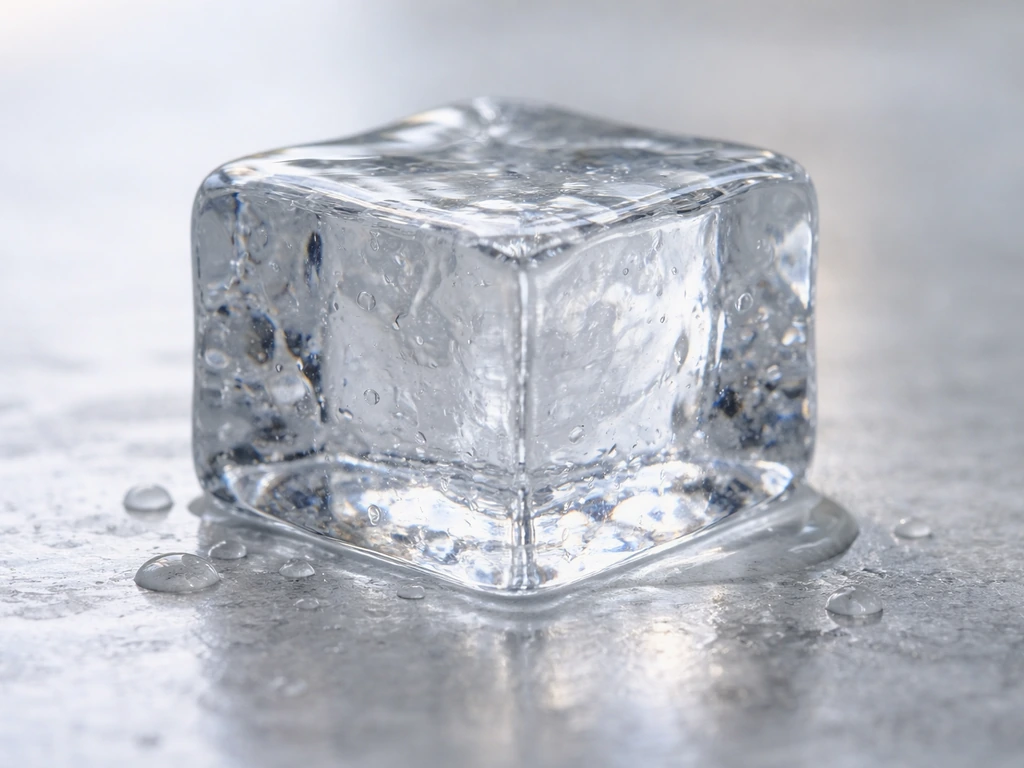
Bacteria cannot actively grow on ice. Freezing stops bacterial growth almost entirely because the water activity drops too low and the temperature shuts down the metabolic processes bacteria need to multiply. But that is not the whole story. Bacteria survive on ice, sometimes in large numbers, and the moment ice starts to melt, growth can resume fast. This same idea applies to other surfaces too, so if you are wondering whether can bacteria grow on copper, the key is whether bacteria have enough moisture and nutrients to multiply. The real food-safety risk is not the frozen state itself but what happens before the ice formed, how clean the source is, and what conditions develop during thawing.
Can Bacteria Grow on Ice? Survival, Growth, and Safety Tips

Marcus Reeves
13 May 2026
Survival vs. growth: what freezing actually does to bacteria
Freezing and killing are two very different things. The FDA is direct about this: freezing stops bacterial growth, but it does not kill most bacteria. The USDA agrees, describing freezing as a preservation method that prevents microbial growth rather than a reliable sterilization step. What this means in practice is that bacteria present in water or food before freezing will still be there after it thaws, often in numbers close to what they were when the water froze.
The reason growth stops is largely about water activity. Bacteria need liquid water to metabolize, reproduce, and build proteins. When water freezes into ice crystals, that liquid water becomes unavailable, and biological activity shuts down. Temperature also plays a direct role. Most bacteria that cause foodborne illness are mesophiles, meaning they grow best between roughly 40 and 140°F (4 to 60°C). Below 32°F (0°C), mesophiles are essentially dormant. The USDA recommends keeping frozen foods at or below 0°F (-18°C), where microbial activity is negligible.
Some cold-tolerant bacteria can slow their metabolism down to survive very low temperatures, but even they cannot actively multiply while water is frozen solid. Survival in a frozen state can last months or even years for some species, which is exactly why thawing matters so much.
When growth becomes possible: the conditions that matter
Three factors determine whether bacteria can grow in or around ice: temperature, available nutrients, and water activity. All three have to be favorable at the same time before multiplication begins.
- Temperature: Growth requires liquid water, so the temperature must be above freezing. Most pathogens need at least 40°F (4°C) to begin multiplying at any meaningful rate.
- Nutrients: Pure water ice made from clean tap water offers almost no nutrients for bacteria. Ice that contains food particles, organic residue, syrup, or juice provides the fuel bacteria need to grow once conditions warm up.
- Water activity: Solid ice has a water activity close to 0.90 at 0°C and drops further as temperature falls. Bacteria generally need a water activity of at least 0.91 to 0.95 to grow, so solid ice is effectively off-limits as a growth medium.
The takeaway is that the frozen state itself is protective, but contamination before or during freezing, and nutrient-rich surroundings, set the stage for what happens once the ice melts.
Psychrotrophs and pathogens: who can handle the cold
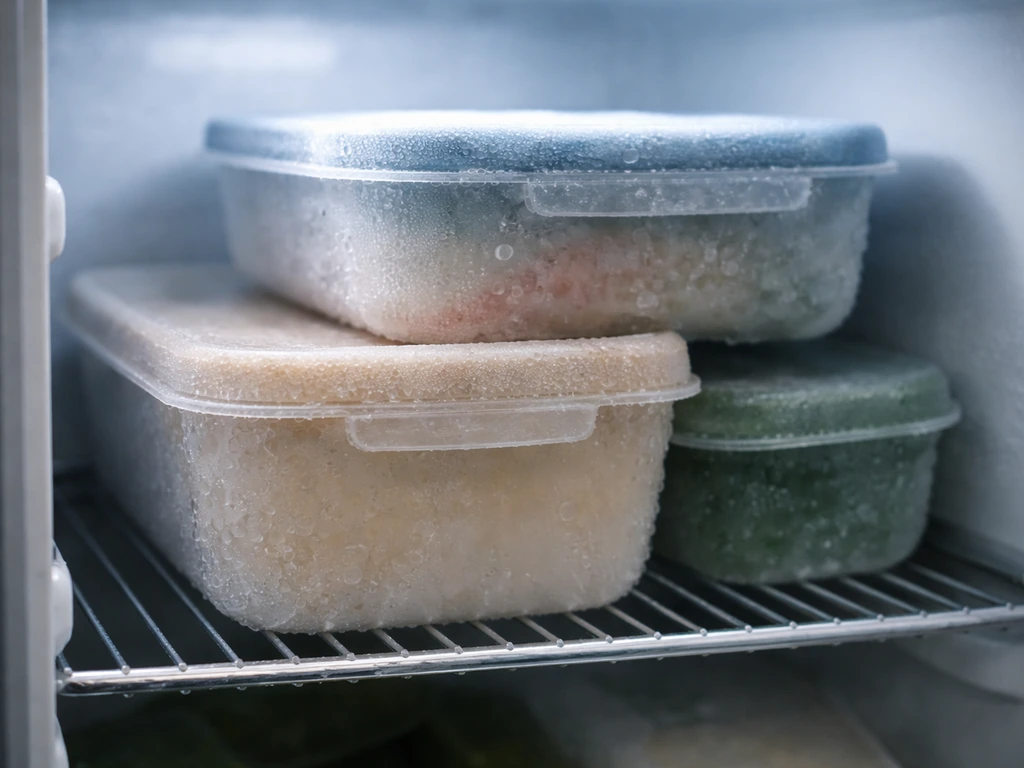
Not all bacteria respond to cold the same way. Psychrotrophic bacteria are the ones worth understanding here because they can grow at refrigeration temperatures, roughly 32 to 50°F (0 to 10°C). They still cannot grow in solid ice, but they become relevant in two situations: when ice is barely frozen or slushy, and immediately after thawing begins.
| Bacteria Type | Growth Temperature Range | Freezing Behavior | Food Safety Relevance |
|---|---|---|---|
| Mesophiles (e.g., Salmonella, E. coli O157:H7) | 40–113°F (4–45°C) | Dormant when frozen; survive and resume growth after thawing | High: major causes of foodborne illness; dangerous in thawing food |
| Psychrotrophs (e.g., Listeria monocytogenes, some Pseudomonas) | 32–50°F (0–10°C) minimum | Cannot grow in solid ice; grow at refrigeration temps and just above freezing | High: Listeria can grow at just above freezing; a concern in cold storage environments |
| Thermophiles | 104–140°F+ (40–60°C+) | Killed or deeply suppressed by freezing | Low risk in frozen/cold scenarios |
| Heterotrophic environmental bacteria (e.g., Pseudomonas aeruginosa) | Varies; many are psychrotrophic | Survive in ice; thrive in biofilms in cold water systems | Moderate to high in ice machine and water system contexts |
Listeria monocytogenes deserves a specific mention here. Research has put its minimum growth temperature at approximately 1.7°C (about 35°F), meaning it can grow in a refrigerator and at temperatures barely above the freezing point. This makes it uniquely dangerous in cold storage environments, including ice cream production settings, where CDC outbreak investigations have found the pathogen present in environmental samples. Listeria will not grow in solid ice, but the margin between frozen and its minimum growth temperature is very small.
Real-world food safety scenarios involving ice
Ice machines
Ice machines are one of the most overlooked contamination sources in food service. The ice itself is frozen and not actively growing bacteria, but the internal components of the machine, including water reservoirs, distribution lines, and surfaces inside the bin, can harbor biofilms. The CDC has documented that heterotrophic bacteria such as Pseudomonas aeruginosa and non-tuberculous mycobacteria can persist in ice machine water reservoirs and attached biofilm.
A 2024 MMWR report tied Burkholderia multivorans infections at multiple hospitals to contaminated ice and water dispensed from ice machines, pointing specifically to biofilm in the machine components. The ice comes out clean in temperature terms but can pick up contamination as it passes through or sits in a dirty machine.
If bacteria can contaminate and survive on cold, damp materials, they can also end up on items like linen when contaminated water or surfaces are involved bacteria on linen.
Drink ice and ice buckets
Ice used in drinks or to chill bottles in a bucket is frozen and not a growth medium while solid. The risk comes from handling: scooping ice with a glass or bare hands introduces bacteria from skin and surfaces. Ice buckets that hold melting ice for hours, especially in warm environments, gradually shift from a frozen state to a cold water state with nutrients (if food or drink residue is present), which can allow growth to begin in the liquid portion. The ice itself stays at or below 32°F, but the meltwater around it may not.
Contaminated ice in contact with food
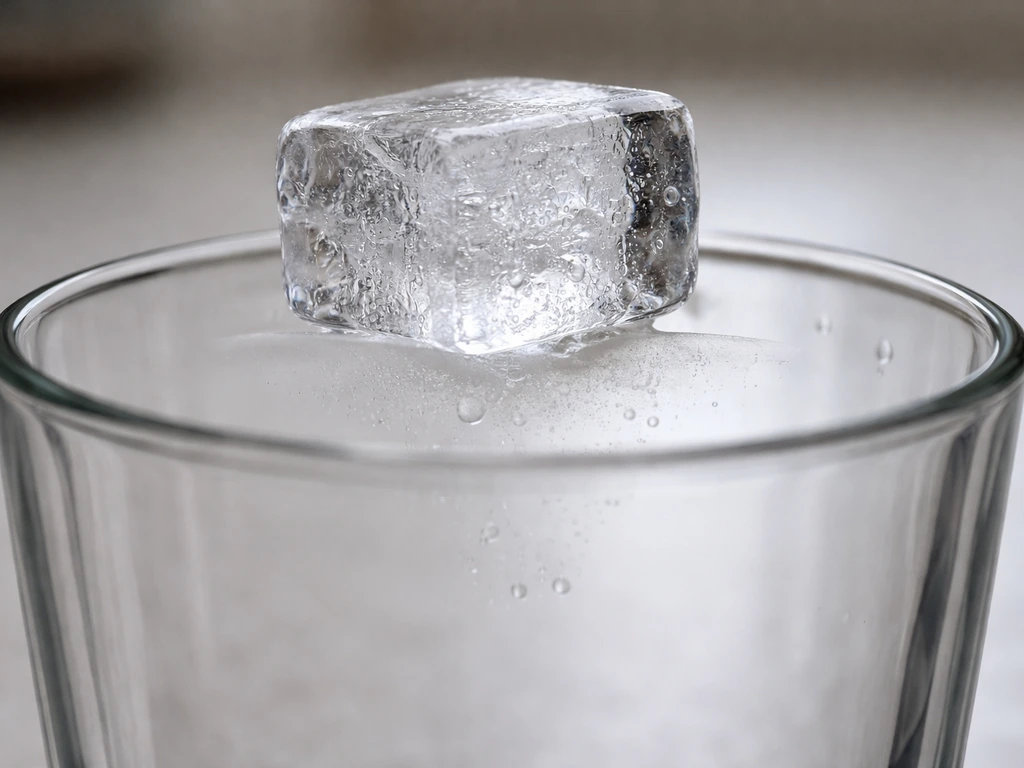
Ice made from contaminated water carries whatever was in that water. Norovirus and hepatitis A, while not bacteria, are classic examples of pathogens that survive freezing and have caused outbreaks through contaminated ice. For bacteria specifically, if the source water contained Salmonella or E. coli before freezing, those organisms will still be present in the ice and will be available to contaminate food or drinks that contact it. This is especially relevant when ice contacts ready-to-eat food directly. This also helps explain why bacteria will not grow on copper pennies, which create an inhospitable surface for microbes.
Thawing: the highest-risk window
Thawing is where the danger becomes concrete. The USDA is explicit about this: when food or ice thaws at room temperature, the outer layer can reach the danger zone of 40 to 140°F (4 to 60°C) even while the core is still frozen. In that zone, bacteria can double in as little as 20 minutes. A piece of food that sat safely frozen for months can develop unsafe bacterial levels within a couple of hours if thawed improperly.
Meltwater from ice that was contaminated before freezing is a direct transfer route. If that water drips onto produce, drains into a cooler with ready-to-eat food, or is used to rinse something, it carries whatever was frozen in the ice. And once the water is fully liquid and at room temperature, the surviving bacteria are no longer dormant. They are back in conditions where they can grow.
Refreezing after a thaw does not fix this. Refreezing will stop growth again, but it will not kill the bacteria that multiplied during the thaw window. The next time the ice or food thaws, that larger bacterial population starts growing again from a higher baseline.
How to prevent contamination starting today
Ice machine maintenance
Ice machines should be cleaned and sanitized on a regular schedule. The FDA Food Code classifies ice-making equipment as a food-contact surface, and guidance from state health departments (such as Louisiana's published protocols for ice-vending and ice-manufacturing equipment) describes specific cleaning and sanitization steps, including disinfectant concentrations and contact times. For most commercial ice machines, a quarterly deep clean is a minimum starting point, but machines in high-use or healthcare environments may need more frequent attention. Sodium hypochlorite at appropriate concentrations is a standard sanitizing agent for water reservoirs and internal components. Check and follow the machine manufacturer's guidance alongside your local health code requirements.
Handling and storage practices
- Always use a clean, dedicated scoop to handle ice. Never scoop ice with a glass or bare hands.
- Store ice scoops in a holder outside the ice bin, not resting on top of the ice.
- Keep ice bins clean and dry when not in use. Wipe down the interior with an appropriate sanitizer and let it air-dry before the next use.
- Do not reuse meltwater from ice that has been in contact with raw meat, seafood, or other potentially contaminated items.
- Do not refreeze ice that has fully melted if there is any chance it was contaminated, either from dirty sources or from contact with raw food.
- Use potable (treated, tested) water when making ice at home or in a food service setting.
- Keep your freezer at or below 0°F (-18°C) to ensure microbial activity stays negligible.
Troubleshooting common situations
If your ice tastes or smells off, that is a signal the ice machine needs cleaning or the water source has an issue. An unusual odor often indicates mold, biofilm, or mineral buildup inside the machine, not necessarily pathogenic bacteria, but any of those conditions warrant a full cleaning before continuing to use the machine.
If ice was left in contact with raw food (for example, raw chicken was stored on ice and the ice melted), treat that meltwater as contaminated. Discard the ice, clean and sanitize the container, and do not let the meltwater contact any ready-to-eat items.
If you are concerned about a home ice maker or ice tray that has not been cleaned in a while, the practical fix is straightforward: empty it, wash with hot soapy water, rinse, wipe with a dilute bleach solution (roughly 1 tablespoon of unscented bleach per gallon of water), rinse again, and let it dry before refilling. That resets any biofilm or residue that could carry over into new ice.
Putting it in perspective
For most people using commercially made ice from a well-maintained machine, the bacterial risk from the ice itself is very low. Solid ice is not a growth medium. Yes, bacteria can survive on surfaces and in contaminated water, but they do not actively grow while the ice is solid; growth is possible once the ice thaws or becomes slushy do loofahs grow bacteria.
The scenarios that create real risk are specific: contaminated source water, dirty ice machine components, improper handling that introduces bacteria from hands or surfaces, and thawing that allows dormant bacteria to become active again. For a similar question about whether bacteria can grow in something like soda, the same water-availability and temperature window idea applies. In the same way, copper pennies do not support bacterial growth because the metal environment is hostile to many microbes.
Understanding these conditions is more useful than worrying about ice in the abstract.
The same logic that applies to bacteria in water bottles, on surfaces, or in other cold or moist environments applies here: the organism's ability to grow depends on temperature, available water, and nutrients arriving together. Ice eliminates or limits all three simultaneously. Remove any one of those controls, especially temperature through thawing, and the risk changes quickly. CDC’s outbreak-contributing factor themes also note that [inadequate time and temperature control related to freezing](https://www.
cdc. gov/restaurant-food-safety/php/investigations/survival-cfs. html) can mean freezing alone is not sufficient to reduce pathogens if time and temperature targets are not met. That is the principle worth keeping in mind.
But when people ask “do port wine stains grow,” the same idea applies: conditions outside the body can influence whether abnormal tissue appears to expand over time.
FAQ
If bacteria can’t grow on ice, is frozen food always safe to eat after thawing?
No. If you keep food frozen solid and it stays at or below 0°F (-18°C), bacteria cannot actively multiply. The key risk is what happens around the thaw point, for example if the freezer door stays open or if you partially thaw then refreeze, which allows growth during the time temperatures drift into the danger zone.
Can bacteria grow on ice cubes inside a drink or cocktail?
Ice that has been sitting in a drink for a long time can still be risky because the meltwater may warm up and pick up contamination from the glass rim, the drink surface, or any food residue. Even if the ice cube surface stays near freezing, the surrounding liquid may become warm enough for rapid growth.
What should I do if ice melted while raw meat was stored on top of it?
Use the water contact rules. If meltwater from contaminated ice touched raw meat, poultry, or seafood, treat it as contaminated like the meat juices. Discard any ice bucket contents that contacted the raw food, then thoroughly clean and sanitize the bin, scoop, and nearby surfaces.
Is there more risk with slushy ice or partially frozen ice?
Yes, slushy ice is different from fully frozen ice. When ice is partially frozen, there is enough liquid water for bacteria that survived to become active and potentially multiply, especially if the slush sits warm for a while.
Does “bad taste” or odor in ice tell me it’s unsafe, or can it be bacteria-free?
For personal safety, avoid tasting test if you suspect contamination. If ice tastes or smells off, it usually indicates biofilm or buildup, and you cannot reliably tell whether pathogens are present by smell alone. The practical step is to stop using that ice supply until the machine is cleaned and, if needed, serviced.
If bacteria can survive on ice, can they also contaminate the freezer or fridge surfaces?
In many cases, yes, because the growth depends on water availability and temperature, not just whether something is cold. Bacteria can persist in tiny moisture films or on damp surfaces and then multiply quickly once enough liquid water and warmth return during thawing or equipment cleanup.
What’s the safest way to thaw foods that have ice on them or are stored in ice packs?
Generally, keep thawing controlled. The safer approaches are thawing in the refrigerator, thawing under cold running water (using a sealed or wrapped method), or cooking from frozen, rather than leaving thawing to room temperature.
If my ice-thawed food partially thawed, can I just refreeze it?
You can, but do not treat refreezing as a “reset.” If a product spends time thawed in the danger zone, bacteria may increase, and refreezing only slows further growth. The only safe option is to assess how long it was out and, if in doubt, discard rather than refreezing.
Will switching to a different water source (filtered, bottled, or RO) eliminate ice-machine contamination risk?
Yes. If your ice is made from tap water, the bacteria risk depends on upstream contamination and the ice machine’s internal biofilm. A machine with good maintenance usually limits risk, but replacing the water supply is not the same as cleaning biofilm in reservoirs, lines, and the bin.
How often should I change ice in a cooler when transporting ready-to-eat foods?
If ice is used for chilling food in a cooler, you must control meltwater handling. Replace the ice frequently, prevent raw and ready-to-eat foods from sharing drainage or contact with meltwater, and keep the cooler closed, because the meltwater can warm and spread contamination.
Next Article
Does Bacteria Grow on Wood Cutting Boards? How to Clean
Yes bacteria can grow on wood cutting boards. Learn why moisture and residues matter, plus exact cleaning, disinfecting,