Yes, loofahs do grow bacteria, and they can build up microbial populations surprisingly fast. The combination of moisture, warmth, trapped skin cells, and a porous structure makes a loofah one of the most bacteria-friendly objects in your bathroom. That doesn't mean you need to panic, but it does mean the way you store, clean, and replace your loofah matters a lot more than most people realize.
Do Loofahs Grow Bacteria? Causes and How to Clean Safely

Marcus Reeves
23 Apr 2026
Why a loofah is basically a perfect environment for bacteria

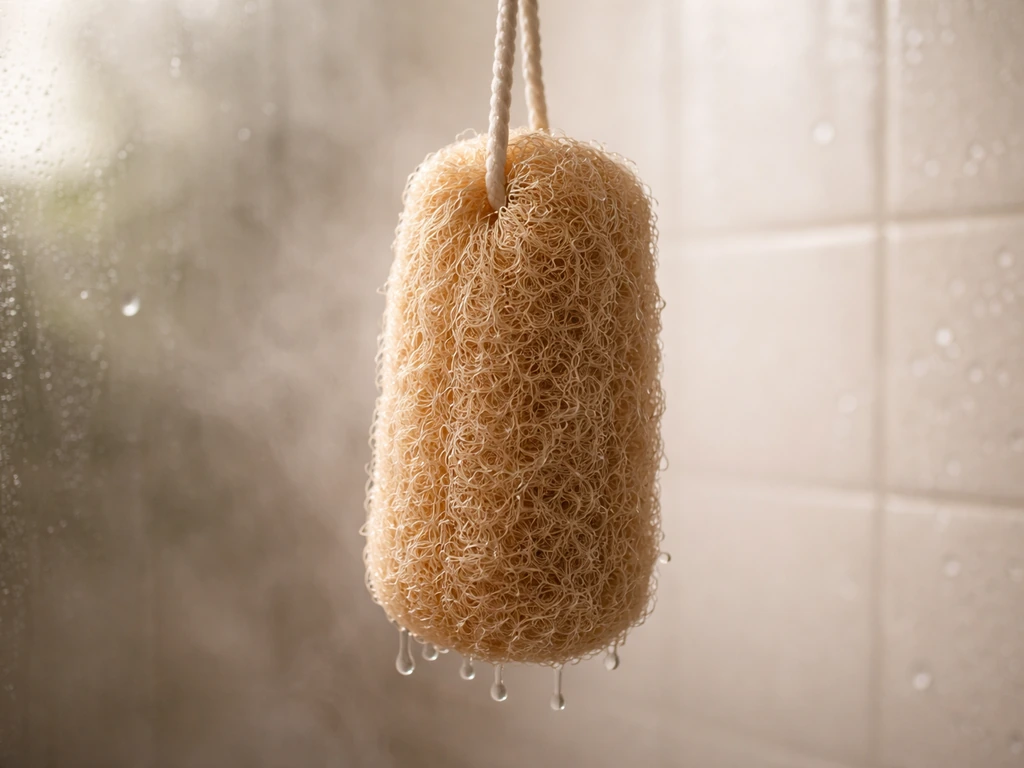
Microbial growth comes down to a few key conditions: moisture, warmth, nutrients, and a surface to attach to. A loofah sitting in a wet shower checks every single box. After each use, it holds water deep in its fibers long after you've stepped out. The ambient warmth of a bathroom keeps that moisture at a temperature bacteria are happy in. Every time you scrub your body, you deposit shed skin cells, oils, and other organic matter into those fibers, which serve as a nutrient source. And the open, fibrous structure gives bacteria enormous surface area to colonize.
The problem is compounded by the fact that a loofah in a typical shower stall doesn't fully dry between uses. Research on porous bath materials supports what Cleveland Clinic experts have pointed out directly: if the tool can't dry out completely, the breeding conditions persist around the clock. Compare that to something like a copper surface, where the material itself has antimicrobial properties that work against bacterial survival. A natural loofah has no such built-in defense.
What's actually growing on your loofah
The most common residents are skin-associated bacteria that transfer directly from your body during use. The human skin microbiome is dominated by genera like Staphylococcus, Corynebacterium, and Cutibacterium (formerly called Propionibacterium). These are normal skin inhabitants, and their presence on a loofah is more or less inevitable once you start using it. Most of the time they're harmless.
The more concerning scenario involves opportunistic bacteria that can thrive in wet environments. Clinical case literature has specifically linked contaminated loofahs to Pseudomonas aeruginosa folliculitis, a skin infection where the same strain of P. A JAMA communication documents a case of Pseudomonas aeruginosa folliculitis linked to contaminated sponges used at home during showering blank" rel="noopener noreferrer">contaminated loofahs to Pseudomonas aeruginosa folliculitis. aeruginosa found on the loofah was recovered from the patient's skin lesions. Pseudomonas is a classic wet-environment opportunist. It doesn't need much to persist in a moist, porous material, and it can cause real problems if it gets into abraded or sensitive skin. Some bacteria can also grow on copper surfaces, but the risk depends on conditions like moisture and contamination can bacteria grow on copper.
Beyond individual bacterial species, the longer-term threat is biofilm. Bacteria attach to moist fibers, produce a protective extracellular polymeric substance (EPS) matrix, and form structured communities that are much harder to remove than free-floating cells. Biofilm formation has been documented on textiles and sponge-like materials used in daily life, and once a biofilm is established, standard rinsing does very little to dislodge it. This is why a loofah that looks and smells clean can still carry a significant microbial load.
How fast bacteria build up, and what speeds it along
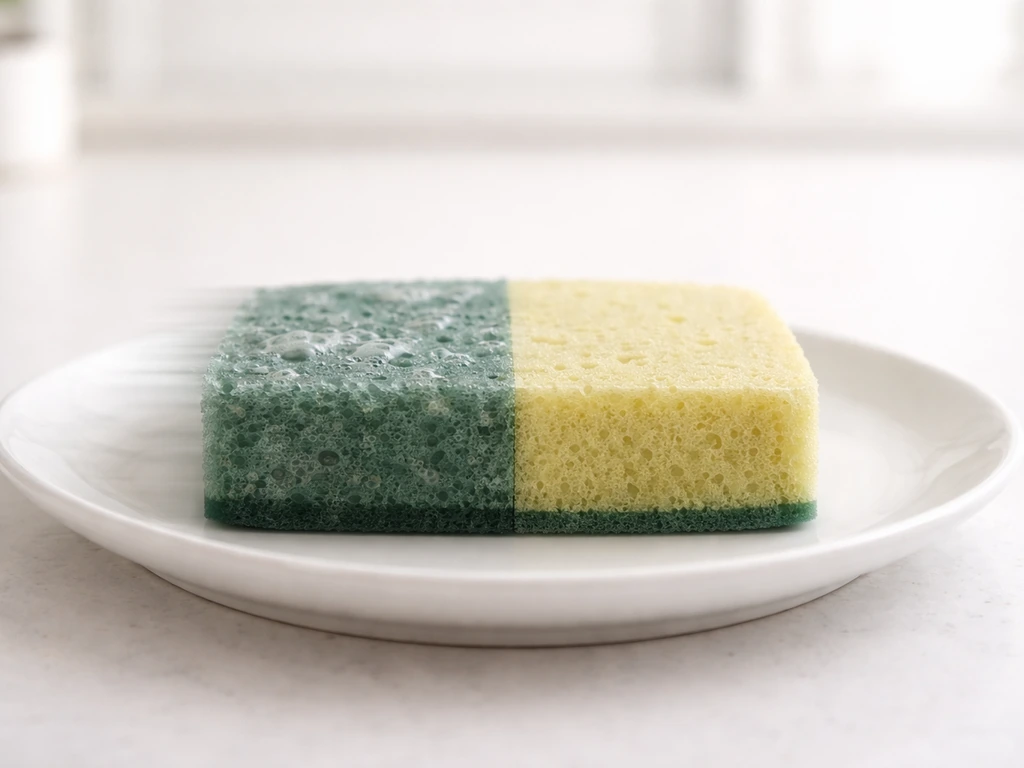
Bacterial populations on porous materials can persist for well over a week under the right conditions. Research on kitchen sponges (which share the same porous, moist character as a bath loofah) has shown that bacteria can survive on inoculated sponges for up to around 16 days, even after drying. The key insight there is that drying slows things down but doesn't eliminate the problem, especially if the material is re-wetted before the population has declined significantly. These kinds of drying cycles are exactly why you would not expect to see bacteria grow on copper pennies either, since copper surfaces resist survival.
Several factors push growth rates higher or lower:
- Drying time: A loofah that hangs in a ventilated spot and dries within a few hours after use accumulates bacteria far more slowly than one that stays wet in a closed shower.
- Use frequency: The more often the loofah is used, the more frequent the reintroduction of skin cells and moisture, giving bacteria repeated opportunities to regrow.
- Shared use: Two people using the same loofah doubles the microbial input and can introduce bacterial strains that aren't part of either person's normal skin flora.
- Bathroom ventilation: Poor airflow keeps humidity high, slowing evaporation and extending the window where bacteria can multiply.
- Water temperature during use: Hot water provides a warm, moist rinse that doesn't sterilize the loofah but does help flush some surface debris.
- Natural vs. synthetic: Natural loofahs (the dried gourd plant) have more irregular, open structure that traps debris more readily than some synthetic mesh versions, though both accumulate bacteria.
How to actually clean and disinfect a loofah
The most important principle here is one borrowed straight from food-safety and infection-control thinking: cleaning always comes before disinfection. If you apply a disinfectant to a loofah loaded with soap scum, skin oils, and biofilm without rinsing it thoroughly first, the disinfectant can't do its job effectively. The organic matter acts as a shield.
Here's a practical weekly disinfection routine that works with what most people have at home: The CDC notes that household bleach is sodium hypochlorite, often around 5.25%, 6.15%, and discusses dilution concepts for effective disinfection.
- Rinse thoroughly first. Run the loofah under hot water and squeeze it repeatedly until the water runs clear. This removes loose debris and reduces the organic burden that would otherwise block the disinfectant.
- Choose your disinfection method. For most people, a dilute bleach soak works well: mix about 1 part household bleach with 9 parts water (roughly a 10% solution) and submerge the loofah for 3 to 5 minutes. Research on porous sponge materials found that a bleach soak was effective at reducing bacterial load when used correctly.
- Alternatively, microwave it. Place the wet loofah (it must be wet to avoid fire risk) in the microwave for 1 to 2 minutes. Studies on porous kitchen sponges found that 1 minute of microwaving reduced aerobic bacterial counts by around 99.99999% in lab conditions. Let it cool before handling.
- Or boil it. Submerging the loofah in boiling water for 5 minutes is another effective option backed by sponge disinfection research. It's simple and doesn't require any chemical inputs.
- Rinse away any bleach residue thoroughly if you used the chemical method.
- Dry it completely. Squeeze out as much water as possible, then hang it somewhere with good airflow, away from the shower spray zone. This step is not optional. The drying phase is what prevents regrowth between uses.
Between weekly cleanings, the single most impactful daily habit is getting the loofah as dry as possible after each use. Hang it outside the shower if you can. A loofah that dries in two hours accumulates far less bacteria than one that stays damp for eight.
When to replace it (and when to throw it out immediately)
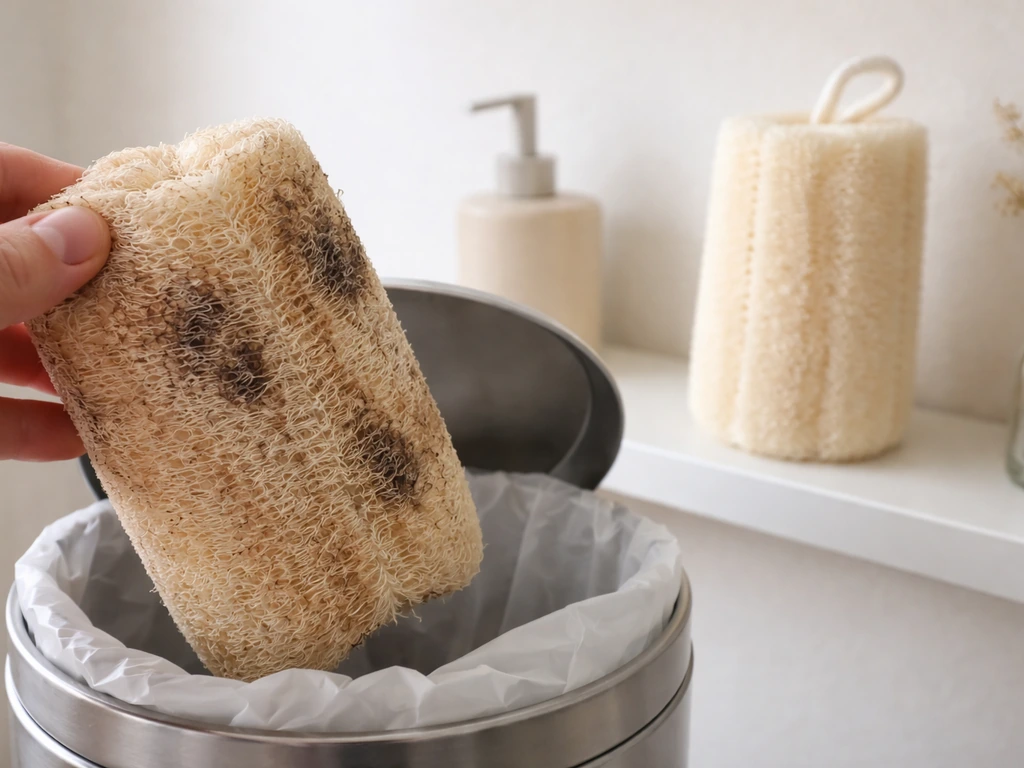
For a natural loofah, a replacement every 3 to 4 weeks is a reasonable standard based on expert guidance from dermatology-focused sources. A commercial care guide also gives a practical replacement-and-cleaning schedule for loofahs, which can be used as a non-medical “how-to” reference alongside medical advice blank" rel="noopener noreferrer">a replacement every 3 to 4 weeks is a reasonable standard based on expert guidance from dermatology-focused sources. However, port wine stains typically do not grow on their own in adulthood; they usually stay the same size after early childhood Do port wine stains grow. Synthetic mesh loofahs can last a bit longer, around 6 to 8 weeks, because they tend to dry more quickly and have less irregular structure for debris to hide in. But these timelines assume regular cleaning and good drying habits. If you're skipping the weekly disinfection step, the effective lifespan is shorter.
There are also situations where you should discard the loofah immediately, regardless of how recently you replaced it:
- Any visible mold or dark spotting on the fibers.
- A persistent musty or sour smell that doesn't go away after cleaning.
- You've had a skin infection, open wound, or active rash and used the loofah during that period.
- Someone else used your loofah.
- The loofah has been sitting wet and unused for more than a few days.
The cost of replacing a loofah is trivial compared to the infection risk of continuing to use one that has become a bacterial reservoir. If you're on the fence, throw it out.
Safer alternatives and best practices for higher-risk situations
For most healthy adults with intact skin, a properly maintained loofah is manageable. But for people with compromised skin, active infections, eczema, psoriasis, or immunosuppression, even a well-maintained loofah introduces unnecessary risk. Bacteria can also grow on linen when it stays damp, like after sweat, and particularly if it's not washed or dried thoroughly loofah introduces unnecessary risk. Dermatology guidance for patients with skin conditions sometimes explicitly recommends skipping loofahs and washcloths altogether.
If you want the exfoliation benefit with less microbial risk, a few alternatives are worth considering:
| Alternative | Microbial risk profile | Practical note |
|---|---|---|
| Silicone bath scrubber | Low: non-porous, dries quickly, less surface area for biofilm | Can be rinsed clean easily and dried fast; some have antimicrobial additives |
| Washcloth (laundered frequently) | Moderate: porous but can be machine washed at high heat after each use | Must be washed and fully dried after every single use to stay safe |
| Sea sponge | Low to moderate: naturally has some antibacterial properties; still requires drying | Replace regularly; better than synthetic but not risk-free |
| Your hands with a good cleanser | Very low: no tool to harbor bacteria between uses | Less exfoliation but the safest option for sensitive or broken skin |
| Exfoliating gloves | Moderate: similar to washcloths; machine washable | Easy to launder; must dry completely between uses |
The consistent theme across all these options is the same one that runs through food safety thinking about bacterial growth: moisture is the main variable you can control. That same basic idea applies beyond bathrooms, including whether can bacteria grow on ice. That same moisture rule also helps answer questions like whether can bacteria grow in soda, since most soda still contains water and nutrients for microbes to use. Whether you're thinking about bacteria in a water bottle, on a wood cutting board, or in a loofah, reducing available moisture reduces microbial opportunity. For a water bottle, keeping it clean and fully dry between uses is key to preventing bacterial growth bacteria in a water bottle. A silicone scrubber that dries in minutes after use is fundamentally safer than a natural loofah that stays damp for hours, regardless of how often you disinfect either one.
If you're in a higher-risk group, the cleanest recommendation is to skip the loofah entirely and use your hands or a silicone tool that you can rinse, dry fast, and replace affordably. For everyone else: weekly disinfection, daily drying, and a fresh loofah every few weeks is a practical, evidence-grounded routine that keeps bacterial buildup well under control.
FAQ
If I rinse my loofah well, will that stop bacteria growth?
Yes. Rinsing under the shower stream mainly removes loose debris, it does not reliably disrupt biofilm inside the fibers. If you disinfect, rinse first until you no longer feel slickness or see residue, then disinfect afterward so the disinfectant can reach the fibers.
What is the most effective routine, drying first or disinfecting first?
Typically, the safest approach is to scrub the loofah, then disinfect weekly, and always let it dry fully between uses. If your loofah is still heavily wet after your shower, shortening the drying time matters more than adding extra soap or doing a faster rinse.
Can I microwave or boil my loofah to kill bacteria?
Microwaving a wet loofah is risky. Fibrous materials can char or create hotspots, and moisture inside can cause uneven heating. If you use heat, only do it when the product is specifically labeled safe for that method, and never when it is soaking wet.
Is it safe to share a loofah with family or a partner?
Yes, if you share it. Bacteria and skin cells transfer during use, and the loofah can become a shared reservoir for opportunists, especially in households with eczema, acne, or frequent skin irritation. Keep one loofah per person, or switch to a disposable alternative like washcloths that are laundered hot.
How can I tell if my loofah is still contaminated if it doesn’t smell bad?
An unpleasant odor can mean microbial activity, but lack of odor does not guarantee low bacterial load. Biofilm and trapped moisture can persist even when the loofah “smells clean.” Use odor only as a hint, not as a reliability check.
Should I avoid using a loofah on breakouts, shaving nicks, or infected areas?
If you have cuts, open blisters, or active infection, stop using the loofah for that area. Opportunists like Pseudomonas take advantage of abraded or compromised skin, and a loofah can reintroduce organisms even after cleaning.
What should higher-risk people do differently with loofahs?
For people with compromised skin, immunosuppression, or chronic inflammatory skin conditions, skipping loofahs altogether is often the lowest-risk option. If you still choose to use one, follow stricter replacement and daily drying, and do not use it on affected areas.
Where should I store my loofah so it dries fast?
Use the storage rule: keep it separated from damp surfaces and air dry. Avoid leaving it in a closed, steamy corner or storing it in a shower caddy that stays wet, because airflow drops and re-wetting happens between uses.
Is bleach the best way to disinfect a loofah, and is it safe for all types?
Bleach can be too harsh on natural fibers and can leave residue if not rinsed correctly, and some plastics react differently. If you use any disinfectant, follow the product instructions, rinse thoroughly afterward, and never mix chemicals like bleach and other cleaners.
Do bacteria grow faster if I use my loofah every day or after sweating?
Yes. If your loofah is frequently used on oily skin, sweaty exercise days, or after applying hair removal products that increase irritation, the nutrient and irritation load rises. In those cases, shorten the replacement cycle and be more strict about daily drying and weekly disinfection.
Next Article
Can Bacteria Grow in Water Bottles? Risks and Prevention
Can bacteria grow in water bottles? Learn when it happens and how to prevent biofilm with safe storage and cleaning.