Yes, bacteria can grow in water bottles. The short answer is that plain water is not a sterile environment, and under the right conditions, microorganisms will multiply in it. That said, the real-world risk depends heavily on whether the bottle is sealed or open, what temperature it's stored at, how clean the bottle is, and how long the water sits. A sealed, factory-fresh bottle of water from a regulated producer is very low risk. An open bottle left on a warm car seat for three days is a different story.
Can Bacteria Grow in Water Bottles? Risks and Prevention

Marcus Reeves
8 Apr 2026
What bacteria actually need to grow in water
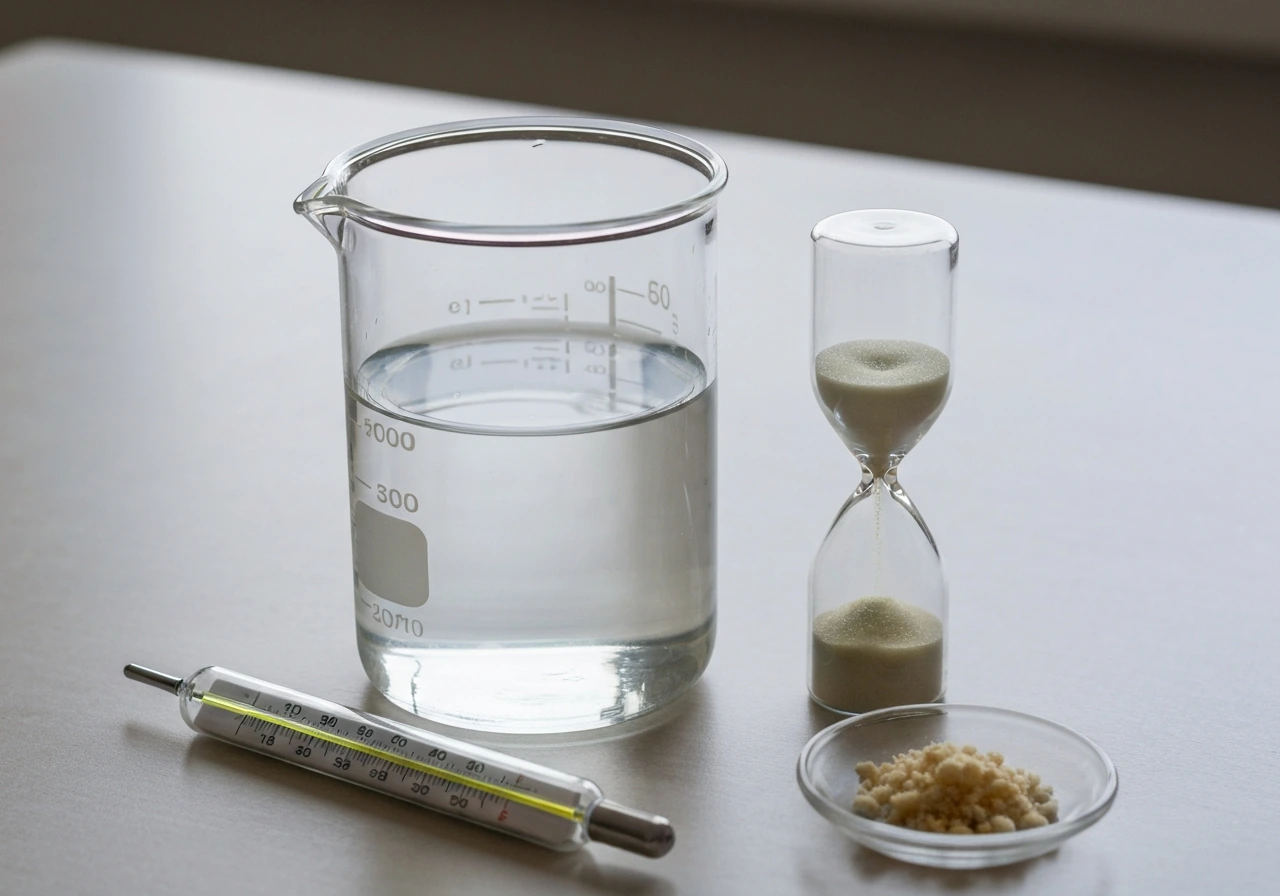
Bacteria don't need much, but they do need something. The five main factors that drive microbial growth are temperature, time, nutrients, oxygen availability, and pH. Water ticks several of these boxes, which is why it can support bacterial growth even though it seems "clean."
- Temperature: Most bacteria that concern us grow fastest between 40°F and 140°F. Room temperature water sits right in this danger zone. The CDC recommends storing treated water between 50°F and 70°F, and even that lower end of the range still allows some bacterial activity over time.
- Time: Bacteria double roughly every 20 minutes under ideal conditions. A small starting population can become a large one within hours if the other conditions are right.
- Nutrients: Tap and bottled water aren't pure H2O. They contain trace amounts of assimilable organic carbon (AOC) and biodegradable dissolved organic carbon (BDOC), which serve as fuel for microbial growth. The less of this organic carbon present, the slower bacteria grow.
- Oxygen: Most common bacterial contaminants are aerobic and prefer oxygen. An open bottle exposed to air gives them exactly what they need.
- pH: Drinking water is typically neutral (around pH 7), which is comfortable for most bacteria. There's no built-in acidity to suppress growth the way there is in, say, soda or vinegar.
Compare this to whether bacteria can grow in soda, where low pH and carbonation create a genuinely hostile environment for most pathogens. Water offers none of those natural barriers.
Sealed vs. open bottles: the contamination gap
This is where the distinction matters most. Sealed, commercially bottled water is produced under sanitary conditions regulated by the FDA as a food product. Bottled water plants are inspected, and the water is treated through filtration and disinfection to remove or reduce microorganisms before packaging. When you buy a factory-sealed bottle, the microbial load inside is very low, and there's nothing adding to it as long as the seal stays intact.
The moment you open a bottle, that changes. The cap comes off, your hands touch the bottle mouth, the water is exposed to air, and any microorganisms present in the environment now have access. The CDC's travel health guidance specifically recommends using factory-sealed containers precisely because once the seal is broken, hygiene and storage practices become the controlling factor.
Cornell University's bottled water consumer guidance puts a concrete number on this: after opening, refrigerate the bottle and use the water within two weeks to avoid contamination. That's for refrigerated storage. At room temperature or warmer, that window closes much faster.
Plastic bottles and the biofilm problem
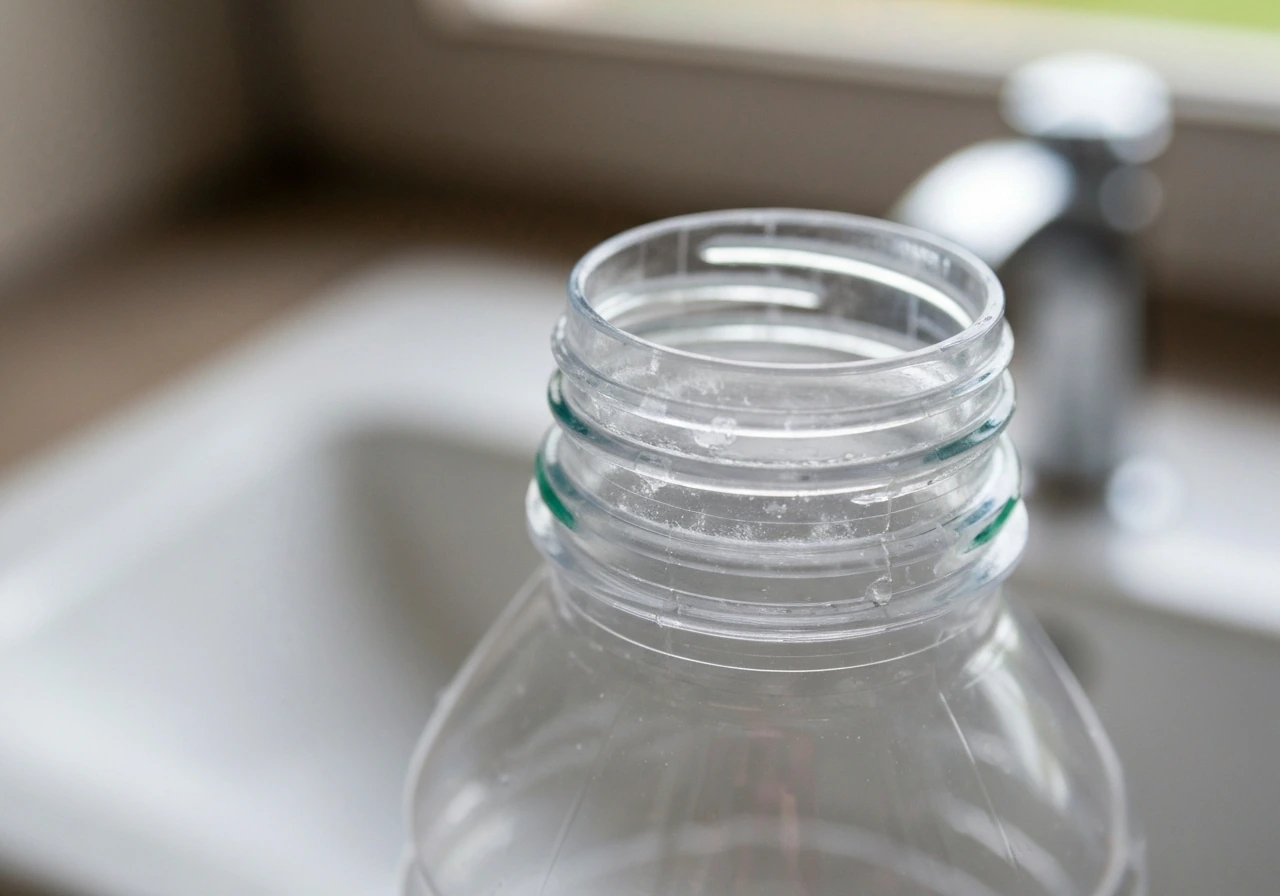
Plastic surfaces are not inert when it comes to bacteria. Research published in environmental microbiology journals has shown that bacteria can attach to plastic surfaces and form biofilms, which are thin communities of bacteria embedded in a self-produced matrix. Biofilms are harder to remove with a quick rinse because the matrix protects the bacteria underneath from physical and chemical attack.
The cap and threads of a water bottle are the highest-risk zones. These surfaces are touched repeatedly, exposed to the mouth, and often left damp. Specific bacteria including Staphylococcus species and environmental gram-negative bacteria have been documented as biofilm-formers on plastic and sealant-type surfaces. Studies of water vending machines have found biofilm-forming multidrug-resistant gram-negative bacteria inside water-dispensing equipment, which illustrates how persistent these communities can become in water-contact environments.
The CDC has also noted that biofilms in water systems can shelter pathogens including Legionella pneumophila and E. coli O157:H7. In the context of a personal reusable bottle, the stakes are lower than a large water system, but the same biology applies. A biofilm on your bottle threads gives any incoming bacteria a foothold that a simple water rinse won't dislodge.
This is roughly analogous to what happens with other everyday surfaces. Loofahs are a well-known example of a surface that grows bacteria because they stay damp, have irregular texture, and accumulate organic matter. Water bottle caps and threads share similar traits: irregular geometry, repeated contact, and persistent moisture.
Real-world scenarios where growth becomes a genuine concern
Bottles left in heat
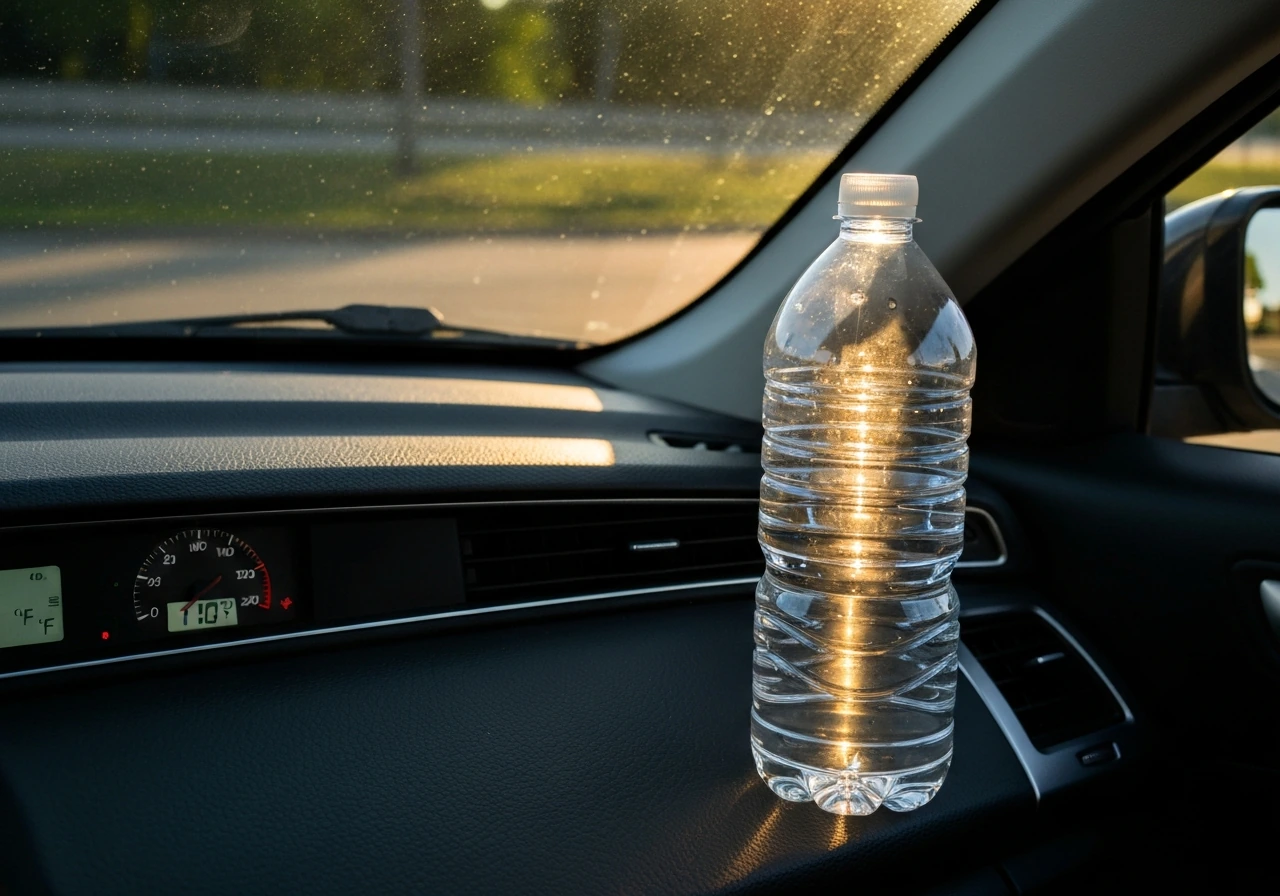
A bottle left in a hot car in summer can reach internal temperatures well above 100°F. That's prime bacterial growth territory. Even if the bottle started out clean, heat accelerates growth of any organisms that get in after opening. Bottled water packaging is also not designed for repeated heat cycles, and while the plastic itself doesn't "breed" bacteria, degraded or scratched plastic surfaces can create microscopic pits where biofilm takes hold more easily.
Reused single-use bottles
Single-use plastic bottles are designed for one use. Their narrow mouths make thorough cleaning difficult, and the plastic is typically thinner and more prone to surface abrasion with repeated washing. If you refill a single-use bottle without proper cleaning, you're adding new water to whatever biofilm and contamination built up from the previous use. The Government of Canada's bottled water safety guidance notes that taste and safety can be affected over time and recommends refrigerating water after opening.
Dirty or damp lids
The lid is the most neglected part of any water bottle. Residue from lips, fingers, and the environment builds up in the threads and under the cap seal. Left at room temperature in a damp state, this is an ideal biofilm initiation site. Some people wash the bottle body and ignore the cap entirely, which defeats the purpose.
Water sitting for extended periods
Water that sits open at room temperature for more than a day carries growing risk. Some infection-control guidelines suggest discarding water that hasn't been used within 48 hours as a conservative measure. Even for sealed emergency water storage, the CDC recommends keeping it at 50°F to 70°F specifically to slow microbial activity.
How to actually prevent bacterial growth in your water bottles
Storage temperature
Keep opened water refrigerated whenever possible. If you're carrying a bottle during the day, that's unavoidable, but don't let it sit out at room temperature overnight. The CDC's recommended storage range for treated water is 50°F to 70°F, and refrigeration at around 38°F to 40°F is even better for slowing microbial activity.
Cleaning reusable bottles properly
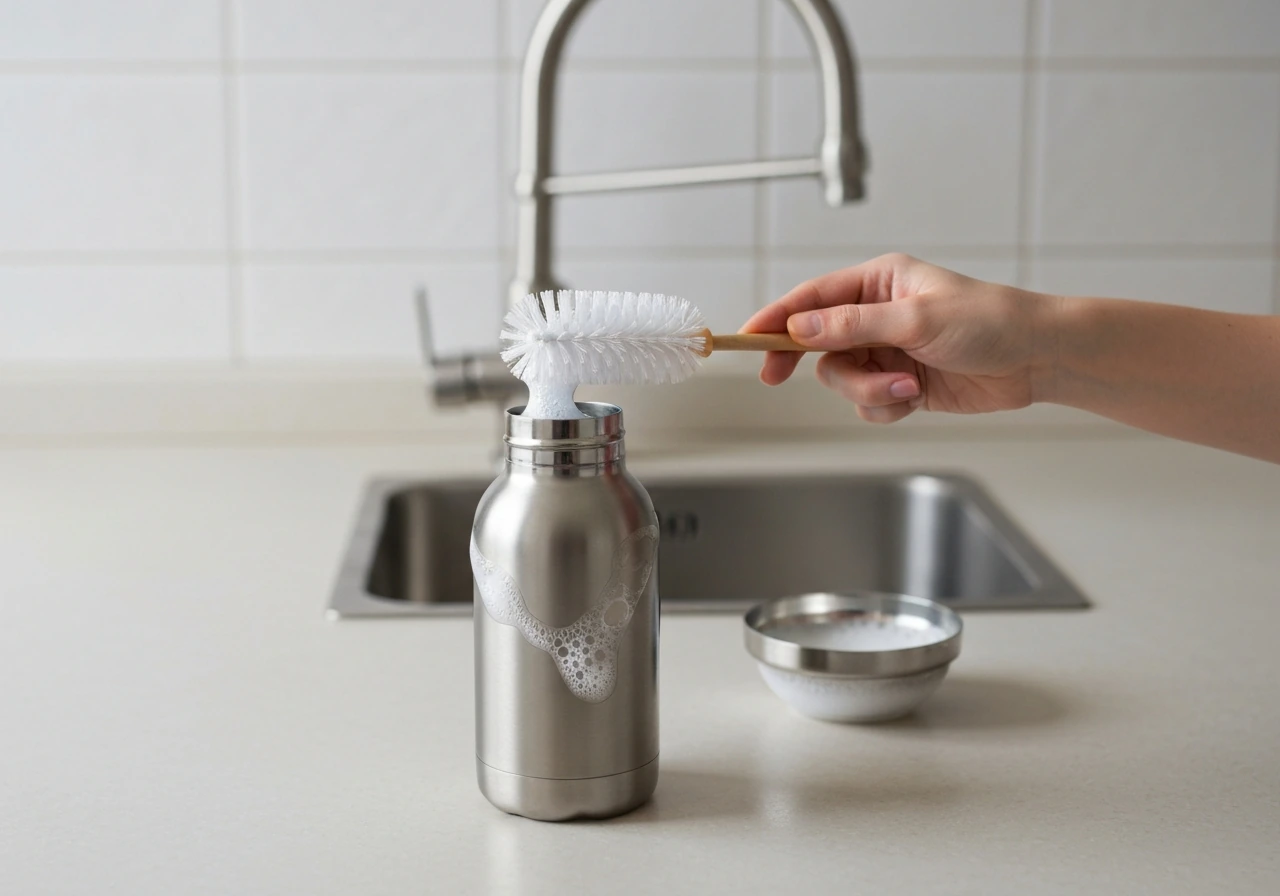
A quick rinse doesn't remove biofilm. You need soap, hot water, and mechanical scrubbing. Clemson University's consumer guidance on reusable water bottles recommends washing with soap after each use and periodically sanitizing with either a dilute bleach solution or a vinegar-based approach. For the cap and threads specifically, a small bottle brush or pipe cleaner that reaches into the crevices is the only way to physically disrupt biofilm buildup.
Sanitizing with bleach
After washing, sanitizing kills residual organisms that scrubbing didn't remove. The CDC provides a standard bleach sanitizing solution of 1 tablespoon of household chlorine bleach per gallon of clean water. For water storage containers, the CDC's WASH guidance uses approximately 1 teaspoon (5 mL) of unscented chlorine bleach per liter of water for disinfecting the container itself. The bleach solution needs to contact all interior surfaces, including the cap and threads, for the contact time specified on the product label (typically at least 1 to 2 minutes). Contact time matters: a sanitizer that gets rinsed off immediately isn't doing its job.
When to just throw it away
Some bottles and caps are not worth trying to salvage. If the interior of a bottle has visible slime, discoloration, or persistent odor after cleaning, the biofilm has progressed to the point where consumer-level cleaning is unlikely to fully eliminate it. The CDC's guidance in contamination scenarios advises discarding hard-to-clean items rather than risking inadequate decontamination. A $15 reusable bottle is not worth a gastrointestinal illness.
How water bottles compare to other surfaces for bacterial growth
It helps to have some context for where water bottles fall on the risk spectrum. Wood cutting boards present a similar ongoing contamination challenge because of their porous surface and repeated food contact. On the lower-risk end, surfaces like copper are actively hostile to bacteria. Copper's antimicrobial properties mean bacteria struggle to survive on it, which is part of why copper has been used in water distribution contexts. Plastic, by contrast, is neutral: it doesn't promote or suppress bacterial growth on its own, but its surface characteristics make biofilm attachment easy once conditions are right.
| Bottle type / scenario | Bacterial growth risk | Key controlling factor |
|---|---|---|
| Sealed, factory-bottled water (unopened) | Very low | Sanitary production and intact seal |
| Opened bottled water, refrigerated, used within 2 weeks | Low | Cold temperature slows growth |
| Opened bottle, room temperature, used within 1 day | Low to moderate | Short exposure time limits growth |
| Opened bottle left at room temperature for 2+ days | Moderate to high | Time and temperature allow multiplication |
| Reusable bottle, washed daily with soap and scrubbing | Low | Regular mechanical removal of biofilm |
| Reusable bottle, rinsed only, cap rarely cleaned | High | Biofilm builds on threads and cap interior |
| Bottle left in hot car (80°F+) | High | Heat accelerates bacterial growth sharply |
| Single-use bottle refilled without washing | High | Biofilm accumulates, difficult to clean |
Quick do/don't guidance by situation
Here's a practical reference based on the most common scenarios people actually face:
| Situation | What to do |
|---|---|
| Sealed bottled water, stored properly | No action needed. Use as normal. |
| Opened bottle, refrigerated | Use within two weeks. Keep cap on when not drinking. |
| Opened bottle left out at room temperature overnight | Use it today or discard it. Do not refrigerate and save for later. |
| Reusable bottle used daily | Wash with soap and a brush after every use, including the cap and threads. Sanitize with dilute bleach weekly. |
| Bottle that smells or has visible residue after washing | Discard it. The biofilm is beyond what cleaning will reliably fix. |
| Bottle left in a hot car | If it was opened, discard the water. Wash the bottle before refilling. |
| Single-use bottle you want to refill | Use a proper reusable bottle instead. If you must refill, wash it with soap and water first, and don't reuse more than once. |
A few more surface comparisons worth knowing
If you're thinking about bacterial growth across the objects you use every day, the patterns are consistent. Linen and fabric surfaces can harbor bacteria under the right moisture and temperature conditions, just as water bottle caps do. And it's not just organic surfaces: bacteria can persist on ice, which surprises many people since cold temperatures slow but don't eliminate microbial survival. The throughline is that moisture combined with any available nutrients and a surface to attach to is enough to support bacterial life.
It's also worth noting that the reason copper is effective is not magic: copper ions are actively toxic to bacterial cells, which is why bacteria won't grow on copper surfaces the way they will on plastic or stainless steel. Plastic has no equivalent mechanism.
The bottom line
Bacteria can and do grow in water bottles, but the risk is manageable with basic habits. Do port wine stains grow? Learn how similar factors like moisture and biology influence whether certain skin changes can persist or worsen over time. Sealed commercial bottled water is safe by design.
The risk appears when you open a bottle, leave it warm, skip cleaning, or neglect the cap. The cap and threads are the highest-risk spot on any reusable bottle, biofilm is the mechanism to understand, and cold storage plus regular soap-and-brush cleaning are your two most effective tools. CDC infection-control guidance notes that biofilms may form under stagnant as well as flowing conditions and can help pathogens such as Legionella pneumophila and E.
coli O157:H7 survive biofilm is the mechanism to understand.
If a bottle looks, smells, or feels off after washing, throw it out. The biology here is straightforward, and so is the fix.
FAQ
If a water bottle looks clean, can bacteria still be growing inside it?
Yes, but the water itself does not remove contaminants once the seal is broken. The bigger issue is what microbes get introduced at the mouth or cap and how warm the bottle stays afterward, since bacteria can multiply quickly when held at higher temperatures.
What if I only took a small sip from an open bottle left out overnight?
A tiny sip is not a reliable safety test. Even if the water tastes fine, biofilm on the cap and threads can seed new contamination into each pour, so “no symptoms” does not mean the bottle is microbe-free.
Does freezing an opened water bottle kill bacteria?
You should not assume freezing makes opened bottle water safe. Cold slows growth but does not reliably sterilize, and thawing can allow any surviving microbes to multiply again, especially if the bottle was already contaminated.
Can I pour fresh water into a reusable bottle without fully sanitizing it first?
Usually, yes. If you refill a reused bottle, you must treat the bottle first, then fill with treated water. Otherwise, you can be adding clean water onto existing biofilm, which biofilm protects from simple rinsing.
How can I tell if I should throw away the bottle instead of cleaning it?
If mold is present, discard the bottle. “Visible slime” and “fuzzy growth” are stronger indicators than odor alone, and moldy biofilm is difficult to fully remove from crevices like threads.
Are bottles with straws or valve lids higher risk than standard bottles?
Sports bottles with straws, bite valves, or complex lids have more hard-to-reach surfaces, so they need more thorough cleaning. A squeeze bottle brush or small straw brush and regular disassembly of the valve are often necessary, otherwise residue becomes a persistent biofilm source.
If I refrigerate the bottle, does that reset the safety clock after it warms up?
For refrigeration, the key is keeping it cold consistently, not just “eventually.” If you take a bottle out and it warms above room temperature for several hours, shorten the reuse window and clean the bottle sooner rather than waiting for the two-week mark.
Is running a water bottle through the dishwasher enough to sanitize it?
Dishwasher cycles are helpful for many items, but they may not sanitize cap threads equally due to positioning and detergent rinse-off. If you use a dishwasher, still inspect the cap and threads and consider a separate sanitizing step for the lid and crevices.
Does vinegar cleaning work as well as bleach for reusable water bottles?
No. Vinegar is primarily an acid cleaner and may reduce odor or scale, but it is not consistently reliable as a disinfectant for bottle interiors and biofilm. For sanitizing, use an appropriate chlorine bleach method or a bottle-specific sanitizer following the label contact time.
Is the risk different for kids, older adults, or people with compromised immune systems?
Yes, particularly for infants, older adults, people with weakened immune systems, and anyone with recent GI illness. In these cases, err on the side of shorter storage times, stricter refrigeration, and discarding bottles that smell, look slimy, or are hard to clean thoroughly.
Next Article
Can Bacteria Grow on Linen? How to Clean and Prevent It
Can bacteria grow on linen? Learn when they survive or multiply and how to wash, dry, sanitize, and prevent recurrence.