No, bacteria cannot grow without water. Completely dry conditions stop bacterial multiplication entirely. But here is the important nuance: bacteria do not need a puddle or flowing liquid to grow. They need available water at the molecular level, and even foods or surfaces that feel dry to the touch can still carry enough moisture to support bacterial growth. The real question is not whether something is wet or dry, it is how much of that water is actually free and accessible to bacteria.
Can Bacteria Grow Without Water? Water Activity Explained

Marcus Reeves
29 Jun 2026
Why bacteria need water in the first place
Water is not optional for a bacterial cell. It is the medium through which virtually every biological process happens. Nutrients get absorbed through the cell membrane dissolved in water. Waste products exit the same way. Enzymes, which drive every metabolic reaction inside the cell, only function when they are properly hydrated. DNA replication, protein synthesis, energy production: all of it depends on water being present inside and around the cell.
When water is removed, the cell's interior becomes too concentrated, enzymes denature or stop working, and the cell membrane loses its structural integrity. At that point, metabolism halts. No metabolism means no reproduction. That is why, as a hard biological rule, bacteria cannot grow (multiply) in the complete absence of water.
Water activity: the number that actually matters
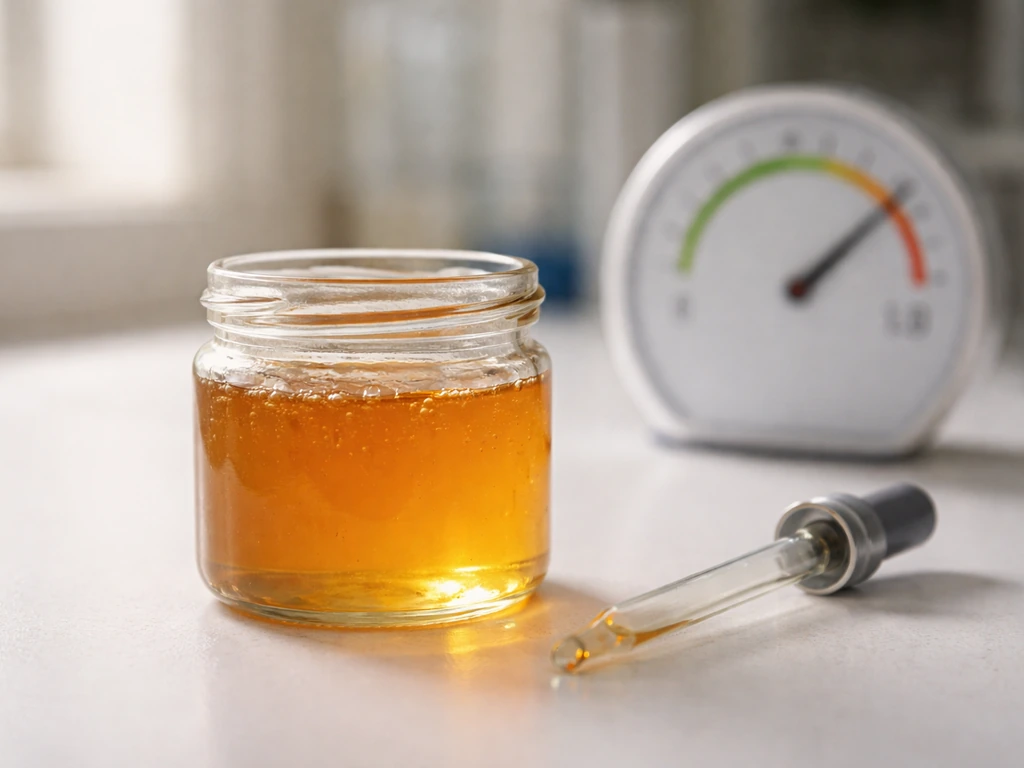
Food scientists and microbiologists do not talk about water content when they assess microbial risk. They use water activity, abbreviated aw. Water activity is a scale from 0 to 1 that measures how much of the water in a food or on a surface is actually free and available to microorganisms, rather than bound tightly to sugars, salts, proteins, or other molecules. Pure distilled water has an aw of 1.0. Bone-dry material has an aw near 0.
This distinction matters enormously in practice. A jar of honey and a glass of plain water both contain water, but honey has a very low aw (around 0.5 to 0.6) because its sugars bind the water tightly. That is why honey resists bacterial spoilage even though it is clearly a liquid. The FDA specifically uses an aw of 0.85 as a regulatory cutoff for certain low-acid canned foods, recognizing that below that threshold many pathogens are inhibited. Most fresh, unprocessed foods sit above aw 0.95, which is comfortably within the range that supports bacterial growth.
| Water Activity (aw) | What can grow | Example foods/conditions |
|---|---|---|
| 0.97 – 1.00 | All bacteria, yeasts, molds | Fresh meat, fish, most vegetables |
| 0.91 – 0.96 | Most bacteria (including Bacillus subtilis) | Cooked sausage, bread, aged cheese |
| 0.87 – 0.90 | Staphylococcus aureus (minimum ~0.86), some yeasts | Fermented meats, intermediate-moisture foods |
| 0.80 – 0.86 | Molds, halophilic (salt-loving) bacteria, very few pathogens | Flour (~0.87 or below), dried fruit, salami |
| Below 0.60 | No microbial growth; survival only possible for some organisms | Freeze-dried foods, crackers, dry spices |
Clostridium botulinum, the bacterium behind botulism, stops growing at an aw below 0.93. Staphylococcus aureus, one of the more resilient common pathogens, has a minimum growth aw of around 0. AQUALAB’s educational mapping of water activity values to organisms likewise places Staphylococcus aureus around an aw of about 0.87 as a typical growth threshold Staphylococcus aureus has a minimum growth aw of around 0.86. 86. Most other bacteria of food safety concern need aw above 0.90 to actively multiply. These thresholds are why specific water activity targets are built into food preservation and canning regulations.
Can bacteria grow in dry conditions? Real-world examples
Dry does not automatically mean safe. This also applies to RO water, since bacteria can survive in reconstituted or contaminated water even if growth is limited by low available moisture dry does not automatically mean safe. Several real-world foods and environments sit in a gray zone where surface moisture, temperature, or handling can shift the aw enough for some organisms to grow or at least survive at dangerous levels.
Flour and powdered foods

Raw flour typically has a water activity around 0.87 or lower. That is below the threshold for most pathogens to actively multiply, but it is not sterile. For comparison, the question can bacteria grow in water depends on whether enough free water is available, similar to how water activity controls growth in dry foods. Salmonella and E. coli O157:H7 have been linked to flour outbreaks since at least 2009. The bacteria are not growing in the flour; they are surviving there, sometimes for months. Cronobacter sakazakii (previously called Enterobacter sakazakii) is a particularly concerning example. CDC investigations in 2001 and again in 2021-2022 linked it to powdered infant formula. CDC documents a Tennessee outbreak investigation in 2001 linking Cronobacter (formerly Enterobacter sakazakii) infections in neonates to the use of powdered infant formula blank" rel="noopener noreferrer">CDC investigations in 2001. Cronobacter can survive in dry powders at water activity as low as 0.30 and remain viable for up to 12 months, then cause severe illness when the powder is reconstituted with water.
Jerky, dried meats, and intermediate-moisture foods
Properly made jerky targets an aw below 0.85. At that level, most pathogens cannot grow. However, if jerky is made at home without adequate temperature treatment first, Salmonella or E. coli can survive the drying process and remain present even in a product that tests within the target aw range. Reviews of low-moisture foodborne illness outbreaks consistently identify Salmonella as the most common culprit, precisely because it survives desiccation so effectively.
Dry processing environments and surfaces

In food manufacturing, dry surfaces like conveyor belts, cracked concrete floors, and equipment seams can harbor pathogens that persist between production runs. These environments are not growing bacteria in the same way that a moist surface would, but condensation, cleaning water residue, or humid air can temporarily raise the local aw enough to allow a burst of activity. Water softeners are another place where trace moisture can allow bacteria to persist, so keeping the unit clean and maintaining proper water conditions matters. This is why humidity control inside dry-food processing facilities is taken seriously as a food safety tool.
Survival vs. growth: what actually happens when water runs out
This is the most important distinction to internalize: not being able to grow is not the same as dying. When water becomes unavailable, bacteria generally shift into a survival mode rather than simply perishing. The outcome depends heavily on the organism and how quickly desiccation occurs.
Some bacteria form spores when conditions become unfavorable. Bacterial spores are dormant structures with extremely low water content in their core, minimal metabolic activity, and remarkable resistance to heat, drying, and many disinfectants. Species like Bacillus and Clostridium use sporulation as a long-term survival strategy. When moisture returns, spores can germinate rapidly and resume vegetative growth. The low water content of the spore core is actually the key mechanism behind their resistance.
Non-spore-forming bacteria use other strategies. Some accumulate compatible solutes (sugars, amino acids, and other small molecules) that protect cell structures during drying. Others form biofilms that slow water loss and shield cells from the environment. The spectrum of desiccation survival is extreme: some bacteria die within seconds of air-drying, while certain desiccation-tolerant species have been documented surviving for years or even longer under the right conditions.
Freezing presents a related but distinct situation. Ice locks water into crystals, making it unavailable to bacteria. Bacterial growth essentially stops at freezing temperatures, which is why frozen food is considered stable for long periods. But freezing does not sterilize food. Cells and spores survive, and when the food thaws and aw rises again, the organisms can resume activity. The same principle applies to freeze-dried foods: the product is shelf-stable because the aw is very low (often below 0.2), but bacteria that were present before processing can remain viable and become dangerous once reconstituted.
How to actually prevent bacterial growth in low-moisture settings
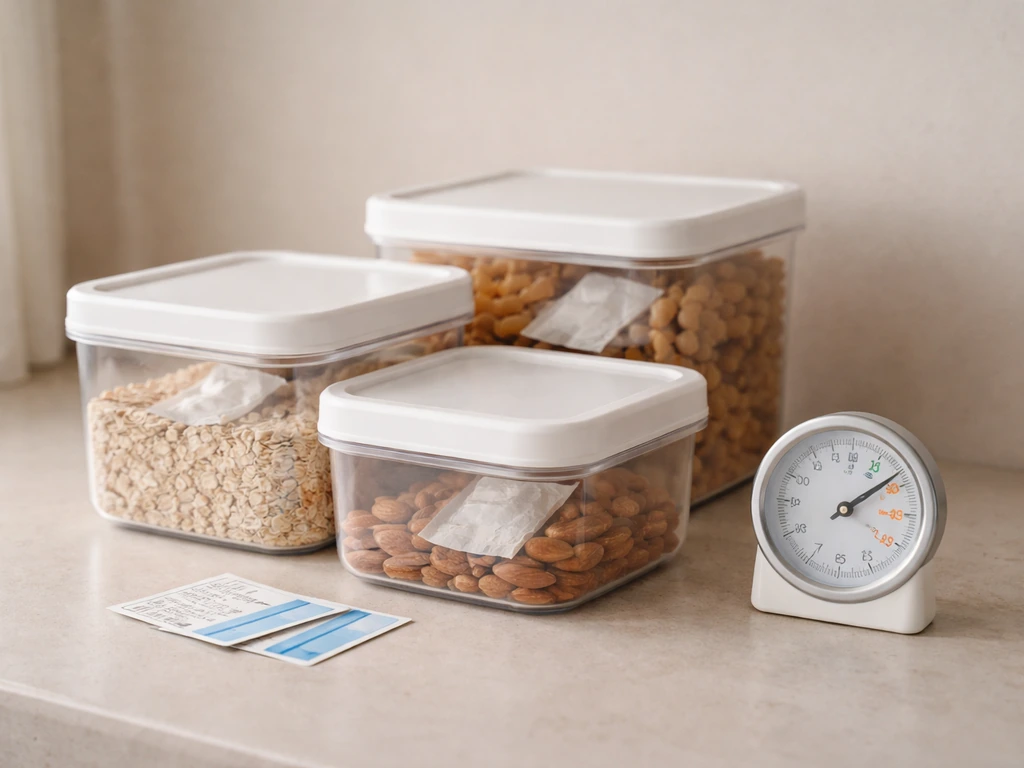
If you are working with food storage, food production, or just trying to keep a dry environment safe, the practical steps come down to controlling water activity, pairing it with other barriers, and being realistic about what dryness does and does not eliminate.
Keep aw below the relevant threshold for your concern
For most food safety purposes, getting aw below 0.85 eliminates the growth risk from the majority of bacterial pathogens, including Clostridium botulinum. Getting below 0.60 stops virtually all microbial growth, including xerophilic (dryness-adapted) fungi. Verified water activity measurement, using a calibrated aw meter, is the reliable way to confirm a product is within a safe range. Estimating by feel or appearance is not enough.
Use salt and sugar to bind free water
Salt and sugar work as preservatives largely because they reduce water activity by binding free water molecules. However, salt can lower water activity, and whether bacteria can grow depends on whether enough free water remains can bacteria grow on salt. Brining, curing, and making high-sugar preserves like jams are all applications of this principle. But there is a catch: highly salt-adapted bacteria called halophiles, and some halophilic archaea, can grow at water activities that would stop ordinary bacteria cold. Research has documented cell division in some halophilic organisms at aw values approaching 0.75 or even lower in high-salt environments. For everyday food safety contexts, this is not a common concern, but it is worth knowing that salt alone is not a universal barrier against all microorganisms.
Control ambient humidity for stored dry goods
A dry food product does not stay dry automatically. If stored in a humid environment, it can absorb moisture from the air and its aw can rise into a range that permits bacterial growth. Dry spices, powders, grains, and dried legumes should be stored in airtight containers in a cool, low-humidity space. In professional food processing, controlling the relative humidity of the storage and production environment is a direct tool for managing aw in dry products.
Do not rely on dryness alone: use multiple barriers
Water activity is one control, not a complete safety system by itself. Temperature, pH, and oxygen availability all interact with moisture to determine whether bacteria can grow. A product with aw 0.88 might be safe if it is also acidic (pH below 4.6) and refrigerated, but potentially risky if it is ambient temperature and near-neutral pH. This is the multiple-hurdle principle that food safety systems rely on. Reducing any one of those factors makes it harder for pathogens to grow; combining several reductions is far more reliable than pushing any single factor to an extreme.
For home food storage, the practical takeaway is to treat low-moisture foods as pathogen-stable (unlikely to support active bacterial growth) but not sterile. Always handle dry foods with clean hands and utensils, store them sealed and away from humidity, and treat reconstituted products (rehydrated dried foods, mixed powdered formula) as perishable from the moment water is added.
The bottom line on bacteria and water
Bacteria absolutely need water to grow. Zero free water means zero bacterial multiplication. But bacteria are remarkably good at surviving without water, and the threshold at which growth stops is not the same as the threshold at which they die. The practical tool for assessing this is water activity, not whether something looks wet or dry. Some bacteria can still grow even when salt levels are high, as long as enough free water (high water activity) is available for metabolism grow in high salt concentration. Foods and environments with aw above 0.85 to 0.90 carry real growth risk for major pathogens. Below that range, growth becomes increasingly unlikely, but survival and contamination remain possible until the aw approaches zero. Knowing that distinction is what separates a genuinely safe storage or processing decision from one that just feels safe.
FAQ
If a surface feels dry, can bacteria still be a problem?
Yes. “Dry to the touch” does not indicate whether enough free water (water activity) is present. Microbes can persist on dry surfaces, and if humidity rises or condensation leaves behind a thin moisture film, localized water activity can increase enough for limited survival and sometimes renewed activity.
Does using paper towels or air-drying make food “sterile”?
No. Drying reduces water activity, which can stop growth, but it does not remove or reliably kill microorganisms. Contaminants can remain viable, especially spores, and you should still use normal hygiene and discard policies for high-risk foods if contamination is suspected.
Can bacteria grow in refrigerator-dry foods, like crackers or dry cereal, if they get a little humid?
They can, depending on how high the product’s water activity rises and for how long it stays there. Small moisture uptake from air can push aw into a range that permits survival and, for some organisms, growth. Airtight storage and stable low humidity matter more than just “not wet.”
What happens when you rehydrate a dry product, like powdered formula or flour?
Rehydration rapidly increases water activity, which can switch bacteria from survival mode to growth mode. The key risk is that some organisms can survive long dry storage, so the safest approach is to follow exact mixing instructions and avoid using out-of-date or improperly stored powders.
Are frozen foods completely safe from bacterial growth?
Freezing stops growth because free water is locked in ice, but it does not sterilize. When the food thaws, water activity increases again and surviving cells, including some spore formers, can resume growth, especially if thawed slowly or held at unsafe temperatures.
Do antibiotics or alcohol make dry environments safer?
Not necessarily. Many disinfectants work poorly when they cannot access enough water for chemical action, and alcohol is unreliable on dried residues because it can’t penetrate biofilms or spores effectively. Use targeted cleaning and, for food contexts, prefer correct water-activity control plus appropriate sanitizing steps.
Can bacteria grow on salt-free “low moisture” foods like roasted nuts?
They can, if water activity is high enough due to moisture absorption, formulation, or packaging leaks. Salt is only one factor; water activity is the main driver for growth potential. Roasting does not guarantee a permanent aw level, so storage conditions still determine risk.
Is there a difference between water activity control and “low moisture” labeling?
Yes. “Low moisture” is a crude measure that does not directly tell you the available free water for microbes. Two products can have similar moisture percentages but different water activity due to how water is bound. For decisions, calibrated water activity measurement is more reliable than label impressions or appearance.
Why does salt sometimes seem to prevent spoilage but other times not?
Salt lowers water activity by binding water, but it does not guarantee that aw stays below growth thresholds for every organism. Some salt-tolerant microbes can survive and some may grow at relatively low aw if other conditions allow, so rely on combined barriers and proper formulation rather than salt alone.
Do probiotics or “beneficial bacteria” grow in dry supplements after opening?
Often they can survive, but growth depends on aw, temperature, and oxygen exposure. Once a dry supplement absorbs humidity, growth and shifts in population can occur. Store supplements tightly sealed, avoid humid bathrooms or kitchens, and follow manufacturer storage directions.
Next Article
Can Bacteria Grow in RO Water? Conditions and Prevention
Can bacteria grow in RO water? See when RO stops growth, how contamination enables regrowth, and prevention steps.