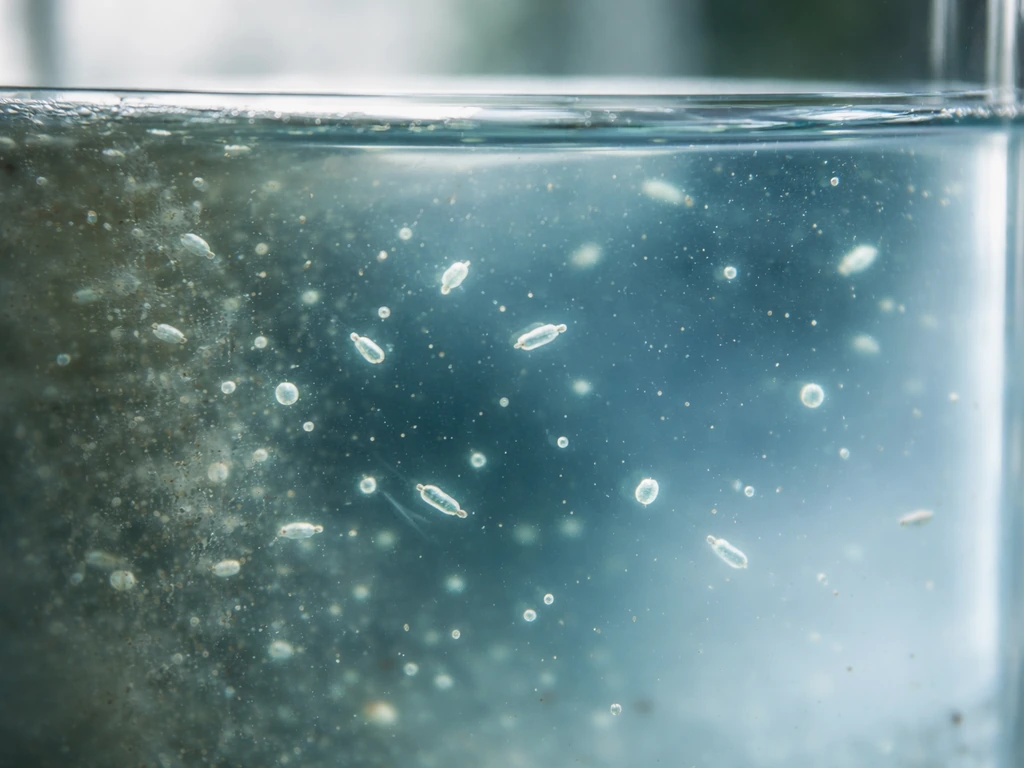
Yes, bacteria can grow in a water softener. Not everywhere inside the system at equal rates, and not every softener will develop a problem, but the conditions inside a softener are permissive enough for microbial survival and biofilm formation under the right circumstances. The bigger distinction to understand is the difference between bacteria simply surviving in low numbers versus actively proliferating or building a biofilm, because those two situations carry different risks and different fixes.
Can Bacteria Grow in a Water Softener? Fix and Prevention

Marcus Reeves
2 Jun 2026
What the softener environment actually looks like for bacteria
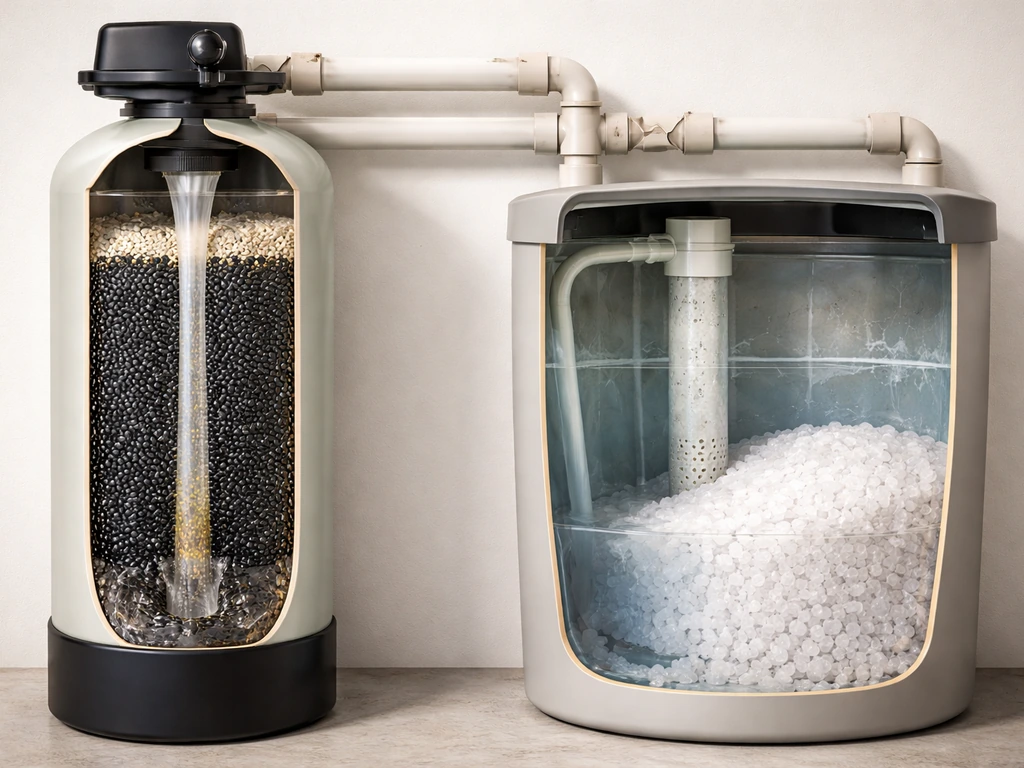
A water softener has three distinct micro-environments: the resin tank, the brine tank, and the connecting lines and valve head. Each one presents different conditions for microbial life, and it helps to think about them separately.
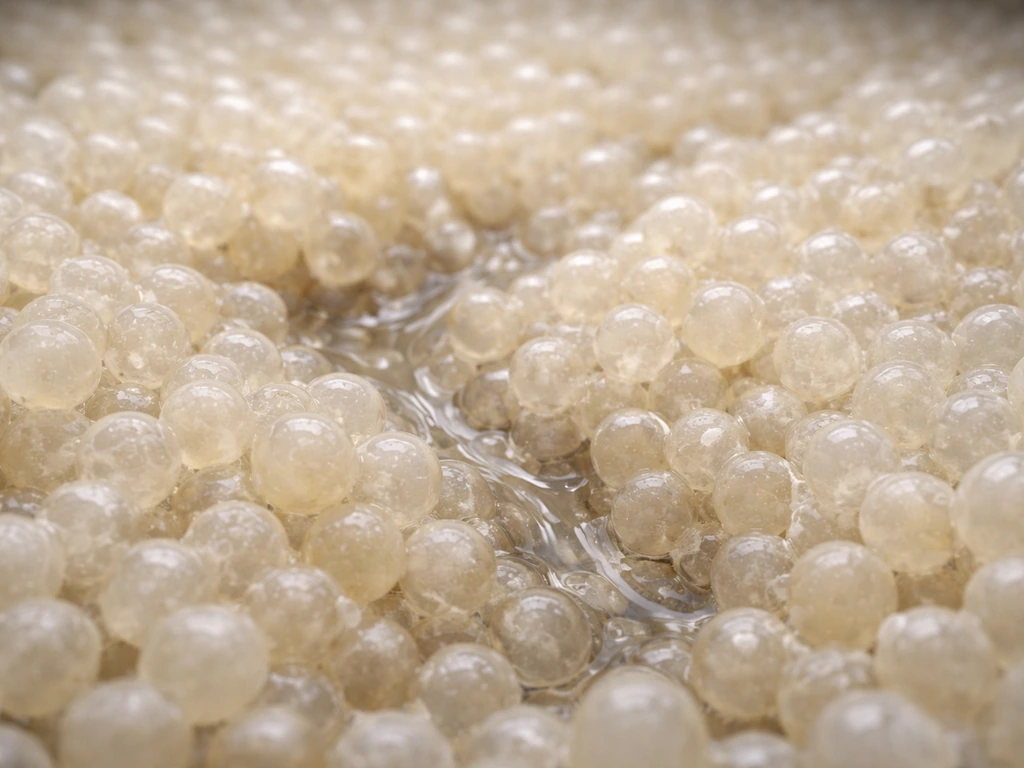
The resin bed is a dense matrix of thousands of small polymer beads that stay permanently wet. Even without free liquid water, bacteria can persist in tiny moisture films inside a system and may regrow when conditions and nutrients become favorable grow without water. Water passes through slowly during softening and is flushed during regeneration, but the beads themselves trap fine organic particles, sediment, and iron from the source water over time. That organic matter is fuel. The resin bed is also kept at whatever temperature your basement or utility room sits at, often between 60 and 75 degrees Fahrenheit, which is comfortably within the range most mesophilic bacteria prefer for growth.
The brine tank is a different story. During standby periods, it holds a saturated salt solution, typically around 26% NaCl by weight. That concentration is hostile to most bacteria because extremely high salt pulls water out of bacterial cells by osmosis, preventing normal cell function. Most common bacteria cannot survive in saturated brine. However, some salt-tolerant species (halotolerant bacteria) can persist in lower-salinity zones that develop near the surface, along the tank walls, or in sludge accumulating at the bottom where salt concentration may be diluted by organic material and water. Research in microbial halophilism confirms that blank" rel="noopener noreferrer">even near-saturated brines remain "permissive for life" for the right organisms because water activity never drops to zero.
Water residence time matters enormously. When a softener sits unused for days or weeks, water stagnates in the resin, valve head, and connecting lines. The CDC, WHO, and OSHA have all flagged stagnation as one of the primary drivers of biofilm development in building water systems, particularly for organisms like Legionella. The same principle applies to softener components.
Where microbes are most likely to set up home
If you're troubleshooting a softener, focus your attention on these four areas in order of contamination likelihood:
- The resin bed: the most common location for heterotrophic bacteria and biofilm, especially in systems with iron in the source water or long intervals between regeneration cycles. Organic fouling on resin beads creates protected niches where biofilms can anchor.
- The brine tank bottom: sludge accumulates over years, mixing undissolved salt impurities, organic debris, and water. This wet, low-salinity sludge layer can support bacterial colonies even when the liquid above is saturated brine.
- The valve head and bypass manifold: internal O-rings, flow channels, and dead-end passages hold stagnant water and are difficult to clean. These spots can harbor biofilm with minimal exposure to salt or disinfectant.
- The drain line and overflow tube: these lines see warm, intermittently flowing water mixed with concentrated brine and regeneration waste. Biofilm can grow in the drain line and re-enter the system if the line is submerged or poorly routed.
What's the actual health risk here
Most microbial growth in a household water softener is nuisance-level rather than immediately dangerous. Heterotrophic plate count (HPC) bacteria are the most common finding. These are a broad category of environmental bacteria that live in virtually all water systems and are generally harmless to healthy adults. High HPC counts don't automatically signal a health emergency, but they do indicate organic fouling and reduced water quality.
The organisms worth taking more seriously are total coliform bacteria and E. coli, because their presence indicates fecal contamination of the source water or a cross-connection somewhere in the system. A softener doesn't produce coliforms on its own, but it can concentrate and protect them if source water contamination exists. If you're on a private well, this risk is more relevant.
Legionella is worth mentioning because it forms biofilms in water systems and is amplified by warm temperatures and stagnation, both conditions a softener can create. That said, Legionella is primarily a concern in large building water systems with hot water recirculation, cooling towers, and aerosol-generating fixtures. In a typical household softener in a cool utility space, the risk is lower, but not zero, particularly if the softener feeds a storage tank or hot water heater that sits unused.
Pseudomonas is another genus worth knowing about. Research published in 2025 on bacterial osmoadaptation found that certain Pseudomonas strains can persist in biofilm form even under fluctuating salt concentrations, which is exactly the kind of environment that exists in the brine tank during and after regeneration. Pseudomonas is an opportunistic pathogen in immunocompromised individuals and can cause taste and odor problems even at low counts.
For most healthy households, a contaminated softener is more likely to cause bad-smelling water, slimy resin, or a sulfur-like taste than acute illness. But for homes with young children, elderly residents, pregnant people, or immunocompromised individuals, addressing contamination promptly matters more.
How to tell if you actually have microbial growth
Trust your senses first, then confirm with testing. The most common signs that something is growing in your softener include:
- A rotten egg or sulfur smell in softened water (hydrogen sulfide produced by sulfur-reducing bacteria)
- A musty, earthy, or swampy odor from the water or from inside the brine tank
- Visible slime, black or brown streaks, or a gelatinous film on the resin beads, inside the brine tank, or around the valve
- Water that feels slippery or soapy even after normal regeneration
- Cloudy water shortly after regeneration
- Salt bridging or excessive sludge at the bottom of the brine tank that reappears quickly after cleaning
If you see or smell any of these signs, water testing is the right next step. For a household well, order a basic water test that includes heterotrophic plate count (HPC), total coliform, and E. coli. Many county health departments offer this, or you can use a certified private lab. NSF-certified home test kits are available for coliform at hardware stores and give a fast yes/no result, though a lab test gives quantitative data you can act on. If you're on municipal water and still see signs of contamination, test the water at the softener outlet and compare to the pre-softener tap to isolate whether the softener itself is the source.
What to do today: cleaning and disinfecting your softener
If you have confirmed or strongly suspected contamination, here is the practical sequence to follow. Read your softener manufacturer's manual before starting because some resin types are damaged by high chlorine concentrations or extended contact times. Most standard cation-exchange resin handles a dilute bleach disinfection fine if you don't exceed the recommended dose.
- Put the softener into bypass mode so untreated water flows to the house while you work. This keeps disinfectant out of the plumbing system until you're ready.
- Clean the brine tank first. Remove all remaining salt. Scoop out and discard any sludge from the bottom. Wash the interior walls with a mixture of 1 gallon of water and 1/4 cup of unscented household bleach (5.25–8.25% sodium hypochlorite). Scrub with a brush, rinse thoroughly with clean water, and allow to drain.
- Refill the brine tank with fresh, high-purity salt (more on salt quality below). Add the manufacturer's recommended amount of water to dissolve initial salt before putting it back into service.
- Disinfect the resin bed. Mix approximately 1/4 to 1/2 cup of unscented household bleach (do not use splash-less or scented) with 1 gallon of water. Pour this solution directly into the brine tank's brine well or into the salt tank according to your manual. Then run a manual regeneration cycle. This draws the diluted bleach through the resin bed and valve head during the brine draw step, then flushes it out during the rinse steps. Some manufacturers provide a specific sanitizer product (like a resin cleaner with sodium hypochlorite) that is formulated for this purpose.
- Run two full regeneration cycles back-to-back to ensure thorough flushing of any bleach residual from the resin.
- Return the softener to service and run cold water from an indoor tap for 5 to 10 minutes before using the water for drinking or cooking.
- Test the water again 48 to 72 hours after disinfection to confirm counts have dropped to acceptable levels.
If you have iron fouling on the resin (orange or brown staining, iron smell), use a dedicated resin cleaner designed for iron removal before or alongside disinfection. Iron-fouled resin provides an excellent substrate for iron bacteria, and bleach alone won't remove the iron deposits.
Preventing this from happening again
Prevention comes down to controlling the four things bacteria need to thrive in a softener: organic matter (food), moisture residence time (stagnation), temperature, and salt quality. You can't eliminate moisture from a softener, but you can manage the other three.
Use high-purity salt and manage the brine tank properly
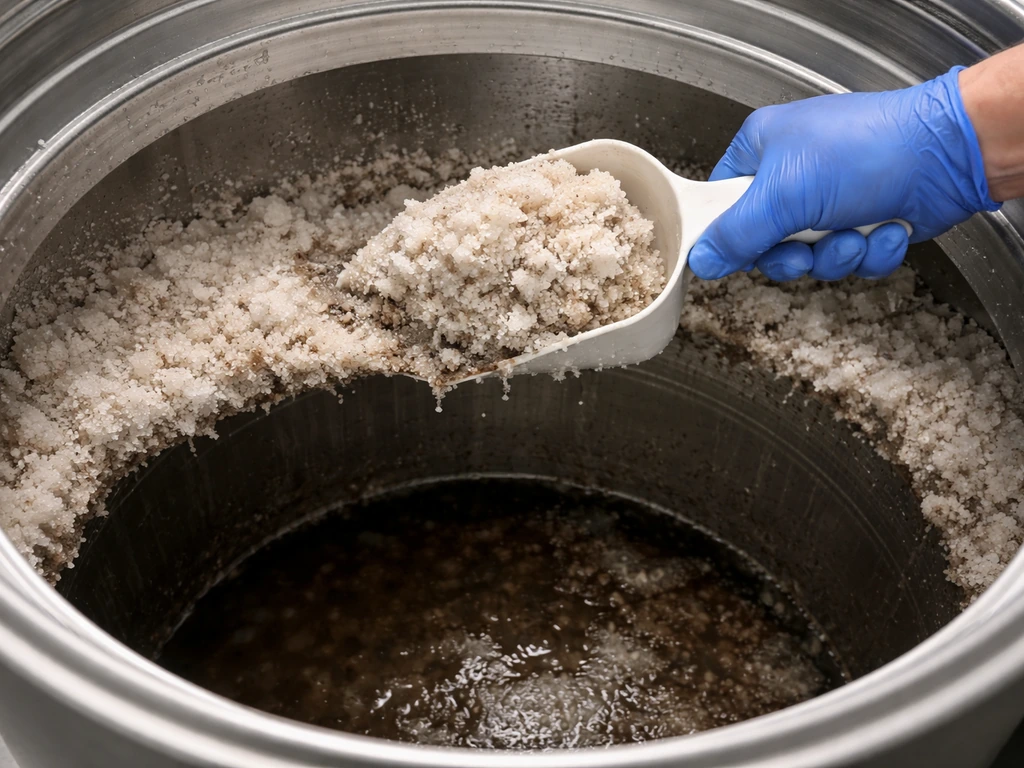
Rock salt is the cheapest option but carries the most impurities, including organic material and sediment that accumulate in the brine tank over time and feed bacterial growth. Solar salt (evaporated solar-grade salt pellets or crystals) is significantly purer, typically 99.6% or higher NaCl, and is a better default choice. Pellets are preferable to crystals in most residential softeners because they reduce bridging. Avoid overfilling the brine tank, which causes salt bridging and creates stagnant wet zones. Keep the salt level at about half to two-thirds full, and inspect the tank every 2 months.
Set regeneration frequency correctly
Many softeners are set to regenerate on a fixed calendar schedule rather than based on actual water use. If you're regenerating too infrequently, the resin stays saturated with hardness ions and sits without a flushing cycle longer than necessary. Adjust regeneration frequency to match your household's actual water demand. If you travel frequently and the softener sits unused for a week or more, manually trigger a regeneration cycle when you return to flush out stagnant water.
Annual brine tank cleaning
Plan to clean out the brine tank completely once a year. This means removing all salt, scooping out the sludge layer at the bottom, washing the tank interior, and starting fresh. It takes about an hour and makes a significant difference in both system performance and microbial hygiene. This is also a good time to inspect the brine well float and tubing for slime or discoloration.
Consider pre-filtration and UV disinfection
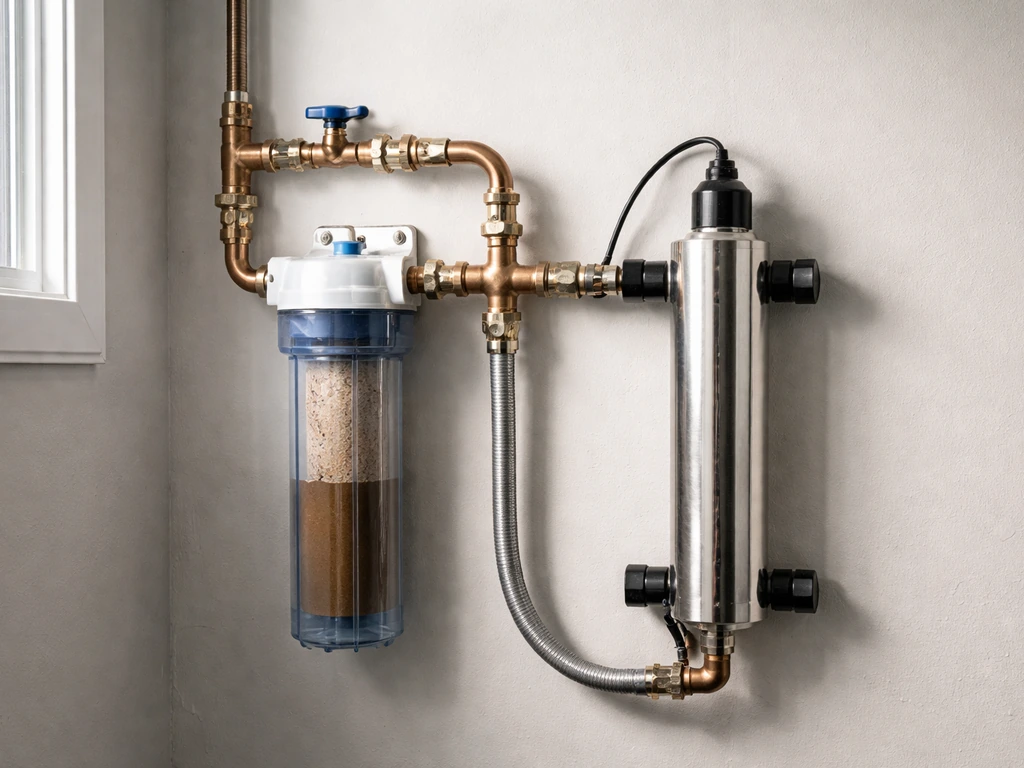
If you're on a private well with high organic load, iron, or known bacterial contamination, a sediment pre-filter installed before the softener protects the resin from fouling and reduces the food supply for biofilm. A 5-micron sediment filter is a reasonable starting point and should be changed every 3 to 6 months.
A UV disinfection system installed after the softener is one of the most effective ways to handle bacterial contamination without adding chemicals to your water. UV systems expose water to ultraviolet light at a wavelength that disrupts bacterial DNA, preventing reproduction. They don't affect water chemistry, don't damage the softener, and don't require ongoing chemical handling. If your household includes vulnerable individuals or you've had repeated contamination issues, UV after the softener is worth the investment.
A maintenance schedule you can actually follow
| Task | Frequency | Notes |
|---|---|---|
| Check salt level and inspect for bridging | Every 4 to 6 weeks | Break up any crust with a broom handle; don't let the tank run dry |
| Inspect brine tank for sludge or discoloration | Every 2 to 3 months | Discoloration or smell = clean sooner |
| Change sediment pre-filter (if installed) | Every 3 to 6 months | Adjust based on turbidity of your water |
| Run manual regeneration after extended absence | After 7+ days without use | Flushes stagnant water from resin and lines |
| Full brine tank cleanout | Annually | Remove all salt, scrub, discard sludge, refill fresh |
| Resin bed disinfection with dilute bleach | Annually or after any confirmed contamination | Follow manufacturer dilution guidelines |
| Water test (HPC, coliform, E. coli) | Annually for well users; after disinfection | Use a certified lab for actionable results |
| UV lamp replacement (if installed) | Every 12 months | Output degrades even if bulb appears lit |
The bigger picture: salt, water, and microbial growth
It's worth putting water softeners in context alongside related water-quality questions. The salt in a softener's brine tank does inhibit most bacteria, which is the same principle explored when looking at whether bacteria can grow on salt or in high-salt-concentration environments generally. But unlike truly halophilic environments (salt lakes, for example), a softener brine tank is not at a constant, uniform salt concentration.
In the same way, softened or “RO water” that lacks minerals can still be contaminated, and bacteria can grow if organic food and enough moisture are present in the system can bacteria grow in RO water. The surface layer, sludge, and organic fouling all create diluted microenvironments where salt-tolerant, not just salt-loving, bacteria can survive. That's the nuance that makes "the salt will protect me" an incomplete picture.
Similarly, the resin bed holds continuously wet conditions, which is a reminder that bacteria in water systems generally require free water to grow, and the softener's resin provides exactly that, along with protected surface area. Conditions like prolonged stagnation, moderate temperatures, and organic fouling are the real drivers of growth here, more than any single factor alone.
The practical takeaway: a well-maintained softener with high-purity salt, correct regeneration frequency, a clean brine tank, and periodic disinfection is not a significant microbial risk for most households. An unmaintained one, especially on a private well with high organic or iron content in the source water, can develop real contamination that deserves attention. The steps above give you everything you need to assess where you stand and correct it.
FAQ
How can I tell if bacteria are only surviving at low levels or actually forming biofilm in my water softener?
Look for “biofilm-like” signs: slimy residue in the brine tank, gray or discolored sludge, persistent odor that returns quickly after cleaning, and visible fouling in the valve head or resin bed. Biofilm also tends to correlate with worse taste and a repeated HPC rise on follow-up testing (for example, retesting 1 to 2 weeks after disinfection).
If my water softener smells bad, does that automatically mean I have dangerous bacteria like E. coli or Legionella?
Not automatically. Odor and taste issues are more often linked to heterotrophic growth and organic fouling. For E. coli and total coliform, you need confirmation with lab or properly set up test results, because odors alone cannot distinguish fecal contamination from nuisance microbes.
Can I just use more salt or run the softener longer to “fix” microbial growth?
Usually no. More salt can worsen issues like bridging if it leads to wet stagnant zones, and simply running cycles without disinfection may not remove trapped organics in the resin or sludge in the brine tank. The more reliable approach is correct regeneration frequency plus targeted brine tank cleaning and, when warranted, disinfection using the manual’s limits.
What should I do if I use bleach to disinfect and the smell or sliminess comes back within days?
That pattern usually means source contamination is still feeding the system (for example, high organics/iron from a private well, or a cross-connection) or the resin is still fouled. Recheck upstream water quality, consider an iron removal step or resin cleaner before disinfection, and inspect for sludge in the brine tank and slime in valve/lines.
Is it safe to disinfect the softener if my resin is damaged by chlorine?
Use caution and follow the manufacturer’s guidance. Some resin types are sensitive to high chlorine concentration or long dwell times. If you are unsure, choose a manufacturer-approved cleaner or a diluted bleach regimen that stays within the recommended dose and contact period, then rinse and regenerate per instructions.
How often should I test my water if I suspect contamination but don’t see obvious signs?
If you have no odor, discoloration, or performance changes, routine frequent testing is usually unnecessary. A practical approach is one baseline test (HPC, total coliform, E. coli) when you first notice a concern, then retest after corrective actions such as brine tank cleaning or disinfection, especially if you are on a private well.
If I’m on municipal water and only see problems after the softener, should I test the softener outlet or only the pre-softener tap?
Test both if you can. Comparing the pre-softener tap to the softener outlet helps isolate whether the issue is source water contamination, a cross-connection, or microbial amplification within the softener. If the outlet worsens while the inlet is fine, focus troubleshooting on the brine tank, resin bed, and valve head.
Do UV systems installed after the softener treat the biofilm inside the softener, or only disinfect the water leaving it?
UV generally disinfects water flowing through the unit, not the biofilm resident in the resin bed and brine tank. If the softener itself is the contamination source, you still need cleaning and disinfection of internal components, then UV can reduce downstream microbial risk.
What salt type is best if my brine tank tends to get sludge or has high impurities?
Solar salt pellets are often a better default than rock salt because they are purer and pellets reduce bridging. Also, keep the brine tank filled to roughly half to two-thirds, because overfilling increases the chance of salt bridging and stagnant wet zones that favor microbial persistence.
Can bacteria grow in a softener during long vacations, and should I do anything before leaving?
Yes, stagnation during weeks of non-use can increase the chances of biofilm development in the resin bed, lines, and valve head. If you will be away a week or more, trigger a regeneration shortly before departure (or manually upon return) so the system does not sit with long residence times and trapped organics.
Next Article
Can Bacteria Grow in Water? Conditions and How to Reduce Risk
Learn when bacteria can grow in water, what conditions drive it, and how to reduce contamination risk safely.