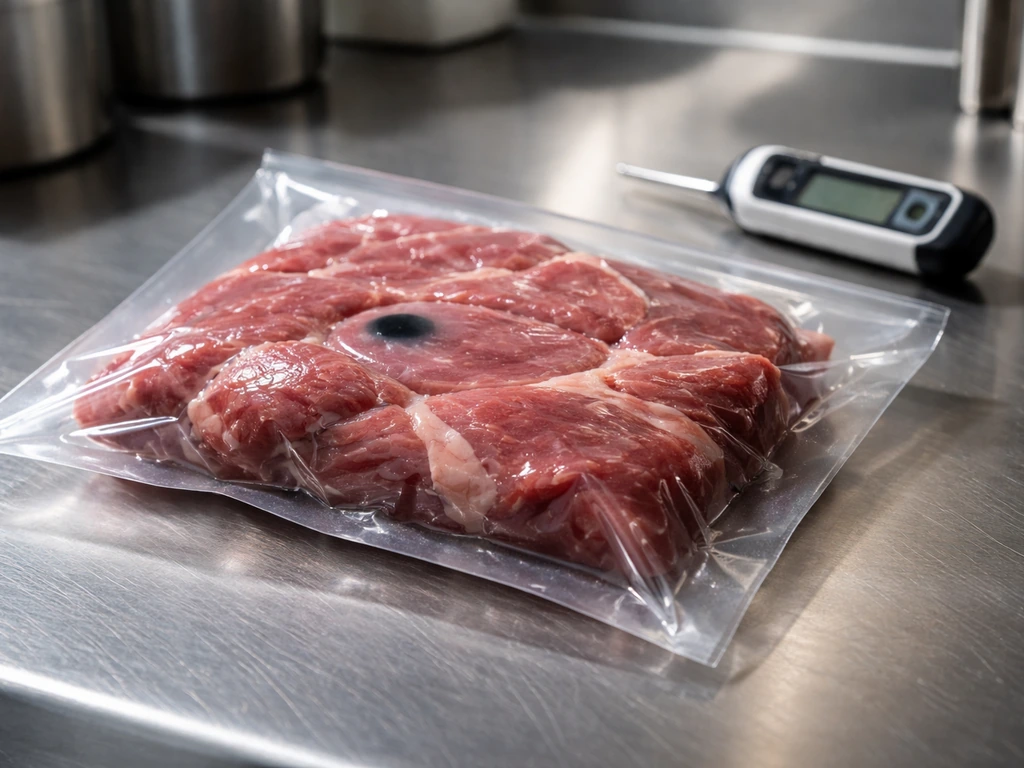
Salmonella needs warmth, moisture, a near-neutral pH, and available nutrients to grow. It thrives between 7°C and 48°C (about 45°F to 118°F), with the sweet spot around 35°C (95°F). It grows best in moist, protein-rich foods with a pH between 4.5 and 9.3, and it can do so with or without oxygen. Cut off any one of those conditions aggressively enough and you stop growth, though stopping growth is not the same as killing the bacteria, and that distinction matters a lot in practice.
What Conditions Does Salmonella Need to Grow?

Marcus Reeves
18 Jun 2026
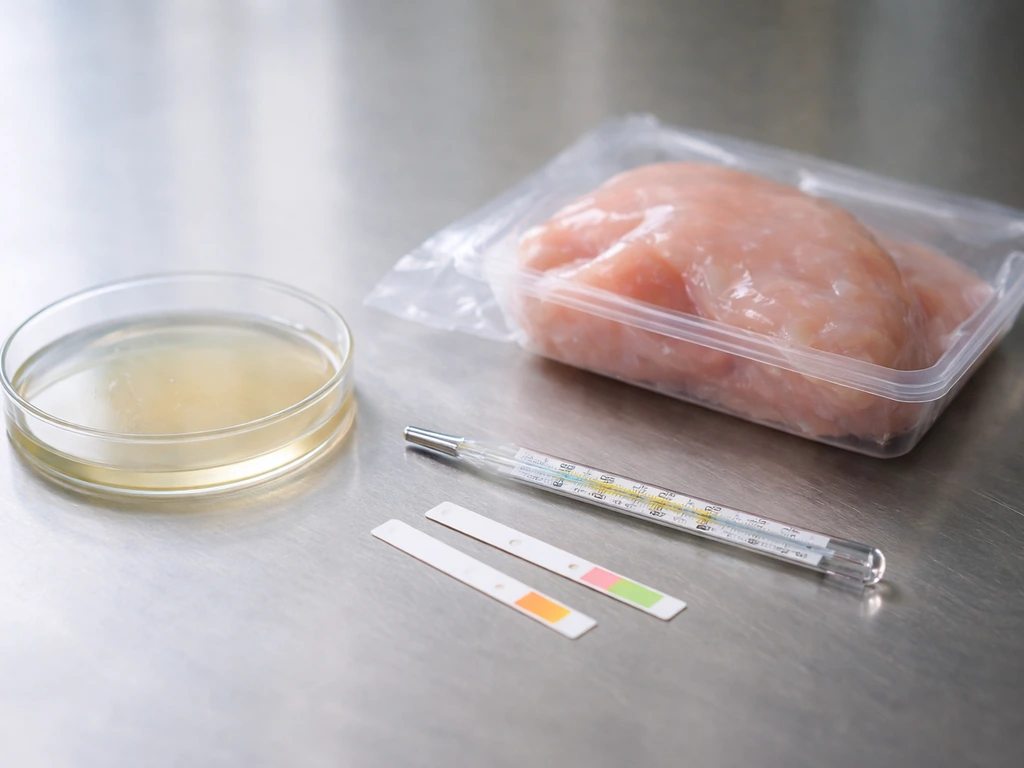
The core growth requirements: temperature, time, and nutrients
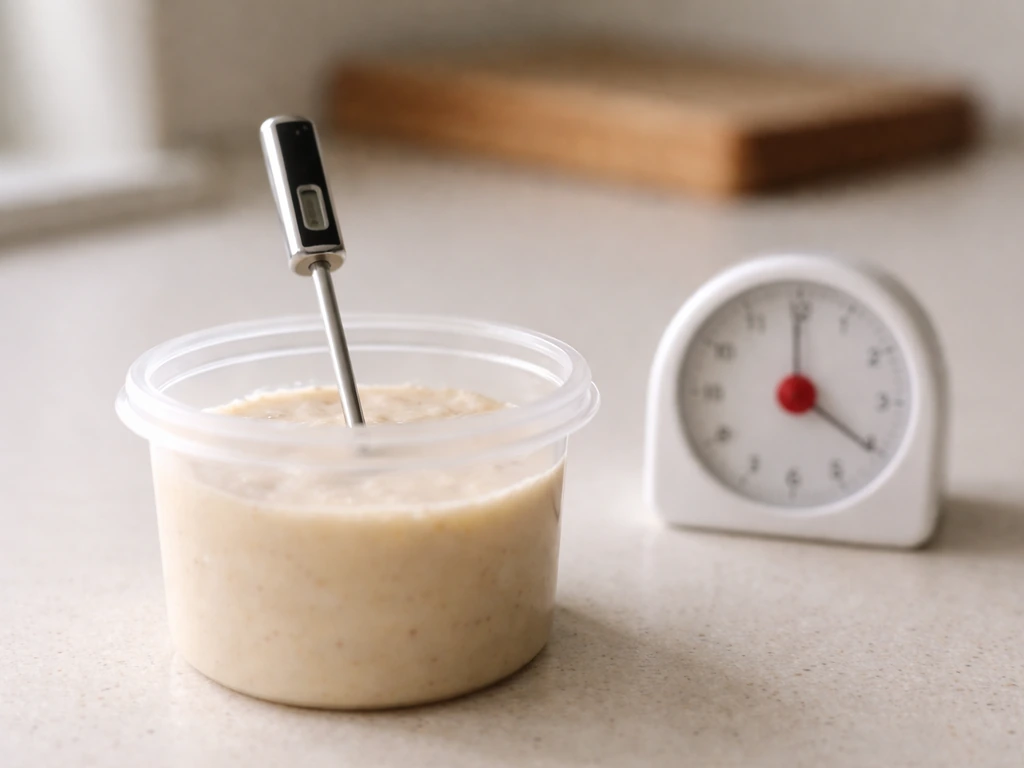
Temperature is the most practical lever you have. Salmonella grows across a remarkably wide range, from just above 7°C (about 45°F) all the way up to 48°C (118°F). That range covers most room-temperature and warm food-handling environments, which is exactly why leaving food out on a counter for a few hours can be risky. The optimum is around 35°C, close to human body temperature, so a warm kitchen or a buffet line is nearly ideal for the pathogen.
Time is the multiplier. Even a low initial contamination level (studies often find fewer than 1 cell per gram in contaminated raw foods) can reach dangerous counts if the food sits in a permissive temperature range long enough. The "danger zone" framing used in food safety (roughly 5°C to 60°C / 40°F to 140°F) is essentially a practical shorthand for the Salmonella growth window. In general, Salmonella can grow in cold temperatures if the food remains in a permissive range long enough.
Nutrients matter too, but Salmonella is not a picky eater. It grows readily in protein-rich foods like poultry, eggs, and meat, but also in produce, dairy, nut butters, and even some dried foods when moisture is sufficient. Any food with available carbon, nitrogen, and minerals can support growth under the right conditions.
pH tolerance: how acidic does food need to be to stop growth?
Salmonella's pH growth range runs from about 4.5 to 9.3, with optimal growth near neutral (7.0 to 7.5). Most foods sit comfortably inside that range, which is part of why it's such a successful foodborne pathogen. True inhibition starts when pH drops below 4.5, and growth stops more reliably at or below 4.0.
That said, pH alone is not a guaranteed kill switch. Some research has documented Salmonella survival at pH values as low as 3. EFSA’s BIOHAZ materials in the BIOHAZ context similarly emphasize that growth inhibition depends on multiple hurdles, such as pH, water activity, temperature, and atmosphere pH values as low as 3. 8 in certain food systems, particularly when other conditions (temperature, water activity) are still permissive. Highly acidic foods like properly fermented pickles or vinegar-based preserves with a confirmed pH below 4.0 are generally considered safe from growth, but the acidification has to be uniform throughout the food, not just on the surface.
pH also interacts with other factors. A food at pH 4.8 might support some slow growth at room temperature but not at refrigerator temperatures. This is the basis of "hurdle technology" in food preservation: stack enough unfavorable conditions together and you push growth below a practical threshold even if no single factor alone would be sufficient.
Water activity and moisture: why dry foods are not always safe
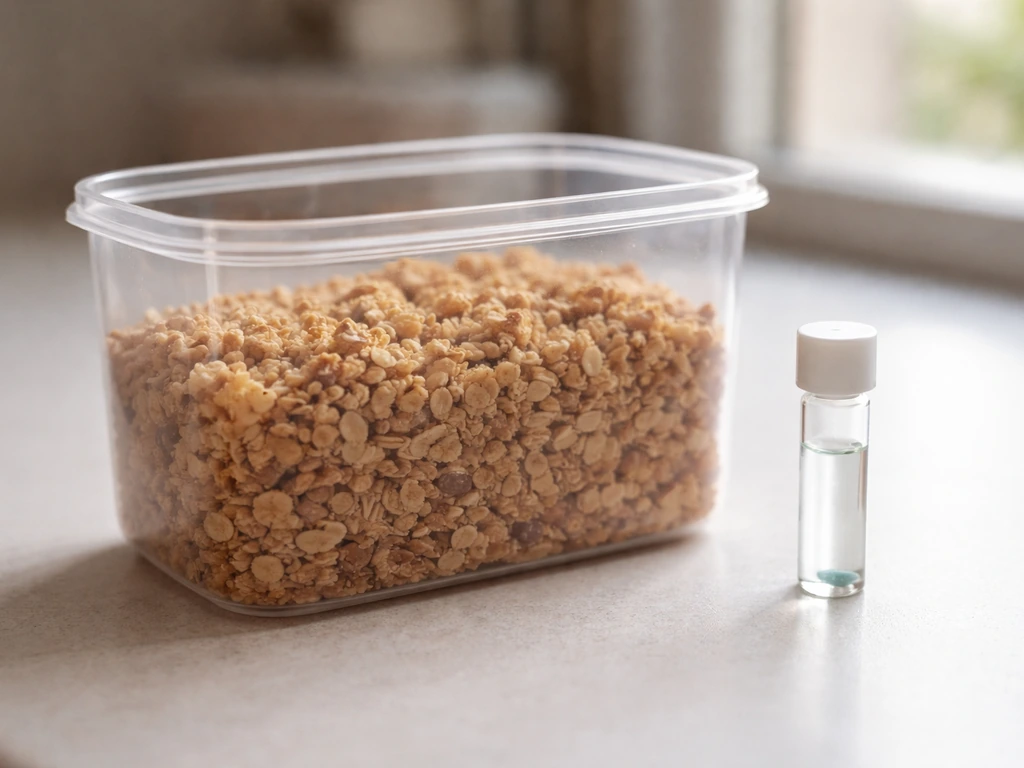
Water activity (aw) measures how much water is actually available for microbial use in a food, not just total moisture content. Salmonella needs an aw of at least 0.94 to grow under otherwise favorable conditions. Most fresh foods, including raw meat, fresh produce, and dairy, have an aw above 0.95, which is why they support growth so readily.
Drying a food below aw 0.94 stops growth, but it does not kill Salmonella. The bacteria can survive in low-moisture environments for extended periods, which is why outbreaks have been linked to peanut butter, dry spices, powdered infant formula, and chocolate. Once those products are reconstituted or used in a moist preparation, surviving cells can begin growing again if conditions allow.
Freezing also stops growth completely (Salmonella has no growth at temperatures below about 7°C) but leaves viable cells intact. Thawing food at room temperature puts it right back in the danger zone, so any surviving bacteria can resume growth. Salt and sugar reduce aw by binding water and making it unavailable to microbes, which is why heavily salted or sugared products resist bacterial growth, but both solutes need to reach meaningful concentrations throughout the product to be effective.
Oxygen and atmosphere: does Salmonella need air to grow?
Salmonella is a facultative anaerobe, meaning it can grow both with and without oxygen. Under aerobic conditions (normal air), it grows efficiently. Under anaerobic conditions, growth is somewhat repressed but not stopped. This means vacuum packaging or modified atmosphere packaging (MAP) does not eliminate Salmonella as a hazard, though it can reduce growth rate.
Research on minced meat packaged under vacuum and modified atmospheres shows that Salmonella can survive and grow under low-oxygen conditions, though the dynamics differ from aerobic storage. Carbon dioxide in MAP packaging can inhibit some bacterial growth generally, but its effect on Salmonella specifically is modest compared to temperature control.
The practical takeaway: don't rely on vacuum sealing or MAP alone to prevent Salmonella growth. Those packaging methods need to be combined with adequate temperature control to be meaningful. This is why knowing what temperature Salmonella grows at matters for safe storage and handling temperature control.
How food composition changes the picture
The food matrix itself shapes how fast Salmonella grows. Salt is one of the most well-studied inhibitors. Research on processed meats shows that NaCl reduces growth in a concentration-dependent way, particularly under aerobic conditions. Mannitol salt agar is a selective medium often used to isolate certain bacteria, so it's important to verify whether Salmonella can grow on it before relying on it for detection. At higher concentrations, the effect becomes more pronounced, and sodium nitrite (used as a curing agent) can enhance that inhibition when NaCl is also present. Neither alone is as effective as the combination.
Sugars work similarly to salt by reducing water activity when present at high enough concentrations. Jams, preserves, and confections with high sugar loads resist growth for this reason. Fats, on the other hand, don't directly inhibit Salmonella but can protect bacterial cells from heat and antimicrobial treatments, which is one reason Salmonella in high-fat foods like chocolate or nut butters can be unusually heat resistant.
High-protein foods like poultry, eggs, and meat provide ideal nutrients and tend to have neutral to slightly acidic pH values with high water activity, which explains why they are the most commonly associated vehicles for salmonellosis outbreaks. Low-protein, high-acid foods naturally stack more hurdles against growth.
A quick reference: growth conditions at a glance
| Condition | Growth Range | Optimum | Inhibited Below/Above |
|---|---|---|---|
| Temperature | 7°C to 48°C (45°F to 118°F) | ~35°C (95°F) | Below 7°C or above 48°C |
| pH | 4.5 to 9.3 | 7.0 to 7.5 | Below ~4.5 |
| Water activity (aw) | 0.94 to 1.0 | >0.99 (fresh foods) | Below 0.94 |
| Oxygen | Aerobic and anaerobic | Aerobic (faster growth) | Neither aerobic nor anaerobic stops growth alone |
| Sodium chloride (NaCl) | Up to ~3–4% NaCl in many conditions | Low salt (0–1%) | Higher concentrations progressively inhibit |
Practical steps to stop Salmonella growth in real settings
Controlling temperature is the most reliable and immediately actionable step. Keep cold foods at or below 5°C (41°F), EFSA recommends keeping refrigerators below 5°C specifically to stop bacterial growth. Refrigeration slows Salmonella growth, but it does not necessarily stop it in every food situation keeping refrigerators below 5°C. At that temperature, growth is negligible. Freezing stops growth entirely, though it does not eliminate viable bacteria, so handling and thawing practices still matter.
- Refrigerate perishables within two hours of cooking or purchasing (one hour if ambient temperature is above 32°C/90°F).
- Thaw frozen food in the refrigerator, not at room temperature, to keep it out of the danger zone during thawing.
- Cook poultry, eggs, and meat to internal temperatures that kill Salmonella: 74°C (165°F) for poultry, 71°C (160°F) for ground meat, 63°C (145°F) for whole cuts with a rest time.
- Don't rely on vacuum packaging alone — refrigerate vacuum-sealed raw meat and treat it as a temperature-control-sensitive product.
- For acidified or fermented foods, verify that pH uniformly reaches below 4.5 throughout the product, not just on the surface.
- Use salt and sugar-based preservation only at levels validated to actually reduce aw to below 0.94 — don't estimate by taste alone.
- Wash hands, surfaces, and utensils that contact raw poultry or eggs before they touch ready-to-eat foods: cross-contamination transfers Salmonella to environments where it can grow.
Growth inhibited does not mean bacteria eliminated
This is the nuance that trips people up most often. Refrigeration, drying, acidification, and salt all work by making the environment unfavorable for growth. FDA research notes that antimicrobial effects on Salmonella isolates can depend on conditions, including that minimum inhibitory concentrations can vary with temperature. They slow or stop Salmonella from multiplying, but they leave cells alive. The moment conditions improve (food warms up, dry product is reconstituted, acid is diluted), growth can resume from whatever cell count was already present.
True elimination requires lethal treatments: adequate heat, sufficient time at acidic pH combined with other stresses, or validated antimicrobial interventions. For most home and food-service contexts, the practical goal is keeping growth suppressed until the food is either consumed safely or destroyed by cooking. Understanding the specific conditions Salmonella needs to grow gives you the ability to apply exactly the right controls at each step, rather than relying on a single intervention that may not be enough on its own.
FAQ
If Salmonella stops growing in the fridge, why do outbreaks still happen?
Because refrigeration mainly suppresses growth, it does not guarantee elimination. If food contains Salmonella when it is refrigerated, cells can survive and later multiply if the food warms up during transport, sits out during prep, or is held warm after cooking.
Does Salmonella still grow in foods that are slightly acidic, like 4.8 pH?
Possibly, but growth is likely slower and more condition-dependent. A pH near 4.8 may still allow some multiplication at room temperature, yet the same food may not grow well at refrigerator temperatures, which is why you cannot judge safety from pH alone.
What water activity value is “safe” for preventing Salmonella growth?
The article’s key threshold is aw below about 0.94, because at or above roughly 0.94 Salmonella can grow when other conditions are favorable. Many dry foods have lower aw, but partial drying or moisture uptake during storage can raise aw and restart risk.
Can vacuum packaging or modified atmosphere packaging prevent Salmonella growth completely?
No. Vacuum sealing and MAP reduce oxygen and can change growth dynamics, but Salmonella is facultative anaerobic and can still grow, just sometimes at a different rate. Temperature control remains the primary control.
Why is thawing at room temperature risky if Salmonella has a wide temperature range anyway?
Thawing at room temperature can quickly bring the product into the permissive growth window. Even if the outer surface thaws first, the temperature gradient can create pockets that remain warm long enough for multiplication.
Does freezing kill Salmonella?
Freezing stops growth but usually does not kill Salmonella. Viable cells can remain, so the safety still depends on how the frozen food is thawed and cooked. For ready-to-eat uses, proper cooking and handling after thawing are still critical.
How do salt and sugar controls actually work in practice?
They work by lowering water activity, but the effect depends on reaching effective concentrations throughout the whole food. If salt or sugar does not diffuse evenly, some regions may remain permissive for growth, especially in thicker items.
Can Salmonella survive in low-moisture foods like peanut butter and spices even if there is little water?
Yes. Low moisture stops growth, but it does not reliably eliminate viable cells. When such products are reconstituted or mixed into a moist preparation, surviving cells can resume growth if temperature and other factors become favorable.
Is 35°C the only risky temperature for Salmonella growth?
No. The growth range is broad, roughly from just above 7°C up to about 48°C. That means food can be risky not only at hot buffet temperatures but also during cool-to-warm handling, such as prolonged time in a minimally refrigerated environment.
What mistake leads people to think “cooking will fix it” when it does not?
Under-cooking or not cooking uniformly. Salmonella can be present throughout the food, and uneven heating can leave cold spots. Also, if post-cooking handling recontaminates food, growth can resume in permissive storage conditions.
Next Article
Can Salmonella Grow Without Oxygen? Food Safety Guide
Yes. Salmonella is facultative and can grow without oxygen; food safety tips for vacuum packs and oxygen-limited storage