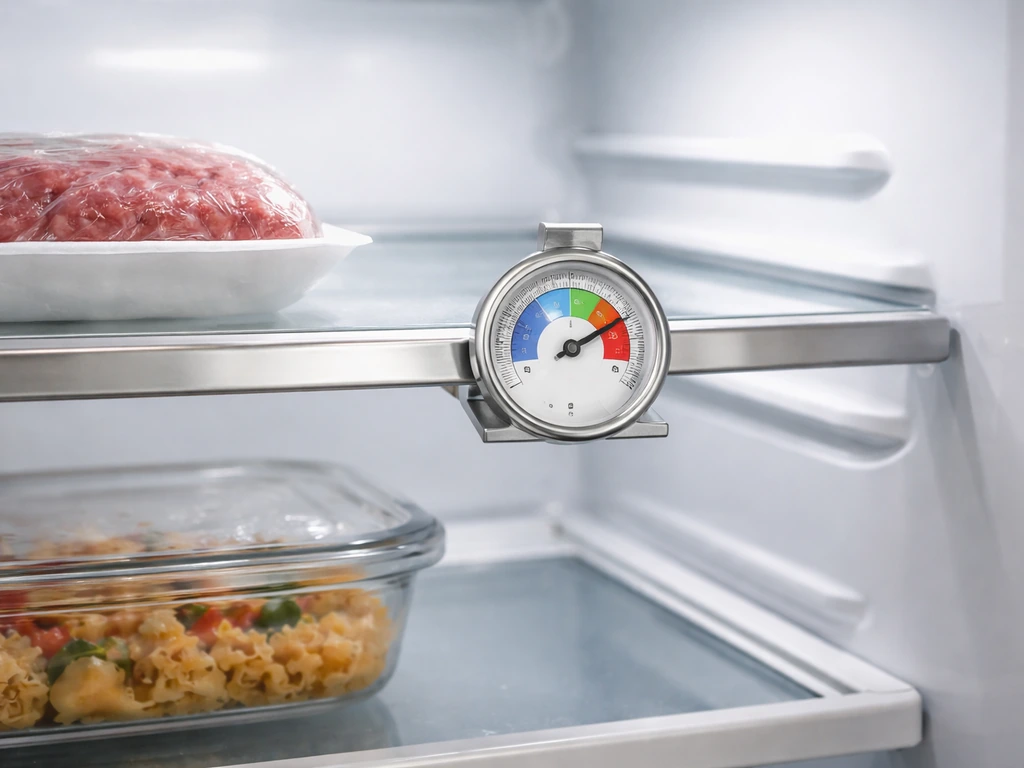
Yes, Salmonella can grow without oxygen. It is classified as a facultative anaerobe, which means it thrives in oxygen-rich environments but can switch metabolic gears and keep growing when oxygen is limited or absent. Vacuum-sealed packaging, sealed containers, and other low-oxygen storage conditions do not stop Salmonella from growing. Other factors, primarily temperature, pH, and water activity, are what really control whether growth happens.
Can Salmonella Grow Without Oxygen? Food Safety Guide

Marcus Reeves
11 Jun 2026
What 'facultative anaerobe' actually means
Bacteria are broadly sorted by how they handle oxygen. Strict aerobes need oxygen to grow. Strict anaerobes are killed by it. Facultative anaerobes sit in the middle: they prefer oxygen when it is available because aerobic respiration produces more energy, but they can switch to anaerobic respiration or fermentation when oxygen disappears. Salmonella falls firmly in this last category, and that distinction matters a great deal for food safety.
In practice, this means Salmonella does not care whether your vacuum bag has removed the air. The FDA classifies Salmonella spp. explicitly as a facultative anaerobe in its pathogen growth and inactivation tables. Scientific research on Salmonella Typhimurium confirms it uses alternative electron acceptors, such as nitrate and tetrathionate, to sustain anaerobic respiration when oxygen is gone. Scientific research on Salmonella Typhimurium examines the mechanisms that allow aerobic versus anaerobic growth, consistent with its facultative anaerobe physiology alternative electron acceptors. So the biology is clear: removing oxygen is not a kill step and is not a reliable growth-control step on its own.
What actually controls growth in low-oxygen environments
When Salmonella is in a sealed, oxygen-limited space, the conditions that determine whether it grows or stays dormant are the same ones that matter everywhere else: temperature, pH, and water activity. Oxygen deprivation may slow growth rate somewhat, but it does not override those other factors.
| Parameter | Minimum for Growth | Optimal for Growth | Maximum for Growth |
|---|---|---|---|
| Temperature | ~5°C (41°F) | 35–37°C (95–99°F) | ~47°C (117°F) |
| pH | ~3.8 | 7.0–7.5 | ~9.5 |
| Water Activity (aw) | ~0.94 | ~0.99 | 1.0 |
Temperature is the biggest lever most people have. The danger zone runs roughly from 5°C to 57°C (41°F to 135°F). Growth is fastest between about 21°C and 49°C. Below 5°C, Salmonella growth slows dramatically and essentially stops near freezing, though the bacteria survive.
If a vacuum-sealed food sits at room temperature during prep or delivery, Salmonella can grow inside that sealed package just as readily as in the open air. What conditions does Salmonella need to grow? Temperature, pH, moisture (water activity), and the initial contamination level matter far more than low oxygen alone temperature, pH, moisture, and water activity. Where does Salmonella grow?
Mostly in food kept in the temperature danger zone, and it can still grow in sealed, low-oxygen packaging when other conditions like pH and water activity are suitable.
pH matters too, though Salmonella is more acid-tolerant than most foodborne pathogens. Most bacteria stall below pH 4.6, but Salmonella can grow as low as pH 3.8. That means mildly acidic foods are not necessarily safe. You need a genuinely low pH, well under 4.0, to start inhibiting growth, and even then, survival (without active growth) can continue at even lower pH levels.
Water activity (aw) represents how much free, available moisture is in a food. Salmonella needs a minimum aw of about 0.94 to grow. Most fresh meats, poultry, eggs, and dairy sit well above that threshold, so moisture is rarely the limiting factor in those foods. Dry foods like spices, powdered milk, and chocolate can fall below 0.94, which is why Salmonella contamination in those products tends to result in survival and persistence rather than active multiplication.
Foods where oxygen is already limited
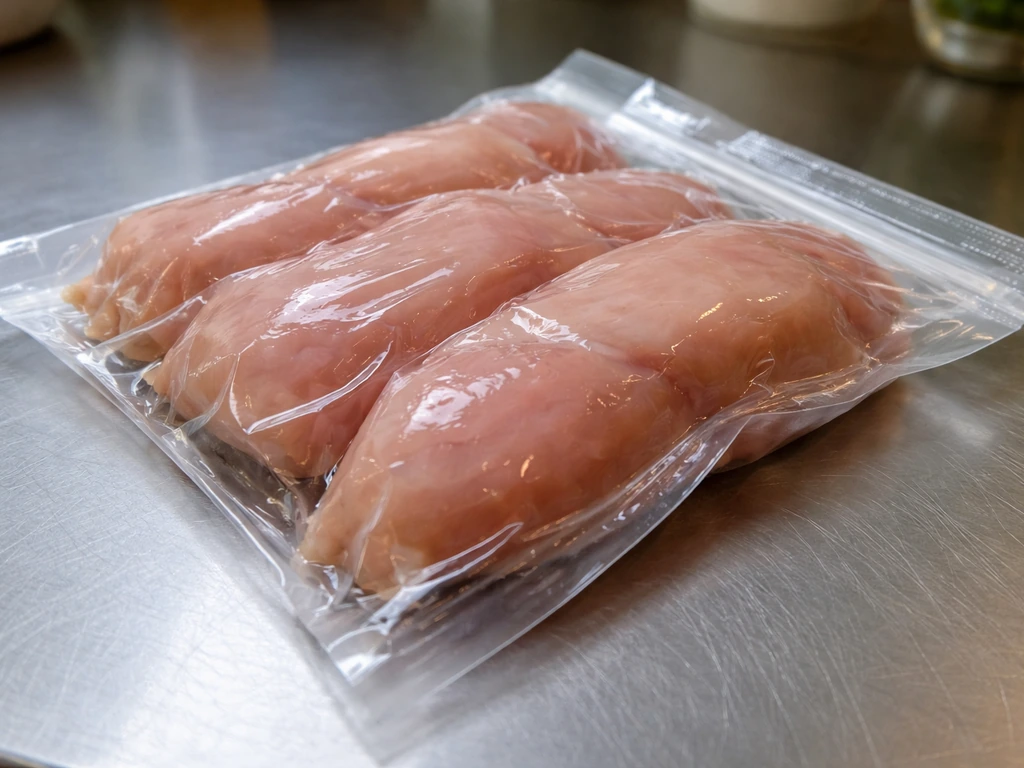
Several common food storage and packaging formats create exactly the kind of low-oxygen environment this question is about. None of them neutralize Salmonella risk on their own.
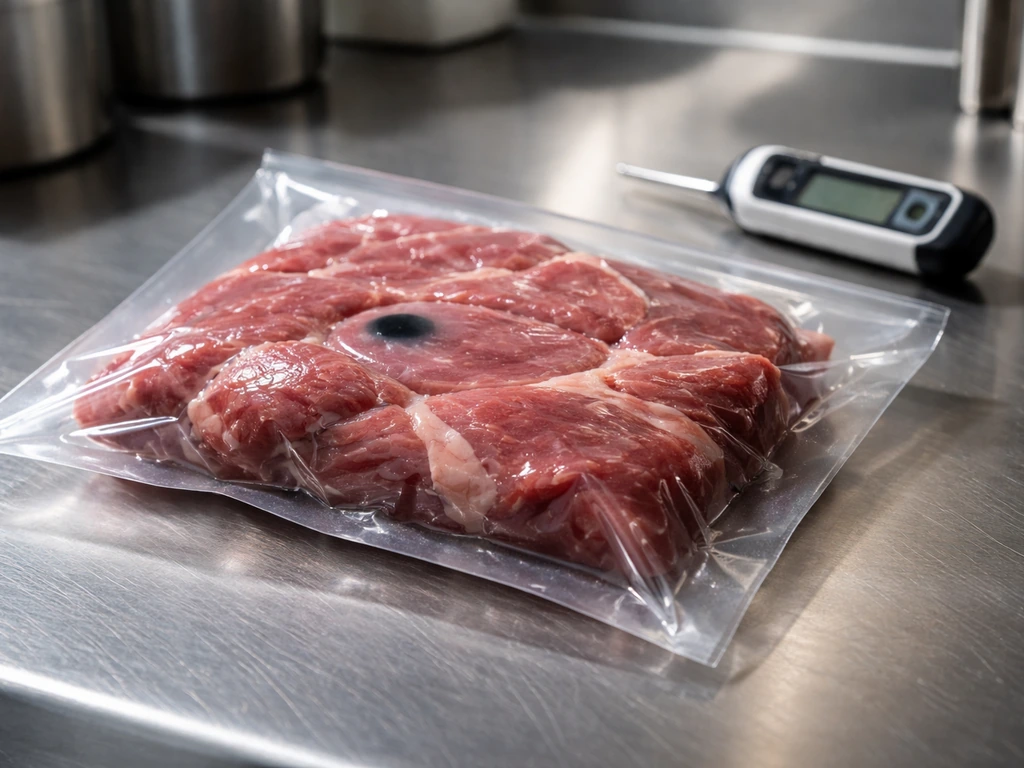
- Vacuum-packed raw meat and poultry: Oxygen is removed, but if the product is contaminated and stored above 5°C for any significant time, Salmonella can grow. Research on vacuum-packed minced meat at refrigeration temperatures shows that while reduced oxygen changes microbial metabolism and may reduce growth rate, it does not eliminate Salmonella survival.
- Modified atmosphere packaging (MAP): Packaging that replaces oxygen with carbon dioxide or nitrogen extends shelf life, but the USDA and FSIS position MAP as a shelf-life tool, not a pathogen-kill step. Salmonella can persist and potentially grow if temperature control breaks down.
- Vacuum-packed cooked products: Studies on vacuum-packaged cooked cured meats confirm that Salmonella behavior is affected by the packaging environment, but the bacteria can survive and remain hazardous. Any post-cook contamination is particularly dangerous here because there is no competing flora and no further heat treatment before consumption.
- Sealed containers and meal-prep storage: Foods stored in airtight containers in a refrigerator are low-oxygen by design. Again, as long as temperature is held below 5°C, growth is controlled. The risk appears when those foods spend time at room temperature or are improperly cooled after cooking.
- Fermented or acidified products: Low pH combined with low oxygen can suppress Salmonella, but the pH has to be genuinely low, below about 4.0, to be effective. Mildly acidic foods like some dressings or sauces do not hit that threshold.
Survival vs. active growth: an important distinction
There is a meaningful difference between Salmonella growing (multiplying to higher numbers) and Salmonella surviving (staying alive at its current count without multiplying). Under severe oxygen deprivation combined with cold temperatures or very low water activity, Salmonella may not actively grow, but it can remain viable for weeks or months. A low-oxygen, dry environment like a spice blend can harbor live Salmonella cells that are not multiplying but will become active again when conditions improve.
This matters practically because the infectious dose for Salmonella can be low, particularly for vulnerable people. Even without growth, a product that was contaminated at a meaningful level before packaging can still make people sick. The absence of growth is not the same as the absence of risk, and that is why oxygen removal is never treated as a standalone safety control in professional food safety frameworks like the FDA Food Code.
Salmonella also does not form endospores the way Clostridium does, so there is no dormant spore form to worry about specifically. When conditions become unfavorable, vegetative Salmonella cells may die off gradually, but they can also persist far longer than you might expect, especially in cold, dry, or acidic environments. The practical takeaway is: if Salmonella got into the food before sealing, it is still a threat after sealing.
How to actually prevent Salmonella growth and survival
Since removing oxygen does nothing reliable on its own, prevention comes down to the same pillars that apply to all Salmonella control: temperature management, cooking, hygiene, and avoiding cross-contamination. Here is what that looks like in practice.
Temperature control
Keep cold foods at or below 5°C (41°F) and hot foods above 57°C (135°F). That applies to vacuum-packed products too. If a vacuum-sealed item has been sitting in the temperature danger zone for more than two hours total, treat it with the same caution you would any other perishable food. For meal prep stored in airtight containers, get food into the refrigerator within two hours of cooking, and make sure your refrigerator is actually holding below 5°C.
Cooking temperatures
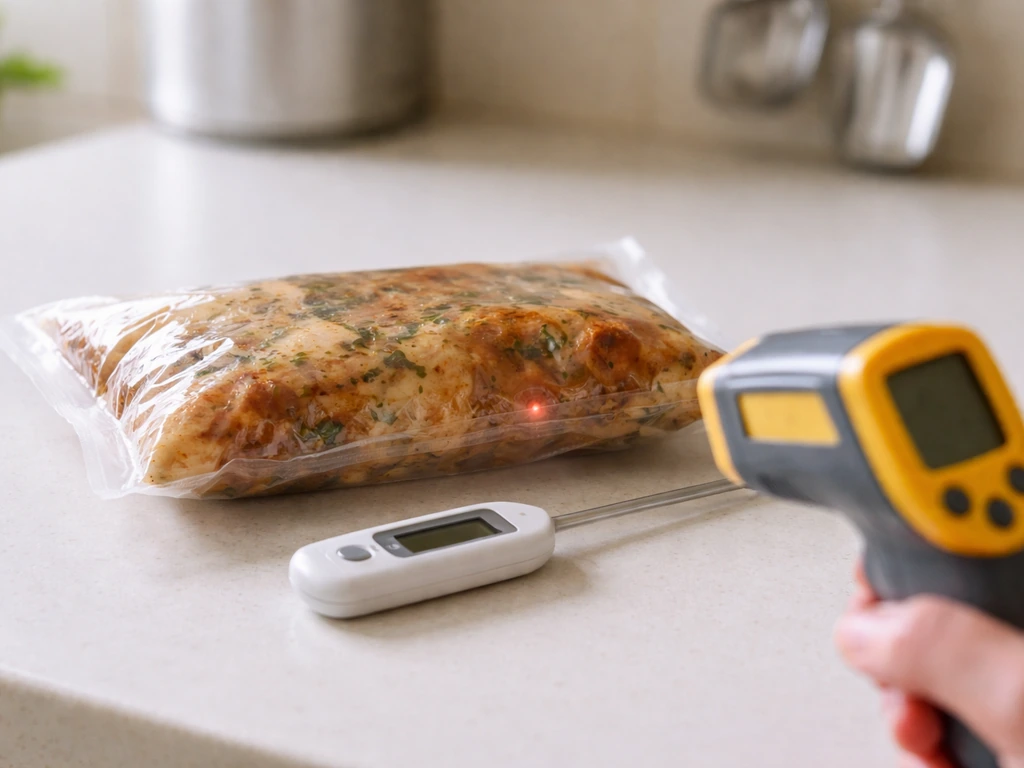
Salmonella is not particularly heat-resistant. A core temperature of 75°C (167°F) achieved instantaneously, or equivalent time-temperature combinations, is sufficient to kill it. This is why cooking is the most reliable kill step available to consumers. Sous vide and vacuum cooking are common low-oxygen cooking methods, but they rely entirely on achieving and holding target core temperatures, not on the absence of oxygen itself.
Hygiene and cross-contamination
Most Salmonella risk in home and commercial kitchens comes from cross-contamination: raw poultry juices on a cutting board, unwashed hands between handling raw and cooked foods, or shared utensils. Vacuum sealing a food that was already contaminated during prep just traps the contamination inside. Wash hands thoroughly, sanitize surfaces between tasks, and keep raw proteins away from ready-to-eat foods.
Thawing safely
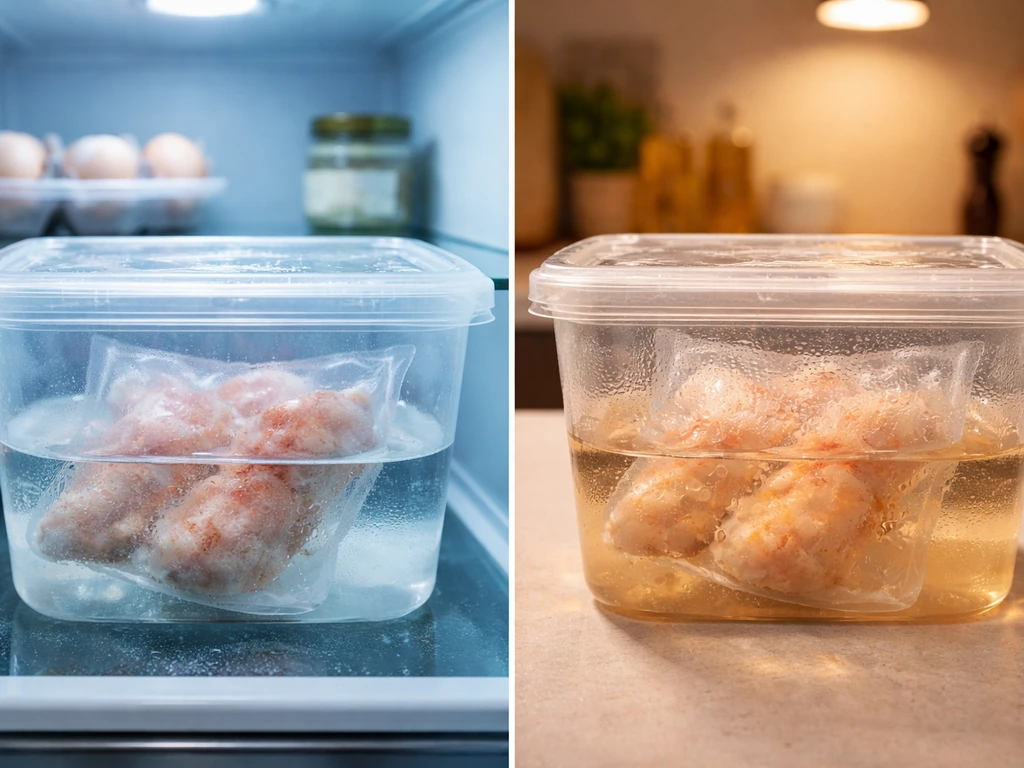
Vacuum-packed frozen foods are often thawed at room temperature or in warm water, which is exactly the temperature abuse scenario where Salmonella can start growing inside a sealed package. Thaw in the refrigerator, under cold running water, or as part of the cooking process. Never leave vacuum-packed raw meat on the counter to thaw.
Do not rely on packaging alone
Vacuum packaging and modified atmosphere packaging are shelf-life tools. They slow spoilage organisms and can reduce growth rates of some pathogens, but they are not designed or validated as pathogen elimination steps. The FDA Food Code treats reduced oxygen packaging as a condition that requires additional safety controls, not as a control itself. If you are operating a food business that uses vacuum or MAP packaging, you need to pair it with validated time-temperature controls and, in many cases, regulatory oversight.
Low pH and water activity as supporting controls
Acidification below pH 4.0 and reducing water activity below 0.94 are legitimate supplementary controls, but they require precise measurement and formulation, not a splash of vinegar. Properly acidified foods and genuinely dry shelf-stable products (think jerky made to USDA water activity standards) do restrict Salmonella growth. In combination with low-oxygen packaging, these parameters together create a meaningful hurdle effect. Used alone or imprecisely, neither is reliable.
The core message is straightforward: oxygen availability is not what determines whether Salmonella is a threat. To answer the lab question directly, Salmonella is not typically associated with growing on mannitol salt agar as a selective growth medium in the same way as Staphylococcus does salmonella grow on mannitol salt agar. Temperature, pH, moisture, contamination load, and hygiene practices are. Understanding where Salmonella can grow, what temperatures drive its growth, and what conditions it needs to thrive all connect back to those same controlling factors, and controlling them is what actually keeps food safe.
FAQ
Does vacuum-sealing or modified atmosphere packaging kill Salmonella if oxygen is removed?
No. Removing oxygen only limits aerobic respiration, it does not reliably inactivate Salmonella. If the food is contaminated before sealing, the cells can survive and potentially resume growth later when temperature and moisture conditions allow.
If Salmonella can grow without oxygen, does that mean it grows faster in sealed packages?
Not necessarily. Oxygen loss may slow the growth rate, but Salmonella can still grow via anaerobic respiration. The biggest drivers of how quickly numbers rise are still temperature, pH, water activity, and how many cells were present at packaging.
Can Salmonella grow in the refrigerator if the package is sealed?
Growth is greatly slowed below 5°C, but it is not a guaranteed stop. Salmonella can survive refrigeration for extended periods, and if the food warms up later, growth can restart. Refrigeration is a control for rate, not an automatic “no risk” state.
What about freezing, does it stop Salmonella from becoming a problem?
Freezing generally prevents growth because metabolic activity stops, but it does not kill Salmonella reliably. Thawing is the higher-risk window, especially if thawed at room temperature or in warm water while sealed.
Can mildly acidic foods still be contaminated after sealing if oxygen is low?
Yes. Salmonella can tolerate and persist at pH values low enough to slow other bacteria, and it can still grow down to around pH 3.8 under suitable conditions. If the product is not formulated and measured to reach below pH 4.0, low oxygen does not make it safe.
Do low-water-activity foods prevent Salmonella risk entirely?
They reduce active growth, they do not remove risk. Salmonella can survive in dry foods like some spices and powders, and may become active again if rehydrated or if moisture conditions rise.
How can I tell whether the risk is survival only versus active growth in a sealed package?
Active growth requires favorable temperature, pH, and water activity, plus enough time. If a sealed product stayed cold and dry for the entire storage period, you may have mainly survival, but that still matters because even low initial contamination can cause illness for vulnerable people.
Is heating vacuum-packed food safe if I cook longer, even if it was low-oxygen?
Cooking is the most reliable control, but you must still reach the correct internal temperature throughout. Low-oxygen packaging does not compensate for undercooking, and temperature penetration in thick foods can be uneven, so use a thermometer when possible.
Does the oxygen question change how I should handle thawing vacuum-sealed meat?
Yes, it reinforces the rule. Thawing in warm or room-temperature conditions creates the temperature conditions Salmonella needs, and sealing keeps the environment low-oxygen but not hostile. Thaw in the refrigerator, under cold running water, or cook from frozen as appropriate.
What is a common mistake people make when using vacuum packaging for food safety?
Assuming vacuum means “sterile” or “preserved like canning.” Vacuum packaging mainly reduces oxygen and slows some spoilage processes, it does not eliminate pathogens, and it can trap contamination that was introduced during prep.
If Salmonella does not form endospores, how should that affect my expectations of shelf stability?
It means the “spore-former” logic used for some other pathogens does not apply, but persistence can still occur. Cold, dry, or acidic conditions can keep Salmonella viable for long periods, so shelf stability claims should not be treated as pathogen elimination.
For food businesses using vacuum or MAP, what additional control is typically expected beyond removing oxygen?
Validated time-temperature controls paired with hygiene and cross-contamination prevention. Reduced oxygen packaging is usually treated as a condition requiring additional safeguards, such as controlling temperature throughout distribution and holding, and using appropriate formulations when relying on hurdle strategies.
Next Article
Can Salmonella Grow in the Refrigerator? Temperature Facts
Find out if Salmonella can grow in the refrigerator, how fridge temps affect survival vs growth, and safe storage steps.