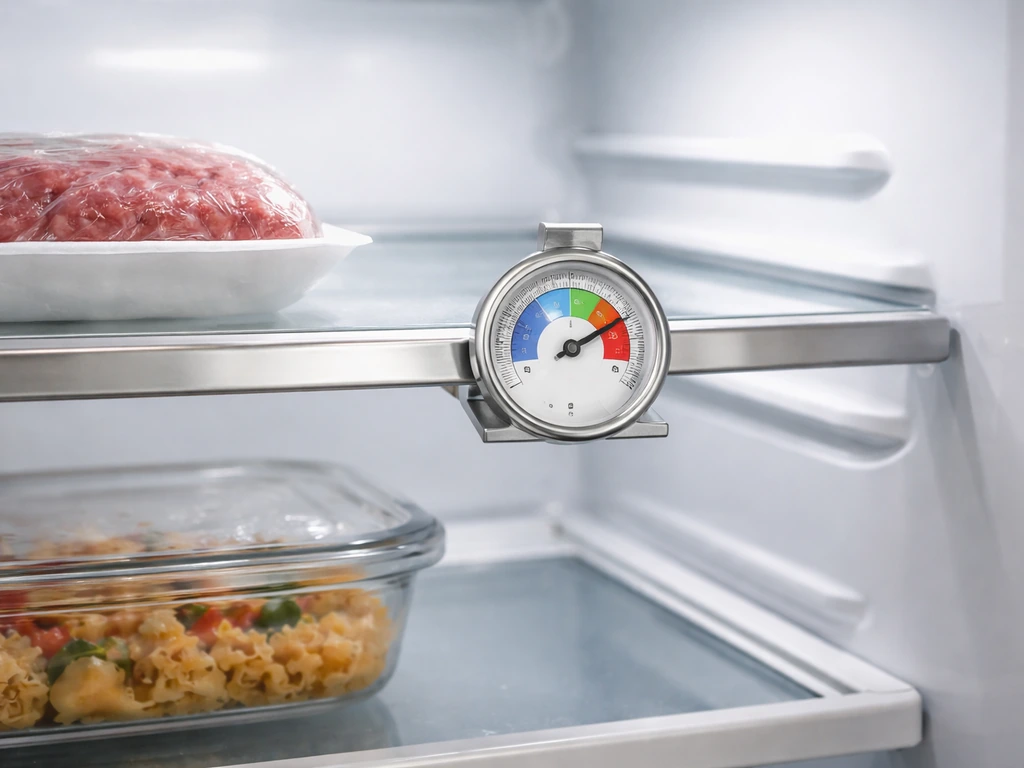
Salmonella can survive in a refrigerator, but at a properly maintained temperature of 40°F (4°C) or below, it cannot grow and multiply meaningfully. The catch is that most home refrigerators don't always stay at that temperature, and real-world factors like door-opening habits, warm spots near the door, and improperly thawed food create windows where Salmonella can do more than just survive.
Can Salmonella Grow in the Refrigerator? Temperature Facts

Marcus Reeves
3 Jun 2026
Survival vs. growth: not the same thing
There's an important distinction between a bacterium surviving in the cold and actually growing. Growth means cell division, the process where one Salmonella cell becomes two, then four, then thousands. Salmonella can still grow only in the presence of oxygen-free conditions under the right circumstances. That's when contaminated food becomes genuinely dangerous. Survival means the cells are still alive and viable, just not multiplying.
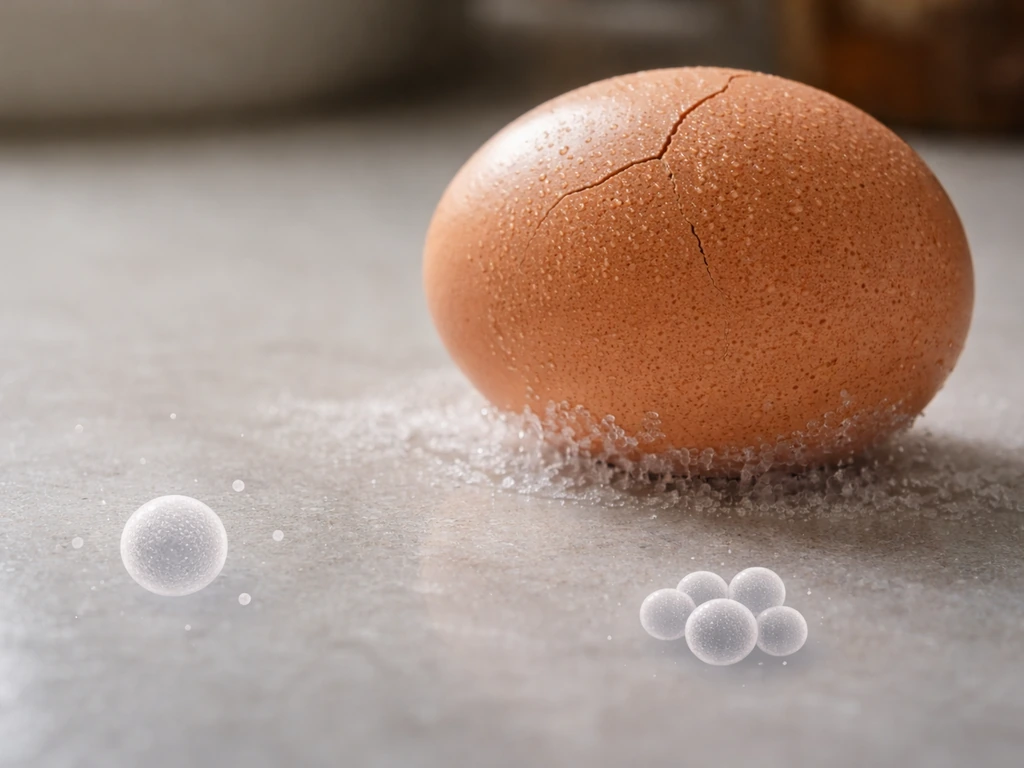
Research on Salmonella Enteritidis in eggs shows minimal to no growth at 4°C (39°F), while growth proceeds readily at room temperature around 23°C (73°F). At true refrigerator temperature, you're essentially pressing pause on Salmonella rather than eliminating it. The moment that food warms up, whether on the counter, during thawing, or in a poorly calibrated fridge, the clock starts again.
The lower end of Salmonella's growth range sits around 5 to 7°C (41 to 45°F) depending on the strain and the food. Below that, growth is effectively suppressed. Above it, even slightly, very slow growth becomes possible over longer storage times. This is why both USDA and FDA guidance lands on blank" rel="noopener noreferrer">40°F (4°C) as the safe threshold for home refrigerators, with the FDA Food Code using 41°F (5°C) as the commercial cold-holding standard.
Your fridge conditions matter more than the dial says
Setting your refrigerator to 37 or 38°F doesn't guarantee every part of it stays that cold. Several practical factors can push the actual temperature above the safe threshold without you noticing.
Temperature accuracy
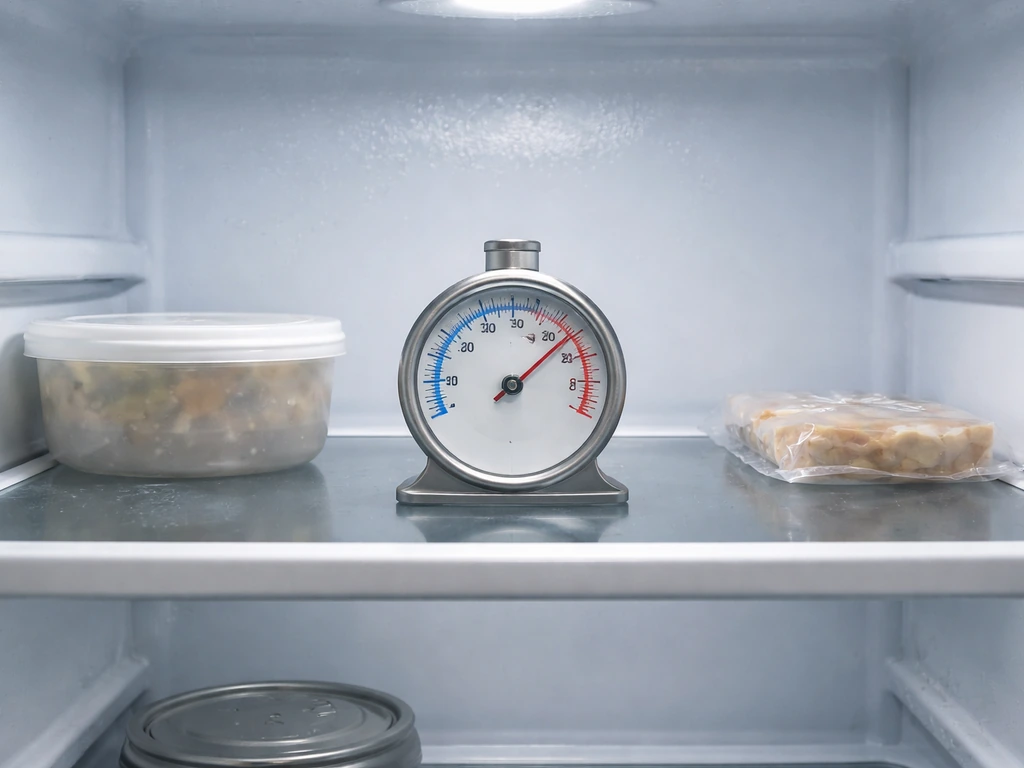
Most built-in refrigerator thermostats are not laboratory grade. The actual temperature can vary by 3 to 5°F from what the dial shows, and it can drift over time as the appliance ages. FDA recommends keeping an inexpensive standalone thermometer inside your refrigerator, placed toward the middle, to verify what's actually happening. If it reads above 40°F regularly, that's a problem worth fixing before you store anything potentially risky.
Door zones and hot spots
The door shelves and the front of any shelf are consistently warmer than the interior. Air rushes in every time the door opens, and those zones recover temperature more slowly. Foods stored on the door, like eggs, condiments, or leftovers, are regularly exposed to temperatures a few degrees higher than the fridge's core. For items at higher risk of Salmonella contamination (raw poultry, eggs, raw seafood), back-of-shelf or lower-shelf storage is meaningfully safer.
How often you open the door
Frequent door opening in a warm kitchen adds up. A fridge in a busy household kitchen during summer can experience interior temperature spikes of several degrees multiple times a day. Each individual spike is brief, but if high-risk foods sit near the door, those repeated temperature fluctuations accumulate over days of storage.
Airflow and overcrowding
A densely packed refrigerator restricts cold air circulation. Warm spots develop around large items blocking vents or tightly packed containers. Salmonella doesn't need a large temperature window to persist: even a zone that sits consistently at 44 or 45°F because cold air can't reach it is a zone where very slow growth may occur over several days.
Which foods carry the most risk
Salmonella needs moisture, nutrients, and suitable temperature to grow, and certain foods check all those boxes even at marginal refrigerator temperatures. Raw poultry is the most commonly implicated food: it often arrives from the store with Salmonella already present on the surface, and it provides everything the bacteria needs. Raw eggs, raw ground meat, raw seafood, and unpasteurized dairy products carry similar risk.
Ready-to-eat foods like deli meats, cooked leftovers, and cut produce don't typically carry Salmonella on their own, but cross-contamination changes that picture fast. Drip from raw chicken onto a container of cut melon sitting below it in the fridge, or using the same cutting board for raw meat and a salad without washing in between, introduces Salmonella directly onto food that won't be cooked again before eating. At that point, even a fridge that's technically at 40°F is holding a ready-to-eat food that now has viable Salmonella cells on it.
Other environmental factors like pH and water activity also affect whether Salmonella can survive or grow in a specific food. Highly acidic foods (pickles, vinegar-based dressings) and very dry foods are naturally less hospitable. High-moisture, neutral-pH foods like cooked rice, poultry, and soft cheeses provide better conditions for persistence even in the cold.
Time and thawing change the risk calculation
Even at safe refrigerator temperatures, time matters. Mannitol salt agar is one common laboratory medium used to assess whether Salmonella would grow under specific conditions does salmonella grow on mannitol salt agar. Salmonella cells on raw chicken sitting in the fridge for five days aren't multiplying much, but they are still present and still viable, ready to grow the moment conditions shift. Cross-contamination risk increases the longer contaminated food sits alongside other items.
Thawing is where the biggest risk often hides. Thawing on the counter at room temperature is the classic mistake: the outer surface of a frozen chicken breast reaches Salmonella's growth range long before the interior thaws. Even thawing in the refrigerator at 4°C introduces freeze-thaw stress on Salmonella cells, but USDA research confirms they can survive this process. The cells may be stressed, but they're not gone, and they recover once the food warms.
Thawing in cold running water (under 70°F / 21°C) or in the microwave followed by immediate cooking are the options that minimize the time food spends in the temperature range where Salmonella can start to grow. Avoid partial thawing and re-refrigerating repeatedly, as each cycle stresses but doesn't eliminate Salmonella while giving it repeated opportunities to warm up.
Practical storage steps that actually reduce risk
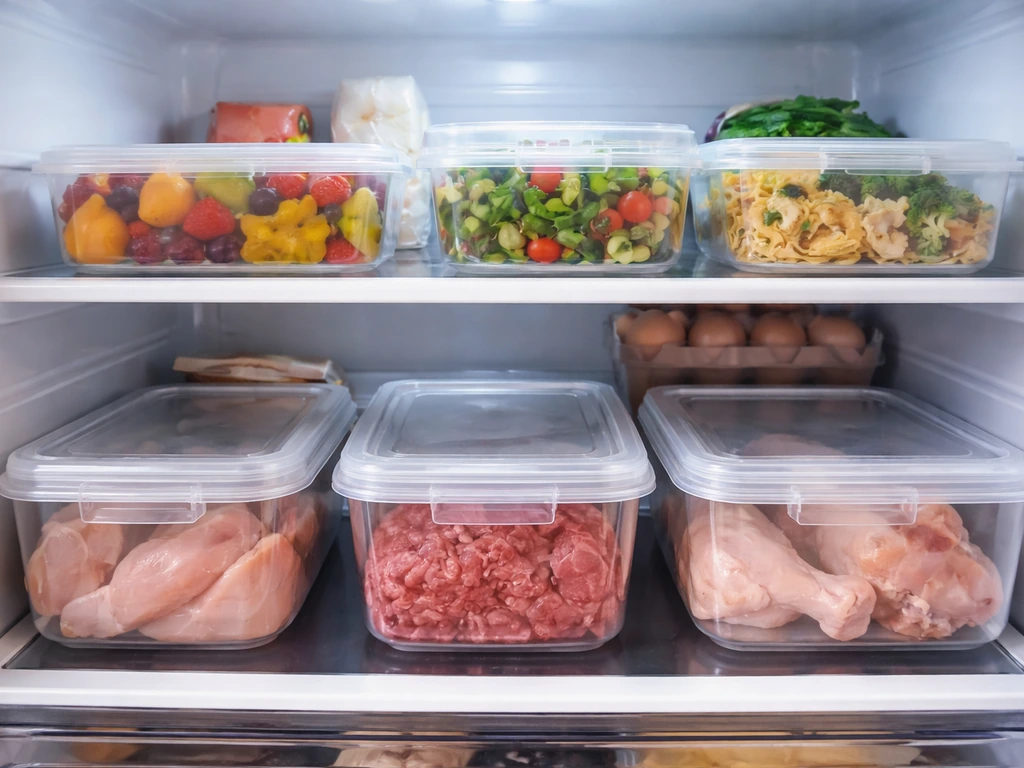
- Verify your fridge temperature with a standalone thermometer. Aim for 37 to 40°F (3 to 4°C) at the center. Adjust if it's reading above 40°F.
- Store raw meat, poultry, and seafood on the bottom shelf in sealed containers or bags so drips can't reach other foods.
- Never store high-risk raw foods on door shelves. Reserve the door for drinks, condiments, and items that don't carry Salmonella risk.
- Keep raw and ready-to-eat foods completely separated, both in storage and during prep.
- Use dedicated cutting boards for raw meat and never use them for produce or cooked food without thorough washing in between.
- Refrigerate cooked leftovers within two hours of cooking (one hour if the kitchen is above 90°F / 32°C).
- Follow recommended refrigerator storage times: raw chicken and ground meat should be cooked or frozen within 1 to 2 days; raw whole cuts of beef, pork, or lamb within 3 to 5 days.
- Thaw food in the refrigerator, in cold running water, or in the microwave followed by immediate cooking. Never on the counter at room temperature.
If you suspect Salmonella contamination: what to do now
If you think a food in your fridge may have been contaminated, whether because raw chicken dripped onto something, a food was left out too long before being put back, or you've had a foodborne illness in the household, here's the practical approach.
- Discard ready-to-eat foods that may have had contact with raw meat or poultry juices. Salmonella on cooked food or cut produce can't be remedied by refrigerating it further.
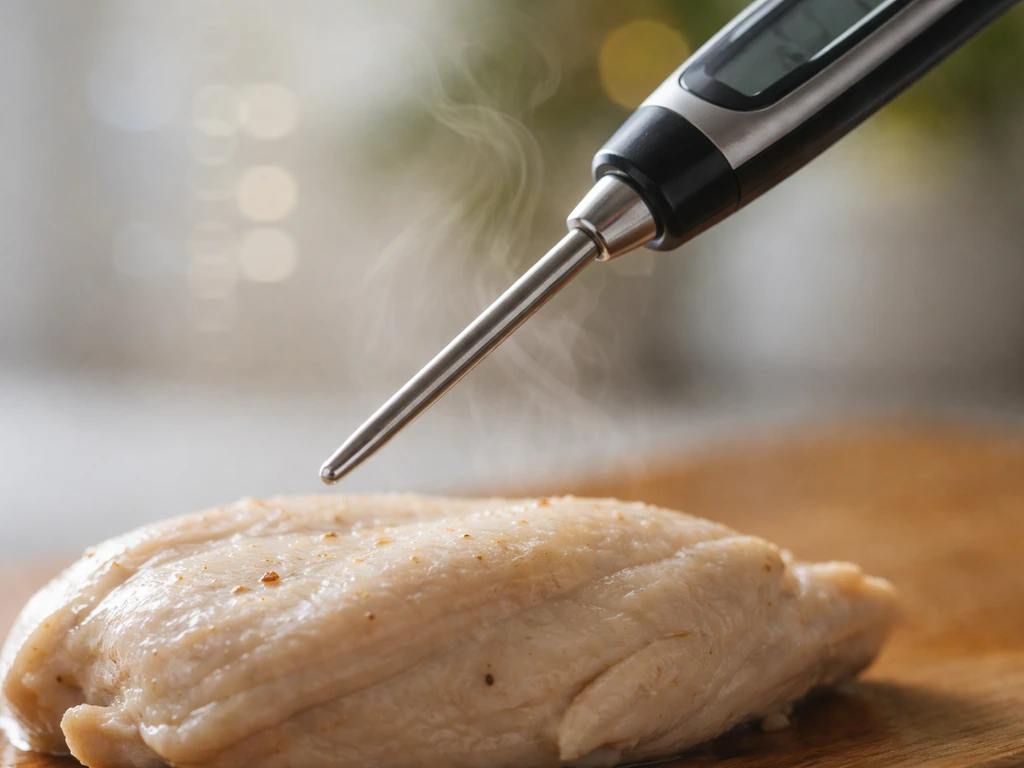
- Raw meat or poultry that was contaminated during storage can still be made safe by cooking to the correct internal temperature: 165°F (74°C) for poultry, 145°F (63°C) for whole cuts of beef, pork, or lamb, and 160°F (71°C) for ground meat. Cooking kills Salmonella regardless of refrigerator history.
- Clean and sanitize any surfaces that had contact with potentially contaminated food, including shelves, drawers, and containers. Soap and water followed by a dilute bleach solution works well.
- Wash hands thoroughly after handling raw meat, poultry, or eggs, and before touching anything else in the kitchen.
- If someone in the household is showing symptoms of Salmonella infection (diarrhea, fever, abdominal cramps) that are severe, prolonged beyond a couple of days, or affecting someone who is elderly, very young, pregnant, or immunocompromised, contact a healthcare provider.
The key principle is that refrigeration controls Salmonella by slowing growth, not by eliminating it. Cooking eliminates it. So for any food that will be cooked, refrigeration buys you safe time, as long as the fridge is genuinely cold and cross-contamination is prevented. For foods that won't be cooked again, contamination is a discard situation, not a wait-and-see one.
A quick comparison: growth vs. survival across temperatures
| Temperature | Salmonella behavior | Practical implication |
|---|---|---|
| Below 40°F / 4°C (proper refrigeration) | Survival only, growth suppressed or absent | Safe for short-term storage; Salmonella remains viable but not multiplying |
| 41 to 50°F / 5 to 10°C (marginal cold) | Very slow growth possible over extended time | Risk increases with longer storage; common in poorly calibrated or overcrowded fridges |
| 50 to 70°F / 10 to 21°C (cool room temp) | Moderate growth | Danger zone begins; thawing on counter falls here |
| 70 to 100°F / 21 to 38°C (room to body temp) | Rapid growth | Classic foodborne illness scenario; buffet foods, forgotten leftovers |
| Above 165°F / 74°C (cooking temperature) | Killed | Cooking to safe internal temps eliminates Salmonella |
Understanding where the refrigerator fits in Salmonella's growth range is the foundation for safe food handling. The fridge is a powerful tool when it's actually cold and managed well, but it's not a kill step. Keeping that distinction clear, and pairing it with proper cooking temperatures, cross-contamination control, and realistic storage times, is what actually keeps food safe.
FAQ
If my fridge is set to 40°F, can salmonella still grow in some spots?
Yes. Even when the dial reads 40°F, the temperature can vary by a few degrees inside, and door shelves or warm airflow-poor corners may hover above the safer threshold long enough for slow growth. This is why checking with an internal thermometer is more reliable than trusting the setting.
How long can salmonella survive in the refrigerator even if it does not grow much?
Salmonella can remain viable for days on many foods at refrigerator temperatures. Viability matters because once the food warms, bacteria can resume growth quickly, especially if it sits in the 5 to 7°C range or higher for extended time.
Does salmonella grow in the refrigerator on ready-to-eat foods like deli meat or leftovers?
Salmonella may not be present initially on many ready-to-eat foods, but growth is possible after contamination. Cross-contamination from raw poultry drips, shared utensils, or cutting boards can deposit viable cells onto food that will not be cooked again, creating a real risk even at fridge temperatures.
What is the biggest mistake people make that allows salmonella to “start again” in the fridge?
Putting food back into the fridge after it has warmed up for too long, or leaving it partially thawed on the counter, then refrigerating again. Each temperature exposure gives bacteria a chance to multiply before cold storage slows further changes.
Is it safe to re-refrigerate food that was thawed partially on the counter?
Use caution. Partial thawing often means the outer portions were in the growth-permissive range. If thawing was prolonged, the safest choice is to discard. If you only have brief warming, proper cooking may be safer than trying to rely on the fridge to “undo” what happened.
Can salmonella grow faster at 41 to 45°F than people think?
Growth can become possible, even if it is slow. The risk increases with time in those marginal temperatures, and with strains plus food types that provide good moisture and nutrients, so small temperature differences can matter over days.
Does packaging matter for whether salmonella can grow in the refrigerator?
Yes. Tight packing that blocks air circulation can create consistent warm zones around certain containers, especially large items and foods stored in front of vents. Also, leaks from raw meat drips onto uncovered foods can seed contamination regardless of the average fridge temperature.
What foods should be stored farther back or lower in the refrigerator to reduce risk?
Raw poultry, raw ground meat, raw seafood, and eggs are highest priority for storage in safer zones. Keeping them toward the back and lower shelves reduces exposure to warmer door-shelf temperatures and lowers the chance of drips contacting ready-to-eat foods.
Is thawing in the refrigerator safer than thawing on the counter?
Generally yes. Thawing at refrigerator temperature reduces time spent in the bacteria growth range, but salmonella can still survive the process. The key is preventing drips, avoiding repeated warm-ups, and cooking promptly after thawing.
If salmonella is present, will cooking always eliminate the risk?
Cooking is what reliably kills the bacteria. However, prevention of cross-contamination is still essential, because cooked food can become re-contaminated if it touches surfaces or utensils that previously handled raw items. Store and handle separately, especially near the sink and cutting area.
How can I tell if my refrigerator is truly cold enough to suppress salmonella growth?
Place an inexpensive standalone thermometer in the middle of the refrigerator (not on the door) and monitor for several days. If readings regularly exceed 40°F, fix the issue before storing high-risk foods, because the warm duration is what drives risk.
What should I do if raw chicken dripped onto produce or leftovers in the fridge?
Treat it as contamination of a food that will likely not be cooked again. Discard the affected ready-to-eat item if it was exposed to drips and you cannot ensure it will be cooked thoroughly afterward, and sanitize all surfaces that contacted the raw juices.
Next Article
What Temperature Does Salmonella Grow? Key Limits
Know what temperature Salmonella grows, growth vs survival, and how refrigeration, freezing, hot holding, and thawing af