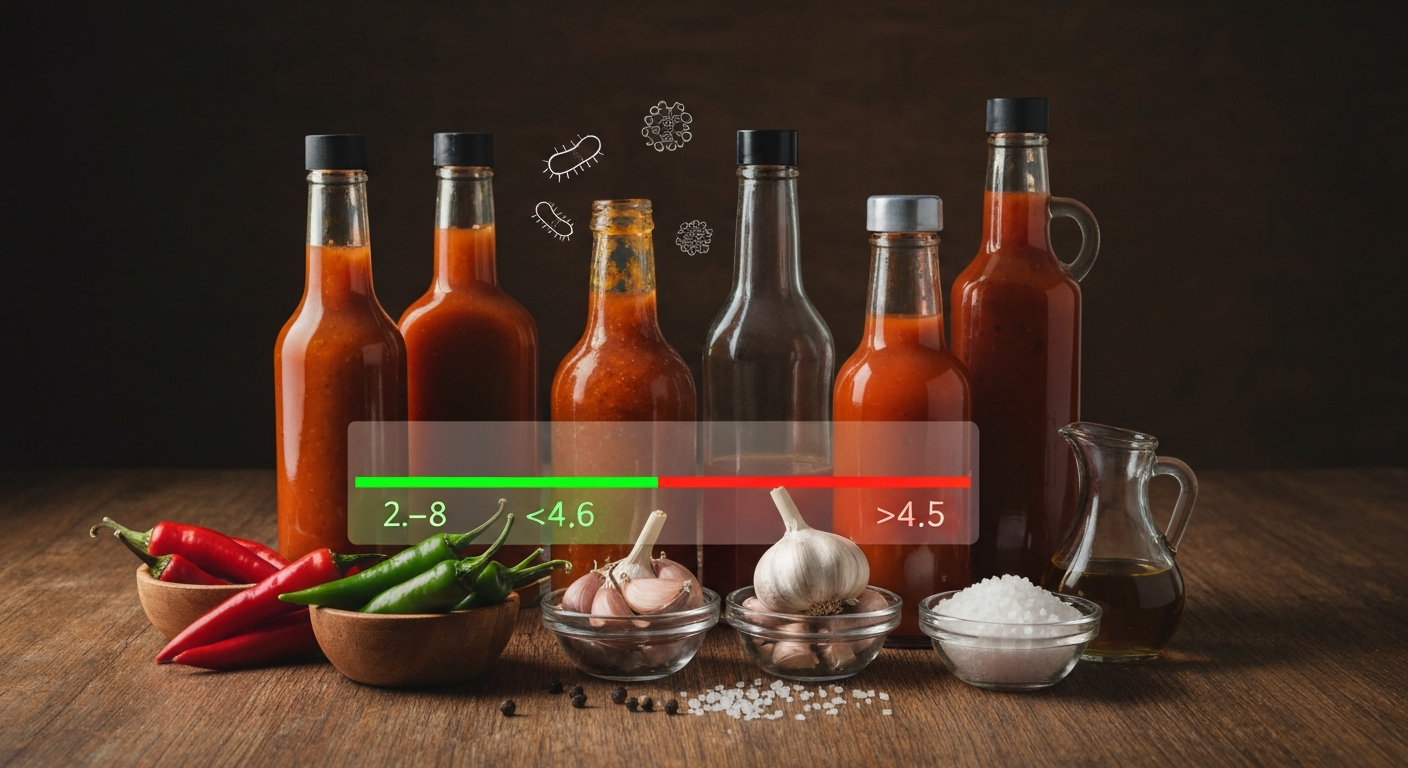
Salmonella grows wherever it finds enough moisture, warmth, nutrients, and a hospitable pH. In practical terms, that means it thrives in protein-rich foods like poultry, eggs, and dairy held between about 40°F and 140°F (4°C to 60°C), and it can colonize surfaces, water, soil, and animal guts just as readily. In a lab, it grows on a wide range of agar media, from basic nutrient agar all the way to highly selective plates designed specifically to isolate it from mixed samples. Understanding the full picture of where and how it grows lets you make a confident call on whether a specific food, environment, or storage situation carries real risk.
Where Does Salmonella Grow What It Grows On and Conditions

Marcus Reeves
2 May 2026
What "grows on" actually means for Salmonella
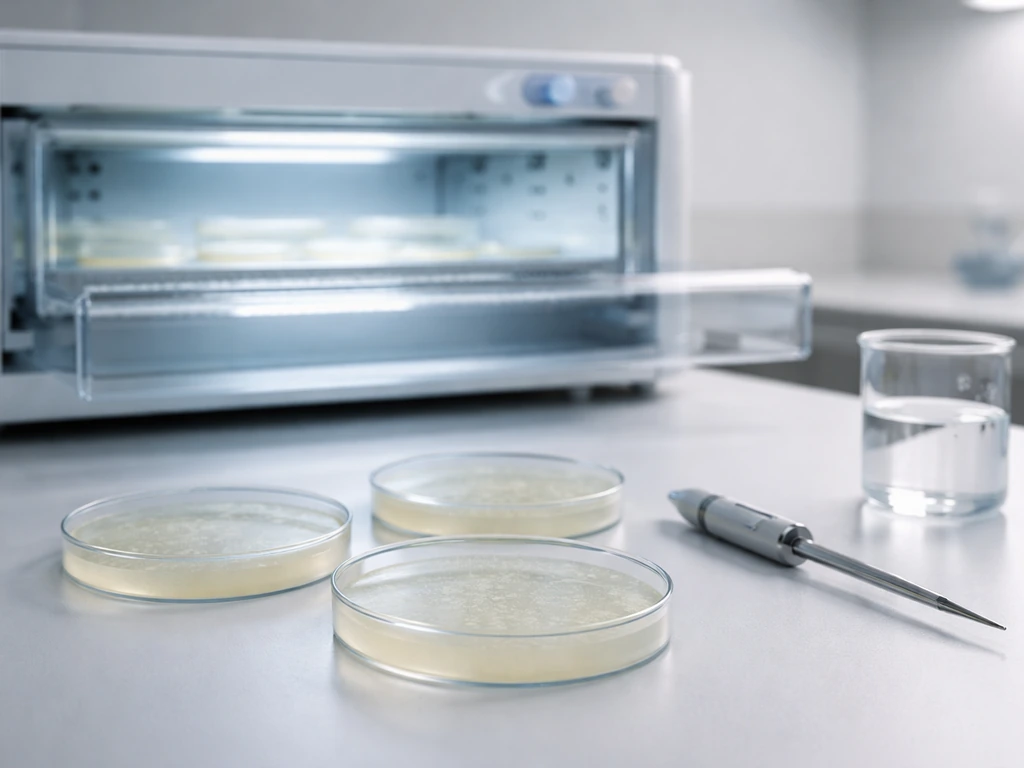
The phrase "grows on" can mean two different things depending on who's asking. For a microbiologist, it usually means: what agar or lab media will support Salmonella colonies in culture? For a food safety professional or home cook, it means: what foods or surfaces can Salmonella use as a substrate to multiply and reach dangerous numbers? Both questions are worth answering, and the logic behind them is the same.
Salmonella needs a nutrient source, adequate moisture, a suitable temperature, and a pH it can tolerate. To answer what conditions Salmonella needs to grow, focus on nutrient availability, moisture, temperature, and pH all working together conditions Salmonella needs to multiply. If those conditions are met, whether in a petri dish or a bowl of cooked rice, it will grow.
It's worth keeping the two contexts separate as you read, because the word "substrate" in a lab means the agar medium, while in a food context it means the food matrix itself. The organism doesn't care which context you're in; it just responds to the chemical and physical environment around it.
The environmental conditions Salmonella needs to multiply
Salmonella is a fairly adaptable pathogen, but it still has clear boundaries. The CDC notes that Salmonella are bacteria that can cause illness (salmonellosis) in people. Knowing those boundaries is how you predict whether it can grow in any given situation.
Temperature
Salmonella's growth range runs from roughly 40°F to 150°F (about 5°C to 45°C, with some strains showing limited growth closer to the edges of that range). Below refrigeration temperatures it can survive but generally won't multiply at meaningful rates can salmonella grow in cold temperatures. The optimal zone is around 95°F to 104°F (35°C to 40°C), which maps almost exactly to mammalian body temperature. That's no accident; Salmonella is primarily an intestinal pathogen. The food safety danger zone of 40°F to 140°F (4°C to 60°C) is built around this biology. Below refrigeration temperatures it can survive but generally won't multiply at meaningful rates, and above 160°F (71°C) it's reliably killed.
pH
Salmonella grows best in near-neutral conditions, roughly pH 6.5 to 7.5. It can manage between about pH 3.8 and pH 9.5 under otherwise ideal conditions, but growth slows significantly toward those extremes. Highly acidic foods like properly fermented pickles or well-acidified vinegar dressings inhibit it. This is why acidification is a real preservation strategy, though it has to be sufficient to actually push pH low enough, not just slightly acidic.
Moisture (water activity)
Water activity (aw) is the measure that actually matters here, not total water content. Salmonella needs a minimum water activity of about 0. An FDA CFSAN qualitative risk assessment notes that Salmonella does not grow below a water activity (aw) of 0.94 a minimum water activity of about 0.. 94 to grow, and it grows optimally at aw close to 0.99. Foods with aw below 0.94, like dried pasta, crackers, chocolate, or properly dried jerky, don't support Salmonella growth even if the bacteria are present. That said, Salmonella can survive in low-aw environments for extended periods and become a contamination risk when moisture is introduced later. It's a survivor even where it can't actively multiply.
Oxygen
Salmonella is a facultative anaerobe, meaning it grows well with oxygen but can also grow without it. This is a critical practical point: vacuum sealing or modified atmosphere packaging alone does not prevent Salmonella growth. If temperature and moisture conditions are right, it will multiply in both aerobic and anaerobic environments. Oxygen availability simply isn't a reliable control point the way temperature and water activity are.
| Condition | Minimum | Optimum | Maximum |
|---|---|---|---|
| Temperature | ~40°F / 5°C | ~95–104°F / 35–40°C | ~150°F / 45°C |
| pH | ~3.8 | ~6.5–7.5 | ~9.5 |
| Water Activity (aw) | ~0.94 | ~0.99 | ~1.0 |
| Oxygen | Not required (facultative anaerobe) | Aerobic preferred | Tolerates high O₂ |
What Salmonella grows on in food and common environments
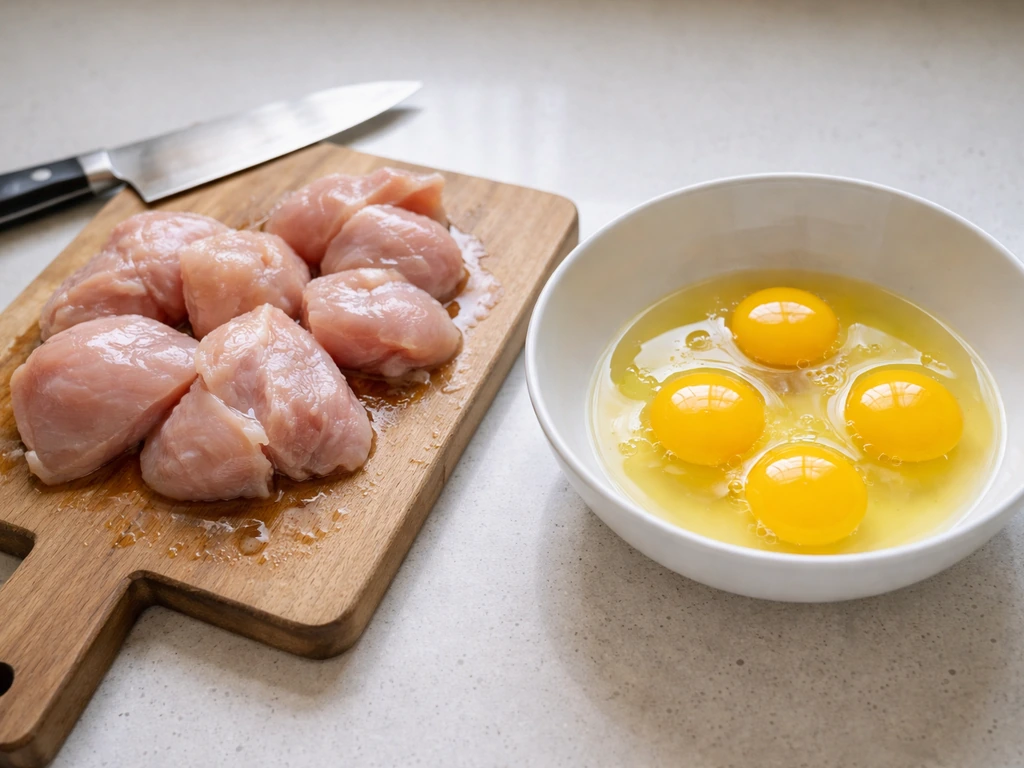
Salmonella is not picky about its food source as long as it provides usable nutrients. It grows on proteins and carbohydrates alike, which means the list of foods that can support it is long. Contamination usually enters through animal products, but cross-contamination means it can end up on almost anything.
High-risk foods
- Raw and undercooked poultry (chicken, turkey, duck) — historically one of the most common sources
- Raw and undercooked eggs and foods made with them (cookie dough, homemade mayonnaise, Caesar dressing)
- Raw beef and pork, especially ground forms with more surface area
- Raw seafood and shellfish
- Unpasteurized (raw) milk and dairy products
- Fresh produce: sprouts, leafy greens, tomatoes, melons, and cucumbers have all been implicated in outbreaks
- Nut butters and tree nuts (lower aw doesn't guarantee safety if contamination occurred)
- Spices and dried herbs (low aw means survival, not death)
Produce contamination often originates from irrigation water, manure-based fertilizers, or animal intrusion in fields. Processing and handling spread it further. Once it's in a kitchen, cross-contamination from cutting boards, hands, knives, and sinks is the main amplification pathway.
Environmental reservoirs
Beyond food, Salmonella lives in the gastrointestinal tracts of many animals including poultry, reptiles, rodents, cattle, and even domestic pets like turtles, lizards, and chicks. Soil and water contaminated with animal feces are persistent environmental sources. In food processing plants, Salmonella can establish persistent biofilm communities in drains, on floors, and on equipment surfaces, making it a recurring control challenge.
What agar Salmonella grows on in the lab
In a microbiology workflow, you typically move through a sequence of media types when trying to isolate and confirm Salmonella from a sample. The choice of agar depends on what you're trying to accomplish at each stage.
Non-selective media
On general-purpose, non-selective agars like nutrient agar or tryptic soy agar (TSA), Salmonella grows readily and forms smooth, round, gray-white colonies. These media support nearly all bacteria, so they're useful for checking viability or performing pure-culture work, but they won't distinguish Salmonella from the dozens of other organisms that might be present in a food or environmental sample.
Selective and differential media
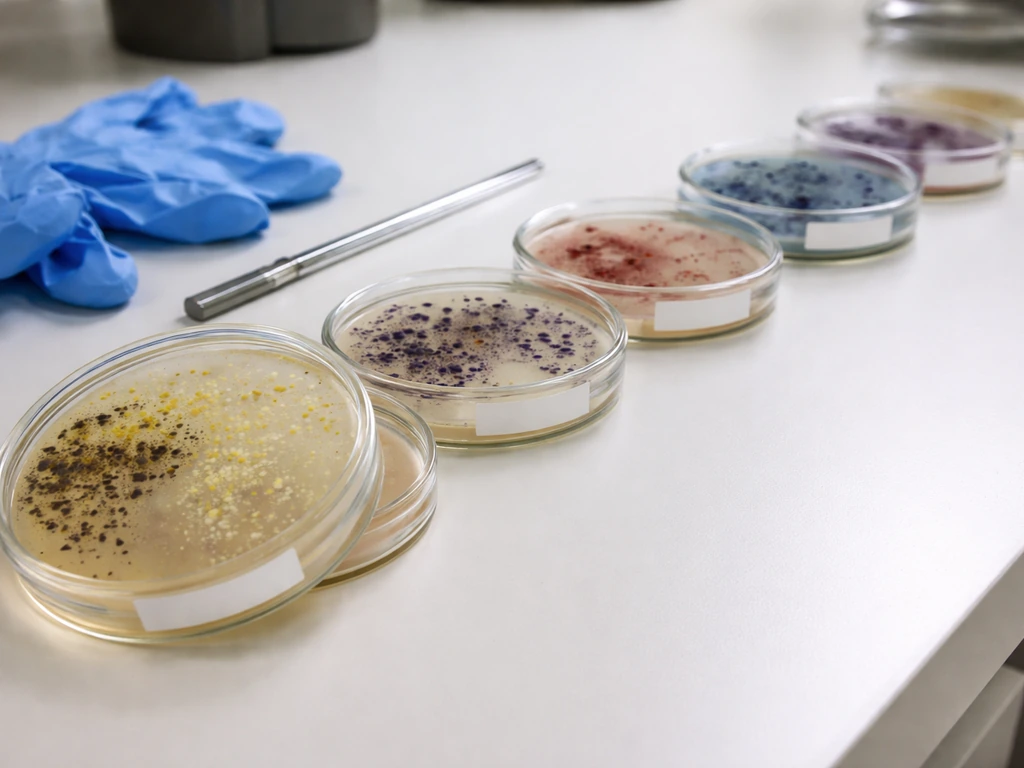
Selective media contain agents (like bile salts, dyes, or antibiotics) that suppress most competing bacteria while still allowing Salmonella to grow. Differential media go a step further: they include indicators that produce visible color changes based on specific metabolic reactions, making Salmonella colonies visually distinct from those of other organisms. In practice, most Salmonella isolation protocols use selective-differential media that do both jobs at once.
Common examples include Xylose Lysine Deoxycholate (XLD) agar, Hektoen Enteric (HE) agar, and Bismuth Sulfite agar. On XLD, Salmonella typically produces pink-to-red colonies with black centers due to hydrogen sulfide production. On HE agar, colonies appear blue-green with black centers. Bismuth Sulfite produces characteristic black, metallic-sheen colonies. These appearances come from the organism's metabolic traits, particularly its ability to produce hydrogen sulfide and ferment (or not ferment) specific sugars.
One medium that comes up in lab coursework is mannitol salt agar (MSA), which is designed to select for staphylococci. Salmonella does not grow well on MSA because the high salt concentration (7.5% NaCl) is inhibitory to it. Knowing what Salmonella does NOT grow on is just as useful for understanding its selective isolation.
Enrichment broths
Before plating on selective agar, most standard protocols include a pre-enrichment step in a non-selective broth (like buffered peptone water) to recover stressed or injured cells, followed by selective enrichment in broths like Selenite Cystine broth or Tetrathionate broth. These liquid media suppress competing flora while encouraging Salmonella to multiply, increasing the likelihood of detection even when starting numbers are very low.
How to reason through "can it grow here?"
Whether you're evaluating a food storage situation or troubleshooting a contamination event, the same checklist applies. Work through each factor in order, because all of them need to be permissive for growth to happen.
- Temperature: Is it between 40°F and 140°F (4°C to 60°C)? If yes, temperature is not a control point here. If it's reliably below 40°F or above 140°F, growth is inhibited or stopped.
- Water activity: Does the food or substrate have aw above 0.94? Fresh, high-moisture foods generally do. Dried, low-moisture products may not. Check the product category if you're unsure.
- pH: Is the environment between roughly pH 4.0 and 9.0? Most foods are in this range. Highly acidic foods (properly pickled vegetables, citrus juice) are outside Salmonella's growth range.
- Nutrients: Does the substrate provide usable carbon and nitrogen sources? Virtually all whole foods do. Pure fats (like vegetable oil) and extremely low-nutrient surfaces are less hospitable, though cross-contamination from other sources can still be an issue.
- Oxygen: Don't use this as a control point. Salmonella grows with or without it.
- Time: Even under permissive conditions, Salmonella needs time to reach dangerous levels. Under optimal conditions it can double in about 20–30 minutes, so a few hours in the danger zone with a contaminated food is genuinely risky.
If all the first four factors are permissive and time is sufficient, assume growth is possible. If any one of the critical factors (temperature, aw, or pH) is outside Salmonella's range, growth is inhibited, though survival and later reactivation remain a concern.
Practical food safety and storage takeaways
Temperature control is your most reliable and practical tool. Keeping cold foods below 40°F (4°C) and cooking foods to safe internal temperatures (165°F/74°C for poultry, 160°F/71°C for ground meats) directly addresses Salmonella's most exploitable requirement. Refrigeration doesn't kill it, but it keeps populations from growing to dangerous levels.
Cross-contamination is how Salmonella gets from a raw chicken breast onto your salad greens, cutting board, or counter. Separating raw proteins from ready-to-eat foods, using dedicated cutting boards, and washing hands and surfaces after contact with raw animal products are the core prevention steps. These aren't just general hygiene rules; they directly target Salmonella's most common route into meals.
For shelf-stable and low-moisture products, the risk calculus changes. A jar of peanut butter or a bag of flour has low enough water activity that Salmonella can't actively grow, but if those products were contaminated during processing (which has happened in real outbreaks), the bacteria survive and can infect when consumed. Cooking those products (like baking the flour or heating the peanut butter into a sauce) removes that residual risk.
In food service and processing settings, environmental monitoring for Salmonella matters precisely because it can establish persistent reservoirs in drains and on equipment. A positive environmental swab doesn't always mean food is contaminated, but it signals a harborage point that needs to be eliminated before it becomes a product contamination event. The same selective and differential media concepts from the lab section above are what food safety labs use to run those environmental monitoring programs.
If you're working through a specific growth scenario, such as whether Salmonella can grow in a refrigerator, survive in cold temperatures, or thrive without oxygen, those questions each have their own detailed answers tied to the same underlying biology covered here. The conditions framework in this article is the foundation for all of them.
FAQ
Does Salmonella grow on cooked food after it cools, even if it was fully heated?
Yes. Heating can kill existing cells, but if cooked food is cooled or held in the permissive temperature and moisture range, contamination introduced afterward can multiply. Focus on avoiding time in the 40°F to 140°F zone and preventing cross-contamination during handling, slicing, or transfer.
Can Salmonella grow on bread, rice, or other starchy foods at room temperature?
Potentially, if the food has enough available moisture (water activity not far below the ~0.94 threshold) and stays warm long enough. The key practical variable for starches is how much moisture the product retains in storage, not just whether it contains carbohydrates.
Why does freezing “not” stop Salmonella if it keeps it from growing?
Freezing generally halts growth by dropping temperature below the multiplication range, but it does not reliably kill the cells. If the food is later thawed and then held warm, surviving cells can regrow, so safe thawing and prompt refrigeration after thaw still matter.
If a food is acidic, can Salmonella still survive but not grow?
Yes. Acidified foods can inhibit multiplication without necessarily eliminating the bacteria, depending on the final pH and how acidic it is throughout the product. Survival is why you still need clean handling, not just reliance on “slightly acidic” flavors.
Does vacuum sealing or using an airtight container prevent Salmonella from growing?
No. Salmonella can grow with little or no oxygen, so sealing mainly changes oxygen availability, not the other requirements like temperature and water activity. The safer approach is controlling temperature (and using appropriate preservatives if applicable), not relying on anaerobic conditions alone.
How can Salmonella survive in low-moisture foods if it cannot grow there?
It can persist for extended periods in low water activity environments, then pose risk when moisture is introduced during preparation or cooking steps. If contaminated flour, spices, or dried ingredients are used to make a dish that becomes sufficiently moist, bacteria may be able to multiply if time and temperature allow.
Is Salmonella always present in raw chicken because it is in the animal gut?
Not always. Animal carriage means exposure risk is possible, but contamination levels vary by flock, processing controls, and handling. The practical takeaway is that raw poultry can be contaminated even if it is not visibly so, which is why preventing cross-contact is essential.
Can Salmonella grow on fruits and vegetables like lettuce?
Yes, because it can persist on surfaces and in water associated with irrigation or field contamination, then enter food through handling and cutting. Growth on produce after harvest depends on storage conditions and how wet the surface environment is, which can change during washing or cutting.
Can Salmonella grow on dairy or eggs even if they are refrigerated?
Refrigeration suppresses growth, but it does not guarantee immediate inactivation. If product is repeatedly warmed (for example, long counter time, frequent door openings, or leaving food out after opening), surviving cells can regrow. Also watch for contamination during cracking, mixing, or pouring.
In labs, why do different selective agars give different colony colors or appearances?
They target different combinations of inhibitors and metabolic indicator reactions. The color and features reflect whether Salmonella can tolerate the selective agents and perform specific metabolic traits, such as producing hydrogen sulfide, fermenting certain sugars, or interacting with dyes and metals in the medium.
Why do pre-enrichment steps matter for detecting Salmonella in samples with very low numbers?
Low counts or “injured” cells may not grow well directly on selective plates. A non-selective recovery broth helps stressed bacteria regain ability to multiply, then selective enrichment increases the fraction of Salmonella before plating.
What common mistake leads people to think Salmonella cannot grow in a situation where it might?
Looking at only temperature and ignoring water activity and pH. A food might be near room temperature but also be too dry or too acidic for growth, or it might be refrigerated but still permit survival with later reactivation. The conditions need to be permissive together.
How should I interpret an environmental swab result if Salmonella is found on equipment or drains?
Treat it as evidence of a harborage point, even if no product is currently positive. The risk action is to identify where the organism is persisting (such as drain biofilm, gasket areas, or hard-to-clean corners), then verify cleanup changes with repeat sampling.
Next Article
Can Bacteria Grow in Hot Sauce? Food-Safety Thresholds & Risks
Can bacteria grow in hot sauce? Explains when microbes survive or grow, key pH/aw thresholds, risks & prevention.