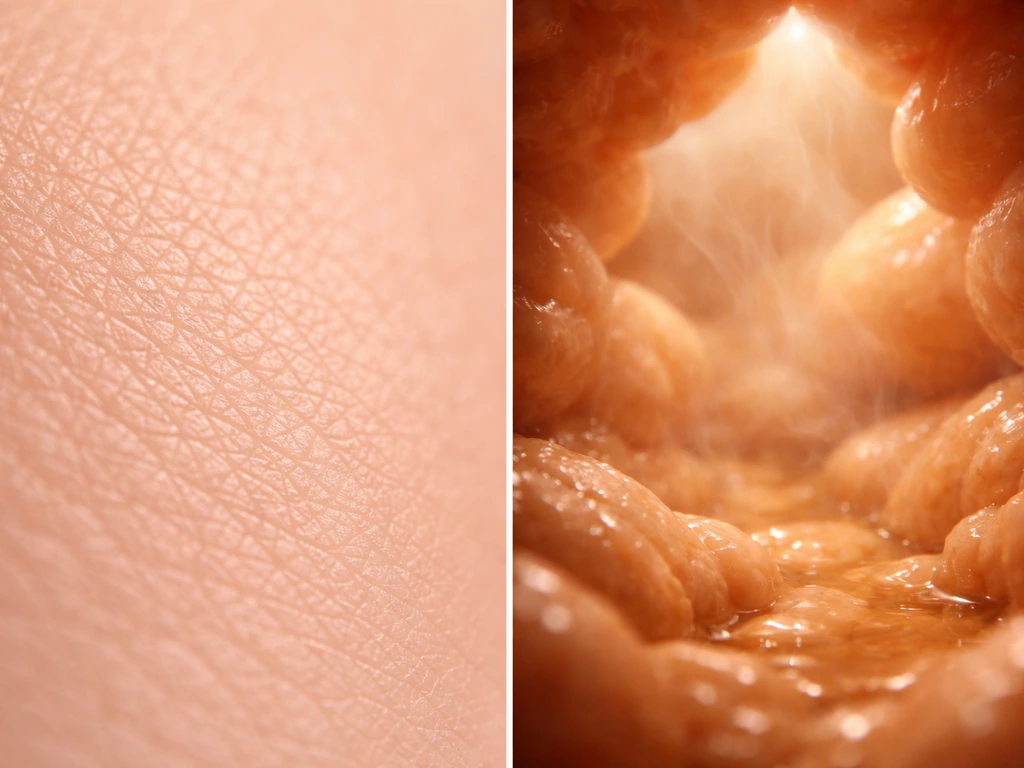
When hyphae are able to grow and penetrate, it means fungal threads have moved beyond the surface and pushed into the interior of whatever they are colonizing, whether that is a loaf of bread, a ceiling tile, a wooden shelf, or a block of soft cheese. The visible fuzz you see on the outside is only a fraction of the problem. The real concern is how far the invisible network of hyphae has extended into the material, because once that happens, wiping or cutting away the surface mold does not remove the contamination.
The Hyphae Are Able to Grow and Penetrate: How to Prevent It

Marcus Reeves
7 Jun 2026
What hyphal growth and penetration actually mean
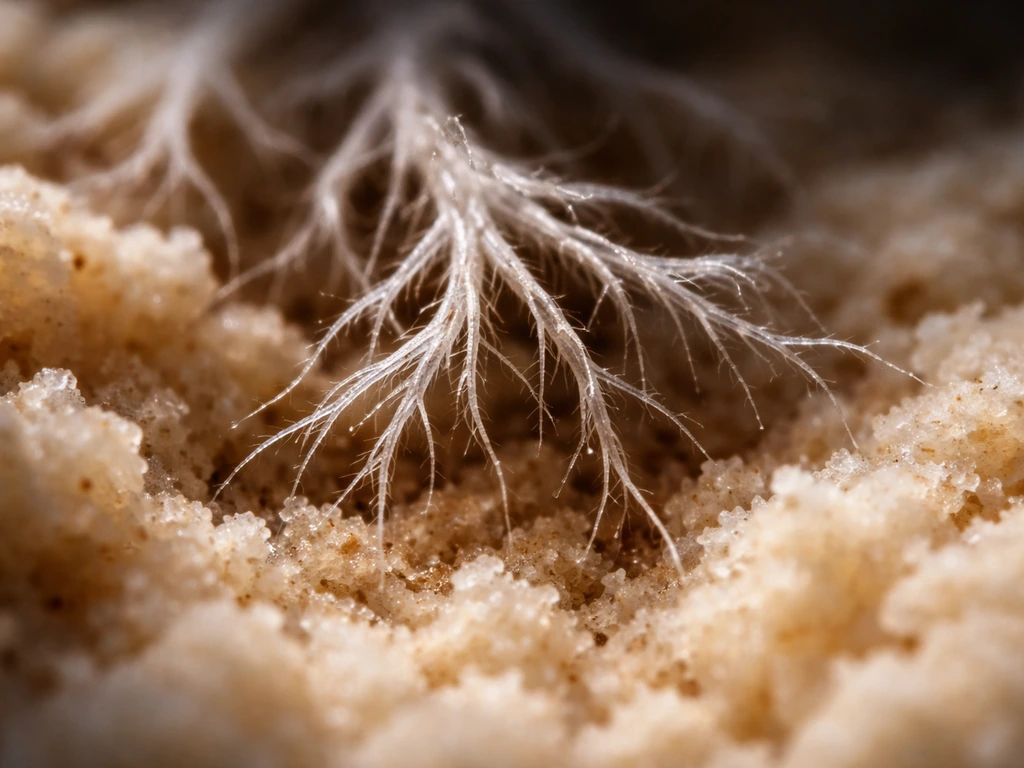
Hyphae are the thread-like filaments that make up the body of a fungus. They extend at their tips, branching repeatedly to form a mesh called mycelium. "Growth" refers to that tip extension. "Penetration" is what happens when that growth pushes through the surface layer and into the substrate beneath it, physically invading the material rather than just sitting on top.
In lab studies with Aspergillus oryzae and Rhizopus oligosporus, two types of penetrative hyphae have been identified. Short penetrative hyphae reached about 2 mm depth in 40 hours, while longer penetrative hyphae reached roughly 4.5 mm in the same window. In harder materials like concrete, scanning electron microscopy has shown fungal hyphae penetrating approximately 25 micrometers into the pore structure. The depth depends heavily on the substrate, but the key point is that penetration is measurable and real, not just a theoretical risk.
In a food safety context, penetration is what separates a surface spot you can safely trim from a contaminated food you need to discard. The USDA puts it plainly: you only see part of the mold on the surface. The rest is hidden inside. For porous or soft foods, that hidden portion is almost always present by the time you notice any visible mold at all.
The conditions that let hyphae grow and penetrate
No single factor controls hyphal penetration on its own. It is always a combination of moisture, temperature, pH, and oxygen availability working together. Remove one of them and you slow or stop growth. Let more than one line up in the wrong direction and penetration accelerates.
Moisture and water activity
Water activity (aw) is the most important lever. Most common indoor and food-spoilage molds need a minimum aw of around 0. This is similar in ant colonies, where competition and the ants’ defenses make conditions unfavorable for the fungus to establish and grow there indoor and food-spoilage molds. 80 to 0.
85 to initiate growth. Some xerophilic (dry-tolerant) species can start at aw as low as 0. 78. On the humidity side, mold development on porous building materials typically begins at relative humidity between 80% and 95%, and research consistently shows that keeping indoor RH below 60% keeps most mold from establishing at all.
A practical rule: if a surface or food feels persistently damp or the storage area regularly exceeds 70% RH, hyphae have the moisture they need to penetrate.
Temperature
Most food-spoilage molds are mesophiles, growing best in the 20 to 45 degrees Celsius range. Psychrotrophic molds, however, can extend hyphae at temperatures as low as 4 degrees Celsius, which means refrigerator storage does not eliminate fungal risk, it only slows it. Freezing (below 0 degrees Celsius) stops active hyphal extension but does not kill spores. When food comes back to room temperature, germination and penetration can resume.
pH
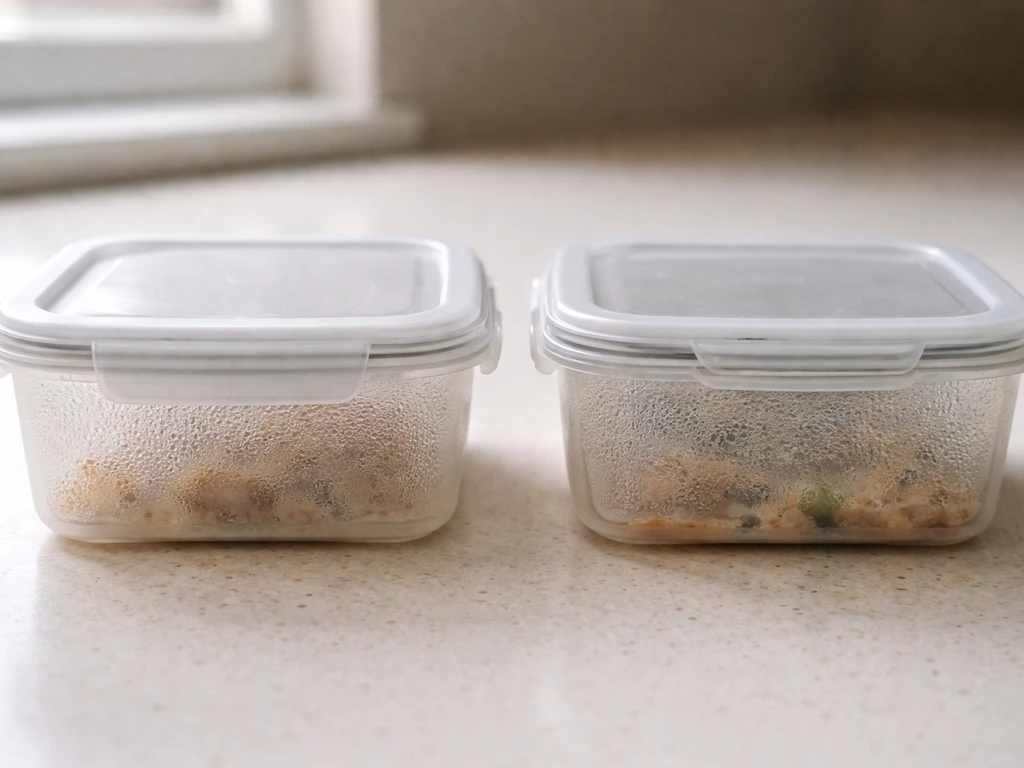
Fungi tolerate a wide pH range, roughly 2 to 8, which is broader than most bacteria. This is why you see mold on acidic foods like citrus, yogurt, and vinegar-pickled items. A low pH that would inhibit bacterial spoilage does not reliably inhibit hyphal growth or penetration.
Oxygen
Most common molds are aerobic, requiring oxygen to grow. However, some species (particularly wood-rotting basidiomycetes) are facultative, able to develop under low-oxygen and high-CO2 conditions. Even in nominally aerobic environments, fungal biofilms can create internal hypoxic microenvironments that protect interior hyphae from oxygen limitation, allowing penetration to continue inside a material even when surface conditions seem unfavorable. This matters in practice because vacuum-sealed or modified-atmosphere packaging reduces but does not always eliminate fungal risk.
Why penetration happens: what the substrate has to do with it
Whether hyphae can penetrate depends heavily on what they are growing into. Porosity, surface texture, and nutrient availability all determine how fast and how deep growth goes.
| Substrate type | Penetration risk | Why |
|---|---|---|
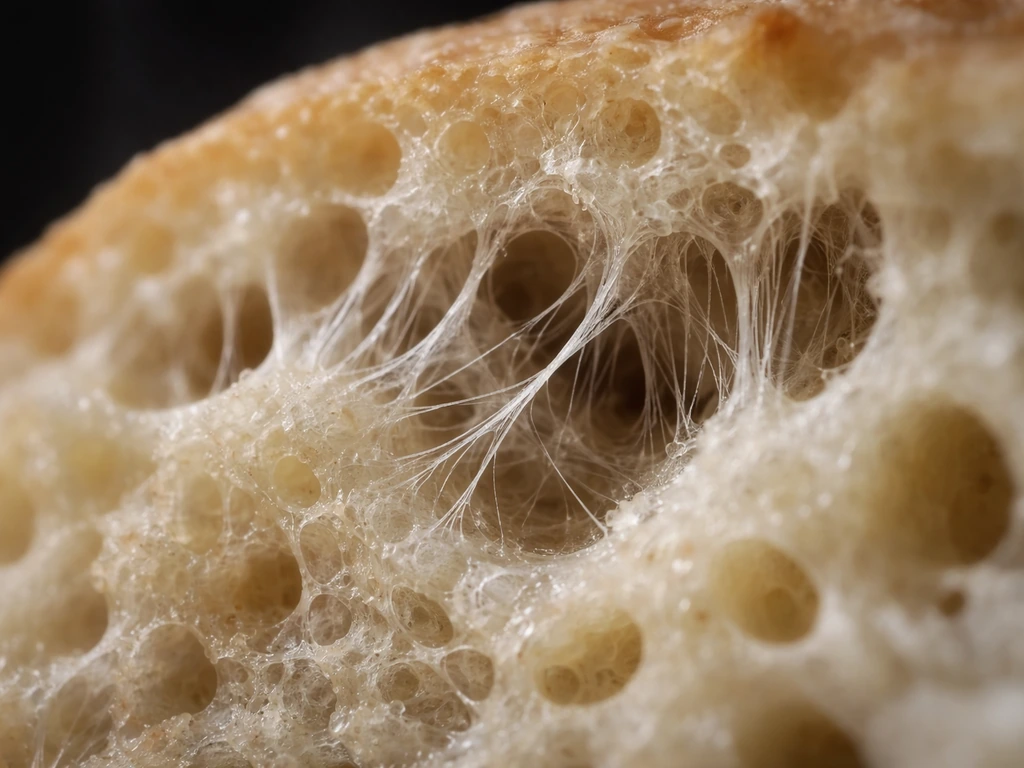
| Soft porous foods (bread, cake, soft cheese) | Very high | Open structure, high moisture, abundant nutrients allow rapid hyphal extension through the interior |
| Hard dense foods (hard aged cheese, hard salami) | Lower but present | Denser matrix slows penetration; surface mold may be cut away safely with a 1-inch margin if no visible moisture damage |
| Porous building materials (drywall, ceiling tile, carpet) | Very high | Fibrous or cellular structures allow deep colonization; impossible to fully sanitize once penetrated |
| Non-porous hard surfaces (stainless steel, glass, ceramic tile) | Very low | No structural pathways for hyphae to enter; surface growth only, easy to clean and sanitize |
| Porous packaging (cardboard, paper, cloth) | High | Absorbs moisture; hyphae can penetrate into packaging material itself and reach the food inside |
Nutrients are equally important. Hyphae actively seek out nutrient-rich areas, which is why growth accelerates where sugars, starches, or proteins are concentrated. A food with high nutrient density and high moisture is essentially an ideal penetration target. Surface texture matters too: rough or scratched surfaces provide more physical anchor points for initial adhesion before penetration begins.
How to assess a suspected penetration problem
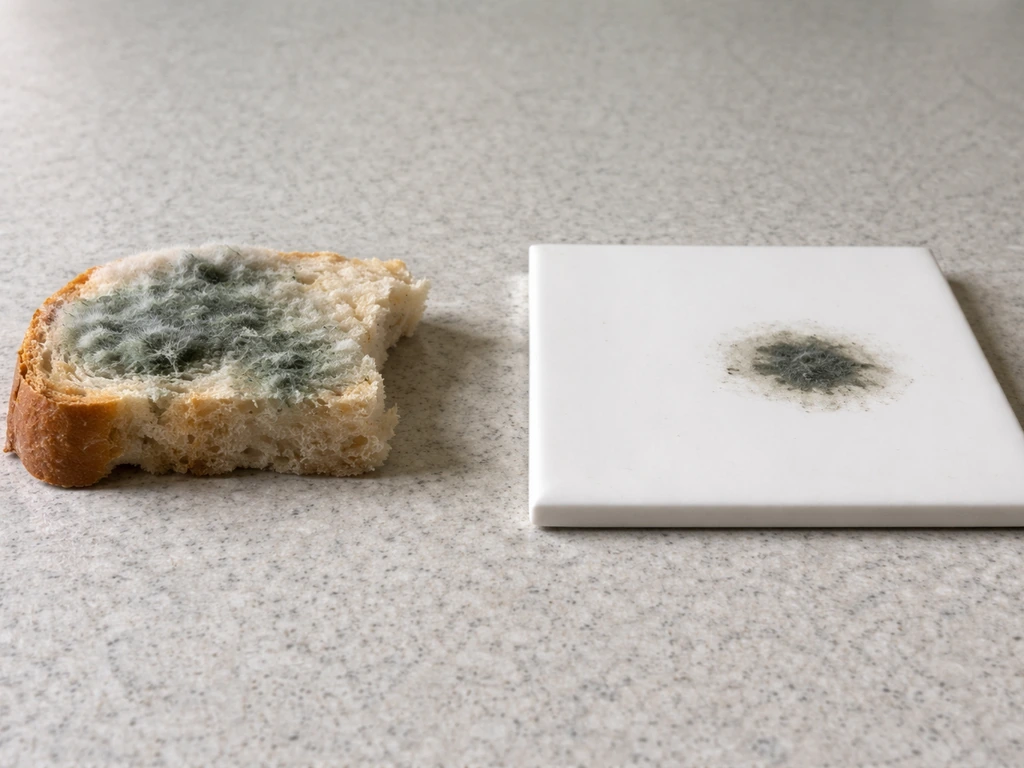
When you spot visible mold, the first question is not "how do I clean this" but "has penetration already happened?" The answer determines whether you are dealing with a surface problem or a discard situation.
- Identify the substrate first. Is it porous (bread, soft cheese, drywall, ceiling tile, sponge, carpet) or non-porous (stainless steel, glass, sealed ceramic)?
- Look at the extent of visible mold. A small spot on a hard cheese is different from fuzzy coverage across a soft food. If the food is covered with mold or has mold throughout, discard it.
- Check for odor. A musty or yeasty smell from a food or storage area that goes beyond the visible mold spot suggests mycelial spread beneath the surface.
- Check the moisture source. Is there condensation, a leak, or a humidity problem in the storage area? Active moisture means active penetration conditions.
- Look for soft spots or texture changes near the mold. Softening, color change, or sliminess adjacent to visible mold is evidence of deeper mycelial activity.
- Check packaging integrity. If mold appears on food inside packaging, inspect whether the packaging itself (especially cardboard or paper) has been damp, because hyphae can penetrate through packaging materials.
For non-food surfaces: check whether the material is absorbent. The EPA and most state health agencies are consistent here: if porous materials like drywall, carpet padding, or ceiling tiles show mold, they typically need to be removed and replaced, not cleaned. Cleaning the surface does not reach hyphae that have grown into the interior of the material.
Stopping further growth vs. dealing with already-penetrated material
These are two different problems and they require different responses. Confusing them is where most mistakes happen.
Stopping further growth (before penetration or at early stages)
- Reduce moisture immediately: lower RH to below 60%, dry wet surfaces within 24 to 48 hours, and fix any leaks or condensation sources
- Drop temperature: refrigerate susceptible foods, target 4 degrees Celsius or below for storage
- Remove oxygen where practical: modified atmosphere packaging, CO2 flushing, or vacuum sealing can slow aerobic mold growth on food
- Use preservatives and pH adjustment in food production: antimicrobial preservatives, reduced aw through added salt or sugar, or acidification can push conditions below fungal growth thresholds
- Sanitize non-porous surfaces after cleaning: clean first to remove organic material, then apply an appropriate sanitizer; the FDA Food Code is the reference standard for food-contact surfaces
Dealing with already-penetrated material
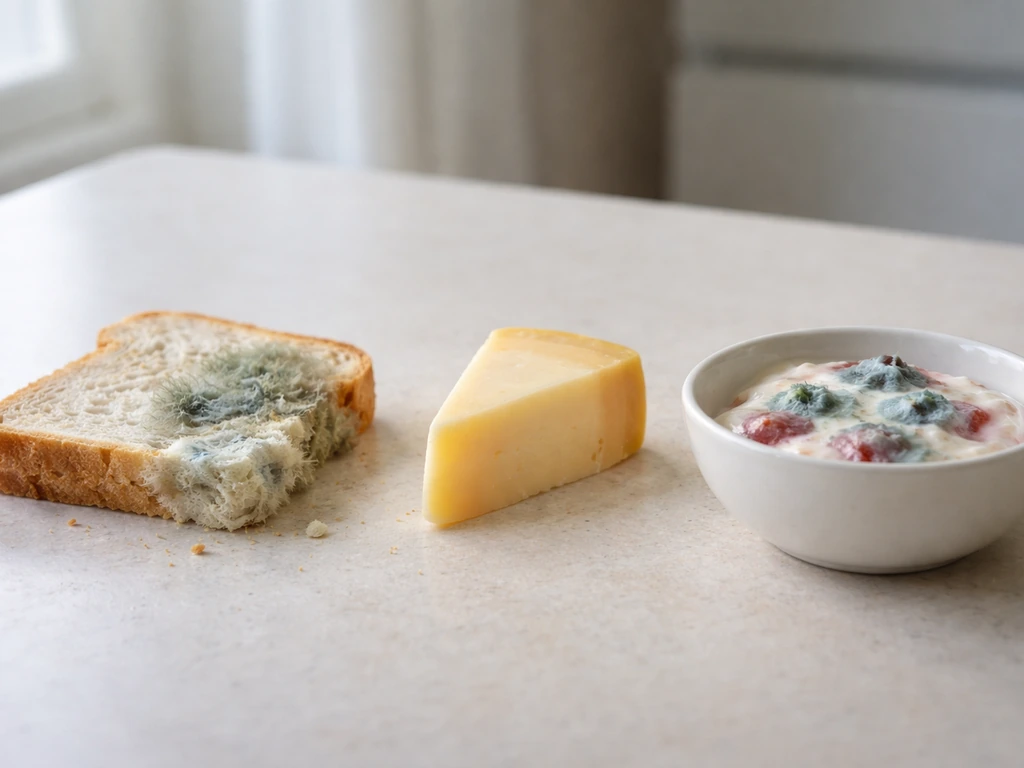
Once hyphae have penetrated, surface cleaning or trimming is rarely sufficient. [For soft porous foods (bread, soft cheeses, yogurt, soft fruits), discard the entire item. ](https://open. library.
ubc. ca/cIRcle/collections/undergraduateresearch/51869/items/1. 0435582) For hard dense foods (hard aged cheese, hard salami, firm vegetables like carrots), the USDA guidance allows cutting away at least 1 inch around and below the mold spot if the food shows no other signs of damage, moisture, or off-odor.
USDA FSIS also advises discarding foods that show time-temperature abuse or signs of spoilage beyond surface mold, including moldy or yeasty odors and sliminess USDA guidance allows cutting away at least 1 inch around and below the mold spot for certain hard dense foods.
For porous building materials, removal and replacement is the standard approach, consistent with EPA and state health guidance. Sanitizing a contaminated porous surface treats the exterior while leaving the interior colonization intact.
Practical do and don't guide for food storage and cleaning
| Situation | Do | Don't |
|---|---|---|
| Storing bread and baked goods | Keep in dry, cool conditions; use airtight packaging; consume within the recommended window | Store in humid conditions or leave in paper bags on warm countertops |
| Soft cheese and dairy | Refrigerate at 4°C or below; rewrap in fresh wrap after each use | Leave uncovered or at room temperature for extended periods |
| Hard aged cheese | Cut away at least 1 inch margin around visible mold; rewrap immediately | Scrape the mold surface and assume the rest is unaffected |
| Leftover cooked foods | Refrigerate within 2 hours; discard at first sign of mold or off-odor | Reheat moldy food thinking heat will make it safe; mycotoxins are heat-stable |
| Cleaning non-porous food contact surfaces | Clean to remove organic debris first, then apply appropriate sanitizer | Apply sanitizer to dirty surfaces; it won't penetrate through organic matter |
| Wet/damp packaging | Discard food in water-damaged cardboard, paper, or cloth packaging | Assume the food inside is safe if the outer packaging absorbed moisture |
| Sponges and cleaning rags used on mold | Discard them after use on moldy material | Rinse and reuse; hyphae penetrate into sponge structure and cannot be fully removed |
When to discard, when to clean, and how to keep it from happening again
The discard-versus-clean decision comes down to three factors: substrate porosity, extent of visible mold, and moisture history. If a food is soft, porous, or has widespread mold coverage, discard it. If a building material is absorbent and has visible mold over more than a small area, remove and replace it. If a surface is hard and non-porous with isolated surface growth, clean and sanitize it. That is the practical triage framework.
One important caution: even if you cannot see mold, mycotoxins (toxic compounds produced by some molds) may already be present in penetrated food. These are heat-stable, meaning cooking does not neutralize them. This is the reason that discarding at the first sign of mold in high-risk foods is not overcautious but the appropriate default, especially for soft and porous items.
To reduce recurrence, address the underlying conditions rather than just treating visible growth. Keep storage areas below 60% RH consistently. Inspect food regularly and do not store new food against or near already-moldy items, because spores spread easily. Ensure storage containers are airtight and dry before use. For building materials, trace and fix the moisture source before replacing any removed material, otherwise new mold will colonize the replacement.
It is also worth noting that hyphal behavior varies meaningfully between fungal species and settings. The conditions that allow a common bread mold to penetrate differ from those enabling wood-rotting fungi or the environmental molds discussed in building-air quality contexts. Similarly, the question of where fungi grow at all (whether on nutrient agar in a lab, in food storage environments, or on natural organic substrates) shapes how penetration risk should be interpreted in each specific situation.
In a lab setting, nutrient agar is one of the media that can support fungal growth when other conditions are right. Commonly, yeast is most likely to grow in warm, moist, nutrient-rich environments like certain foods, damp surfaces, and humid indoor areas where fungi grow at all. Resident flora can grow anywhere moisture, nutrients, and the right substrate conditions allow, such as damp indoor surfaces and food storage environments where fungi grow at all.
In pour plate lab work, colonies appear wherever hyphae can grow into the agar beneath the surface, not just on top where you first see growth where colonies grow in pour plates. The core principles of moisture control, temperature management, and substrate-appropriate response remain consistent across all of them.
FAQ
If I only see a small spot of mold on a hard food, does that mean the hyphae are definitely shallow and safe to trim?
Not necessarily. A small visible spot can still come from a deeper hyphal network in porous areas like around the rind, seams, or surface cracks. Trim is only reasonable when the mold spot is truly isolated, the food is firm and non-gummy, and there is no persistent moisture, off-odor, or widespread discoloration beyond the spot.
Why should I not try to salvage moldy bread by scraping off the surface?
Bread is porous and absorbs moisture, so hyphae can move inward quickly and spread beyond what you can see. Even if scraping removes the fuzzy exterior, the interior portion can remain colonized, and some molds can produce heat-stable toxins that are not eliminated by toasting.
Does freezing stop hyphae from penetrating food that already has mold on it?
Freezing halts active extension, but it does not reliably inactivate spores or previously established growth. When you thaw, remaining viable structures can resume germination and penetration, especially if the thawed food stays warm and moist.
Can I rely on smell to tell whether penetration already happened?
Smell is not a dependable indicator. Some fungal growth produces noticeable odors early, while other cases have little to no odor even when material is colonized. The safer rule is to use substrate type and the visible extent of mold, not odor alone.
What if the item is packaged, for example vacuum-sealed or in modified-atmosphere packaging, and I still see a mold spot?
Packaging can slow growth and reduce oxygen exposure, but it does not guarantee that interior hyphae are prevented. Some species can tolerate low oxygen, and biofilms can create microzones where oxygen is limited. If a spot appears on a porous food, treat it as a penetration-risk situation, not just a surface stain.
Is wiping with vinegar, bleach, or alcohol enough to remove hyphae from porous building materials?
Usually no. Surface disinfectants can reduce organisms on the exterior but they do not reach hyphae that have grown into drywall, carpet padding, ceiling tile, or similar materials. For absorbent materials with visible mold, removal and replacement is the practical approach after you fix the moisture source.
How do I decide whether a moldy building surface should be cleaned or replaced without guessing?
Use porosity and coverage. If the material is absorbent (drywall, insulation batts, ceiling tiles, carpet padding) and mold is present, replacement is typically the safest decision. If the surface is non-porous (tile, some sealed metal or glass) and the growth is isolated, cleaning and sanitizing may be sufficient, provided the moisture leak or condensation cause is addressed.
What moisture level is most important, relative humidity or visible dampness?
Both matter, but persistent dampness or frequent high indoor RH is the practical warning sign that aw and condensation conditions are supportive for hyphal growth. If an area regularly exceeds about 70% RH, feels persistently wet, or shows repeated condensation, assume mold can become established and penetration risk rises in porous materials.
If I cut out at least one inch around mold on hard cheese, is it always safe to eat the rest?
It reduces risk for some hard, dense foods, but it is not risk-free. The USDA-style trim approach assumes the food remains firm with no additional damage, moisture seepage, or off-odors beyond the cut boundary. If the cheese is softening, crumbling, watery, or has widespread mold, discarding is the safer option.
Can mold hyphae penetrate beneath the surface in non-foods like grout lines or painted wood?
Yes. Even on surfaces that seem hard, cracks, pores, chipped paint, and grout joints can act like micro-substrates that allow attachment and inward growth. If you see mold reappearing in the same spot after cleaning, that often indicates ongoing moisture and internal colonization.
How can I prevent recurrence if the moisture problem is intermittent, like a slow leak?
Look for the pattern, not just a one-time fix. Repair the source, then remove any removed materials and dry thoroughly before reassembly. If the area stays humid during certain seasons or after rain, target that time window by improving ventilation and dehumidification so RH stays consistently lower.
Should I discard the entire soft food even if the mold looks like one tiny patch?
In general, yes for soft and porous foods. Small visible growth can reflect extensive inward colonization, and heat-stable mycotoxins mean cooking does not provide a reliable safeguard. The triage rule is soft plus porous equals discard.
Next Article
Where Does Resident Flora Grow and How to Control It
Learn where normal resident microbes thrive on skin and foods, and how to control growth using temperature, moisture and