Fungus almost never gets a foothold inside a healthy ant colony, and that's not an accident. Ant nests are genuinely hostile environments for most fungi, thanks to a combination of tightly controlled humidity, temperature stability, chemical weapons, ventilation engineering, and collective hygiene behaviors that most people don't realize exist. When you understand which of these factors is doing the most work, you can also figure out why fungi occasionally do appear, and what to look for when they do.
Why Does Fungus Not Grow Inside Ant Colonies? Key Limits

Marcus Reeves
13 Apr 2026
How ant colonies control moisture and humidity
Moisture is the single biggest lever for fungal growth. Fungal spore germination depends directly on water activity (aw), which is closely tied to the relative humidity (RH) of the surrounding air. Most common molds need RH above roughly 80% (aw above 0.80) just to begin germinating, and mycelial establishment requires sustained moisture above that threshold. Ant colonies actively prevent this.
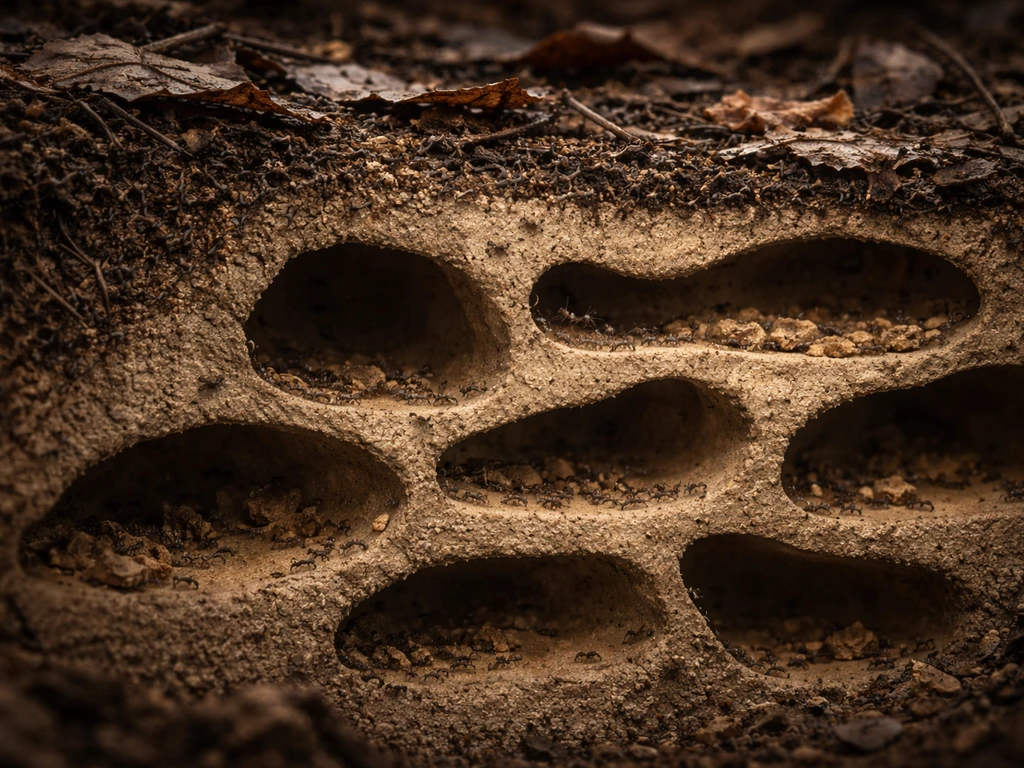
Research on Temnothorax rugatulus shows that chamber-level humidity inside a nest can remain measurably different from the ambient lab environment over a tracked 7-day period. Ants achieve this through nest architecture: the geometry of tunnels and chambers creates internal gradients that buffer moisture. Workers also physically manage moisture by relocating brood and adjusting nest structure in response to humidity shifts. The result is a microclimate that stays drier than you might expect, even when the surrounding soil or wood is damp.
This matters because the link between spore germination and water activity is well-established. For Aspergillus restrictus, germination and growth isopleths show clear aw thresholds, and those thresholds don't get crossed if the colony keeps internal RH low enough. Ants essentially engineer the environment to stay below the germination trigger. Think of it the same way food preservation works: control the water activity, and the fungus has no entry point.
Temperature regulation vs fungal growth ranges
Temperature is the second major environmental gating factor. Most common indoor and nest-associated fungi, including Aspergillus, Penicillium, and Candida species, have wide temperature tolerances in isolation, but they still have cardinal points: minimum, optimum, and maximum temperatures for growth. Aspergillus niger, for example, can grow across a broad range from roughly 8°C to the mid-40s°C depending on strain and conditions. The issue isn't that ant nests fall outside this range entirely; it's that colonies maintain thermal stability rather than allowing the temperature fluctuations that would support opportunistic fungal blooms.
Colonies of arboricolous ant species like Azteca chartifex actively manage nest temperature through microclimate homeostasis, using nest architecture and collective thermoregulation behaviors. A stable temperature that stays slightly warmer or cooler than fungal optima can slow germination rates significantly, especially when combined with the humidity suppression described above. Candida albicans, for instance, is documented to prefer 37°C and neutral pH for hyphal growth, conditions that overlap with some nest thermal zones but rarely with the full combination of conditions the fungus needs.
The practical takeaway: temperature alone probably isn't why fungus doesn't grow, but thermal stability interacts with every other limiting factor. A nest that holds steady at 25°C and low RH is far less hospitable than a nest that fluctuates between 20°C and 35°C with periodic moisture spikes.
pH and chemical defenses (ant secretions, antimicrobial compounds)
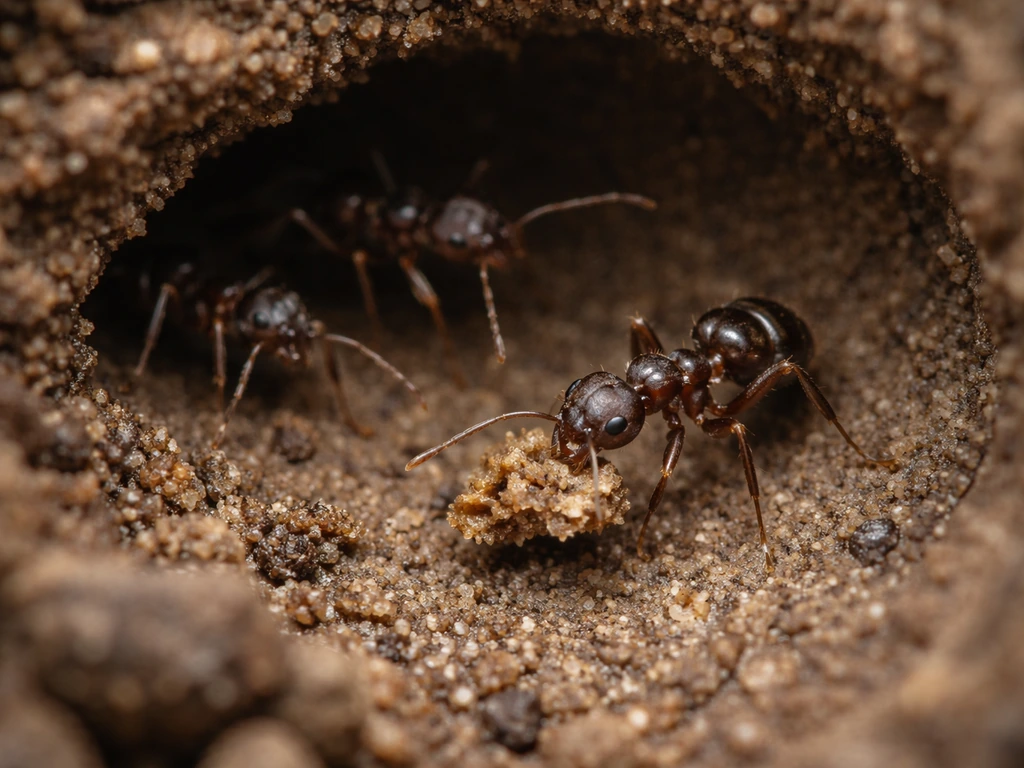
This is where ant biology gets genuinely impressive. Ants deploy a suite of chemical defenses that directly inhibit fungal germination and hyphal growth. The most studied is the blank" rel="noopener noreferrer">metapleural gland, present in most ant species, which secretes compounds with documented antimicrobial activity. Research on Myrmecia gulosa shows these secretions work primarily by disrupting microbial cell membranes, which targets fungi and bacteria alike. Workers spread these secretions through grooming and contact with nest surfaces, effectively coating the nest interior with antifungal chemistry.
Formic acid is another relevant player. Experimental evidence shows that formic acid applied to materials can inhibit fungal hyphae and reduce spore germination for multiple fungal taxa. Many ant species produce and deploy formic acid, and even the vapor phase in enclosed nest spaces can reach concentrations relevant to fungal suppression.
The mechanism behind weak-acid antifungal action is well understood. Sorbic acid, for example, inhibits conidial germination and mycelial growth in Aspergillus niger through intracellular acidification, and similar pH-disruption pathways apply to other weak organic acids. When ants deposit acidic secretions into nest substrate, they're essentially dropping the local pH in a way that makes the environment chemically hostile to fungal establishment. This is a passive, persistent defense that continues working even when workers aren't actively present.
Oxygen, airflow, and how nest ventilation works against fungi
Airflow inside ant nests is more sophisticated than it looks. In Atta leaf-cutting ant tunnels, researchers measured CO2 levels that reflect the ventilation state of the nest at any given time, with values around 6% indicating poor airflow in certain nest zones. But healthy colonies actively manage this. Research on termite mound ventilation (a comparable social insect architecture) shows that nest geometry and porosity can harness diurnal temperature oscillations to drive passive gas exchange, flushing CO2 and drawing in fresh air without any active pumping.
Why does this matter for fungi? Because blank" rel="noopener noreferrer">Aspergillus niger is a strict aerobe and requires oxygen to grow. Low-oxygen pockets inside nest chambers can directly inhibit fungal establishment in those zones. More broadly, active ventilation keeps the nest from developing the stagnant, humid microenvironments that fungi prefer. Airflow also dries surfaces continuously, coupling gas exchange to humidity control in a way that doubly suppresses fungal germination.
Understanding how the hyphae are able to grow and penetrate a substrate requires sustained moisture at the surface and adequate gas exchange for fungal metabolism. Ant nests deny both by managing their internal atmosphere. This is a passive engineering defense, not a behavioral one, and it operates continuously.
Ant immune defenses and behavioral hygiene
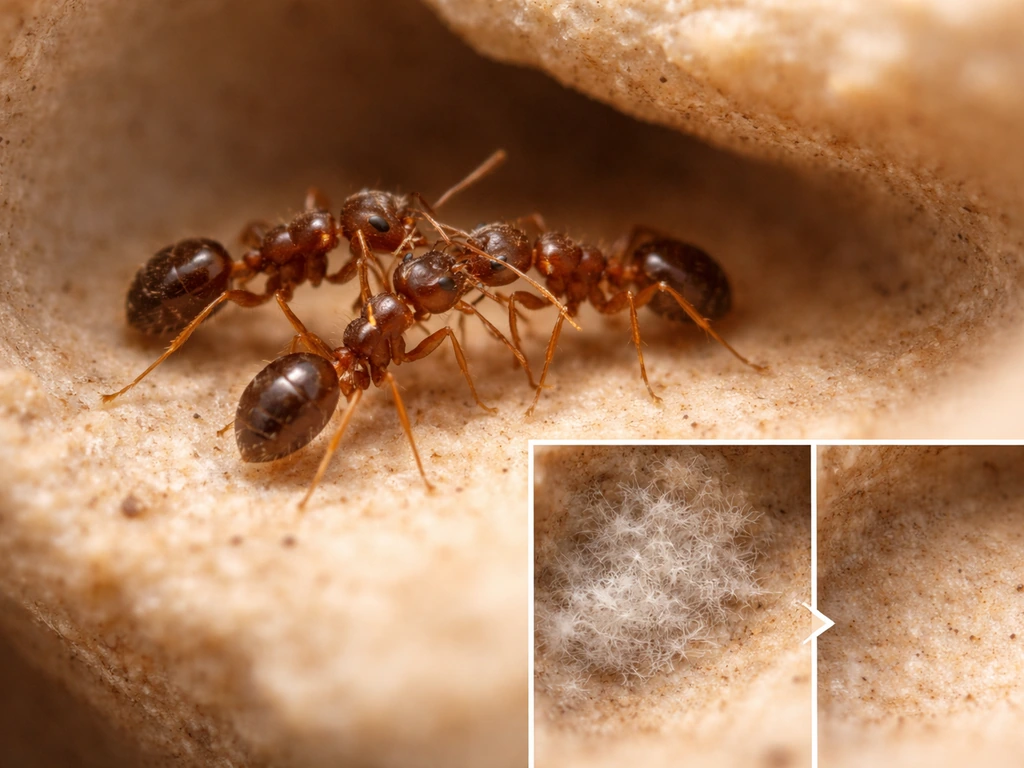
Even if the physical and chemical environment were somehow permissive enough for a spore to germinate, ant social immunity provides a final, active line of defense. This is the concept of the colony functioning as a collective immune system, and it's been studied directly in the context of fungal infections.
Grooming is the most visible behavior. Workers groom each other and themselves continuously, mechanically removing spores and fungal material before it can establish. Research on ant social immunity documents that this collective grooming significantly reduces pathogen load and slows the spread of fungal infection within the colony. Workers preferentially groom nestmates that have been exposed to fungal spores, concentrating the cleaning effort where it's most needed.
Corpse management adds another layer. Argentine ants, for example, show documented necrophoresis behaviors where dead nestmates are rapidly removed from the nest interior. Research confirms that this corpse removal inhibits the growth of pathogenic fungi that would otherwise colonize the carcass and sporulate inside the nest. Removing the dead body removes the substrate and spore source before a fungal bloom can start.
Infected or diseased individuals are sometimes actively excluded from the main nest population, a behavior that parallels quarantine in concept. The colony essentially performs triage, concentrating pathogen exposure in expendable individuals and keeping the core population and brood chambers clean. This is social immunity in the most literal sense: the group's collective behavior produces an immune outcome that no single individual could achieve alone.
Why fungus still sometimes appears: realistic exceptions and what to check
None of these defenses are absolute. Fungal suppression inside ant nests is conditional, and when conditions shift far enough, fungi do establish. Knowing what to look for makes diagnosis much faster.
One documented exception involves xerophilic fungi. Studies on mound nests of Formica obscuripes found fungal communities dominated by xerophilic Aspergillaceae, species defined by the ability to grow at aw below 0.85. These fungi are specifically adapted to low-moisture environments, which means the colony's primary humidity suppression defense provides less protection against them than against typical molds. If fungal growth appears in a nest that otherwise seems well-maintained, xerophilic species are a realistic candidate.
Ants themselves can vector fungi into healthcare and indoor environments. Research documenting locations where yeast might naturally grow overlaps with a study showing filamentous fungi including Aspergillus, Penicillium, and Candida genera being carried by ants in hospital settings in Brazil. This means ants can introduce fungal material even when the nest itself suppresses growth, and that's a different problem than internal establishment.
Colony stress is probably the most common trigger for exceptions in natural or managed settings. A colony dealing with pesticide exposure, physical disruption, nutritional deficiency, or population decline will show reduced grooming, impaired corpse removal, and disrupted microclimate regulation. Any of these can open a window for fungal establishment. This is comparable to how resident flora in a host ecosystem shifts when normal defenses are compromised: when you understand where resident flora grows under normal conditions, it also tells you what changes when suppression fails.
A practical checklist for diagnosing the limiting factor
If you're observing fungal growth in or around an ant colony and need to identify why the suppression broke down, work through these factors in order:
- Measure or estimate internal RH. If it's consistently above 80%, moisture suppression has failed. Water intrusion, substrate saturation, or poor drainage is the first thing to fix.
- Check temperature stability. Repeated fluctuations, especially with moisture spikes, create windows where fungal germination rates accelerate. Steady temperatures, even within fungal growth ranges, are less permissive than variable ones.
- Assess chemical defense integrity. A colony with a reduced worker population, sick queens, or disrupted grooming will be producing fewer metapleural gland secretions and less formic acid. Look for reduced worker density or abnormal behavior.
- Evaluate ventilation. If nest tunnels are blocked or the nest has been relocated into a sealed space with poor airflow, CO2 can accumulate, oxygen drops, and humidity rises. Restore airflow as a priority.
- Look for sanitation failures. Unremoved corpses, abandoned brood, or waste accumulation inside nest chambers indicate social immunity breakdown. These are signs of colony stress, not just a hygiene lapse.
- Identify the fungal species or type if possible. Xerophilic species like certain Aspergillus complexes require different interventions than humidity-dependent molds. Species with minimum growth temperatures around 10 to 25°C and humidity thresholds above 45% are common candidates, but xerophiles operate below those thresholds.
- Consider spore load from external sources. High ambient spore counts, especially in disturbed or compost-adjacent environments, can overwhelm even a healthy colony's defenses. Reducing external inoculum pressure helps.
Comparing the main suppression mechanisms
| Defense Mechanism | How It Works | Most Effective Against | Fails When |
|---|---|---|---|
| Humidity control | Nest architecture and worker behavior keep internal RH below germination thresholds | Most common molds requiring aw above 0.80 | Water intrusion, substrate saturation, colony population decline |
| Temperature regulation | Thermal homeostasis via collective behavior and nest design | Fungi with narrow temperature optima | Colony stress, relocation to extreme environments |
| Chemical defenses (pH, acids, metapleural secretions) | Acidic compounds disrupt fungal cell membranes and cause intracellular acidification | Acid-sensitive fungi; broad-spectrum antimicrobial effect | Reduced worker density, species that tolerate acidic environments |
| Ventilation and oxygen management | Nest geometry drives gas exchange; low-O2 zones inhibit aerobic fungi | Strict aerobes like Aspergillus niger | Blocked tunnels, sealed nests, poor drainage |
| Social immunity (grooming, necrophoresis, quarantine) | Removes spores, infected individuals, and carcasses before establishment | Any fungal species that requires time to establish | Colony stress, low worker numbers, disrupted behavior |
Putting it all together
Ant colonies don't rely on any single defense against fungi. They stack moisture suppression, thermal stability, chemical warfare, ventilation engineering, and active social hygiene into a system where each layer compensates for the others. This is why healthy colonies can maintain near-sterile nest environments even in fungus-rich outdoor environments. It's also why diagnosing fungal growth when it does occur requires checking all five factors rather than assuming one cause.
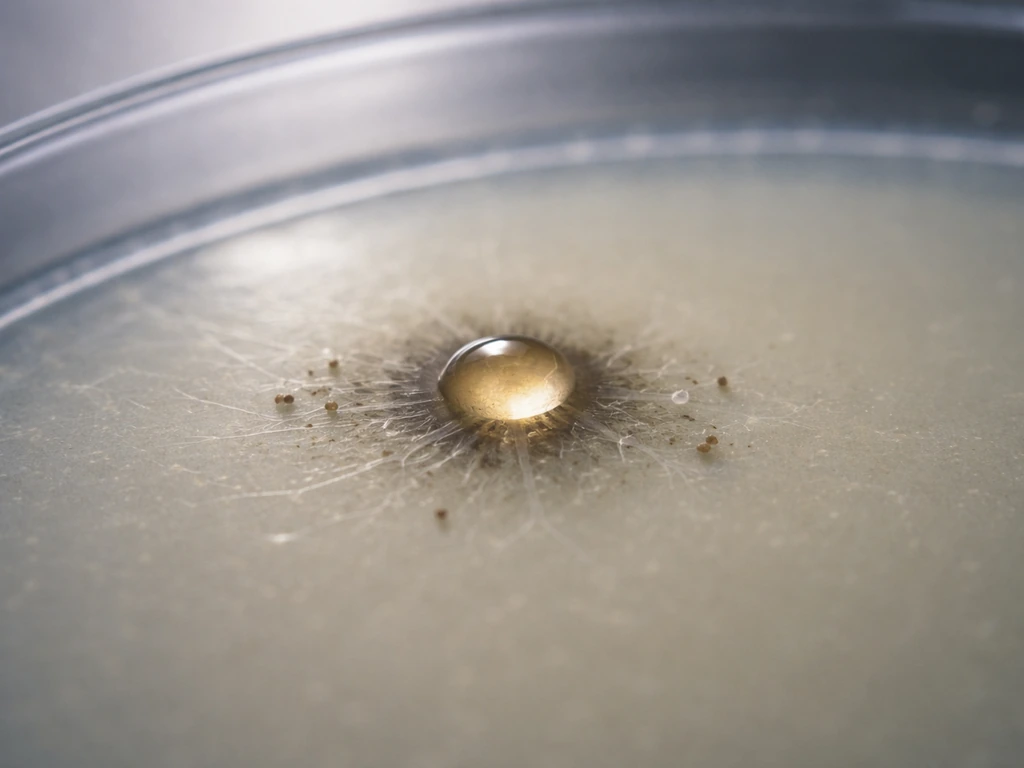
If you're working in a microbiological or food safety context and want to apply these principles to controlled settings, the logic maps directly. Whether fungi grow on nutrient agar follows the same environmental logic: water activity, temperature, pH, oxygen availability, and substrate chemistry all determine whether germination and colony formation happen. Ant nests are essentially a biological model of multi-factor fungal suppression, and understanding how they work makes the principles more concrete.
For anyone working with laboratory culture methods, it's worth noting that where colonies grow in pour plates depends on the same aw, temperature, and oxygen gradients that ant nests manipulate. The ant colony is just doing it with architecture and behavior instead of agar depth and incubation temperature.
FAQ
If spores are present outside every colony, what stops them from germinating inside?
The most common reason is that the nest rarely stays above the humidity water-activity threshold long enough for spores to germinate and then sustain hyphal establishment. Even if the air outside is humid, internal chamber geometry, brood movement, and ventilation tend to prevent prolonged wet microenvironments that molds need.
Why can fungus sometimes grow in ant nests that look healthy?
Some fungi can use different survival strategies. Xerophilic species (adapted to very low water activity) are less affected by low-RH defenses, so you may see growth in otherwise “well-managed” nests when the fungus itself is tailored for dryness.
How can fungus appear around a colony without actually establishing deep inside it?
In most field observations, what looks like “internal” fungal growth is actually one of two cases: spores being deposited near openings and growing on damp surfaces, or fungi being vectored into the nest by ants, then establishing where defenses are temporarily weakest.
What colony conditions make fungal establishment more likely?
Yes. If the colony becomes stressed or disrupted, defenses can stop working as a coupled system. Grooming may drop, corpse removal can lag, and microclimate regulation can weaken, creating a window where humidity or chemistry thresholds are crossed.
Is there any one factor that is always the main reason fungi fail to grow inside ant colonies?
Ant defenses are usually conditional, meaning the colony can suppress typical molds but still lose when multiple limits align in the wrong direction at once (for example, humidity spikes plus low airflow plus reduced grooming). A single breakdown is less predictive than the combined “stack” failing together.
How does ventilation failure change the outcome for fungi inside a nest?
If airflow is poor locally, oxygen can drop and CO2 can build up, reducing growth for strict aerobes and also allowing stagnation where humidity rises. Ventilation issues are especially important in sheltered zones like corners, brood areas, or clogged tunnels.
Why might ant chemical defenses not work even when the metapleural gland is present?
Ant chemical defenses typically reduce fungal viability by disrupting membranes and/or lowering local pH via weak acids. However, if the substrate becomes coated differently, dilution occurs, or secretions are not spread effectively due to reduced grooming, antifungal chemistry may not reach the relevant surface microhabitats.
Can ant colonies transport fungal spores even if they prevent internal establishment?
Yes, fungi can spread even if growth inside is suppressed. Spores can be carried on the body of workers, and outbreaks can occur in nearby moist substrates (detritus, nest entrances, or damp soil/wood interfaces) where ant defenses are weaker or absent.
What should I look for to tell whether fungi are invading or just growing on local wet spots?
A practical observation tip is to look for the “where” and “when.” Growth that appears primarily at entrances, along damp nest-contact surfaces, or after prolonged colony disruption is more consistent with deposition or localized defense failure than with a total breakdown of the whole nest.
What is the best way to apply these ideas in a lab or food safety setting?
For controlled environments, replicate the same multi-factor gating rather than testing one variable. If you only manipulate temperature but allow water activity to rise, you will still enable germination. Likewise, keeping RH low without ensuring airflow or substrate chemistry can still permit edge-case establishment.
Next Article
Can Bacteria Grow in Lemon Juice? Growth Risk Explained
Learn if bacteria can grow in lemon juice, how acidity affects survival vs multiplication, and safe storage steps.