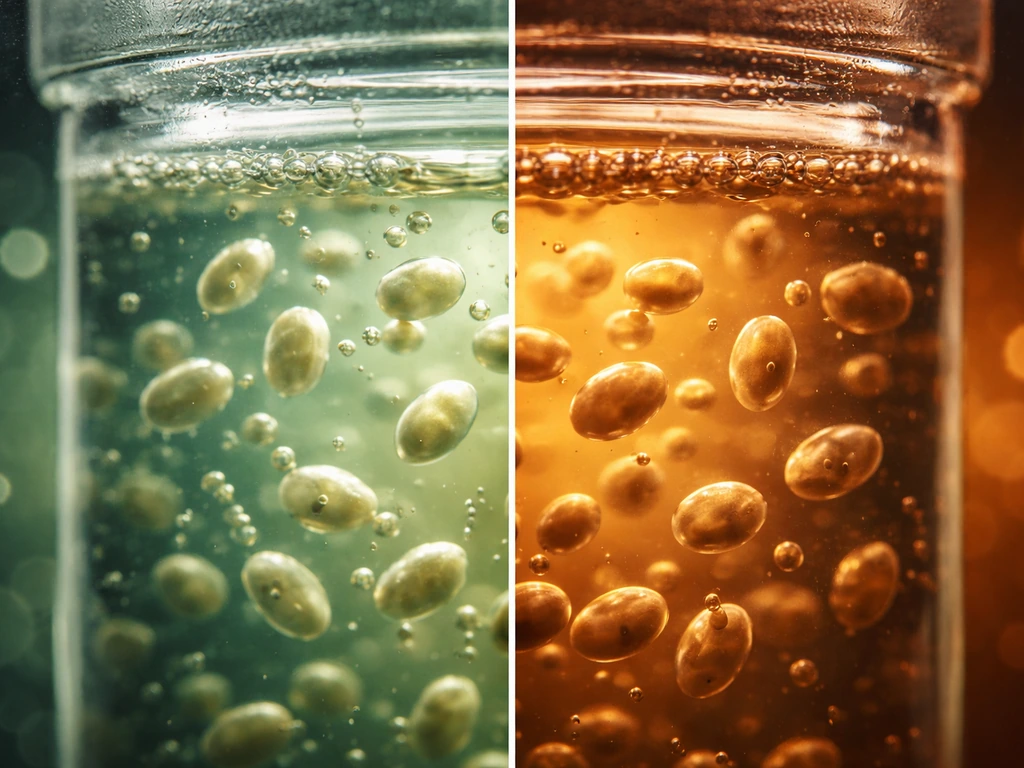
Microbes cannot grow when at least one critical environmental condition falls outside their survivable range. The most reliable barriers are temperatures below 0°C or above 60°C, pH at or below 4.6, water activity (aw) below 0.85, and the absence of required nutrients or oxygen. Hit any one of these limits hard enough and growth stops. Hit several at once and you can push toward actual kill. Understanding which barrier does what, and how firmly each one holds, is the practical core of food safety and preservation.
Where Can Microbes Not Grow: Conditions That Prevent Growth

Marcus Reeves
8 Jun 2026
What 'not grow' actually means (and why it matters)
There is a critical difference between growth inhibition and microbial death, and confusing them is where food safety mistakes happen. When conditions fall outside a microbe's growth range, replication stops. But the organism may still be alive, dormant, and ready to resume multiplying the moment conditions improve. Think of it like a pause button, not a stop button.
In antimicrobial science, this distinction is formalized as the difference between MIC (minimum inhibitory concentration, which stops visible growth) and MBC (minimum bactericidal concentration, which actually kills the organism). MBC is typically higher than MIC, and in many real-world conditions, you are operating somewhere in between: growth is suppressed, but the population is not gone. In real foods, intestinal bacteria can grow in the presence of adequate nutrients and oxygen.
Spores make this even more complicated. Clostridium botulinum and Bacillus cereus, for example, can form heat-resistant spores that survive conditions that kill vegetative cells. Those spores can persist through cooking, drying, or acidification and then germinate when the environment improves. This is why canning science uses D-values (the time needed to reduce a population by 90% at a given temperature) and F-values (total accumulated lethal effect) to describe actual kill, not just growth inhibition. For C. botulinum spores, the industry standard requires an F-value equivalent to 2.45 minutes at 121°C to achieve the target reduction. Simply suppressing growth is not enough in low-acid, low-oxygen shelf-stable products.
Temperature limits: cold slows, heat kills
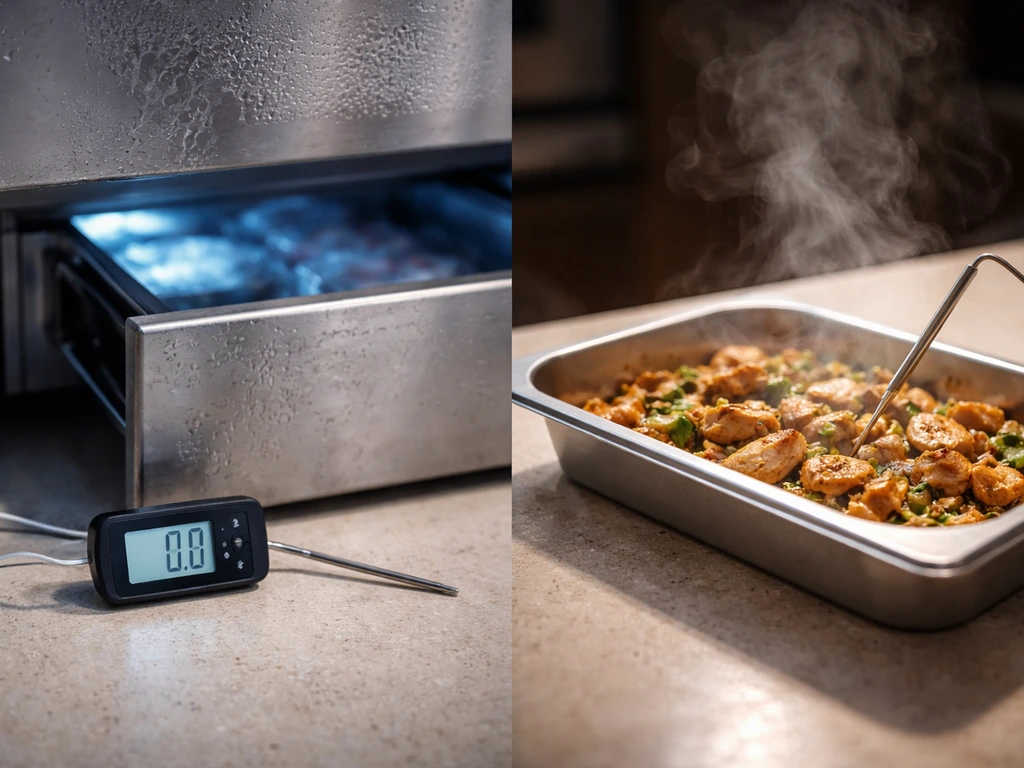
Temperature is the most widely used and most intuitive growth barrier. Most foodborne pathogens are mesophiles, meaning they grow best between roughly 20°C and 45°C (68°F to 113°F). LibreTexts (OpenStax) provides more specific temperature group ranges relevant to food preservation, including psychrophiles growing best around 0, 15°C, mesophiles around 20, 45°C, and thermophiles adapted above about 50°C blank" rel="noopener noreferrer">psychrophiles growing best around 0–15°C, mesophiles around 20–45°C, and thermophiles adapted above about 50°C. Drop below that range and growth slows dramatically. Conventional refrigeration at 4°C (40°F) or below keeps most pathogens in a suppressed state but does not kill them.
The wrinkle is psychrophiles and psychrotrophs. Some organisms, including Listeria monocytogenes, can grow at refrigerator temperatures, just more slowly. Psychrophiles as a group can grow down to around -2°C to 0°C, with an optimum somewhere between 0°C and 15°C. Freezing at -18°C (0°F) stops growth across virtually all relevant foodborne pathogens, but again, it does not kill them. Thaw improperly and you are back where you started.
On the high end, most vegetative bacterial cells are killed above 70°C (158°F) with sufficient time. Thermophiles are the exception, thriving above 50°C and sometimes surviving well above 80°C. For practical food safety, the key zone to avoid is the range between roughly 4°C and 60°C (40°F to 140°F), often called the temperature danger zone, where mesophilic pathogens grow most aggressively. Heating to lethal temperatures and then cooling rapidly through this zone is the foundation of safe thermal processing.
| Group | Growth Range (approx.) | Practical relevance |
|---|---|---|
| Psychrophiles | -2°C to 15°C (28°F to 59°F) | Can grow in refrigeration; freezing stops growth but not survival |
| Mesophiles | 20°C to 45°C (68°F to 113°F) | Most foodborne pathogens; thrive at room and body temperature |
| Thermophiles | 50°C to >80°C (122°F to >176°F) | Rare in food pathogens; relevant in industrial fermentation and spoilage |
pH and acidity: how low is low enough
Acidity is one of the most reliable growth barriers for pathogens. The FDA uses a pH of 4.6 as a critical regulatory cutoff: foods with an equilibrium pH at or below 4.6 are classified as acidified foods, and at that level, C. botulinum cannot grow or produce toxin. That is why properly acidified products like shelf-stable pickles, hot sauces, and fermented vegetables do not require refrigeration for safety, only for quality.
Most disease-causing bacteria prefer a pH range of 6.0 to 7.5, close to neutral. As you push below pH 4.6, the environment becomes increasingly hostile. At pH 4.0 and below (think vinegar-heavy brines or citric acid-based products), even acid-tolerant organisms struggle to survive, not just grow. However, some yeasts and molds are significantly more acid-tolerant than bacteria and can spoil foods at pH levels where pathogens cannot.
One important operational point: the FDA requirement for acidified foods is that the finished equilibrium pH must not be higher than 4.6. That means you need to test and verify that the acid has fully equilibrated throughout the product, not just on the surface. A jar of whole peppers that looks acidic on the outside may still have a neutral core if brining was not done correctly.
Water activity: why dryness is such a powerful barrier
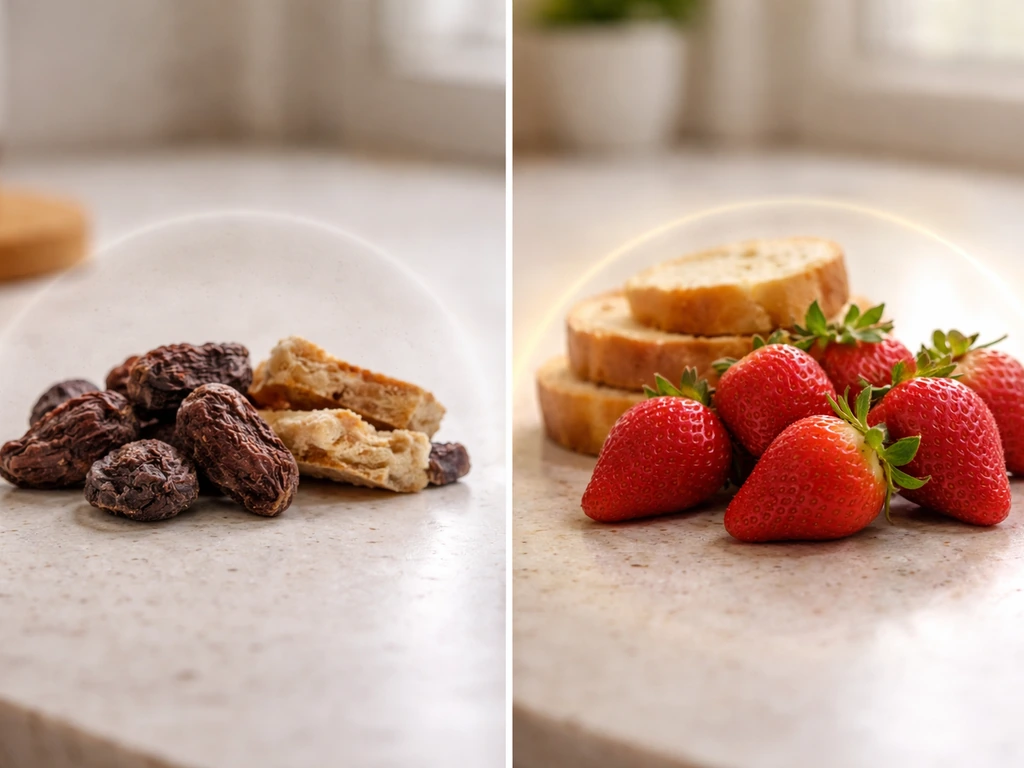
Water activity (a_w) measures how much free water is available for microbial use, on a scale from 0 to 1.0 (pure water). It is not the same as moisture content. A food can be wet but still have low water activity if the water is tightly bound by salt, sugar, or other solutes. This is why jerky, honey, and heavily salted fish can be shelf-stable.
blank" rel="noopener noreferrer">Most spoilage bacteria stop growing below an aw of about 0.91, and most pathogenic bacteria cannot grow below 0.85. The FDA uses 0.85 as its regulatory threshold: products with both a pH above 4.6 and an aw above 0.85 are classified as low-acid foods requiring strict process controls. Staphylococcus aureus is one of the most water-activity-tolerant pathogens, capable of growing down to around aw 0.86 under optimal conditions, and potentially as low as 0.83 under ideal temperature and pH. That tolerance is why S. aureus is a concern in cured and fermented meats even when salt levels seem high.
Molds are generally the most drought-tolerant group: many can grow down to aw 0.70 or lower, well below where bacteria have given up. This means dried products that are safe from bacterial contamination can still spoil or produce mycotoxins from mold. If a product is going to be stored at intermediate moisture levels (aw 0.70 to 0.90), mold control through pH, preservatives, or oxygen exclusion needs to be part of the plan.
Oxygen and atmosphere: it is not as simple as 'needs air or doesn't'
Oxygen requirements vary enormously across microbial species, and this variation creates some counterintuitive food safety risks. That is why you also need to consider which bacteria can still grow without oxygen when oxygen is removed from a package oxygen-free growth. Obligate aerobes need oxygen to grow and will not multiply in a vacuum-sealed package. Obligate anaerobes are the opposite: they require the absence of oxygen and can actually be harmed by oxygen exposure. These obligate anaerobes can grow in low-oxygen environments where oxygen is essentially absent. For that reason, the absence of oxygen can allow strictly anaerobic bacteria to grow even when aerobes cannot. Facultative anaerobes, which include many important pathogens like Listeria and E. Yeast cells can grow under either aerobic or anaerobic conditions, so oxygen status alone is not a reliable barrier against spoilage. coli, can grow with or without oxygen. Because facultative anaerobes can grow with or without oxygen, they still may multiply even when oxygen is removed. Microaerophiles need oxygen, but only at low concentrations, typically 2 to 10%, well below the 21% found in air.
The practical danger in oxygen management is that removing oxygen to protect against aerobic spoilage organisms can create conditions that favor strictly anaerobic pathogens, particularly C. botulinum. Vacuum packaging and modified atmosphere packaging (MAP) that drops oxygen below 1 to 2% creates the low-oxygen environment where C. botulinum grows best and produces its toxin. University extension programs and USDA guidance are explicit: oxygen scavengers or vacuum alone do not control C. botulinum. You need compensating barriers, refrigeration below 3°C, a pH below 4.6, adequate salt, or approved nitrite levels.
Listeria monocytogenes is a particular concern in vacuum-packaged ready-to-eat products because it is a facultative anaerobe that adapts well to low-oxygen environments. Research has shown that vacuum packaging can allow Listeria to reach dangerous levels faster than under aerobic conditions, which is why temperature control becomes even more critical when oxygen is removed.
If you are interested in the specific growth behaviors of organisms under varying oxygen conditions, the distinctions between obligate anaerobes, facultative anaerobes, and microaerophiles are explored in more depth across several related topics on oxygen-dependent growth behavior covered elsewhere on this site.
Salt, sugar, nutrients, and food composition
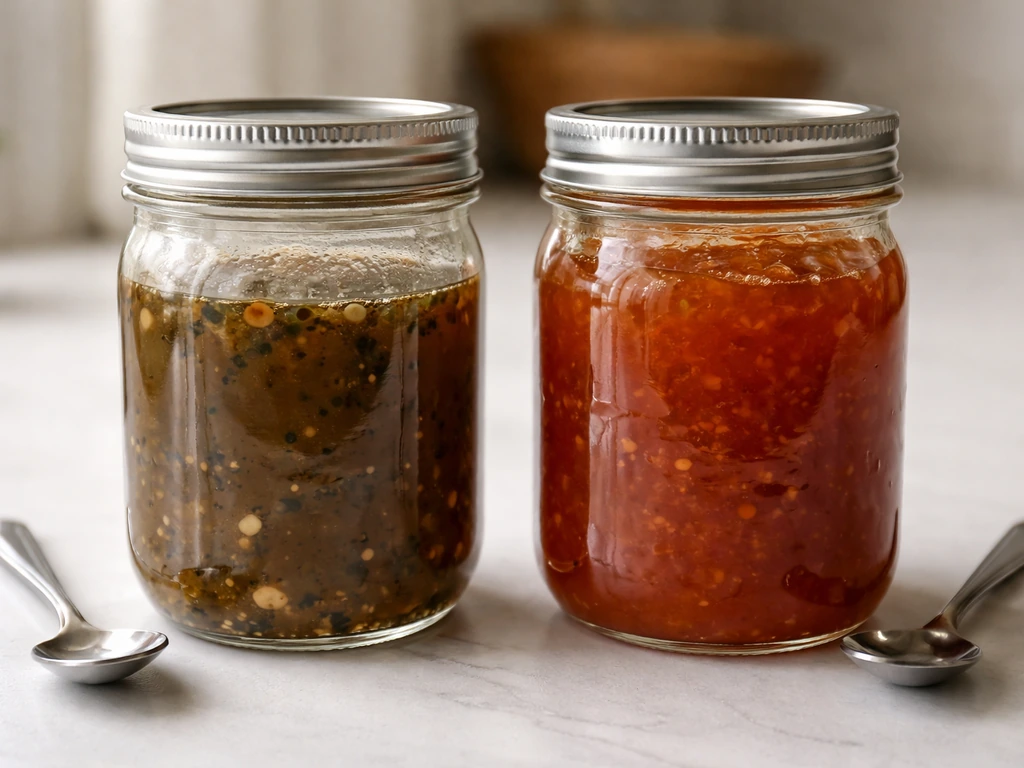
Salt and sugar inhibit microbial growth primarily by reducing water activity, not by any direct toxic effect. When you dissolve enough solute in a food, you tie up free water and create osmotic stress on microbial cells. The relationship between salt concentration and water activity is well characterized: roughly 20% NaCl by weight brings a_w down to around 0.85 to 0.86, which is the minimum growth threshold for S. aureus. At that level, most other pathogens have already stopped growing.
Sugar works the same way. Jams and preserves with high sugar content (typically 65% or above) achieve water activities low enough to prevent most bacterial growth. The classic spoilage risk at those levels shifts to osmotolerant yeasts and xerophilic molds rather than pathogens.
Preservatives like potassium sorbate, sodium benzoate, and calcium propionate work best in combination with low pH. At pH 4.5, these compounds at concentrations around 0.3% can effectively inhibit mold and yeast growth. At pH 5.5, the same concentration becomes much less effective because the active (undissociated) form of the acid preservative is pH-dependent. This is why the combination of pH control plus a preservative is so much more reliable than either alone.
For cured meat products, the regulatory approach combines salt and nitrite. FDA regulations specify that smoked fish, for example, must contain at least 3.5% NaCl and 100 to 200 ppm sodium nitrite in the finished edible portion. The nitrite specifically targets C. botulinum toxin production and works synergistically with the salt barrier. This kind of multi-hurdle formulation is the standard approach in processed foods, and it reflects the reality that no single barrier is fully reliable on its own for shelf-stable or low-oxygen products.
Nutrients matter too
Microbes need carbon, nitrogen, vitamins, and minerals to replicate. Some environments, like highly refined sugars, distilled spirits, or pure oils, simply lack the nutrients needed to support growth. This is part of why honey and pure vegetable oils are not microbial growth media under normal conditions. But introduce any contamination, add water, or change the composition and the picture changes.
A practical checklist for storage and preservation
The hurdle concept is the key takeaway from all of this. No single factor has to do all the work. Combining multiple partial barriers is both safer and more practical than trying to achieve absolute kill with one method. Here is how to think through it systematically.
- Set your temperature target first. Refrigerate at 4°C (40°F) or below for short-term perishable storage. Freeze at -18°C (0°F) to stop all growth, remembering that this does not kill most organisms. For thermal processing, use validated time-temperature combinations that account for the D-value of your target pathogen.
- Verify your equilibrium pH, not just surface pH. For acidified foods, the finished product must reach pH 4.6 or below throughout, including the center of dense pieces. Use a calibrated pH meter on the equilibrated product, not just the brine.
- Measure water activity if you are producing anything shelf-stable or reduced-moisture. Do not guess from moisture content alone. An a_w meter gives you the actual number. Target below 0.85 for broad bacterial control; below 0.70 for mold control in dry products.
- Assess your oxygen environment carefully. If you are using vacuum or MAP packaging, identify what anaerobic risks exist for your specific product. For any product that is not acidified (pH above 4.6) and not reliably refrigerated, reduced oxygen packaging without compensating barriers is a C. botulinum risk.
- Use salt and sugar as part of a multi-hurdle approach, not standalone safety measures. Know the water activity equivalents for your salt or sugar concentrations, especially for tolerant pathogens like S. aureus.
- If using preservatives, match them to your pH range. Sorbate, benzoate, and propionate are most effective below pH 4.5 to 5.0. At higher pH values, the required concentrations increase significantly and may not be practical.
- Account for spores separately. If your product is low-acid, low-oxygen, and shelf-stable, vegetative cell kill is not sufficient. You need validated thermal processing (retort or pressure canning) or a combination of barriers specifically validated to prevent spore germination and outgrowth.
- Document and test. Whether you are a home preserver or a food manufacturer, the difference between 'I think it is safe' and 'I have verified it is safe' is the verification step: pH testing, a_w measurement, and for commercial products, a process authority review of your full formulation and process.
The underlying principle across all of these steps is the same: microbes need a specific set of conditions to replicate, and each condition you control is a barrier between a safe product and a contamination event. Understanding where the limits are, and why those limits sometimes mean inhibition rather than death, is what makes the difference between a strategy that works and one that only works until something changes.
FAQ
If a food is “below the microbial growth limits,” is it automatically safe to eat later?
Not necessarily. Conditions can pause growth without killing cells, so safety depends on whether the barriers prevent later outgrowth (for example during thawing, dilution with liquid, or heating and then slow cooling back into the temperature danger zone).
What’s the safest way to handle leftovers if microbes might only be inhibited, not dead?
Cool fast after cooking, store cold (and keep the fridge below about 4°C), then reheat to hot temperatures before eating. The goal is to prevent surviving organisms from reactivating and multiplying during storage and between reheating cycles.
Why can refrigerated foods still develop contamination if freezing stops growth?
Because refrigeration can suppress growth but some organisms can slowly grow at cold temperatures (notably Listeria in many foods). Freezing stops growth, but any thawing that lingers in the temperature danger zone can allow rapid catch-up growth.
How do I decide whether I should rely on pH or water activity control for a specific product?
Use both when the product is near thresholds. Foods with pH above 4.6 are high-risk unless water activity is also low, and foods with a_w above 0.85 require stronger process controls. The combination matters more than either number alone.
What does “equilibrium pH” mean in practical terms, and why does surface pH mislead?
Equilibrium pH is the final pH throughout the entire product after acid has fully penetrated and mixed. In practice, whole pieces (like peppers) can keep a neutral core if brining and penetration time were insufficient.
Does salt always make food safe just by being salty enough?
Salt primarily lowers water activity, but some pathogens are salt-tolerant. For example, Staphylococcus aureus can still grow near the a_w range around 0.85 to 0.86 under the right conditions, so you need to manage temperature and pH alongside salt.
Are vacuum-packed foods risk-free because oxygen is removed?
No. Removing oxygen can eliminate aerobes, but it can also favor strictly anaerobic organisms or organisms that tolerate low oxygen. This is why oxygen-free packaging needs compensating barriers, especially for low-acid shelf-stable products.
Is pasteurization or “cooking until done” the same as achieving microbial kill?
Not always. Thermal processing must be designed as lethality over time, often expressed with D-values and total effect (F-values). Some methods may stop visible growth without eliminating spores, which can later germinate.
Why do spores survive when vegetative cells die, and what does that imply for storage?
Spores resist heat, drying, and some acidity better than vegetative cells. If spores remain and later conditions improve (temperature, moisture, oxygen, nutrients), they can germinate and rebuild the population.
What’s the common mistake when using preservatives like sorbate or benzoate?
Using the preservative dose without confirming pH and the preservative’s active form. Effectiveness depends strongly on pH, so the same concentration can be far less inhibitory if the product is closer to neutral.
Why do jams and high-sugar foods still sometimes spoil?
At high sugar, bacterial growth is usually suppressed, but yeasts and molds that tolerate low water activity can still grow and spoil the product. Storage hygiene and mold control still matter even when bacteria are unlikely to multiply.
Can a product be “microbe-free” and still get contaminated later?
Yes. Many microbial barriers prevent growth after contamination, but they do not prevent contamination itself. Once you introduce water and nutrients, surviving microbes from handling can exploit conditions that were previously limiting.
How do I think about “microbes can’t grow” for a home recipe like pickling or fermented foods?
Treat it as multi-hurdle control, not one magic lever. Verify pH reaches the correct target throughout the jar, keep temperature controlled during early fermentation and storage, and avoid relying only on “it tastes sour” or “it looks acidic on top.”
What should I do if I’m using a modified atmosphere package (MAP) or oxygen scavengers?
Don’t assume packaging is the barrier. Pair low oxygen with approved, validated controls such as refrigeration (often stricter for RTE products), pH control where applicable, and other hurdles that prevent outgrowth of low-oxygen adapted pathogens.
Next Article
Yeast Cells Can Grow Under Aerobic or Anaerobic Conditions
How yeast grows with oxygen or without it, expected metabolism, byproducts, and a simple test design to compare results.