Intestinal bacteria can grow in the presence of warmth (roughly 40°F to 140°F), adequate moisture, near-neutral pH, and available nutrients, especially when oxygen conditions match the organism's preference. Get all those factors right from the bacteria's point of view, and they multiply fast. Yeast cells can likewise grow under aerobic or anaerobic conditions, depending on the environment they encounter. Remove even one of them effectively, and you stop growth cold, sometimes literally.
Intestinal Bacteria Can Grow in the Presence of Key Conditions

Marcus Reeves
11 Jul 2026
What intestinal bacteria actually need to grow
Growth in microbiology means active cell division, not just staying alive. Before a bacterium starts dividing in a new environment, it goes through a lag phase where it adjusts its enzyme systems and internal chemistry. During that window, population size stays flat. Once the lag phase ends, cells enter exponential growth and numbers can double in as little as 20 minutes for E. coli under ideal conditions, or around 45 to 60 minutes for Listeria monocytogenes at body temperature. That speed is why the conditions that support growth matter so much in food safety.
For gut-adapted bacteria, the five big growth drivers are: oxygen availability, pH, temperature, water activity, and nutrients. Think of them as a combination lock. All five need to be in the right range for growth to happen. Change any one of them far enough outside the organism's tolerance, and multiplication stops, even if the bacteria stay alive.
Oxygen: aerobic, anaerobic, and everything in between
The gut is a low-oxygen environment, and many intestinal bacteria reflect that. Common gut pathogens and commensals fall into a few oxygen categories that directly affect where and how they grow outside the body.
| Oxygen Category | Example Gut Bacteria | Grows Best In | Practical Concern |
|---|---|---|---|
| Facultative anaerobe | E. coli, Salmonella, Listeria | Either oxygen-rich or oxygen-depleted environments | Will grow on food surfaces exposed to air or sealed in packaging |
| Obligate anaerobe | Clostridium perfringens, C. botulinum | Strictly oxygen-free environments | Thrives inside cooked meats, canned foods, vacuum-packed items |
| Microaerophilic | Campylobacter jejuni | Very low oxygen (3–5% O2) | Grows poorly on open surfaces; more of a concern in specific packaging conditions |
| Aerobic | Some Bacillus species | Oxygen-rich environments | Surface growth on exposed food; less common as a gut pathogen |
The practical takeaway: facultative anaerobes like E. coli and Salmonella are the most flexible and therefore the most common food-safety concern. They will grow whether your kitchen counter has airflow or not. Obligate anaerobes like C. perfringens are the reason slow cooling of cooked meats is dangerous, because the interior of a large pot of stew or gravy is essentially anaerobic and stays warm for hours if not cooled properly.
pH and acidity: the range where gut bacteria thrive
Most intestinal bacteria are neutrophiles, meaning they grow best at pH values close to neutral. Salmonella's optimum is around pH 7.0 to 7.5, and E. coli actively grows across a wide range of roughly pH 4.5 to 9.0. That's a lot of latitude. Most foods sit somewhere in that range.
Acidity is one of the most reliable growth blockers we have in food preservation. The FDA considers pH 4.4 or below sufficient to prevent growth of Listeria monocytogenes. At pH 2 (the acidity of stomach acid), E. coli can survive for several hours but doesn't multiply. That distinction matters: survival is not growth. Acid-adapted strains can even extend that survival window further.
For food preservation, organic acids (lactic, acetic, citric) are more effective than mineral acids at the same pH because they penetrate the bacterial cell membrane in their undissociated form. That's why properly acidified pickles or vinegar-based products are shelf-stable, while simply measuring a low pH isn't always enough on its own without confirming the acid type and concentration.
Temperature and time: why the danger zone is exactly that
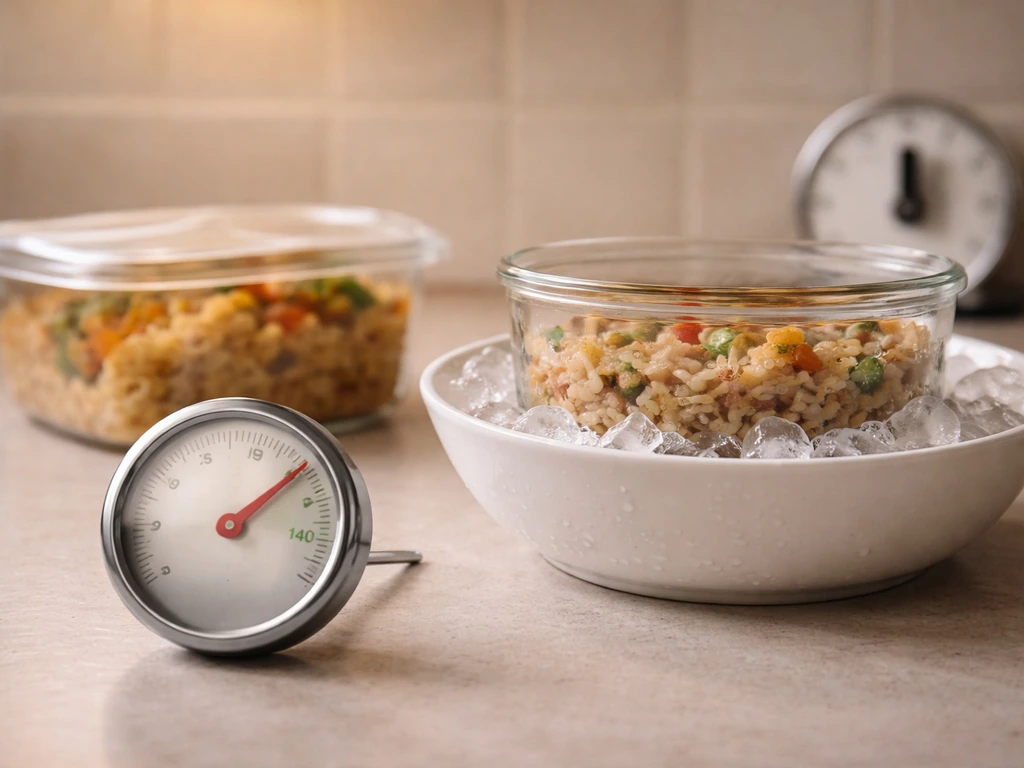
The USDA and CDC define the temperature danger zone as 40°F to 140°F (4°C to 60°C). In that range, gut-adapted bacteria can multiply rapidly. At room temperature (around 70°F), most intestinal pathogens are actively growing. C. perfringens hits its peak growth rate at an unusually high 43°C to 45°C, which is why it's so well-suited to warm buffet foods and slow-cooling stews.
Time inside the danger zone compounds the risk. CDC guidance says not to leave perishable food out for more than 2 hours, or just 1 hour if the ambient temperature is above 90°F. The FDA Food Code's cooling framework is even more specific: cool cooked food from 135°F down to 70°F within 2 hours, then from 70°F down to 41°F or below within an additional 4 hours. That 6-hour total cooling window exists because the lag phase buys some time, but once bacteria shift into exponential growth, each extra 20 to 60 minutes can mean a doubling of the population.
Refrigeration at 40°F (4°C) or below doesn't kill most intestinal bacteria, but it slows their growth dramatically. Some pathogens, including those that are obligate anaerobes, grow primarily without oxygen when conditions favor anaerobic growth slows their growth dramatically. Freezing at 0°F stops growth entirely and can inactivate some organisms over time, but don't rely on freezing as a kill step for pathogens already present in significant numbers.
Moisture and nutrients: why dry food doesn't grow bacteria
Water activity (aw) measures how much free water is available for microbial use, on a scale from 0 to 1.0. Pure water is 1.0. Most fresh foods (meat, produce, cooked grains) have an aw above 0.95, which comfortably supports bacterial growth. The general lower limit for bacterial growth is around aw 0.90, though some organisms are more tolerant of dryness than others. C. botulinum, for example, needs at least aw 0.93 to grow. Below aw 0.86, bacterial growth slows significantly; below 0.80, most bacteria cannot grow at all, though molds may still manage.
Reducing water activity through salting, drying, or adding sugar is one of the oldest and most reliable preservation strategies. When you add salt to a brine, you tie up free water molecules. When you dry meat into jerky, you remove them. Either way, the bacteria present may still survive, but they can't actively replicate without enough free water.
Nutrients matter too. Intestinal bacteria evolved in an environment rich in undigested carbohydrates, proteins, and fats. On food surfaces, they find exactly the same building blocks. High-protein, high-moisture foods like cooked chicken, ground beef, and cooked rice are consistently implicated in foodborne illness outbreaks because they provide the combination of nutrients, water activity, and neutral pH that gut pathogens prefer.
Bile, fiber, and gut chemistry: what supports growth in the intestine (and its food-world equivalents)
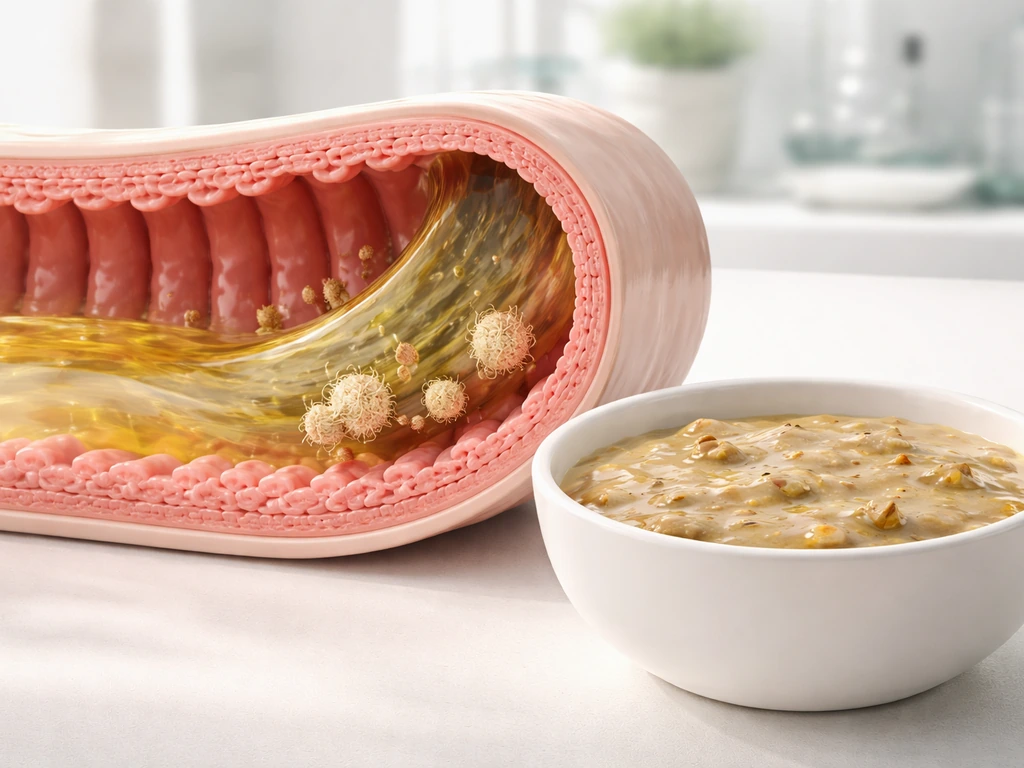
Inside the intestine, bacteria face a complex chemical environment. Bile salts are one of the most important players. In high concentrations, bile acids are actually antimicrobial: their detergent-like properties disrupt bacterial membranes. But gut-adapted bacteria have evolved resistance mechanisms, including efflux pumps and membrane modifications, that let them tolerate or even use bile salts as a signal that they're in the right location to colonize.
This is practically demonstrated in microbiology labs. MacConkey agar contains bile salts and crystal violet specifically to mimic gut conditions and select for Gram-negative intestinal bacteria like E. coli and Salmonella, while killing off most Gram-positive organisms. Bile tolerance is therefore a marker of intestinal adaptation.
Fiber and undigested carbohydrates are the primary fuel for many intestinal bacteria. In the colon, fermentable fibers like inulin, resistant starch, and pectin feed organisms that produce short-chain fatty acids. Outside the body, foods rich in fermentable carbohydrates (cooked legumes, whole grains, starchy leftovers) can support similar microbial growth if temperature and moisture are favorable. The gut-food parallel is real: if a food's chemistry resembles intestinal contents, it's a better growth medium for gut-adapted bacteria.
Survival vs growth: an important distinction
Growth and survival are not the same thing, and confusing them leads to poor risk decisions. Growth means active cell division and an increasing population. Survival means cells remain viable and potentially infectious but are not multiplying. Many conditions that stop growth don't kill the bacteria.
- Refrigeration (below 40°F) stops or severely slows growth of most intestinal pathogens but does not eliminate them. Listeria monocytogenes can still grow slowly at refrigerator temperatures, which is why it's a particular concern in ready-to-eat foods.
- Low pH around 2 (stomach acid level) suppresses E. coli growth but allows survival for hours, especially in acid-adapted strains.
- Low water activity preserves viable cells. Salmonella can survive for months in dry, low-aw foods like peanut butter or dried spices without multiplying.
- Freezing stops growth and can reduce viable counts over time, but does not reliably sterilize food.
- At the growth/no-growth interface (just below the minimum conditions for multiplication), bacteria maintain survival mechanisms while biosynthetic processes are insufficient to support population increase.
The practical implication: a food that has been refrigerated still contains the bacteria that were present when it went into the fridge. If it then enters the danger zone (during a long commute, a power outage, or slow reheating), those surviving cells can resume growth quickly, often skipping a long lag phase because they were merely dormant rather than dead.
Preventing growth in your kitchen and food operation
You can't always eliminate intestinal bacteria from food environments, but you can deny them the conditions they need to grow. Bacteria that do not need oxygen to grow, such as many anaerobes, can still survive and multiply if other growth conditions are met. The food safety approach uses the concept of 'hurdles': stacking multiple inhibitory factors so that no single one has to do all the work.
- Keep cold food cold. Refrigerate at 40°F (4°C) or below, verified with an appliance thermometer. Don't assume your fridge is accurate.
- Keep hot food hot. Hold cooked food at 135°F (57°C) or above if it's not being served immediately.
- Cool food fast. Move cooked food from 135°F to 70°F within 2 hours, then to 41°F or below within 4 more hours. Use shallow pans, ice baths, or blast chillers to hit those windows.
- Don't leave perishables out for more than 2 hours. Drop that to 1 hour if room temperature exceeds 90°F.
- Control pH where possible. For preserved items, target pH 4.4 or below using tested acidification methods. Don't guess: use a calibrated pH meter.
- Reduce water activity for shelf-stable products. Salting, drying, and adding sugar all lower aw. Keep dried foods sealed and dry after opening.
- Sanitize food-contact surfaces. Clean first to remove organic matter, then apply a sanitizer such as a solution of 1 tablespoon of chlorine bleach per gallon of water to food-contact surfaces.
- Use multiple hurdles together. Refrigeration plus reduced pH (as in acidified sauces) is far more protective than either factor alone.
These steps directly counter the conditions that allow intestinal bacteria to grow. Temperature control cuts off the warmth they need. Rapid cooling minimizes time in the danger zone. pH control and water activity reduction both target the chemical environment bacteria depend on for metabolism and division. Together, they give you real, evidence-based control rather than hope.
FAQ
If intestinal bacteria are refrigerated, can they still become a problem later?
Even if a food looks clean, intestinal bacteria can be present as survivors from earlier contamination, and they may resume division later. That is why the risk is highest when refrigerated food spends time back in the temperature danger zone during events like long delivery windows, power outages, slow reheating, or prolonged countertop holding.
Does reaching a low pH always kill intestinal bacteria rather than just stopping growth?
No. Reducing pH to a level that blocks growth for one organism does not guarantee the same for all species or strains. Some bacteria can survive acidic conditions for hours without multiplying, and acid-adapted strains can extend that survival window, so you still need time and temperature control.
Will covering food or changing airflow stop intestinal bacteria from growing?
For many pathogens, oxygen status is not a simple yes or no. Facultative anaerobes can grow with or without oxygen, so “covering” food or changing kitchen airflow usually does not fully stop growth. Obligate anaerobes are more limited to low-oxygen environments, which is why slow cooling in thick, oxygen-poor interiors is risky.
Is freezing a safe alternative to temperature control for contaminated food?
Yes, freezing stops growth but does not reliably eliminate cells, especially if freezing occurs after significant contamination. Over time, some organisms may be injured and less able to multiply, but you should assume viable bacteria can remain and resume growth after thawing if the food warms into the danger zone.
If salt or sugar prevents growth, do the bacteria die permanently?
Salt, sugar, and drying do not necessarily “kill on contact.” They reduce available free water (water activity), so bacteria may stay alive but cannot divide. This means thawed or rehydrated foods can become a growth medium again if temperature and nutrients are favorable.
How should I reheat leftovers differently after they may have cooled slowly?
Reheating should be treated as a separate step from initial cooking and cooling. If leftovers are allowed to cool slowly or sit warm, bacteria can already reach high numbers, so reheating only at the center may not be enough if the heat does not penetrate. Reheat to a safe internal temperature quickly and avoid holding hot food for extended periods.
If bacteria were introduced hours ago, is the danger-zone time what matters most?
The “danger zone” concept applies to both new contamination and bacteria that survived earlier storage. Growth can restart once the food warms into the range, and time compounds risk because populations can shift into exponential growth after the lag phase.
Does 40°F to 140°F always mean growth is impossible below 40°F?
Not necessarily. Microbes do not grow as fast in cold conditions, but growth can still occur if the food sits too long above safe refrigeration temperatures, especially for organisms that can tolerate low oxygen or higher nutrients. Treat 40°F (4°C) or below as a target to minimize growth, and don’t store “borderline warm” food.
Why do some low-moisture or salted foods still cause illness?
Water activity reduction needs the right degree, not just a “little.” Some organisms tolerate moderate dryness, but below certain aw thresholds many bacteria cannot multiply. That is why jerky, properly salted brines, and correctly made pickles are effective, while imprecise home methods or diluted brines can undercut control.
Can I rely on bile salts or gut-like chemistry to keep food safe?
Bile salts are an example of a gut-adaptation factor, but they are not a reliable “control” for food. You cannot count on bile chemistry in food as an antimicrobial hurdle, because concentration and conditions in food differ from the intestine, and many foodborne bacteria can survive harsh environments.
Next Article
Obligate Anaerobes Can Grow in Oxygen-Free Environments
Obligate anaerobes grow only in truly oxygen-free or very low redox, oxygen-limited spots like deep tissues, sediments,