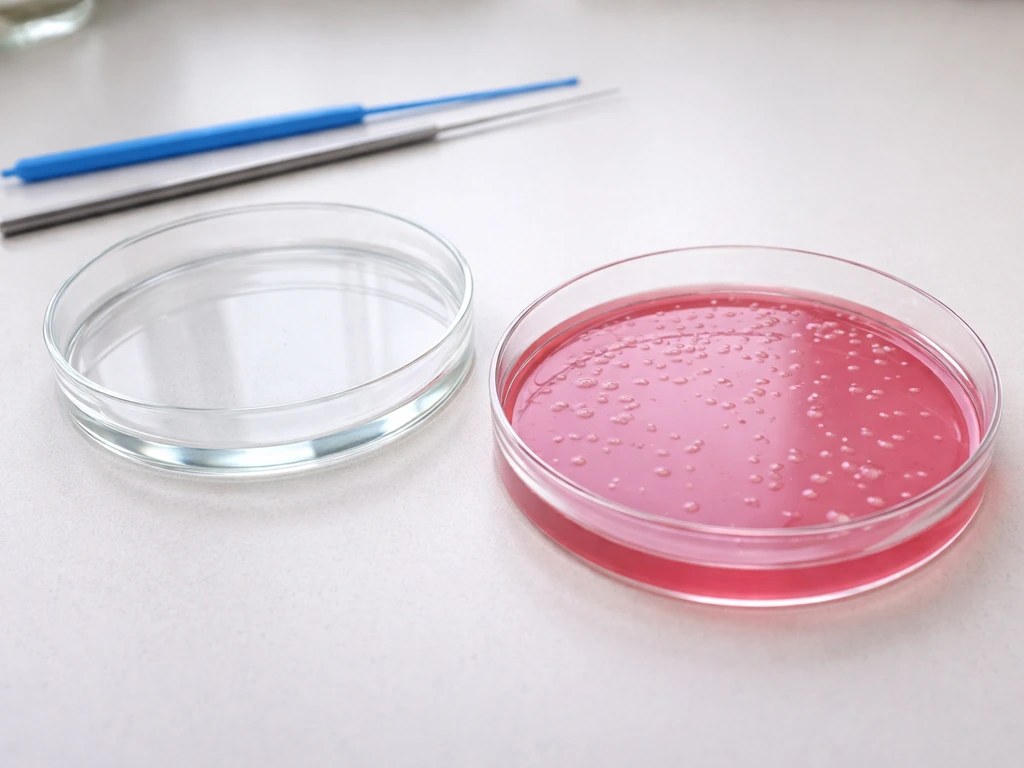
Mannitol Salt Agar will only grow bacteria that are halotolerant, meaning they can survive in a high-salt environment of around 7.5% NaCl. That salt concentration is the primary selective gate. Beyond just surviving, the medium also differentiates those halotolerant organisms by whether they can ferment mannitol and produce acid, which triggers a visible color change from red to yellow. So the complete answer to the sentence is: MSA grows bacteria that are salt-tolerant, and it further separates those into mannitol fermenters (yellow) and non-fermenters (red/pink growth, no color change).
Mannitol Salt Agar Will Only Grow Bacteria That Are Salt Tolerant

Marcus Reeves
25 Jun 2026
What Mannitol Salt Agar is and what it's actually for
Mannitol Salt Agar is a dual-purpose microbiological medium: it is both selective and differential. Selective means it blocks most organisms from growing in the first place. Differential means it uses a chemical indicator to sort the organisms that do grow into distinct categories based on their metabolism.
The FDA's Bacteriological Analytical Manual formulation for MSA calls for 75 g of NaCl and 10 g of mannitol per liter, plus 0.025 g of phenol red as a pH indicator, at a final pH of 7.4. Those three components work together: the salt selects, the mannitol provides a fermentable substrate, and the phenol red reports what happens metabolically. The medium is widely used in food safety labs, clinical microbiology, and teaching labs to screen for staphylococci, particularly when isolating potential pathogens from food samples or clinical specimens.
The key selective factor: high salt concentration
The 7.5% NaCl is what does the heavy lifting on selectivity. Most bacteria you would encounter in a food sample or on a surface cannot tolerate that osmotic stress, so they simply won't grow. This is not a gentle filter; it wipes out the vast majority of organisms. What's left are halotolerant or halophilic bacteria, meaning organisms that have evolved mechanisms to function under high-salt conditions.
Staphylococci are the textbook halotolerant group, and they're the target organism MSA was designed around. That said, salt tolerance is a physiological trait shared by several microbial groups, not a species-specific marker. The medium is not 100% exclusive to any single species or even genus. It's selecting for a functional characteristic, not a taxonomic identity. This is a critical distinction: growing on MSA tells you the organism tolerates high salt; it does not tell you which species you have. If you are asking specifically whether Proteus vulgaris can grow on mannitol salt agar, you still need to evaluate salt tolerance and then confirm with additional tests which species you have.
The differentiating factor: mannitol fermentation and the phenol red color change
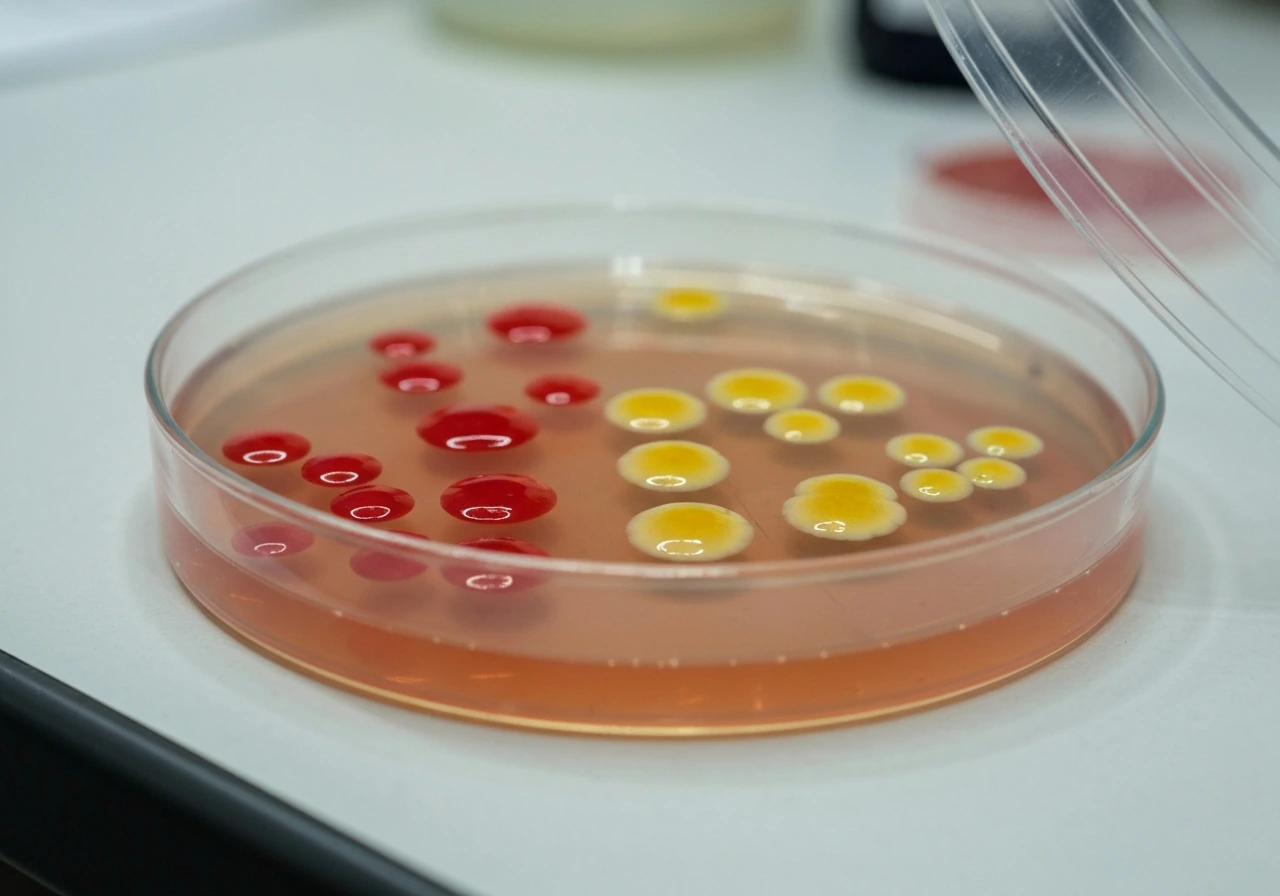
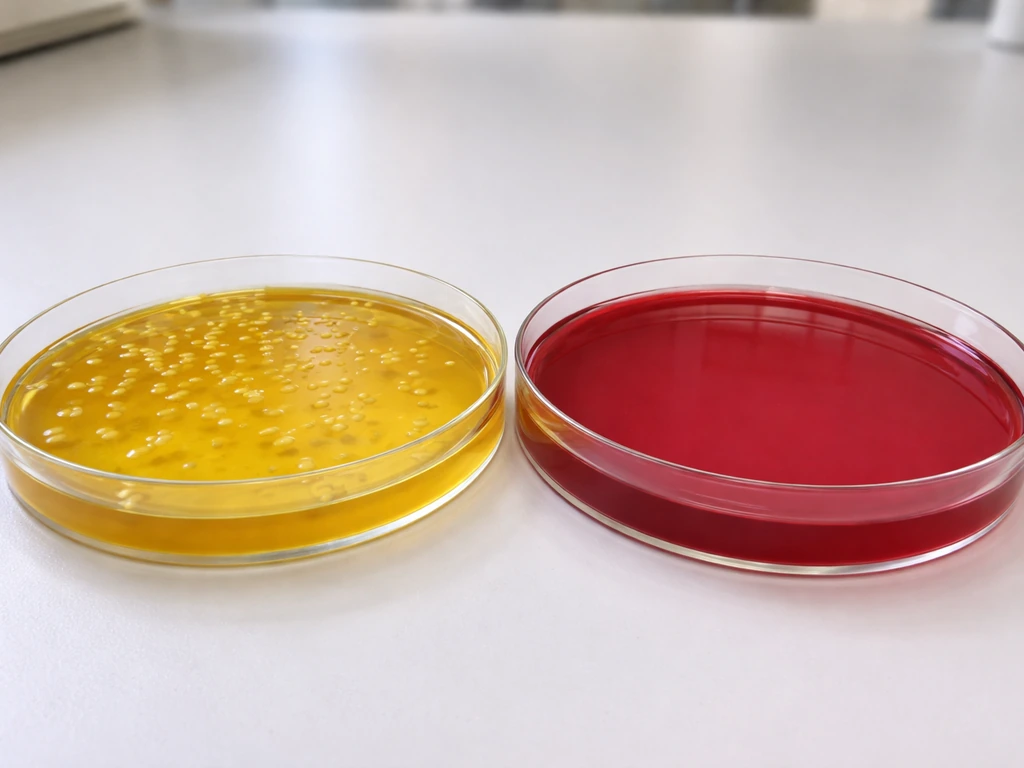
Once an organism survives the salt and grows on the plate, the mannitol-plus-phenol-red system tells you more about its metabolism. blank" rel="noopener noreferrer">Phenol red is a pH indicator that is red at neutral pH (around 7.4) and shifts to bright yellow when the pH drops below about 6.8. If a growing organism ferments mannitol, it produces acidic byproducts that lower the pH of the surrounding medium, and you see that yellow color develop around the colonies or across the plate.
An important clarification from ASM training protocols: it is the medium color change that indicates mannitol fermentation, not simply the presence of colonies. A colony growing on a still-red plate tells you salt tolerance only. A yellow zone or yellow medium tells you salt tolerance plus mannitol fermentation. Those are two separate pieces of information, and conflating them is one of the most common mistakes when reading MSA results.
What grows and what doesn't: typical results on MSA
Here's how results typically map out in practice:
| Organism | Grows on MSA? | Medium color change | What it means |
|---|---|---|---|
| Staphylococcus aureus | Yes | Yellow (mannitol fermented) | Salt-tolerant, mannitol fermenter |
| Staphylococcus epidermidis | Yes | Red/pink (no fermentation) | Salt-tolerant, non-fermenter |
| Other coagulase-negative staphylococci | Yes (most) | Red/pink typically | Salt-tolerant, non-fermenters |
| Enterococcus spp. | Possible (some strains) | Variable | Some halotolerance; not the target organism |
| Proteus vulgaris | Poor or no growth | No color change expected | Not mannitol fermenter; salt-sensitive |
| Most Gram-negative rods (e.g., E. coli, Salmonella) | Inhibited | No growth | Salt-sensitive; selectively excluded |
S. aureus is the classic yellow-colony result and the organism MSA is most commonly used to detect. S. epidermidis grows but leaves the medium its original red/pink color because it doesn't ferment mannitol. Most Gram-negative organisms, including Salmonella and Pseudomonas (which are discussed in other selective media contexts involving MacConkey agar), are inhibited by the salt and simply don't appear. Pseudomonas is inhibited on mannitol salt agar because it does not tolerate the high salt environment, so it typically does not grow on MSA. Proteus vulgaris, which does not ferment mannitol and is generally salt-sensitive, would not produce the expected MSA reaction even in the unlikely event that some limited growth occurred.
How to read the plate and confirm what you've got
Reading an MSA plate is a two-step process: first, note whether there is growth at all, and second, note the color of the medium around and under the colonies. Here's the practical read-out:
- No growth: the organism is salt-sensitive and was inhibited. MSA did its selective job.
- Growth with red/pink medium: the organism is halotolerant but does not ferment mannitol. Presumptive coagulase-negative Staphylococcus or similar salt-tolerant non-fermenter.
- Growth with yellow medium: the organism is halotolerant and ferments mannitol. Presumptive S. aureus or another mannitol-fermenting halotolerant organism.
- Perform confirmatory tests before calling any result final.
MSA gives you a presumptive identification only. For confirmation, the standard workflow recommended in NCBI's Medical Microbiology reference is to Gram stain colonies picked from the plate, then run a catalase test, and then a coagulase test. Coagulase-positive, Gram-positive cocci in clusters, catalase-positive: that's your confirmation of S. aureus. The coagulase test is the differentiator between S. aureus (coagulase-positive) and the coagulase-negative staphylococci like S. epidermidis. Some labs subculture MSA colonies onto a non-selective medium before running biochemical tests, because the high salt can interfere with some downstream assays.
Incubation time matters for the color result
Remel's IFU materials note that some S. aureus strains can show delayed mannitol fermentation. If you pull a plate early and the medium is still red around colonies, don't immediately call it a non-fermenter. Standard incubation is typically 24 to 48 hours at 35 to 37°C. A PMC study on mannitol-use-deficient S. aureus strains has also documented that some S. aureus isolates may produce a weaker yellow reaction or even fail to turn yellow under certain conditions. That's a real but relatively uncommon scenario, and it reinforces why color alone is never the final answer.
Common misconceptions and troubleshooting
Misconception 1: MSA grows only one specific species
MSA is selective for a trait (salt tolerance), not a species. Because MSA selects for salt-tolerant bacteria, Burkholderia cepacia can be evaluated for growth on it as part of that selectivity check. Several organisms can survive the 7.5% NaCl environment. The medium narrows the field dramatically, but it does not produce a pure culture of one species from a mixed sample. You're seeing a subset of the original microbial community, not a guaranteed single organism.
Misconception 2: Yellow color alone confirms S. aureus
Yellow on MSA means mannitol was fermented in a high-salt environment. Gram-positive cocci can sometimes grow on selective media like MacConkey agar only if conditions allow, but MSA is the medium specifically designed for salt-tolerant organisms can gram-positive bacteria grow on macconkey agar. S. aureus is the most common clinical and food-safety organism behind that result, but you need confirmatory testing before reporting it as S. aureus. Always follow up with Gram stain and coagulase testing.
Misconception 3: No color change means no pathogen
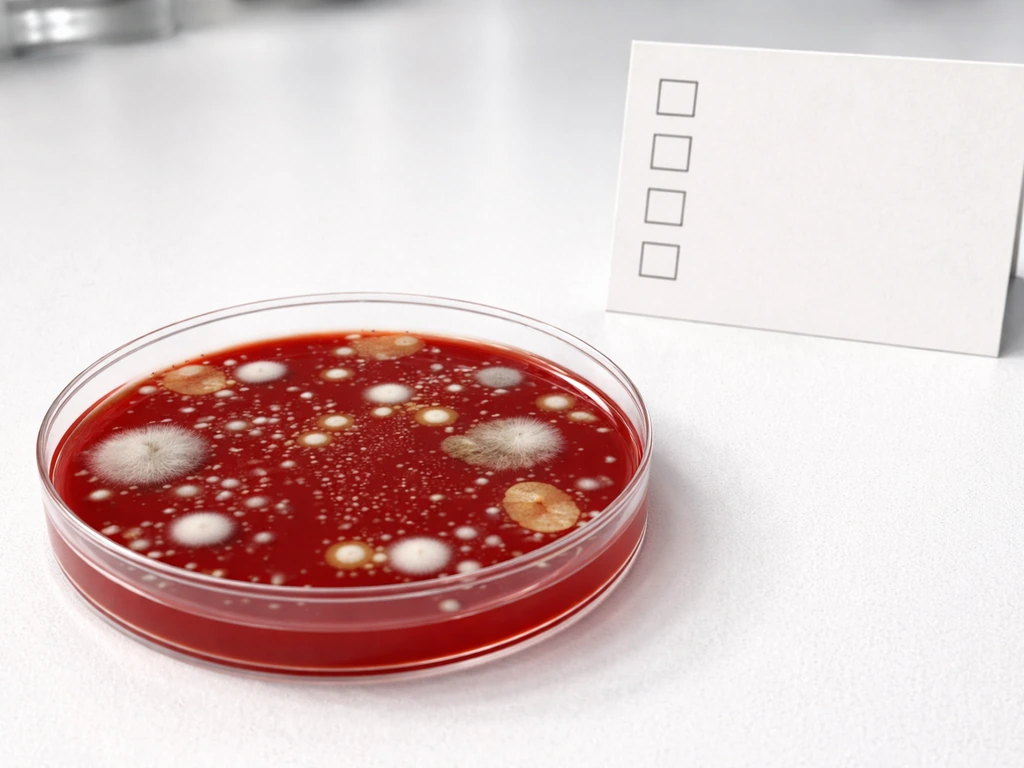
Coagulase-negative staphylococci grow on MSA without changing the medium color, and while many are considered lower-risk, some species in that group are clinically relevant, particularly in immunocompromised patients or device-associated infections. Salmonella does not typically grow on mannitol salt agar (MSA), because the medium is selective for high-salt, mannitol-fermenting organisms grow on MSA. A red/pink plate is not a clean bill of health; it just means the organism present doesn't ferment mannitol.
Troubleshooting: unexpected growth or unusual results
- Faint or no yellow after 48 hours: Extend incubation to 72 hours before concluding non-fermentation. Some strains ferment slowly.
- Unexpected growth of non-staphylococci: Enterococci and a few other halotolerant organisms can break through MSA's selectivity. Gram stain and catalase testing will quickly separate them from staphylococci.
- Over-reliance on color without colony morphology: Note colony size, texture, and pigment alongside medium color. S. aureus typically produces golden-yellow, shiny colonies on MSA.
- Cross-contamination from adjacent colonies: On a heavily inoculated plate, acid produced by one yellow colony can diffuse and artificially shift the color around neighboring non-fermenting colonies. Streak for isolation to avoid this.
- Assuming MSA result equals pathogenicity: Salt tolerance and mannitol fermentation tell you about the organism's metabolic traits, not its virulence. Pathogenicity assessment requires additional context and testing.
Putting it all together: MSA as a starting point, not a final answer
MSA is a powerful and well-validated screening tool. Its 7. 5% NaCl formulation knocks out most of the microbial background, and the phenol red mannitol system gives you a rapid visual clue about fermentation. But it works best as the first step in a workflow, not the last.
Growth on MSA tells you: this organism tolerates high salt. Yellow medium tells you: this organism also ferments mannitol. Confirmatory biochemical tests tell you: this is (or isn't) S. aureus.
Run the full sequence and you have a reliable, defensible result. Skip any step and you're working with incomplete information. Proteus vulgaris is generally not expected to grow on MacConkey agar because it does not tolerate the medium's selective conditions as well as typical Gram-negative enteric bacteria.
FAQ
If a plate shows no color change, does that mean the organism is definitely not salt tolerant?
No. A red or pink medium indicates no mannitol fermentation, not necessarily lack of salt tolerance. If colonies grow at all in the presence of 7.5% NaCl, the organism is at least halotolerant; the red color is telling you it is not lowering the pH by fermenting mannitol.
Why can’t I use “yellow colonies” as a direct report of S. aureus?
Yellow color indicates mannitol fermentation under high-salt conditions, which is only presumptive. Other salt-tolerant mannitol fermenters can produce similar color, so you still need Gram stain and coagulase-based confirmation (many labs include catalase before coagulase).
How long should I incubate before deciding whether mannitol fermentation occurred?
Do not read the plate too early. Some S. aureus strains show delayed fermentation, so if the medium is still red around colonies, extend incubation per your lab’s standard window (commonly 24 to 48 hours at 35 to 37°C) before labeling it a non-fermenter.
Can Proteus vulgaris grow on mannitol salt agar even if it does not ferment mannitol?
In theory, you might see limited survival, but it is generally not expected because it is typically salt sensitive on 7.5% NaCl. Even if you saw growth, you should still expect a red/pink result because mannitol fermentation is not the expected trait.
What’s the practical difference between “growth on MSA” and “yellow medium,” when interpreting results?
Growth on MSA answers the salt tolerance question (survives 7.5% NaCl). Yellow or yellowing around colonies answers the fermentation question (acid production from mannitol). Conflating these leads to incorrect presumptive ID.
Why might I see weak or incomplete yellowing on a plate that otherwise seems consistent with S. aureus?
Some strains can ferment mannitol more slowly or produce a weaker pH shift, especially depending on timing and conditions. If you get borderline color, treat it as presumptive and proceed to confirmatory tests rather than making a final identification from color alone.
Does MSA produce a pure culture from a mixed specimen?
No. MSA narrows the field to halotolerant organisms, but it does not guarantee you have one species. Mixed samples can produce multiple colony types, so you should pick representative colonies and confirm each as needed.
If MSA is selective for salt tolerance, could non-staphylococcal bacteria still grow?
Yes. Salt tolerance is functional, not a species label, so multiple microbial groups can grow on 7.5% NaCl. That is why MSA is a screening medium, not a definitive identification tool.
Can Gram-negative bacteria ever appear on MSA plates?
Most Gram-negative bacteria are inhibited by the high salt and typically do not appear. If you do see growth, interpret it cautiously and consider whether the plate conditions, sample handling, incubation conditions, or strain-specific salt tolerance could explain the unexpected result.
Do I need to subculture colonies before confirmatory biochemical testing?
Many workflows include subculturing from selective plates onto a non-selective medium first. This helps reduce interference from the selective environment and ensures the organism is healthy for downstream assays like catalase and coagulase.
Next Article
Does Salmonella Grow on MacConkey Agar? Results and Interpretation
Learn if Salmonella grows on MacConkey agar, expected colony traits, and how to interpret and confirm results.