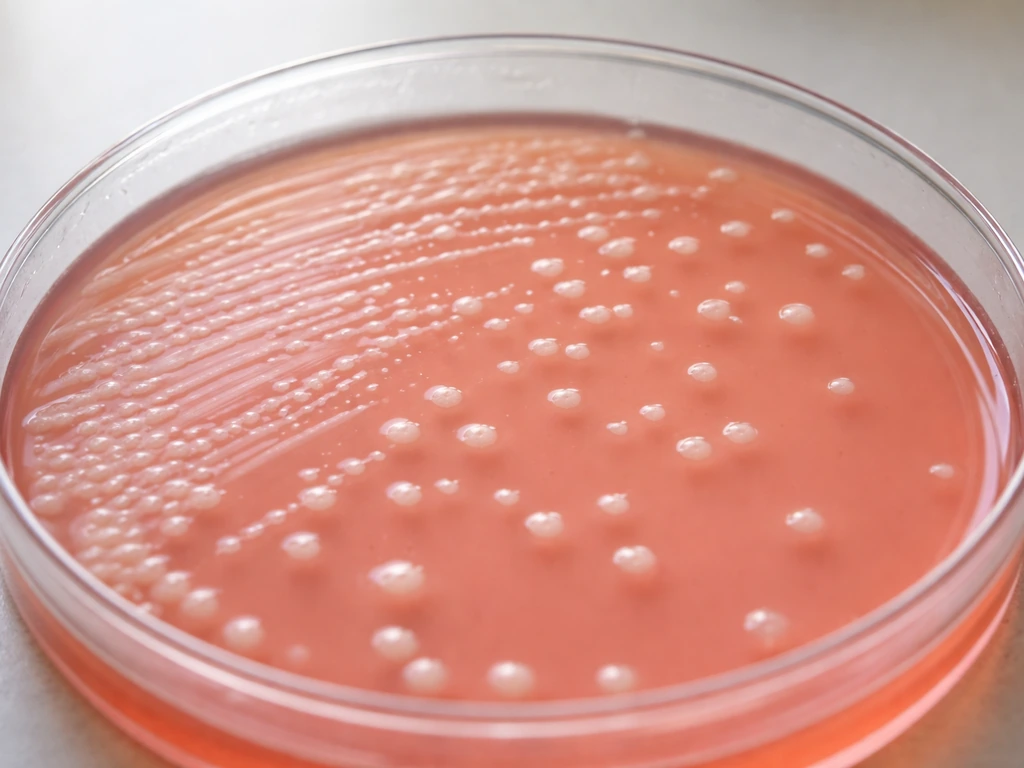
Yes, Salmonella grows on MacConkey agar. Burkholderia cepacia may grow on MacConkey agar, so color alone is not a reliable way to identify it. It produces small, colorless or pale straw-colored colonies roughly 1–3 mm in diameter after 18–24 hours at 30–35°C, because it does not ferment lactose. That colorless appearance is actually the key clue you are looking for. But seeing those colonies is only a blank" rel="noopener noreferrer">presumptive result. MacConkey alone cannot confirm Salmonella, and that distinction matters a lot in any real workflow.
Does Salmonella Grow on MacConkey Agar? Results and Interpretation

Marcus Reeves
19 Jun 2026
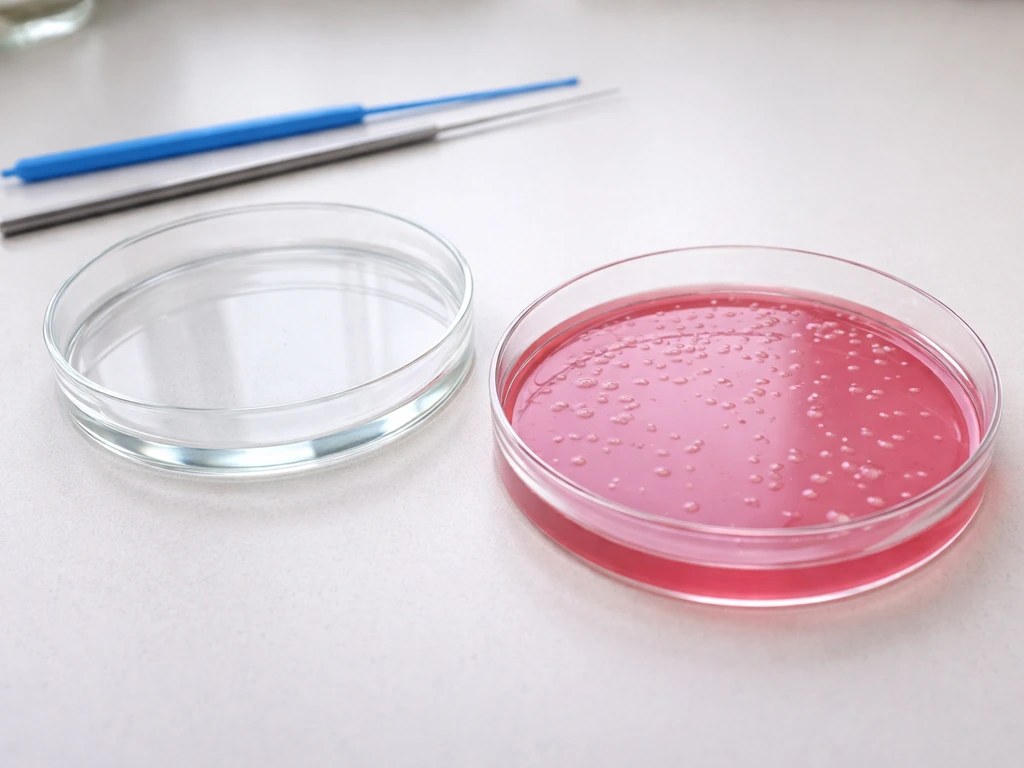
What MacConkey agar is actually designed to do
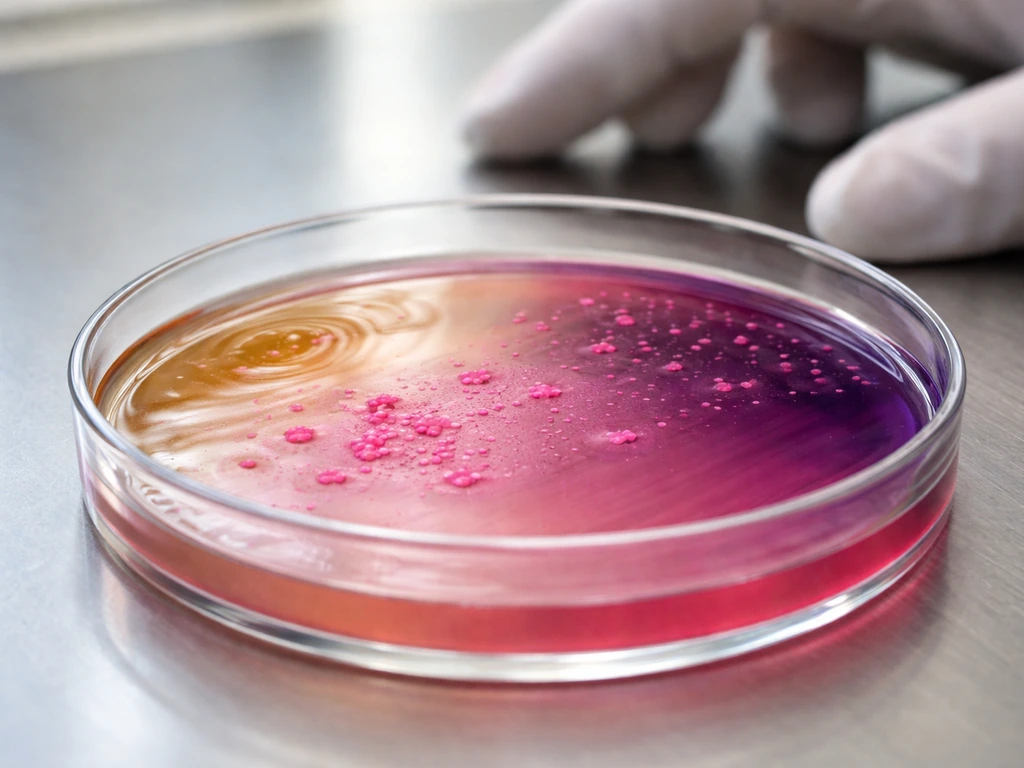
MacConkey agar is both selective and differential, which means it does two jobs at once. The selective part comes from bile salts and crystal violet, which inhibit the growth of Gram-positive bacteria like Staphylococcus aureus. Those organisms simply cannot establish colonies on the plate under standard conditions. The differential part comes from lactose combined with the pH indicator neutral red.
MacConkey agar composition in BAM Media M91 includes lactose, bile salts, neutral red, and crystal violet, which support lactose differentiation and selection against Gram-positives lactose combined with the pH indicator neutral red. When a bacterium ferments lactose, it produces acid that turns the neutral red dye pink or red, staining the colonies and sometimes the surrounding agar.
When a bacterium cannot ferment lactose, the colonies stay colorless or very pale.
The upshot: MacConkey is built to select for Gram-negative enteric bacteria and then sort them visually by whether or not they ferment lactose. That is why it shows up in so many food safety and clinical workflows. Other organisms like Pseudomonas and Proteus also grow on MacConkey and produce their own characteristic appearances, which is worth keeping in mind when you are interpreting a mixed plate.
Yes, Salmonella grows on MacConkey agar
Salmonella is Gram-negative and bile-tolerant, so it clears the selection hurdle easily. Multiple validated product instructions, including Thermo Fisher's MacConkey Agar No. 3 IFU, use Salmonella strains (such as Salmonella Virchow and Salmonella abony) as positive growth controls, confirming reliable growth under standard conditions. The WHO also documents MacConkey as an appropriate plating medium for Salmonella in laboratory safety reference tables.
Because Salmonella does not ferment lactose, it falls into the non-fermenter category on this medium. That puts it in the same visual bucket as other colorless-colony producers, which is exactly why additional confirmation is required before you call anything Salmonella.
What the colonies look like and how to read the results
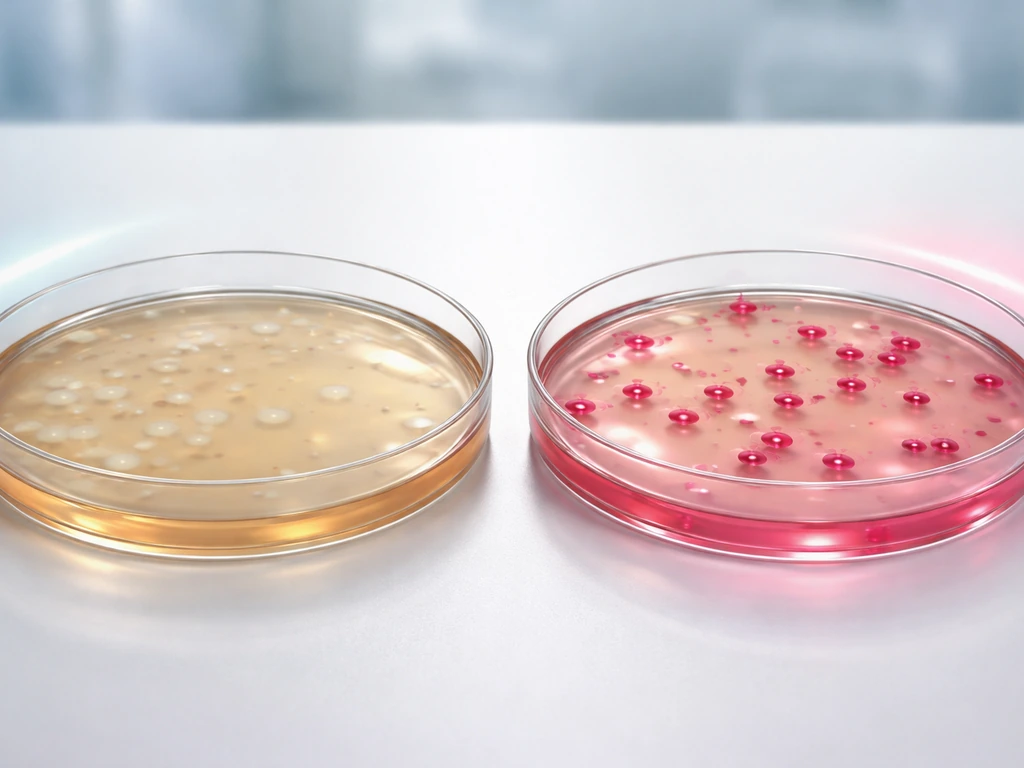
After 18–24 hours of incubation at 30–35°C, expected Salmonella colonies on MacConkey agar are transparent to colorless, sometimes described as pale straw or opaque white, and typically 1–3 mm in diameter (the WHO cites 2–3 mm; Thermo Fisher's IFU lists a range up to about 8 mm depending on strain and formulation). The surrounding agar stays clear because there is no acid production to shift the neutral red indicator.
Contrast that with lactose fermenters like Escherichia coli, which produce bright pink to red colonies with a zone of precipitated bile around them. Those pink colonies are not Salmonella. Colorless colonies that fit the size and morphology profile described above are your presumptive target, but colorless colonies can also come from Shigella, Proteus, and other non-fermenters. Reading the plate tells you what to investigate next, not what you have definitively identified.
| Organism | Colony color on MacConkey | Lactose fermentation |
|---|---|---|
| Salmonella spp. | Colorless / pale straw | No |
| Escherichia coli | Pink to red, with bile precipitate | Yes |
| Shigella spp. | Colorless | No |
| Proteus spp. | Colorless / pale, may swarm | No (usually) |
| Pseudomonas aeruginosa | Colorless to slightly pink, flat spreading | No |
| Enterococcus spp. | No growth (inhibited) | N/A |
Conditions that change how well Salmonella grows
Temperature and incubation time
Standard incubation for MacConkey agar is 18–24 hours at 30–35°C. At that temperature range, Salmonella colonies are well-formed and readable. Going below 30°C slows growth and can produce smaller, harder-to-interpret colonies. Incubating significantly beyond 24 hours is a real practical issue: extended incubation can blur the lactose-fermentation color distinction as secondary metabolic changes alter the pH around colonies, making a non-fermenter look more ambiguous. Read your plates on time.
Inoculum size and culture source
A very low inoculum can result in sparse or pinpoint colonies that are easy to miss or misread. In food safety workflows, samples typically go through pre-enrichment and selective enrichment steps before hitting the selective plating medium precisely because the target organism may be present in very low numbers. Skipping enrichment and plating directly from food or environmental swabs often produces weak or no visible growth even if Salmonella is present.
Atmospheric and pH conditions
Salmonella is a facultative anaerobe, so it grows under standard aerobic incubation without any special atmospheric adjustments. MacConkey agar has a mildly alkaline initial pH (around 7.1–7.4 depending on formulation), which is well within Salmonella's growth range. No special atmospheric manipulation is needed for routine MacConkey plating of Salmonella.
Common gotchas and atypical outcomes
- Mixed cultures are the biggest practical headache. If your sample contains both lactose fermenters and Salmonella, the pink E. coli colonies can visually crowd out or mask the colorless Salmonella colonies. Pick multiple colony types when in doubt.
- Some Salmonella strains can produce slightly pink colonies due to delayed or weak lactose fermentation, especially after extended incubation. This is rare but documented, and it is another reason not to rely on colony color alone.
- Colonies from closely related non-fermenters like Shigella and Proteus look almost identical to Salmonella on MacConkey. You cannot tell them apart by colony appearance on this medium.
- Over-incubation (beyond 24 hours) can cause carbohydrate utilization shifts that muddy the color differentiation, making non-fermenters appear less clearly colorless.
- Weak or absent growth does not rule out Salmonella if enrichment steps were skipped. Always follow the validated workflow for your sample type.
- Heavily contaminated food samples can result in a lawn of competing organisms that suppress Salmonella growth through competitive exclusion, even though Salmonella is present.
How labs confirm Salmonella after MacConkey plating
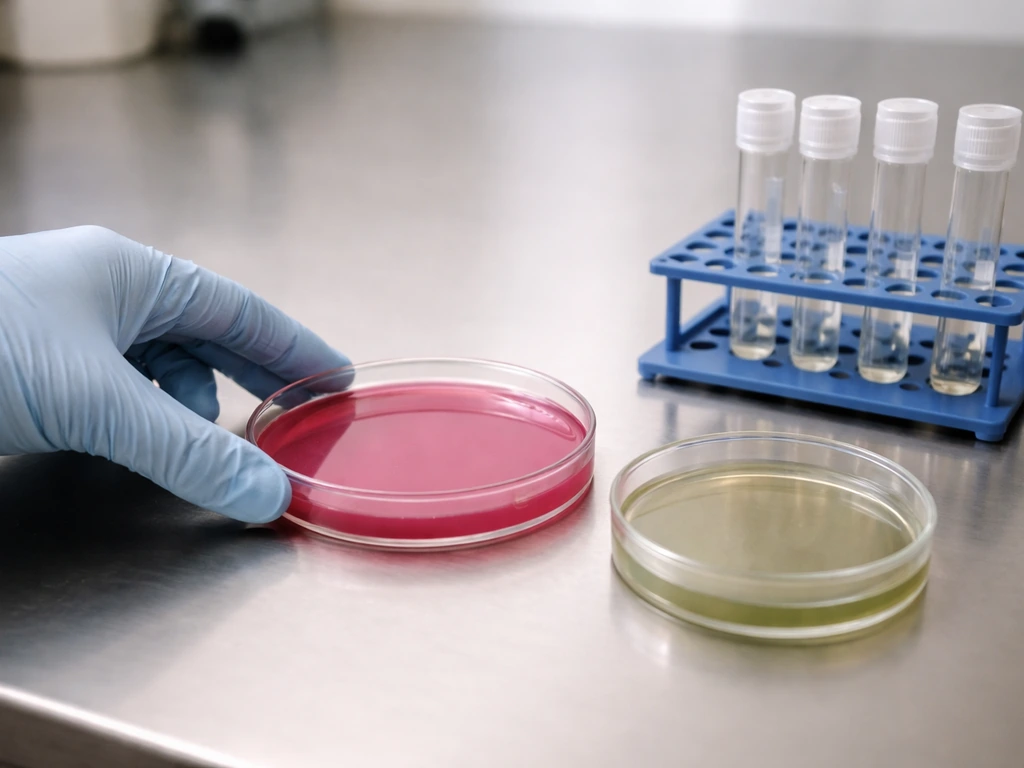
MacConkey agar gives you a presumptive result, not a confirmed identification. FDA guidance explicitly states that a presumptive positive from selective plating does not constitute confirmation and that additional testing is required. This is not a technicality; it is a real analytical necessity because multiple organisms produce the same colorless colony appearance on MacConkey.
The FDA's Bacteriological Analytical Manual (BAM) Chapter 5 lays out the standard Salmonella detection workflow. After selective plating on media like MacConkey agar, suspect colonies are purified and then subjected to biochemical and serological testing. ISO 6579-1:2017 provides the international horizontal method framework and similarly requires confirmatory steps beyond selective-medium morphology.
- Pick 2–5 colorless, non-lactose-fermenting suspect colonies from the MacConkey plate.
- Purify each isolate by streaking to a non-selective agar (such as tryptic soy agar or blood agar) to get a pure culture.
- Run biochemical tests: triple sugar iron (TSI) agar and lysine iron agar (LIA) are standard for Salmonella presumptive biochemistry. Classic Salmonella produces alkaline slant/acid butt with H2S on TSI and alkaline slant/alkaline butt with H2S on LIA.
- Perform serological testing using polyvalent O and H antisera to detect Salmonella-specific somatic and flagellar antigens.
- For definitive serotyping, submit to a reference laboratory or use validated PCR and molecular methods.
- Document the full chain from enrichment through confirmation before reporting a positive result.
If you are working in food safety, the practical takeaway is straightforward: use MacConkey agar as one step in a validated method, not as a standalone test. It is a valuable screening tool that narrows down what you are looking at, but the colorless-colony result is the beginning of your investigation, not the end.
What this means if you are evaluating food safety risk right now
If you are a food safety professional or a microbiologist troubleshooting a plate, the key points are: Salmonella will grow on MacConkey agar and produce colorless to pale straw colonies in 18–24 hours at 30–35°C, it will not produce the pink colonies associated with lactose fermenters, and any suspect colony requires biochemical and serological confirmation before you can act on the result. Mannitol salt agar will only grow bacteria that are salt-tolerant and able to ferment mannitol colorless to pale straw colonies. Do not shorten the enrichment steps, do not over-incubate the plate, and do not call a colorless colony Salmonella based on MacConkey appearance alone.
If you are an educator or student trying to understand how this medium works, the broader principle is useful: MacConkey agar sorts Gram-negative enteric bacteria by lactose fermentation, and Salmonella consistently falls in the non-fermenter group. That same principle applies when thinking about how other organisms behave on this medium, whether you are comparing Gram-positive organisms that cannot grow at all or looking at how other non-fermenters like Pseudomonas or Proteus present on the same plate. Proteus vulgaris can form colonies on MacConkey agar, so you still need confirmatory testing to identify it accurately.
FAQ
If I see colorless colonies on MacConkey agar, does that mean I have Salmonella?
Not reliably. Salmonella forms colorless or pale colonies because it does not ferment lactose, but that same appearance can match Shigella, some Proteus strains, and other non-lactose fermenters. You still need purification and downstream biochemical and serological (or molecular) confirmation to call it Salmonella.
What if Salmonella is present in very small numbers, will it still show well on MacConkey agar?
Yes, but you should expect a weaker read. When Salmonella is stressed or present at very low levels, colonies may be pinpoint or sparse after standard incubation, so confirmatory enrichment and careful colony picking become more important than relying on colony size alone.
Does Salmonella need special oxygen conditions to grow on MacConkey agar?
Usually not. Routine MacConkey plating for Salmonella is done under aerobic incubation, because Salmonella is facultative anaerobic. Avoid special atmospheric changes unless your validated method requires them, since they are not typically part of standard MacConkey workflows.
How does incubation time affect whether Salmonella colonies on MacConkey agar are easy to interpret?
If incubation is too short, you may miss small colonies or misread growth as absent. If it is too long, the lactose-fermentation contrast can become harder to interpret due to evolving local conditions around colonies, so follow the validated 18 to 24 hour window and read the plate at the intended time point.
If there is no growth on MacConkey agar, can I conclude Salmonella is not present?
You can get apparent “growth” from non-target organisms, especially other lactose non-fermenters. Also, bile salts and crystal violet can make some Gram-negatives grow poorly, so a negative plate does not automatically rule out Salmonella if enrichment was skipped or collection was inadequate.
What confirmatory tests should I run after a colorless-colony presumptive result on MacConkey agar?
Usually, no single confirmatory test is enough after MacConkey. Best practice is to pick well-isolated presumptive colonies and run the confirmatory sequence specified in your method (biochemical and serological testing, or validated molecular confirmation). Many false presumptive positives are eliminated only after those steps.
How much variation in colony size or color is normal, and when should I doubt my interpretation?
You still need confirmation even when the size and transparency match typical expectations. Variability by strain and by medium formulation can shift colony appearance, and some non-fermenters overlap heavily in “colorless” morphology, so treat morphology as a screening clue only.
What controls are helpful if I am trying to troubleshoot MacConkey results for Salmonella?
If you are using an enrichment-based workflow, the strongest practical control is to include a known positive and a negative control alongside your samples, run under the same incubation and handling. This helps distinguish method failure (for example, wrong incubation conditions) from a true negative in your specimen.
Next Article
Does Proteus vulgaris grow on MacConkey agar?
Yes, Proteus vulgaris can grow on MacConkey agar, typically non-lactose colonies with possible swarming behavior.