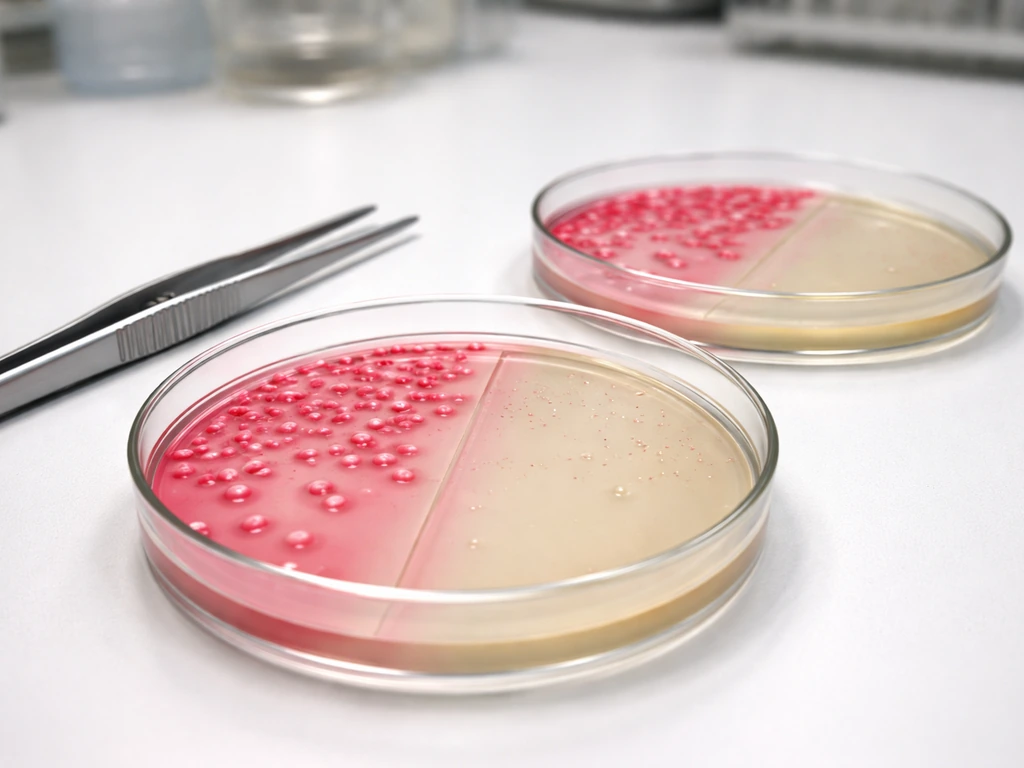
Yes, Pseudomonas aeruginosa grows on MacConkey agar. It is Gram-negative and tolerates the bile salts and crystal violet that make MacConkey selective, so it survives the medium just fine. What it does not do is ferment lactose, which means its colonies will look pale, colorless, or slightly off-white rather than the bright pink or red you see from organisms like E. coli. If you are staring at a MacConkey plate and wondering whether those pale or flat colonies are Pseudomonas, the short answer is: yes, they can be, and you need a few more steps to know for sure.
Does Pseudomonas Grow on MacConkey Agar? What to Check

Marcus Reeves
18 May 2026
What MacConkey agar actually does
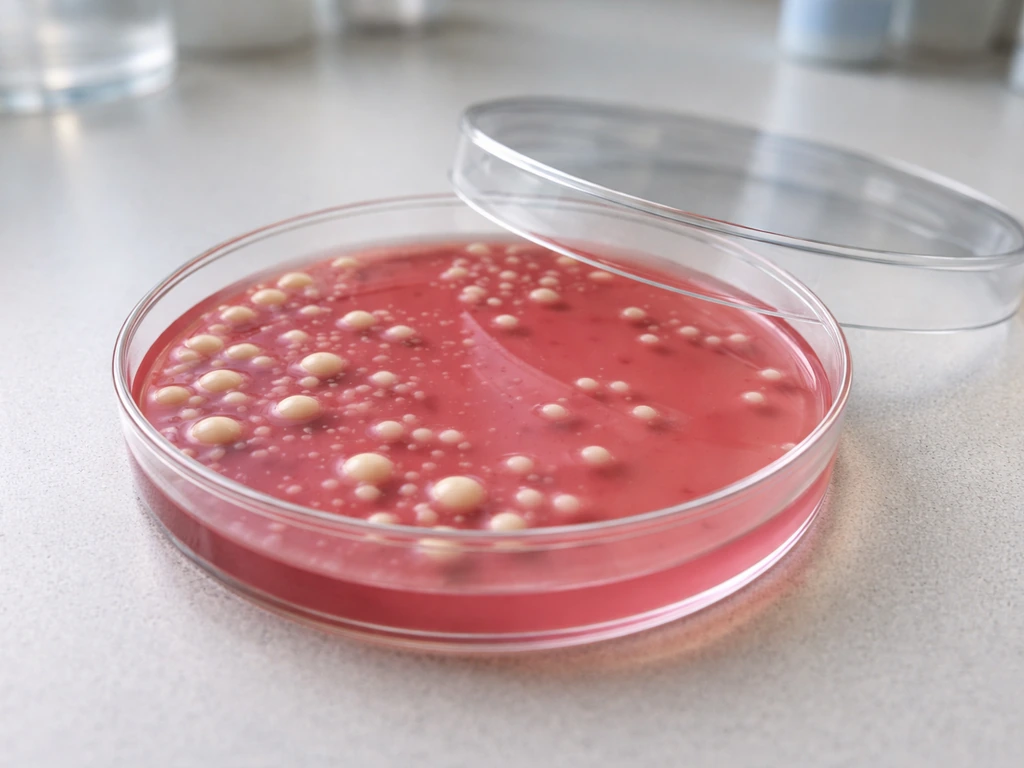
MacConkey agar has two jobs: selection and differentiation. The selective part comes from crystal violet and bile salts, which suppress the growth of most Gram-positive bacteria. This means what survives on a MacConkey plate is almost always Gram-negative. The differential part comes from lactose and a pH indicator called neutral red. When a bacterium ferments lactose, it produces acid, the pH drops, and blank" rel="noopener noreferrer">neutral red turns the colony pink to red. The FDA’s BAM Media M91 MacConkey agar formulation includes blank" rel="noopener noreferrer">lactose and the pH indicator neutral red to support this lactose-based differentiation. When a bacterium does not ferment lactose, no acid is produced, the pH stays neutral, and the colony stays pale or colorless.
So MacConkey is not a growth test for every Gram-negative organism. If you are specifically asking whether Burkholderia cepacia grows on MacConkey agar, remember that MacConkey is more a lactose and Gram-negative screen than a species-specific test Burkholderia cepacia grow on macconkey agar. It is a growth-plus-color test that tells you whether the organism ferments lactose. If you are screening for Pseudomonas, you can get useful information from MacConkey, but you have to know what you are actually reading. Pale or non-fermenting growth on MacConkey is not a red flag by itself. It is just a starting point.
Does Pseudomonas aeruginosa grow on MacConkey agar?
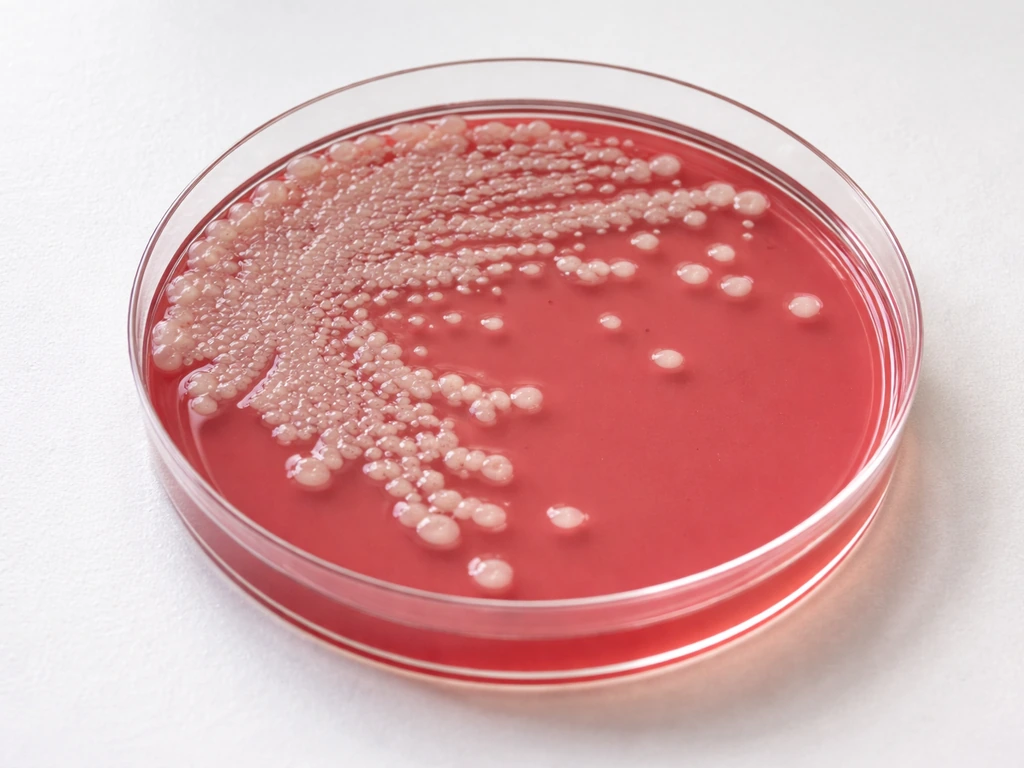
Yes, Pseudomonas aeruginosa grows well on MacConkey agar. It is not inhibited by the bile salts or crystal violet because it is Gram-negative and naturally resistant to many environmental stressors. Growth typically appears within 24 to 48 hours at 35 to 37 degrees Celsius, though Pseudomonas is also well known for growing at temperatures as high as 42 degrees, which is actually one of the classic confirmatory tricks used to help distinguish it from other similar-looking organisms.
Because P. aeruginosa does not ferment lactose, its colonies on MacConkey will be non-lactose-fermenting, meaning pale, flat, and colorless or slightly gray. There is no pink or red coloration. This is where people sometimes get confused: a plate with pale colonies looks unremarkable compared to the vivid pink colonies of a lactose fermenter, and it is easy to underread the result or write it off as a false negative.
Can other Pseudomonas species grow on MacConkey agar?
Most other Pseudomonas species are also Gram-negative and similarly tolerant of the selective agents in MacConkey agar, so yes, many of them will grow. Like P. aeruginosa, they are non-lactose fermenters, so their colonies will also be pale and undifferentiated in color. The colony morphology may vary slightly between species, but you should not expect any of them to produce pink colonies on MacConkey.
It is worth noting that MacConkey agar was not designed to specifically select for Pseudomonas. Other non-lactose-fermenting Gram-negatives like Proteus species can also show up as pale colonies on the same plate. Proteus vulgaris is another non-lactose-fermenting Gram-negative that can show up on MacConkey agar as pale colonies. Proteus vulgaris can grow on mannitol salt agar, because it is a salt-tolerant organism capable of surviving the high-salt environment. So a pale colony on MacConkey is not automatically Pseudomonas. It just means you have a non-lactose-fermenting Gram-negative, and you need more testing to figure out which one.
What you will actually see on the plate, and what it does not tell you
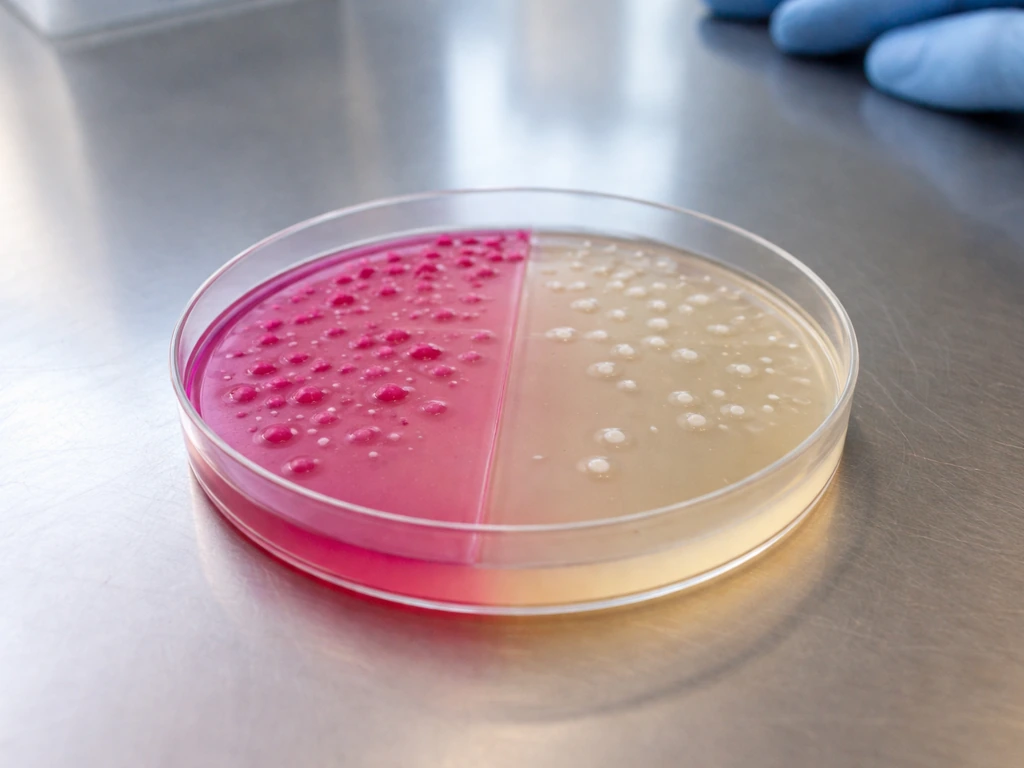
If Pseudomonas aeruginosa is present, expect flat, smooth, irregularly spreading colonies that are pale, colorless, or slightly translucent on MacConkey agar. One of the more helpful visual clues is that P. aeruginosa often produces a blue-green pigment called pyocyanin, which can give colonies a greenish tint even on MacConkey. Some strains also produce a fluorescent yellow-green pigment called pyoverdin. Not every strain produces visible pigment, but when you see it, it is a strong hint.
What the MacConkey plate will not tell you is whether the organism is definitely Pseudomonas, whether it is the specific species aeruginosa, or whether it is pathogenic. Salmonella can grow on MacConkey agar because it is a Gram-negative enteric bacterium, but it typically produces non-lactose-fermenting colonies. It will not confirm antibiotic resistance, virulence traits, or contamination load in any meaningful quantitative way. The plate is a first filter, not a final answer.
| Feature | Lactose Fermenter (e.g., E. coli) | Non-Fermenter (e.g., Pseudomonas) |
|---|---|---|
| Colony color on MacConkey | Pink to red | Pale, colorless, or gray-green |
| Lactose fermentation | Yes | No |
| Neutral red indicator reaction | Positive (acid produced) | Negative (no acid) |
| Grows on MacConkey? | Yes | Yes |
| Pigment visible? | No | Sometimes (blue-green or yellow-green) |
| Needs further testing? | Sometimes | Yes, always |
What to do next when results are unclear or you need confirmation
If you have pale colonies on MacConkey and you suspect Pseudomonas, do not stop there. There are several practical next steps that will give you a much more reliable answer.
Use selective media designed for Pseudomonas
Cetrimide agar is the go-to selective medium for Pseudomonas aeruginosa. It contains cetrimide, a quaternary ammonium compound that inhibits most other organisms but allows P. aeruginosa to grow. Most strains will also produce their characteristic blue-green (pyocyanin) or yellow-green (pyoverdin) pigment on cetrimide agar, making visual identification much cleaner. If you are doing environmental or food safety screening and you specifically need to confirm or rule out P. aeruginosa, subculture your MacConkey colonies onto cetrimide agar.
Run a temperature growth test
Pseudomonas aeruginosa is one of the few species that grows readily at 42 degrees Celsius. If you incubate a subculture at 42 degrees and it grows, that is a strong indicator you are looking at P. aeruginosa rather than most other Pseudomonas or similar-looking non-fermenters. This is a simple, low-cost confirmatory step worth adding to your workflow.
Oxidase test
Pseudomonas aeruginosa is oxidase-positive. If you pick a colony from your MacConkey plate and run a rapid oxidase test (using a commercial oxidase strip or reagent), a positive result within seconds supports a Pseudomonas identification. Combined with the pale non-fermenting morphology and pigment production, a positive oxidase test significantly narrows the field.
Consider pigment detection on King's medium
King's A medium enhances pyocyanin production (the blue-green pigment), and King's B medium enhances pyoverdin (the yellow-green fluorescent pigment). If you want to confirm pigment production as part of your identification, subculturing onto one of these formulations can make the result much easier to read, especially for strains that produce only weak pigmentation on MacConkey or cetrimide.
When a MacConkey plate shows no growth at all
If you see no growth at all on a MacConkey plate from a sample you suspect may be contaminated with Pseudomonas, do not conclude the organism is absent. MacConkey agar is not a universal recovery medium. If the sample had inhibitory substances, if the inoculum was too dilute, or if the strain was stressed, growth might not appear even if the organism is present. In food safety or environmental monitoring scenarios, a negative MacConkey result should be followed up with direct plating on cetrimide agar or another Pseudomonas-specific medium before you call a sample clear.
Putting it together: what you can and cannot conclude
MacConkey agar is a useful first screen, but it is not a Pseudomonas-specific test. Pale or colorless growth on MacConkey is consistent with Pseudomonas, but it is not proof. Pink growth essentially rules Pseudomonas out since it does not ferment lactose. No growth on MacConkey does not rule Pseudomonas out entirely, because the organism may have failed to grow for reasons unrelated to its actual presence in the sample.
For a confident result in food safety or environmental testing, your workflow should treat MacConkey as one step in a sequence: grow on MacConkey to select for Gram-negatives, look for pale non-fermenting colonies with possible pigmentation, then confirm with cetrimide agar, oxidase test, and if needed, growth at 42 degrees. That combination gives you something you can actually trust. If you are comparing other organisms on MacConkey, similar logic applies to non-lactose fermenters like Proteus, or to understanding why certain Gram-positive organisms simply will not show up on this medium at all. On mannitol salt agar, only bacteria that are able to tolerate the high salt and use mannitol will grow mannitol salt agar will only grow bacteria that are.
FAQ
If I see pale non-lactose-fermenting colonies on MacConkey, can I call it Pseudomonas without further tests?
Not in a species-specific way. Pseudomonas aeruginosa will form pale, non-lactose-fermenting colonies, but several other Gram-negative non-lactose fermenters can look similar on MacConkey, so you still need confirmation (for example oxidase testing and subculture to cetrimide agar).
Can incubation time or temperature make Pseudomonas look like it is not growing on MacConkey?
Yes, incubation conditions can change what you see. If colonies are stressed or the plate is read too early, pigmentation may be weak and colonies may look just “colorless.” A common approach is to read again at 48 hours and confirm on a more selective medium rather than relying on early appearance.
How reliable is an oxidase-positive result from a MacConkey colony for identifying Pseudomonas?
The oxidase test helps, but it is not perfectly definitive on its own. Pseudomonas aeruginosa is oxidase-positive, yet some related non-fermenters can also be oxidase-positive, so pair the oxidase result with a confirmatory step such as growth on cetrimide and (if needed) incubation at 42°C.
What if my MacConkey plate has both pink colonies and pale colonies, how should I proceed?
MacConkey can show mixed flora. A single pink colony could indicate a lactose fermenter is present, but it does not rule out Pseudomonas because Pseudomonas will still be pale. When mixed colonies are present, pick well-isolated non-lactose-fermenting colonies for follow-up rather than sampling only the most abundant colony type.
If there is no blue-green or fluorescent color on MacConkey, does that mean it cannot be Pseudomonas?
Pigment is a strong clue, but absence of visible pigment does not exclude Pseudomonas. Some strains produce weak pyocyanin or pyoverdin, or pigment may not be obvious on MacConkey. Use a medium that enhances pigment (cetrimide for selection, or King's A/B for pigment emphasis) if identification depends on visual cues.
How do inhibitors in a sample affect the chance of recovering Pseudomonas on MacConkey?
Yes, antibiotic or disinfectant carryover can suppress recovery. If the original sample contains inhibitory substances, MacConkey may show no growth even when Pseudomonas is present. In that case, dilute or remove inhibitors when possible, then subculture to cetrimide agar as a targeted follow-up before concluding absence.
Does growth on MacConkey prove the organism is Pseudomonas aeruginosa and not another Pseudomonas?
Pseudomonas aeruginosa can grow on MacConkey, but MacConkey alone cannot confirm that you are dealing with aeruginosa rather than another Pseudomonas species. Use a sequence of tests that narrows identity, such as cetrimide growth plus targeted confirmatory steps like the 42°C growth clue and oxidase, and consider further identification methods if species-level certainty matters.
If I confirm Pseudomonas on MacConkey, can I assume it is pathogenic or antibiotic-resistant?
A positive growth outcome does not give antibiotic resistance or virulence information. MacConkey indicates selection and lactose status, not resistance genes or pathogenic potential. If you need clinical or safety implications, follow up with appropriate susceptibility testing and strain typing rather than interpreting the MacConkey plate as conclusive.
Could too many colonies or poor streaking make it easy to misidentify Pseudomonas on MacConkey?
It can be, especially when the sample has many organisms. If the inoculum is heavy, colony morphology can become harder to read, and pale non-lactose fermenters may be less distinct. Use proper streaking to obtain isolated colonies before choosing candidates for oxidase testing or cetrimide confirmation.
Next Article
Can Gram-Positive Bacteria Grow on MacConkey Agar?
Learn if Gram-positive bacteria can grow on MacConkey agar, why they usually can’t, and which Gram-negative do grow.