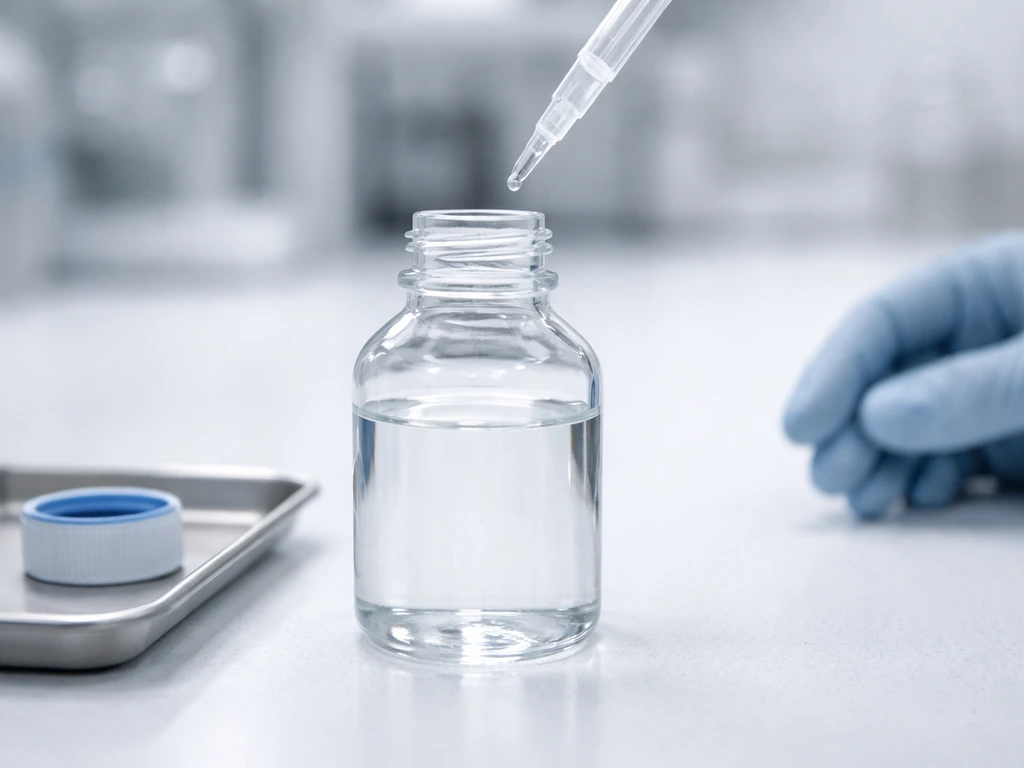
Bacteria can survive brief contact with shea butter, but they cannot meaningfully multiply in it under normal conditions. The reason comes down to water: bacteria need freely available moisture to grow, and pure shea butter contains almost none. As long as shea butter stays dry and uncontaminated, it is a genuinely hostile environment for microbial growth. The real risk shows up when water gets introduced, either through wet hands, mixed formulations, or humid storage.
Can Bacteria Grow in Shea Butter? Growth vs Survival

Marcus Reeves
16 Jun 2026
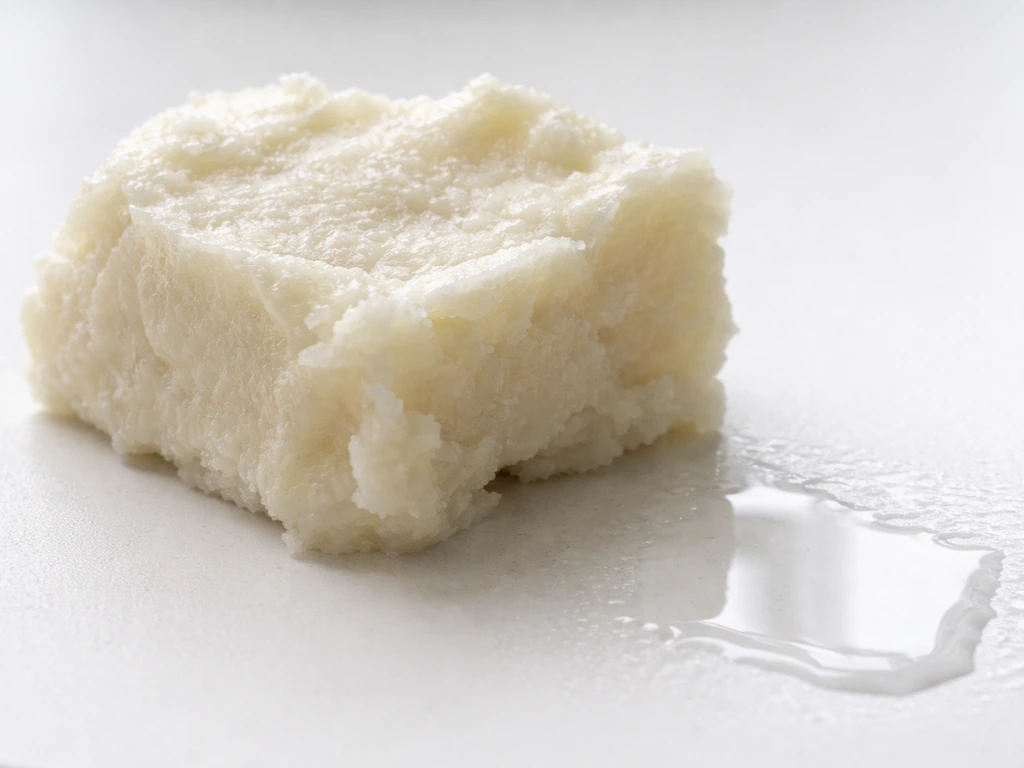
What's in shea butter and why it matters for microbes
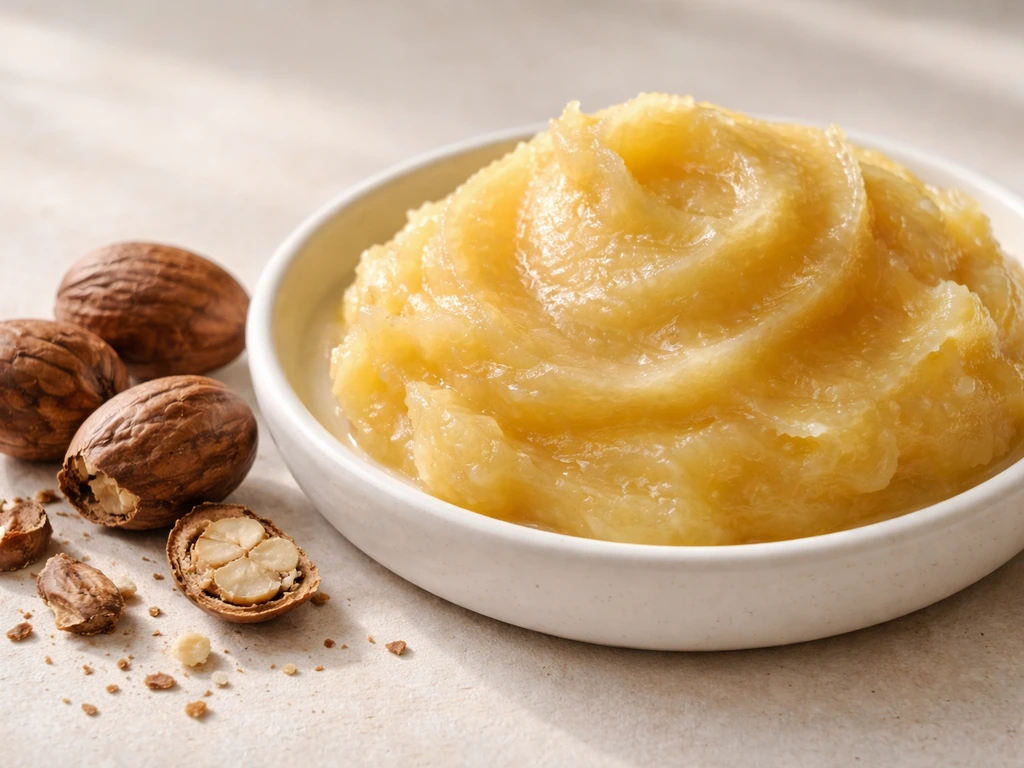
Shea butter is extracted from the nuts of the Vitellaria paradoxa tree and is composed almost entirely of triglyceride fats. The dominant fatty acids are oleic acid (roughly 40–55%) and stearic acid (roughly 35–45%), with smaller amounts of linoleic, palmitic, and arachidic acids. Beyond the fat fraction, shea butter contains an unsaponifiable matter (USM) fraction of bioactive compounds including tocopherols, triterpene alcohols, and sterols. blank" rel="noopener noreferrer">Refined shea butter, as noted in FDA GRAS documentation, typically has around 5–6% USM, while crude shea butter retains more impurities including free fatty acids before processing removes them. A study comparing crude versus refined and fractionated shea butter reports compositional changes from refining, including differences in free fatty acids and unsaponifiable matter between crude shea butter and refined fractions blank" rel="noopener noreferrer">refined and fractionated shea butter compositional changes.
From a microbiology standpoint, what matters most is what shea butter does not contain: it has no meaningful free water, no fermentable sugars, no proteins in significant quantity, and a pH environment driven entirely by fatty acids. That nutritional and aqueous profile makes it a poor substrate for bacteria. Honey is also low in available water, which makes bacterial growth difficult under normal conditions. Some of the phenolic compounds in the unsaponifiable fraction have also been shown to have measurable antimicrobial activity, which adds a small additional layer of protection, though this effect alone is not the primary barrier.
Can bacteria grow in low-water fats? The role of water activity
Water activity (aw) is the measure of how much freely available water exists in a substance, on a scale from 0 to 1. Pure water sits at 1.0. Most bacteria that cause foodborne illness need a water activity above 0.91 to grow, and even mold generally requires at least 0.70. Pure shea butter, like most anhydrous fats, has a water activity well below 0.6, often close to 0.0. At that level, microbial growth is not just unlikely, it is essentially impossible.
This is the same principle that protects other fat-dominated substances. Coconut oil and olive oil behave similarly in that bacteria generally cannot multiply in a pure, water-free fat matrix. Can bacteria grow in olive oil? In general, the answer is no, as bacteria cannot multiply in a pure, water-free oil. Peanut butter is a more nuanced case because it contains some moisture and carbohydrates, but even there, low water activity is the main protective factor. Peanut butter contains some moisture and carbohydrates, so whether bacteria can grow depends heavily on its water activity and how it has been stored Peanut butter is a more nuanced case because it contains some moisture and carbohydrates. Shea butter, being closer to an anhydrous fat, sits at the more protective end of that spectrum.
The critical word in the question is 'grow.' Surviving and growing are very different things microbiologically. A bacterium deposited onto shea butter from a dirty finger may persist for hours or even days, but without sufficient water activity it cannot replicate. Population numbers stay flat or decline rather than increasing. That distinction matters enormously for real-world safety assessments.
Typical contamination scenarios to watch out for
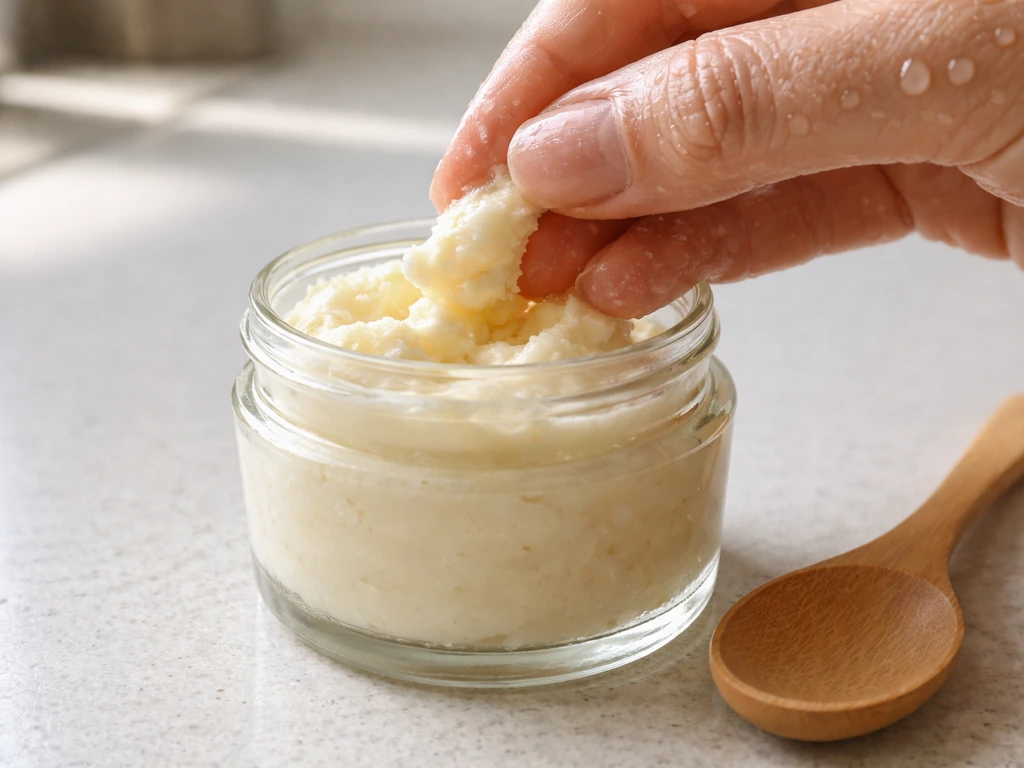
Understanding where contamination actually enters shea butter is more useful than worrying about the fat itself. There are several realistic pathways:
- Wet or unwashed hands: Scooping shea butter directly with damp fingers introduces both bacteria and water at the same time, the worst combination.
- Contaminated tools: A spatula or spoon that has touched water, food, or another product carries moisture into the butter every time it is dipped.
- Water-based additives: Mixing aloe vera gel, hydrosols, extracts, or any water-phase ingredient into shea butter raises water activity dramatically and can create a medium where bacteria can actively multiply.
- Emulsified formulations: DIY or commercial creams and lotions that blend shea butter with water require a proper preservative system, because the emulsified product is no longer a low-water fat.
- Humid storage environments: Leaving a container open in a steamy bathroom or storing it in a location with condensation allows moisture to gradually accumulate on the surface and interior walls.
- Poorly sealed or previously opened packaging: Reusing containers without sanitizing them, or sealing improperly between uses, creates opportunities for moisture and airborne organisms to enter.
Notice that almost every realistic contamination scenario involves water being introduced along with or after the bacteria. The fat itself is rarely the problem; the problem is when it stops being a dry fat.
Survive vs. multiply: what specific bacteria actually do in shea butter
Most common pathogens and spoilage organisms behave predictably in a low-water fat environment. Here is how key bacteria perform:
| Organism | Min. Water Activity to Grow | Behavior in Pure Shea Butter | Risk in Contaminated/Wet Shea Butter |
|---|---|---|---|
| Staphylococcus aureus | 0.83 (toxin production needs ~0.90) | Cannot multiply; may survive short-term | Can grow if water is introduced; produces heat-stable toxins |
| Salmonella spp. | 0.94 | Cannot multiply; dies off over time | Can grow in water-containing emulsions |
| Escherichia coli | 0.95 | Cannot multiply; survives briefly | Growth possible if aw rises above threshold |
| Pseudomonas aeruginosa | 0.97 | Extremely unlikely to survive long | Common contaminant in cosmetic emulsions with water |
| Clostridium botulinum | 0.93–0.97 (type dependent) | Cannot grow; no anaerobic risk in dry fat | Risk emerges only in sealed, water-containing formulations |
| Mold (e.g., Aspergillus) | 0.70–0.80 minimum | Generally cannot grow in dry shea butter | Surface mold possible if moisture condenses on product |
Staphylococcus aureus deserves a specific mention because it has one of the lowest minimum water activity requirements among common pathogens. Even so, it still needs at least 0.83 aw to replicate, and pure shea butter sits far below that threshold. Where S. aureus becomes a genuine concern is in skin care formulations where shea butter has been blended into a cream without an adequate preservative system.
Temperature and storage conditions that affect survival and growth
Shea butter melts at roughly 28–36°C (82–97°F), so at room temperature in warm climates it can be semi-liquid to liquid. Temperature affects bacteria in shea butter differently depending on whether moisture is present.
In dry shea butter, temperature has relatively little effect on the central safety question because water activity is the limiting factor regardless. Bacteria won't grow at 30°C or at 20°C if there is no available water. If the product is truly PBS without free water, the same water-availability limitation means bacteria generally cannot grow in it bacteria won't grow at 30°C or at 20°C if there is no available water. However, warmer temperatures do accelerate oxidative rancidity in the fat itself, which is a quality issue rather than a microbial safety issue in a dry product.
In contaminated or emulsified shea butter with elevated water activity, temperature becomes critical. The standard danger zone of 5–60°C (41–140°F) applies fully once water activity is high enough for bacterial growth. An emulsified shea cream left on a bathroom counter at 25°C without preservatives can support rapid bacterial multiplication, particularly from organisms like Pseudomonas or S. aureus that are commonly introduced from skin contact.
Refrigeration slows but does not eliminate bacterial activity in water-containing formulations. It does not meaningfully change the safety profile of pure, dry shea butter. Freezing can cause texture changes in the butter but is not necessary for safety in a dry product. If you are storing a shea-based cream or emulsion, refrigeration between uses is a reasonable precaution and can extend the window before spoilage organisms take hold.
What to look for: signs of spoilage and safe-use checks
Pure shea butter spoilage is usually rancidity rather than microbial contamination, but the two can co-occur in wet or emulsified products. Here is how to run a quick practical check:
- Smell it: Fresh shea butter has a mild, nutty scent. Rancid fat smells sharp, sour, or crayon-like. An off-smell that is sour or fermented rather than just oxidized can signal microbial activity, especially if water has been introduced.
- Look at the texture and color: Unusual discoloration, visible spots (especially dark or fuzzy patches), or a slimy layer on the surface are all red flags. Mold on the surface means moisture has been present.
- Check the container: Look for water droplets inside the lid or container walls. Condensation inside a container is a sign that the product has been exposed to humidity or temperature cycling.
- Consider the history: Has the container been scooped with wet hands or tools? Has anything water-based been added? Has it been stored in a steamy environment like near a shower? Recent exposure to any of these conditions increases risk.
- Check for off-texture: Grainy or excessively separated texture alone is not a safety issue (it is a normal temperature-change artifact in shea butter), but combined with an off-smell or discoloration it warrants discarding the product.
If you find visible mold, unusual odor, or can confirm that water was introduced, discard the product. This is especially true for emulsified products. The cost of replacing a jar of shea butter is far lower than the risk of applying a bacterially contaminated product to broken or sensitive skin.
Practical steps to minimize contamination and keep shea butter safe
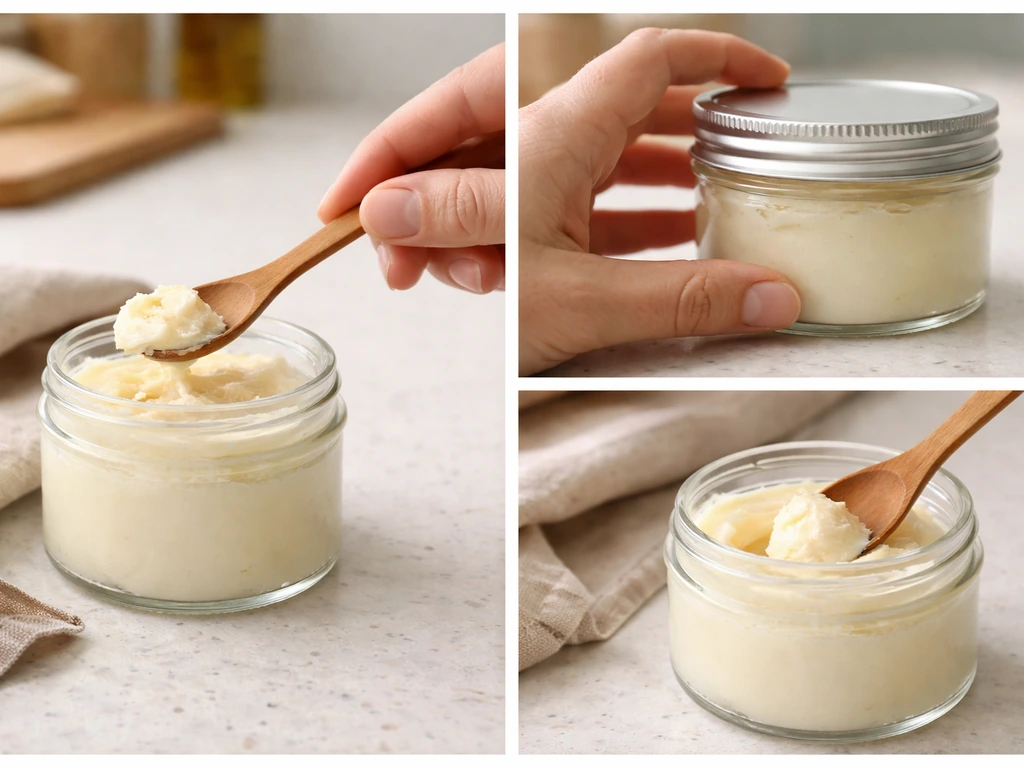
The good news is that keeping pure shea butter safe is genuinely straightforward. The rules come directly from what we know about water activity and contamination pathways.
- Always use dry, clean utensils: A dedicated dry spatula or spoon prevents both water introduction and cross-contamination. Never double-dip a tool that has touched other products or your skin.
- Keep hands dry when scooping: If you must use your fingers, make sure they are clean and thoroughly dry. Better still, use a spatula.
- Store in a sealed container: An airtight container prevents humidity from the environment from accumulating in the product over time.
- Keep it away from water sources: Storing shea butter near a sink, in a steamy bathroom cabinet, or next to open water-based products is an unnecessary risk.
- Do not add water-phase ingredients without a preservative: If you are formulating a cream or lotion with shea butter and any water-based ingredient, you need a broad-spectrum cosmetic preservative system. This is non-negotiable from a microbiology standpoint.
- Label and date containers: Especially for DIY or opened bulk product, knowing how long a product has been open and what has been added to it helps you make informed go/no-go decisions.
- For emulsified products, consider refrigeration: Pure shea butter does not require refrigeration, but any shea-containing product with a water phase benefits from refrigeration between uses, particularly in warm climates.
The same principle that applies to shea butter applies to other anhydrous fats. Pure oils and fats are not inherently dangerous environments for bacteria because they lack the water bacteria need. That same logic applies to paraffin wax: without enough available water, bacteria cannot meaningfully grow in it Pure oils and fats are not inherently dangerous environments for bacteria. Where things go wrong is almost always when water enters the picture, either directly or through formulation choices. Keep the product dry, use clean tools, and treat any emulsified version as the genuinely different microbiological environment that it is.
FAQ
If bacteria cannot grow in dry shea butter, can they still make it unsafe to use?
They can be unsafe if contamination survives and is then transferred to broken or sensitive skin. While numbers may not increase in the jar, pathogens can persist long enough to matter, especially after contact with wet hands, lotions, or skin lesions.
Can bacteria grow in shea butter if I stir it with water or mix it into a DIY recipe?
Yes, that can change the outcome. Adding water (or any water-containing ingredient) raises water activity and can turn the mixture into a place where bacteria multiply, unless you use an effective preservative system and the final formula is properly balanced.
Does “refined” versus “crude” shea butter change bacterial growth risk?
Refined shea butter usually has fewer impurities and less free fatty acid content, but both refined and crude are still primarily anhydrous fats. The bigger risk driver remains water introduction, not the oil grade.
What about water condensation, for example storing shea butter in a humid bathroom?
Condensation is a real edge case. If moisture gets into the jar or on the butter surface (even intermittently), it can locally raise water activity enough for survival and possibly growth in contaminated spots, especially in creams or emulsions.
Can mold grow on top of shea butter?
Mold usually needs higher water activity than anhydrous fats provide, so it is unlikely on truly dry shea butter. If you see mold, it usually indicates water entry (for example from wet scoops, double-dipping, or an emulsified product rather than the anhydrous butter).
Is it safe to use shea butter after it’s been in contact with saliva or sweat?
Single contact can introduce microbes, but safety depends on whether water was introduced and whether the area becomes wet. Sweat contains water, so avoid re-dipping and consider discarding if the product was visibly moistened or used repeatedly on compromised skin.
How long can bacteria survive in shea butter if it is dry?
They can persist for hours to days in many anhydrous fats, but they generally do not replicate. The practical takeaway is hygiene matters at the time of contamination, because you will not get a “self-cleaning” effect from storage.
Does warming shea butter in a double boiler increase microbial growth risk?
Warming dry shea butter alone usually does not enable growth because water activity stays the limiting factor. The risk increases if the process introduces water (steam, wet utensils, or mixing into a cream) or if the product already has added moisture.
If I see a bad smell or rancidity in shea butter, is that always microbial contamination?
No. In dry shea butter, off-odors are more often oxidation and rancidity than microbial growth. Still, if the scent is accompanied by wetness, separation, or visible growth, treat it as a possible water-contamination issue and discard.
What storage and hygiene steps best prevent bacterial problems?
Use dry hands and clean, dry tools, avoid double-dipping, and keep the container sealed to prevent moisture ingress. For emulsified shea creams, ensure a proper preservative system, use clean applicators, and refrigerate between uses if that’s part of your product design.
Can I fix a contaminated shea cream by reheating or freezing it?
Reheating might reduce some microbes, but it does not address contamination that has already occurred, nor does it remove toxins produced by certain pathogens. Freezing mainly slows activity and can change texture, but it is not a reliable safety treatment for water-containing formulations.
Next Article
Can Bacteria Grow in PBS? Survival vs Growth and Tests
Learn if bacteria can grow in PBS, when only survival happens, and how to test sterility and prevent contamination.