Bacteria generally cannot grow (multiply) in pure olive oil. The short answer is that olive oil lacks the free moisture bacteria need to reproduce, so while some microorganisms can survive in oil for a period of time, they cannot actually multiply in the oil phase itself. That distinction, growth versus survival, is the core of what you need to understand to make smart decisions about your olive oil's safety.
Can Bacteria Grow in Olive Oil? Growth vs Survival

Marcus Reeves
20 Apr 2026
Growth vs. survival: what's actually happening in your olive oil
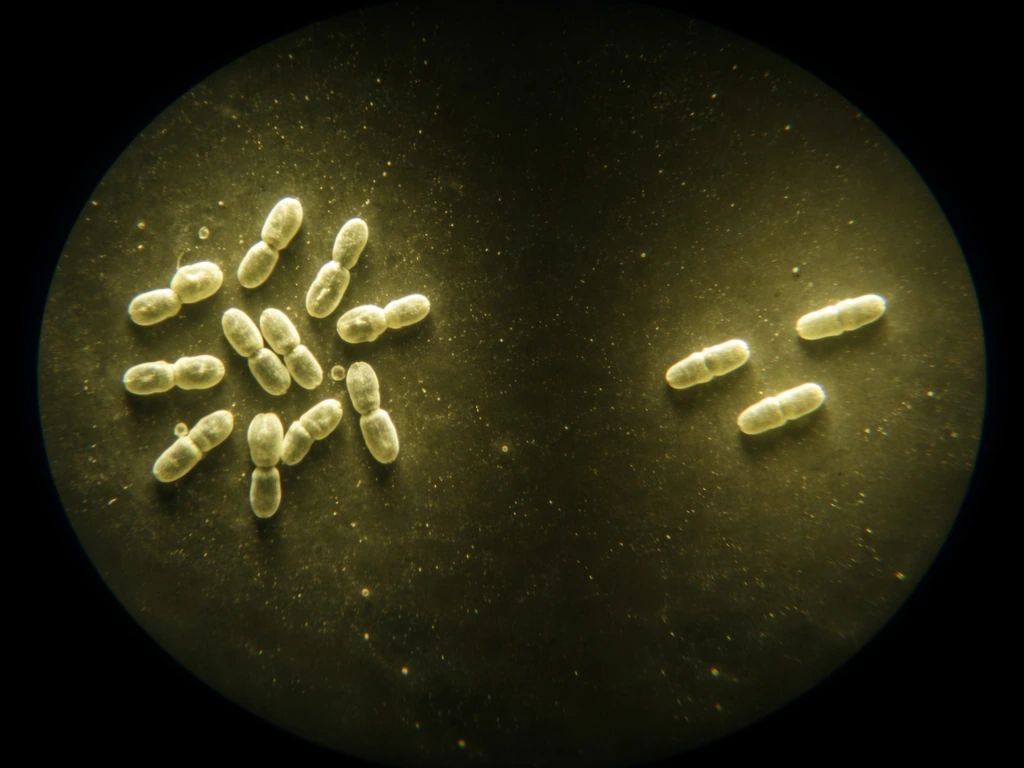
When microbiologists talk about bacterial growth, they mean active multiplication, where one cell divides into two, then four, and so on, eventually reaching numbers that can cause illness or spoilage. Survival is different: a bacterium is still present but is not multiplying, and its population may actually be declining over time. In pure olive oil, survival is possible but growth is not. This matters a lot in practice, because a contaminating organism that can't grow poses a much lower risk than one that's actively multiplying.
Research on coliform bacteria in virgin olive oil confirms this picture: olive oil can actually exert antimicrobial effects, partly due to its polyphenol content, that reduce bacterial viability over time. So not only does pure olive oil fail to support growth, it can actively work against bacteria that end up in it.
Why olive oil stops bacteria from growing
The main reason bacteria can't grow in olive oil comes down to water activity (aw), which is a measure of how much free, available water exists in a substance. Bacteria need free water to carry out the metabolic processes that drive reproduction. Pure olive oil has an extremely low water activity, well below the thresholds that support bacterial growth. Most spoilage bacteria require a water activity of at least 0.
90 to grow, and everything above 0. 86 aw is generally considered a potentially hazardous food from a microbial growth standpoint. [Extra virgin olive oil, by international standard, contains no more than 0. ](https://www.
sciencedirect. com/science/article/pii/S0260877412000489)2% moisture by weight. That trace amount of moisture is bound up in ways that make it essentially unavailable to bacteria.
Beyond water activity, olive oil is also a poor nutritional environment for bacteria. It's composed almost entirely of lipids, and most bacteria lack the enzymatic machinery to efficiently metabolize fats as their primary energy source. There's also no meaningful carbohydrate or protein fraction for bacteria to exploit. And while olive oil's pH isn't acidic enough on its own to be a strong growth inhibitor (unlike honey or vinegar), the absence of free water makes that factor mostly irrelevant anyway, because bacteria can't grow regardless.
Oxygen is a more nuanced factor. Olive oil can be low in dissolved oxygen, especially in sealed containers, which would theoretically favor anaerobic bacteria. But again, without available water, anaerobes face the same barrier as aerobes: they simply can't grow in a pure oil matrix.
When growth becomes possible: conditions that change the equation
The situation changes as soon as water enters the picture. With peanut butter, the same idea applies: bacteria may be able to grow if conditions like available moisture and temperature allow it can't grow in pure oil. That said, if PBS contains enough free water or becomes an oil-water like mixture, bacteria can potentially grow under the right conditions bacteria can grow in PBS.
If an aqueous phase is introduced, either as free water, a water-containing ingredient, or an emulsion, the water activity in the mixture can rise to levels that support bacterial growth. Research on oil-in-water emulsion systems confirms this: even with an oil background, bacteria like Bacillus can grow when an aqueous phase is present and distributed throughout the mixture. The oil doesn't neutralize the risk once there's enough free water available.
Temperature is a secondary factor. While it can't enable growth where water activity is too low, warmer storage temperatures accelerate microbial activity in any mixture that does have sufficient moisture, while cooler temperatures slow it down. Storing olive oil at room temperature isn't dangerous for pure oil, but for any oil that has been mixed with water-containing ingredients, temperature becomes a real variable.
Oxygen availability matters specifically for anaerobic bacteria and spore-formers. A sealed container of oil that has had water-containing material added to it creates conditions that are warm, low-oxygen, and (if enough water is present) potentially hospitable to anaerobic pathogens. That combination is worth taking seriously.
Real-world contamination scenarios
Homemade infused oils with garlic or herbs
This is the highest-risk scenario, and it's well-documented by food safety agencies. When you add fresh garlic cloves, fresh herbs, or other low-acid vegetables to olive oil, you introduce material that contains free moisture, nutrients, and potentially bacterial spores (including Clostridium botulinum). The garlic or herbs effectively create a small aqueous microenvironment within the oil where conditions, low oxygen, neutral-to-low-acid, moderate temperature, can support the growth of anaerobic pathogens and toxin production.
Garlic in oil has been specifically identified by the USDA FSIS and CDC as a known botulism risk scenario. NC State University guidance states that non-acidified infused oil ingredients should be refrigerated and the product used within four days. Michigan State University Extension says to refrigerate at 40°F or below and use within about seven days.
MSU Extension also specifies that garlic-in-oil should be refrigerated at 40°F or below and used within about four days for safety Michigan State University Extension says to refrigerate garlic-in-oil at 40°F or below.
The safest alternatives are to use dried garlic or dried herbs (which have far less free moisture), or to acidify fresh ingredients using an approved process before adding them to oil. Bacteria can sometimes grow in shea butter if water or other moisture gets introduced, such as from mixing, contamination, or poor handling bacteria can sometimes grow in shea butter if water gets introduced. University of Maine Extension notes that commercially acidified infused oils can be shelf-stable, but that's only when done using a tested, approved method, not a home estimate.
Water introduction during everyday handling
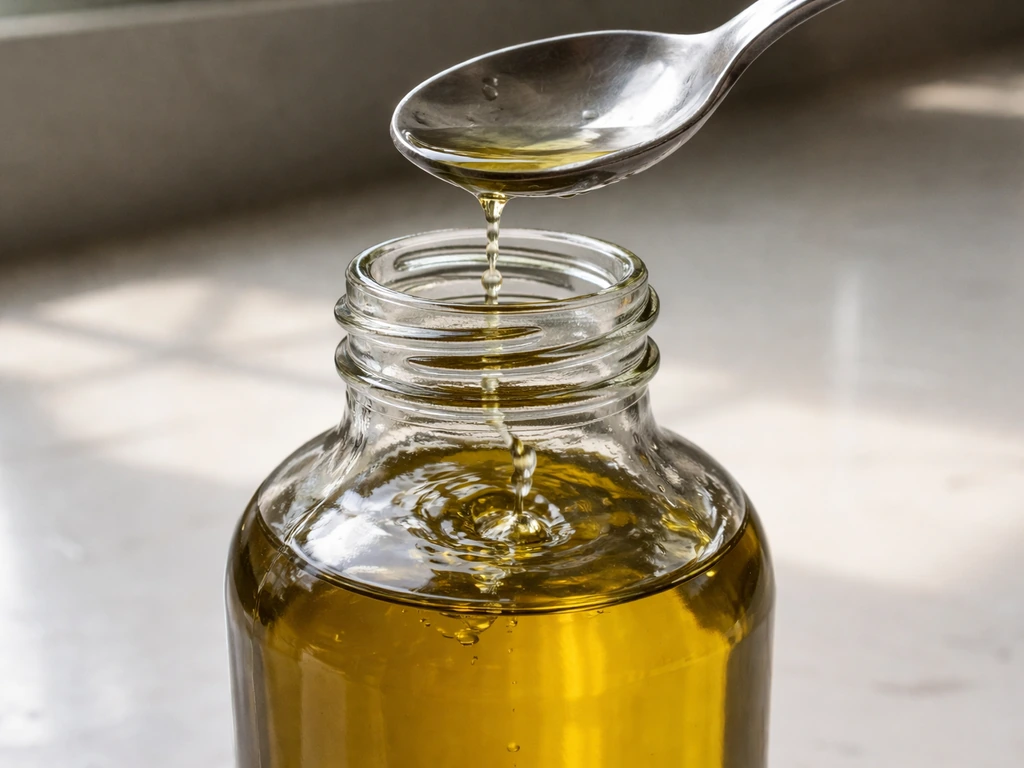
Introducing water into olive oil during routine use is more common than people realize. Using a wet spoon to pour oil, adding oil directly to a pot containing water droplets, or storing the bottle near a steamy stove can all introduce moisture. In pure oil, this is a quality issue more than an immediate safety crisis, but it does raise the water activity locally and can accelerate rancidity. If water-containing food particles enter the bottle, that raises the stakes.
Sediment and particulate matter
Unfiltered or "veiled" olive oils contain fine particles, water droplets, and emulsified material from the olive fruit. Research on veiled extra virgin olive oils discusses how trace water and emulsion components are naturally present. These particles can harbor bacteria in a way that pure, filtered oil does not. At cool temperatures this is mostly a quality concern, but unfiltered oils have a shorter shelf life partly because of these residual water and organic components.
Emulsified preparations (dressings, marinades)
Olive oil mixed with vinegar, lemon juice, or other water-based ingredients forms an emulsion. If the water-to-oil ratio is significant, water activity in the mixture can rise considerably. The acid in vinegar or citrus typically helps keep pH low enough to inhibit many pathogens, but the protection depends on the actual acid concentration and how the mixture is handled and stored.
Which microbes matter most, and why spores are the real concern
In pure olive oil, most vegetative bacterial cells (non-spore-forming bacteria in their active, growing state) will struggle to survive for long. Coliform bacteria, for instance, have been shown to decline in viability in virgin olive oil over time, partly due to the oil's antimicrobial polyphenols. Pathogens like Salmonella or Listeria monocytogenes can technically persist in oil for some period, but they are not growing, and their numbers trend downward.
Spore-forming bacteria are a different story. Clostridium botulinum produces spores that are highly resistant to environmental stress, including the inhospitable conditions of pure oil. Spores can persist in olive oil essentially indefinitely without growing, waiting for conditions to change. If water and nutrients become available, and oxygen is excluded, those dormant spores can germinate and grow, and C. botulinum produces one of the most potent toxins known. This is why the garlic-in-oil scenario is taken so seriously: the oil's anaerobic, low-acid, now-moist environment is close to ideal for botulinum toxin production.
Bacillus species are another category of spore-formers worth noting. While they are generally less acutely dangerous than C. botulinum, research on emulsion systems shows they can grow in oil-water mixtures when the aqueous phase is sufficiently present. For olive oil in everyday use, the more likely concern is mold growth on or around water-contaminated oil, particularly near the bottle opening, rather than bacterial growth in the oil body itself.
For comparison, substances with similarly low water activity, like honey, also resist bacterial growth through a different mechanism (high sugar concentration, low pH, and hydrogen peroxide production). Pure fats like coconut oil and shea butter share the same fundamental barrier olive oil has: the absence of free water. Paraffin wax is also essentially a no-moisture environment, so bacteria generally cannot grow in it unless water is introduced can bacteria grow in paraffin wax. The specific risk profile of olive oil comes from how it's used in real kitchens, particularly the habit of infusing it with fresh, moist ingredients.
How to assess your olive oil today
If your olive oil is pure (no added ingredients), stored in a sealed container, and hasn't had water or food particles introduced into it, the safety risk is essentially negligible. The realistic threat is rancidity (a quality issue from oxidation), not bacterial contamination. You can assess rancidity by smell: rancid olive oil smells like crayons, paint, or old walnuts. That's a quality flag, not a food safety emergency, but it means the oil's antioxidant polyphenols have degraded and the oil is past its best.
For infused oils or oils that have had moist ingredients added, the risk profile is different. If a homemade garlic or herb infusion was stored at room temperature for more than a few hours without acidification, the honest answer is that you can't tell by smell or appearance whether botulinum toxin is present. The toxin is colorless and odorless. If there's any doubt, discard it. This is not alarmism; it's the consistent guidance from multiple university extension programs and federal agencies.
| Scenario | Bacterial Growth Risk | Key Concern | Action |
|---|---|---|---|
| Pure, sealed olive oil | Negligible | Rancidity (quality, not safety) | Store properly, use within shelf life |
| Olive oil with water droplets introduced | Low but elevated | Localized water activity increase, mold near opening | Avoid introducing moisture; check for mold near cap |
| Fresh garlic/herbs in oil, room temp | High | C. botulinum toxin production | Refrigerate immediately; discard after 4-7 days |
| Fresh garlic/herbs in oil, refrigerated | Moderate (time-limited) | Spore germination slowed but not stopped | Use within 4-7 days per extension guidance |
| Dried herbs/garlic in oil | Low | Far less free moisture available | Still refrigerate; use within a few weeks |
| Commercially acidified infused oil | Low | Acid controls pH and pathogen growth | Follow label; refrigerate after opening |
| Oil-water emulsion (dressing, marinade) | Moderate | Water activity rises; depends on acid level | Refrigerate; use within a few days |
Practical storage guidance and best practices
Pure olive oil is shelf-stable for food safety purposes. The practical enemies of olive oil are light, heat, and oxygen, all of which drive rancidity rather than bacterial growth. Store it in a dark, cool place in a sealed, opaque or dark glass container. Most extra virgin olive oils are best used within 18 to 24 months of the harvest date, and within 6 to 12 months after opening.
Refrigeration is not required for pure olive oil and may cause it to solidify and turn cloudy, which is harmless and reversible. But refrigeration is the right call for any oil that has had fresh herbs, garlic, or other moist ingredients added without acidification.
Prevention checklist
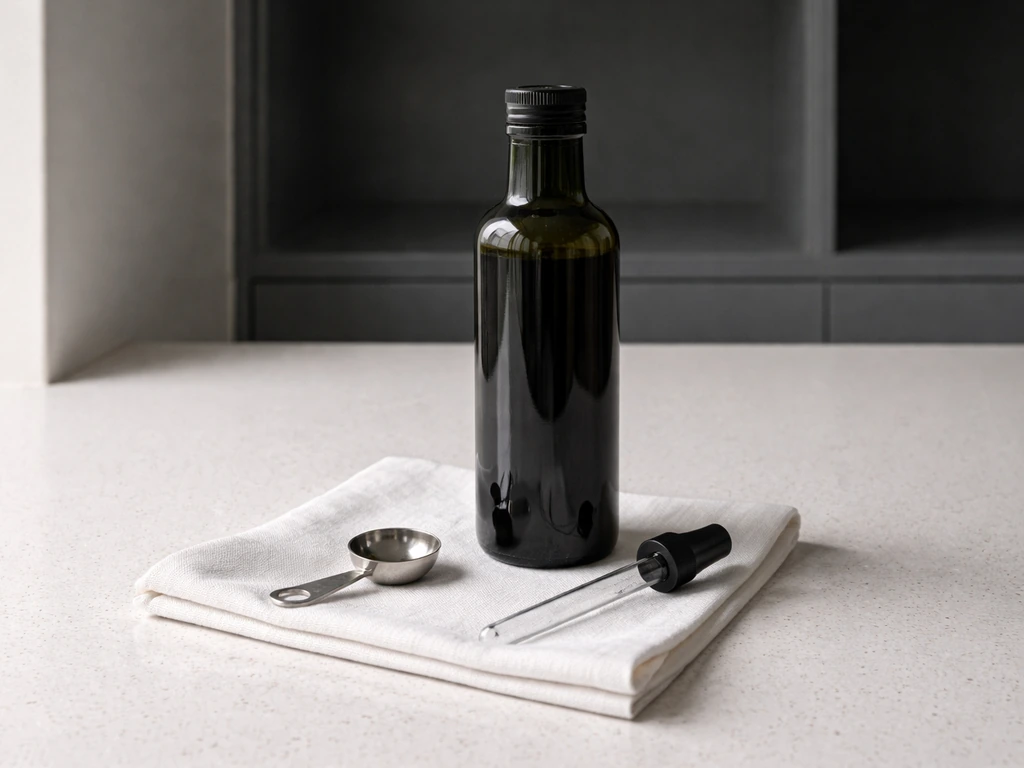
- Always use dry, clean utensils when pouring or measuring olive oil to avoid introducing water or food particles into the bottle.
- Never pour olive oil directly over food into the bottle, and avoid storing oil near a heat or steam source.
- For homemade infused oils using fresh garlic or fresh herbs, refrigerate immediately and use within 4 days (NC State guidance) to 7 days (MSU Extension guidance).
- Use dried herbs or dried garlic instead of fresh if you want a longer window or room-temperature storage. Dried ingredients have significantly less free moisture.
- If you want shelf-stable infused oil using fresh ingredients, use a tested, approved acidification process, not a home estimate of acidity.
- Never store non-acidified fresh garlic or herb infusions at room temperature for extended periods.
- Inspect the bottle opening and neck for any mold growth, which can occur if moisture has been introduced near the cap.
- When in doubt about an infused oil, especially one that was stored at room temperature, discard it. You cannot detect botulinum toxin by smell, taste, or appearance.
- Purchase commercially infused or flavored olive oils from reputable producers who use validated safety processes.
- Check the best-by or harvest date on the label and use pure olive oil within its recommended window for best quality.
The bottom line is that pure olive oil is one of the safer things in your kitchen from a microbial standpoint. Its low water activity creates a genuinely inhospitable environment for bacterial growth. The risks that do exist are well-defined and avoidable: keep water out, handle infused oils as the perishable items they are, and refrigerate anything that has moist ingredients in it. Follow those steps consistently and you won't have a problem.
FAQ
If I refrigerate my olive oil, will it become unsafe or spoil faster?
Yes. Refrigeration is harmless for pure olive oil, it just may turn cloudy or solidify because the fatty acids crystallize. Let it warm to room temperature and it will typically return to its normal clarity and texture.
How can I tell if a homemade garlic or herb-infused olive oil is safe to eat?
Tasting does not reliably indicate safety for infused oils. Botulinum toxin is not detectable by smell, color, or taste, and surviving spores can be present even when the oil looks fine. If you are outside recommended storage conditions for a fresh infusion, discard it rather than sampling.
My unfiltered olive oil looks cloudy, is that bacteria growth?
A cloudy appearance or sediment in an unfiltered, “veiled” olive oil is usually a quality sign (natural plant particles, trace water, emulsion). It does not by itself mean bacteria are growing, but if the sediment includes added moisture sources or you recently introduced water, treat it like an infused oil risk profile.
Can bacteria survive in olive oil even if they cannot grow?
Yes, bacteria can persist for some time without multiplying. For food safety, the key distinction is whether conditions allow growth. In practice, persistence is mainly a concern when spores are present and you later introduce water and an oxygen-poor, low-acid environment.
If my olive oil smells rancid, does that mean bacteria grew in it?
Plain olive oil stored properly has a negligible microbial growth risk, but rancidity can still occur. If the oil tastes or smells rancid (paint, crayons, old nuts), that is an oxidation/quality problem, not proof of bacterial contamination.
What happens if I pour olive oil with a wet spoon or with water droplets in the bottle?
If water is introduced, such as from a wet spoon, the local water activity can increase and accelerate quality changes and possibly microbial activity, especially if you also have nutrients from food particles. For safety, err on the side of contamination: transfer the oil to a clean, dry container and do not keep “topping off” an exposed bottle.
Why are fresh garlic and fresh herbs in oil higher risk than plain olive oil?
Extra caution is needed for oil infused with fresh low-acid ingredients (garlic, herbs, vegetables) because water and nutrients can form small microenvironments, and oxygen can be low in sealed bottles. Follow a strict refrigeration and short use window, or use commercially acidified products made with a tested process.
If I add lemon juice or vinegar to an infused oil, is it automatically safe?
Lemon juice or vinegar can reduce pH, but the protection is only as good as the actual acid concentration, mixing, and storage. “Adding some” without a controlled, tested approach can still leave conditions that allow spore germination if enough moisture and low oxygen are present.
Can bacteria grow in olive oil if it becomes an emulsion, even without garlic?
Yes. Spore-formers like Bacillus are less infamous than botulinum but they can grow when an oil-water emulsion is created with sufficient aqueous phase. This is more likely when the infusion includes water-containing ingredients and is stored warm.
Does cooking or heating olive oil make it safer if I’m worried about contamination?
For pure olive oil, heating is not required to make it microbial-safe because growth cannot occur without free water. Heating can still be useful for culinary reasons, but it does not fix problems caused by later water introduction into an already compromised infusion.
How long can I keep infused olive oil that I made at home?
For oils that have had fresh, water-containing ingredients added, shelf life becomes perishable. If you are not using a tested acidification method, store refrigerated, use quickly, and do not keep for “months” like pure olive oil. When in doubt, discard.
Next Article
Can Bacteria Grow in Honey? Why It Usually Cannot
Learn why bacteria usually can’t grow in honey, what conditions allow survival or later growth, and safe handling tips.