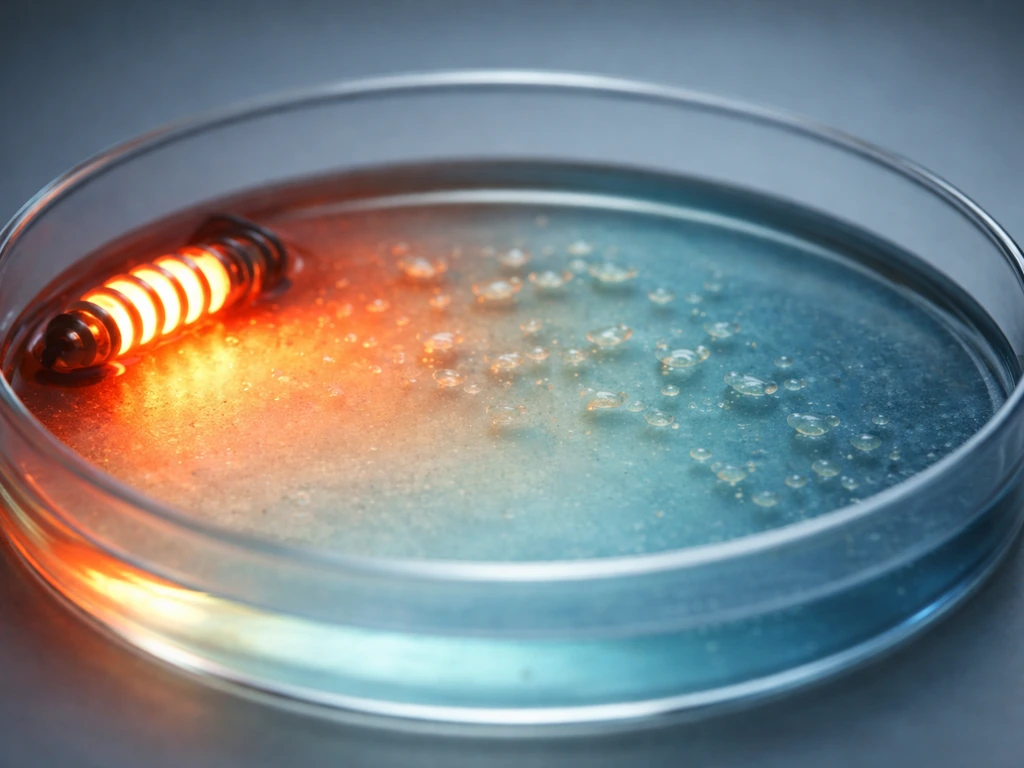
Mesophiles grow best at temperatures between 20°C and 45°C (68°F to 113°F), with most reaching their peak growth rate somewhere in the middle of that range, around 30°C to 37°C. Most mesophilic organisms can grow in a temperature range of 20°C to 45°C. That window lines up almost perfectly with room temperature, human body temperature, and the conditions inside most kitchens and food storage areas that aren't actively refrigerated or heated.
Mesophiles Grow Best At: Optimum Temperature and Conditions

Marcus Reeves
27 May 2026
If you're working in food safety, microbiology, or just trying to understand why food goes bad, that temperature range is the single most important number to internalize. These are known as mesophiles, which is why they can cause spoilage and foodborne illness when food is kept in the danger zone microorganisms that grow best in warm moist places are.
The mesophile temperature range, explained
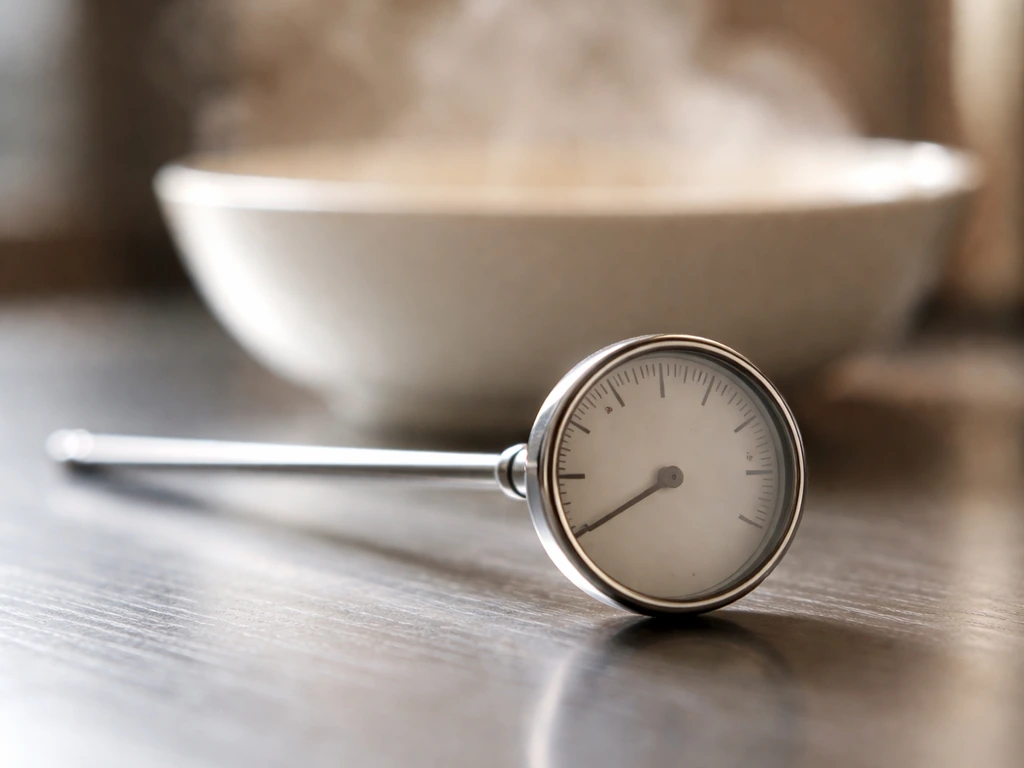
The 20–45°C range isn't arbitrary. It reflects the thermal tolerance of the enzymes and cell membranes in mesophilic organisms. Below 20°C, metabolic reactions slow down enough that growth becomes sluggish (that's where psychrophiles and psychrotrophs take over). Psychrophiles instead thrive in colder environments, so the best temperature for them is the opposite of warm-growing mesophiles psychrophiles and psychrotrophs take over. Above 45°C, proteins start to denature and membranes destabilize. Most mesophiles can't survive sustained exposure above 60°C, which is why cooking to proper internal temperatures reliably kills them.
In practical food safety terms, the USDA FSIS defines the 'danger zone' as 40°F to 140°F (roughly 4°C to 60°C), and bacteria in that zone can double in as little as 20 minutes under ideal conditions. That danger zone overlaps almost completely with the mesophilic growth range. When food sits at room temperature (around 20–25°C), you're sitting in prime mesophile territory.
It's worth noting that not all mesophiles behave identically across the full 20–45°C range. Some organisms, like E. coli and Salmonella, have optima close to 37°C because they evolved inside warm-blooded hosts. Spoilage bacteria common in dairy or produce often peak around 30°C. Knowing which organism you're dealing with helps you predict how aggressively it will grow at a given temperature.
Temperature alone doesn't decide everything: pH, water activity, and nutrients
Temperature is the headline factor, but mesophiles still need the right pH, available water, and nutrients before they'll thrive. A halophile would grow best in salty environments where water activity and ion balance support it. Think of these as independent switches: all of them have to be in the right position for rapid growth to happen. If even one is unfavorable, growth slows or stops even if the temperature is perfect.
pH
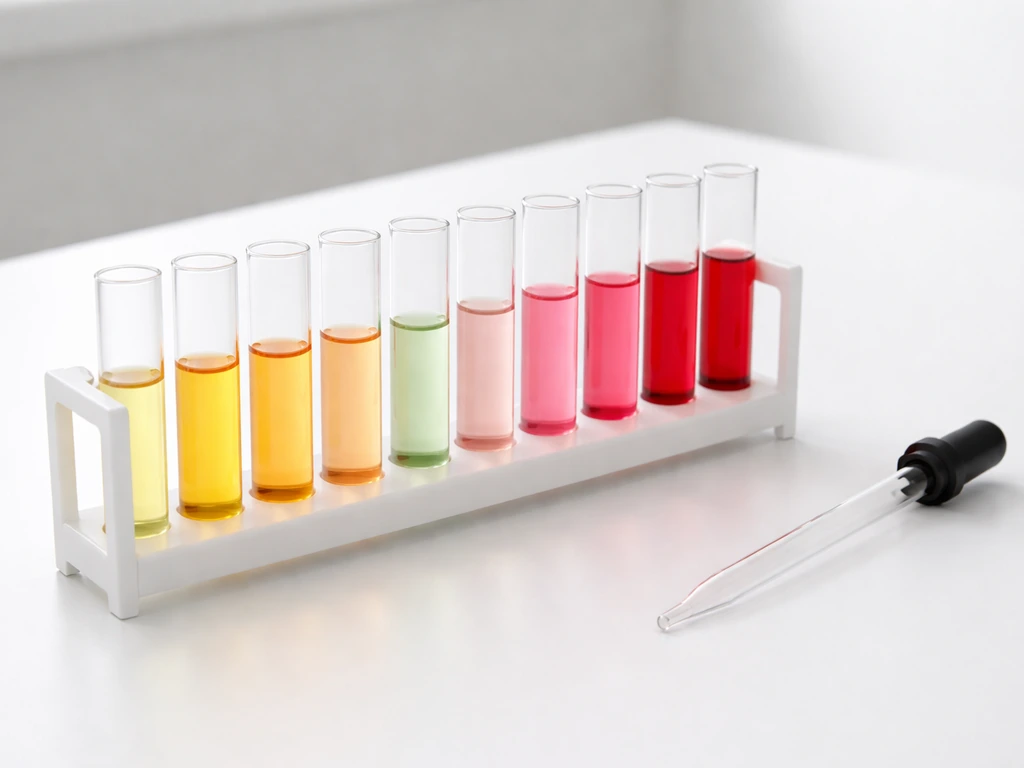
Most mesophilic bacteria prefer a pH near neutral, around 6.5 to 7.0. Many can still grow across a broader range, roughly pH 4.0 to 9.5, but growth slows noticeably as you move away from neutral. This is why acidic foods like vinegar pickles (pH around 3.5) and properly acidified tomato products resist bacterial spoilage. Keeping pH below 4.6 is a recognized control point for pathogens like Clostridium botulinum in home canning. However, some mesophiles, including certain Lactobacillus species, are acid-tolerant and will grow in mildly acidic environments that would stop other organisms.
Water activity (a_w)
Water activity (aw) measures how much unbound water is actually available for microorganisms to use, on a scale from 0 to 1. Fresh meat, cooked rice, and most moist foods sit at aw 0. 97 to 0. 99, which is very permissive for bacterial growth.
Most bacteria need a minimum a_w of around 0. 90 to 0. 91 to grow at all, and optimal growth typically occurs closer to 0. 995.
E. coli, for example, has a minimum growth a_w around 0. 95. Below 0.
91, most spoilage bacteria and pathogens simply can't grow, even at a perfect mesophilic temperature. This is the principle behind dried foods, jerky, and high-sugar or high-salt products: they reduce aw below the threshold for bacterial growth. Molds are more tolerant and can grow at aw as low as 0. 70, which is why you see mold on dried foods but not active bacterial multiplication.
Nutrients
Mesophiles need carbon, nitrogen, minerals, and in many cases specific vitamins or amino acids they can't synthesize themselves. High-protein, high-moisture foods like meat, poultry, fish, eggs, and dairy provide an almost ideal nutrient matrix. That's why these foods dominate the list of high-risk foods in food safety frameworks. Low-nutrient environments, like distilled water or plain salt solutions, can slow or halt growth even when temperature and pH are favorable.
Oxygen requirements: aerobic, anaerobic, and everything in between
Mesophiles span a wide range of oxygen preferences, and this matters a lot in practical food safety and lab work. The three main categories are:
- Obligate aerobes: require oxygen to grow and won't multiply in anaerobic conditions. Pseudomonas, a common spoilage organism in refrigerated meat, falls here.
- Obligate anaerobes: grow only without oxygen. Clostridium botulinum and C. perfringens are classic examples. They're the reason vacuum-packaged or canned foods can still pose risks if not processed correctly.
- Facultative anaerobes: grow with or without oxygen, though many prefer aerobic conditions. E. coli, Listeria, Staphylococcus aureus, and Salmonella are all facultative, which makes them particularly dangerous because they can thrive in both surface and deep-food environments.
- Microaerophiles: prefer reduced oxygen tension, roughly 2–10% O2. Campylobacter is the most food-relevant example and is a leading cause of foodborne illness worldwide.
The practical takeaway: packaging type matters. Modified atmosphere packaging (MAP) and vacuum sealing can suppress aerobes but may favor anaerobes if other control points aren't in place. You can't just pull oxygen out of a package and assume the food is safer overall.
Why incubation conditions matter in labs and food testing
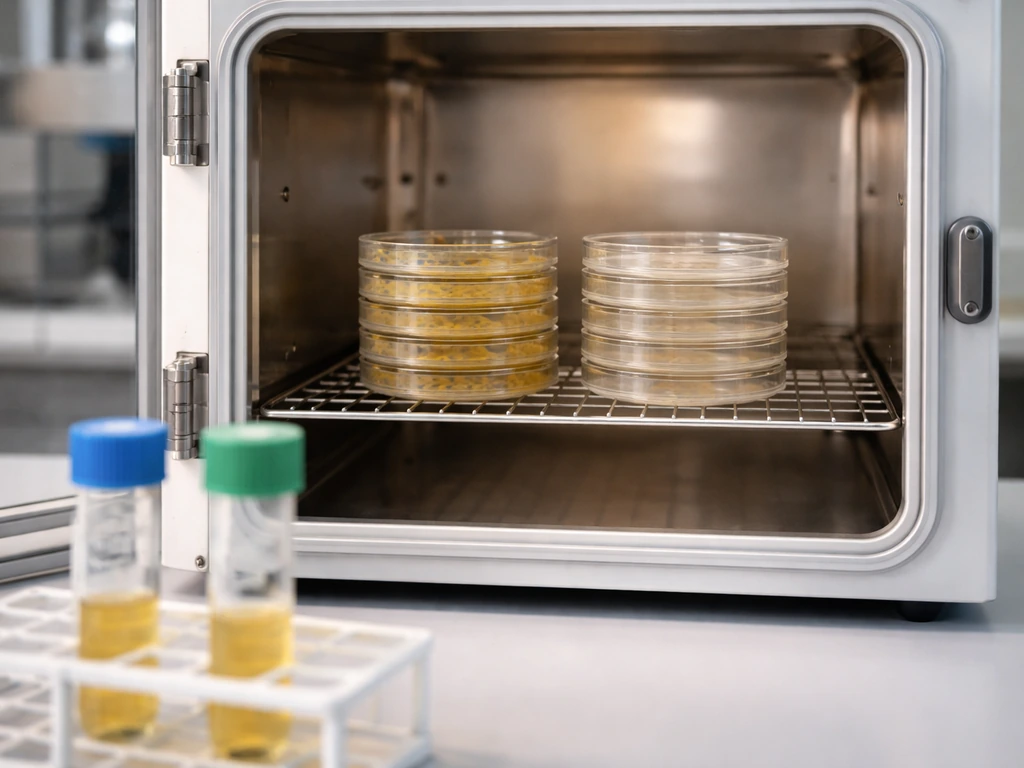
When food safety labs test for mesophilic bacteria, they're deliberately recreating near-optimal conditions to detect even small populations. The FDA's Bacteriological Analytical Manual (BAM) specifies that the standard Aerobic Plate Count (APC) uses incubation at 35°C (±1°C) for 48 hours (±3 hours). This temperature is squarely in the mesophilic range and targets the broad population of aerobic mesophilic bacteria you'd find in foods. The ISO 4833-1:2013 method uses 30°C for the pour plate technique, which is commonly applied in European food testing and picks up a slightly wider range of organisms, including some slower-growing mesophiles.
The choice of 35°C vs. 30°C isn't splitting hairs: 35°C favors organisms associated with warm-blooded hosts and body-temperature pathogens, while 30°C captures more environmental spoilage bacteria. Educators and food science students should note that the standard countable range for viable plates is 25 to 250 colonies per plate. Outside that range, the counts become statistically unreliable, so dilutions are prepared carefully before plating.
These lab conditions are the controlled version of what happens in real kitchens and storage environments. If you hold food at 35°C for 48 hours in a lab, you're essentially creating the same conditions as leaving food at room temperature over a weekend, but with a controlled starting inoculum and a way to count the results.
Where mesophiles show up in real life
Mesophiles are everywhere. They dominate the human gut, live on skin, thrive in soil, and colonize virtually every moist food surface. In practical terms, the foods most at risk are those that combine high water activity, neutral or near-neutral pH, rich nutrients, and temperatures in the danger zone. That includes:
- Raw and cooked meats and poultry
- Dairy products (milk, soft cheeses, custards)
- Cooked grains and starches (rice, pasta, cooked beans)
- Eggs and egg-based dishes
- Cut fruits and vegetables, especially leafy greens
- Ready-to-eat deli foods and sandwiches
Surfaces matter too. Cutting boards, countertops, sink drains, and reusable shopping bags all support mesophilic growth if they're moist and contaminated. Room temperature (roughly 20–25°C) is well within the growth range, so contaminated surfaces left wet for a few hours can accumulate significant bacterial loads. This is separate from cold-tolerant organisms (psychrotrophs like Listeria monocytogenes, which can grow in refrigerators), but those are a different group from core mesophiles.
Growth vs. survival: what happens when conditions shift
There's an important distinction between a mesophile actively growing and one simply surviving. Below about 4°C (40°F, standard refrigerator temperature), most mesophiles stop dividing but don't die quickly. Some bacteria can still grow slowly at cold temperatures even after they stop actively dividing during refrigeration which bacteria can grow even in cold temperatures. They can persist for days to weeks in a refrigerated state, ready to resume growth the moment the temperature rises back into the danger zone. Freezing extends survival even longer: many mesophiles can survive frozen storage for months or years, which is why thawing food at room temperature is risky.
On the high end, sustained temperatures above 60°C (140°F) begin killing mesophiles. Most are destroyed within minutes at 70°C or higher, and pasteurization uses this principle. However, heat-resistant spores from organisms like Bacillus cereus and Clostridium perfringens can survive boiling and germinate once the food cools back into the mesophilic range. This is a particularly common issue with cooked rice and stews held at unsafe temperatures.
Drying, high salt, and high sugar reduce a_w below growth thresholds, stopping active multiplication. But again, the organisms often survive in a dormant state and can revive if moisture is reintroduced. Acidification to below pH 4.6 is similarly bacteriostatic or bactericidal for many pathogens, but some acid-tolerant species persist.
Practical prevention: storage, heating, cooling, and cross-contamination
The core strategy for controlling mesophilic growth is keeping food out of the 4°C to 60°C danger zone as much as possible. Here's how that translates into day-to-day practice:
Storage temperatures
Refrigerate perishables at or below 4°C (40°F). Most mesophiles stop multiplying at this temperature, though they don't die. Freeze foods at or below -18°C (0°F) for longer-term storage. Check your refrigerator temperature with a thermometer periodically: many household fridges run warmer than the dial suggests, especially after repeated door openings.
The 2-hour rule
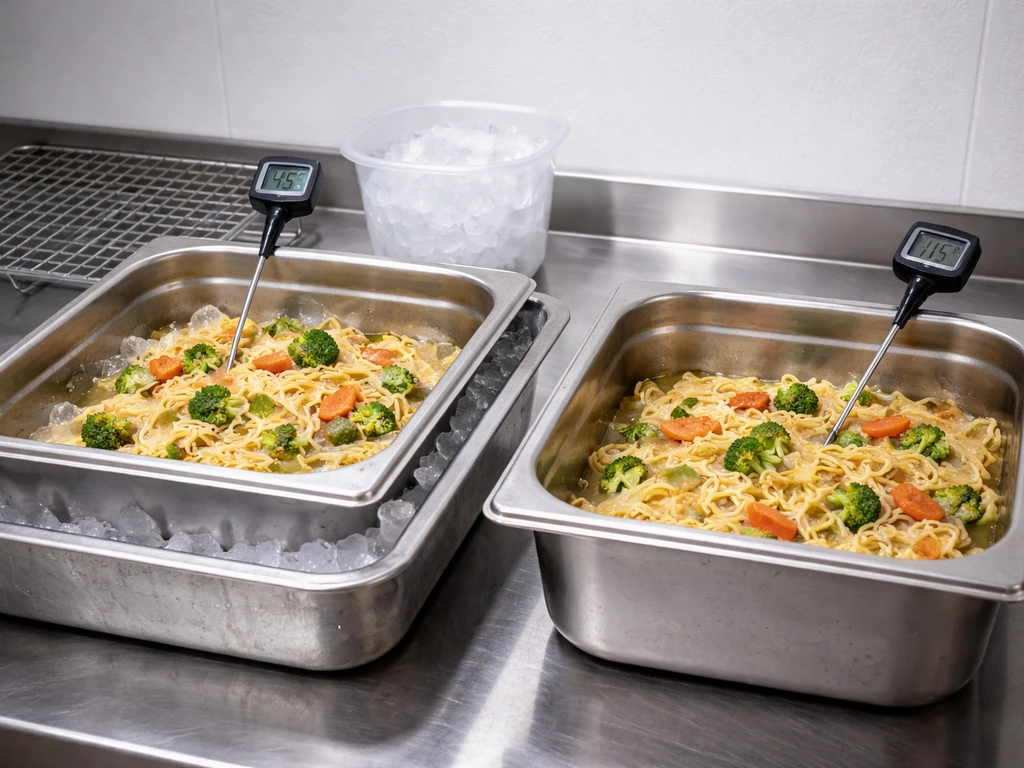
The CDC recommends refrigerating perishable food that has been in the danger zone within 2 hours. If ambient temperature is 32°C (90°F) or above, that window drops to 1 hour. Don't leave cooked dishes, salads, or cut produce sitting at room temperature through a long meal or party without monitoring time.
Cooling cooked food properly
Rapid cooling is one of the most commonly mishandled steps in food service. The FDA Food Code requires cooked food to be cooled from 135°F (57°C) to 70°F (21°C) within 2 hours, and then from 70°F down to 41°F (5°C) within an additional 4 hours. That's a total cooling window of no more than 6 hours. Large pots of soup, stew, or rice are the biggest offenders: they hold heat for a long time in the center and can stay in the mesophilic growth range for hours if simply placed in the fridge intact. Divide food into shallow containers, use an ice bath, or use a blast chiller to hit those targets.
Heating food thoroughly
Cooking to recommended internal temperatures (165°F/74°C for poultry, 160°F/71°C for ground meats, 145°F/63°C for whole cuts with a 3-minute rest) reliably destroys vegetative mesophilic cells. Use a calibrated thermometer and measure in the thickest part of the food, not near the surface.
Cross-contamination control
Mesophiles transfer easily from raw foods to ready-to-eat surfaces through hands, cutting boards, utensils, and cloths. Use separate cutting boards for raw meat and produce, wash hands with soap for at least 20 seconds after handling raw foods, and sanitize food-contact surfaces regularly. Wet dishcloths and sponges are particularly high-risk because they combine moisture, nutrients, and room temperature: a nearly perfect mesophilic growth environment.
Water activity as a preservation hurdle
If you're developing recipes or evaluating shelf-stable products, keeping aw below 0.91 is a reliable way to stop bacterial growth regardless of temperature. This is achieved through drying, adding salt, adding sugar, or a combination. Combining reduced aw with mild acidification (pH below 5.0) and moderate refrigeration creates a multi-hurdle system that's far more effective than any single control on its own.
| Control point | Target value | Effect on mesophiles |
|---|---|---|
| Temperature (cold) | Below 4°C (40°F) | Stops growth; organisms survive |
| Temperature (heat) | Above 60°C (140°F) | Kills vegetative cells; spores may survive |
| pH | Below 4.6 | Inhibits or kills most pathogens |
| Water activity | Below 0.91 | Stops bacterial growth; molds may still grow above 0.70 |
| Time in danger zone | Less than 2 hours total | Limits cell doubling cycles and toxin production |
Understanding mesophiles is really understanding the conditions that define most food safety risk. They're not unusual or exotic organisms: they're the everyday bacteria that have evolved to grow at the same temperatures we live and cook at. Will a thermotropic organism grow in the direction of heat? Yes, thermotaxis lets some organisms move toward more favorable temperatures. Control the temperature, water, pH, and time, and you control them.
FAQ
If mesophiles grow best at 37°C, does 25°C still allow growth?
They grow well at 20°C to 45°C, but the fastest growth is often closer to the mid-to-upper portion of that band (roughly 30°C to 37°C). So a room temperature of about 22°C may support growth, but leaving food longer at closer to 37°C generally increases the risk and reduces safe holding time.
What happens to mesophilic growth near 20°C, does it stop?
Yes. “Best” refers to peak rate, not a hard cutoff. At the low end (near 20°C) growth slows but often still occurs if pH, nutrients, and water activity are favorable, which is why refrigerated or cool-but-not-cold storage can still be risky.
Does fermenting food at room temperature eliminate the mesophile risk?
Fermentation can still be risky for mesophiles early on. If the food starts near neutral pH and you incubate it in the mesophilic temperature range before it acidifies, mesophiles can multiply before acids accumulate enough to suppress them.
If I vacuum-seal food, do mesophiles stop growing?
Not necessarily. Modified atmosphere packaging (MAP) or vacuum sealing can suppress some aerobes, but if you create low-oxygen conditions that favor anaerobes, other bacteria may still grow. The safer approach is using MAP only as part of a multi-hurdle plan (temperature, pH, and water activity).
Do mesophiles die in the refrigerator?
Refrigeration mainly slows and prevents active division, it does not reliably kill mesophiles quickly. They can persist and resume growth after thawing or when the food warms back into the danger zone.
Is thawing food on the counter safe because mesophiles are frozen?
Freezing generally stops growth, not survival. Many mesophiles survive frozen storage and can multiply again once thawed, especially if thawing occurs at room temperature where the food passes back through the 4°C to 60°C range.
Can mesophiles grow at a low pH like 4.0?
Yes, and it depends on the organism and product. For example, acid-tolerant species (such as certain Lactobacillus strains) may continue growing in mildly acidic environments that inhibit other mesophiles. That means you cannot assume “slightly acidic” equals “safe.”
Why do high-salt or dried foods not develop mesophilic spoilage?
Often no, if water activity is low enough. If the product has a_w below roughly 0.91, many bacteria cannot grow even if temperature and pH are favorable. However, survival can still occur, so rehydration can restore growth conditions.
Does the ideal temperature apply the same way for aerobic and anaerobic mesophiles?
Yes, oxygen exposure changes which mesophiles are most likely to grow. If you cool and store a food well, but use conditions that shift it from aerobic to anaerobic, you can change the dominant spoilage or pathogen population, so “controlling temperature alone” is not enough.
How can I tell if my refrigerator is cold enough to stop mesophiles?
Do not use a regular kitchen dial setting as your control point. Many household refrigerators run warmer than indicated, so measuring actual temperature with a probe is the fastest way to confirm you are truly at or below 4°C for long periods.
Next Article
Will a Thermotropic Organism Grow Toward Heat?
Explains whether thermotropic microbes grow toward heat, clarifying thermotropism vs thermotaxis and food-safety impact.