Bacteria can grow across a surprisingly wide temperature range, roughly between -2°C (28°F) and 70°C (158°F) depending on the species, but no single bacterium can grow at every temperature. Each species has a minimum, an optimum, and a maximum growth temperature. Outside those limits, growth stops. The practical danger zone for most foodborne pathogens sits between 4°C and 60°C (40°F and 140°F), which is why those numbers appear in nearly every food safety regulation.
Bacteria Can Grow in Temperatures Between What Ranges

Marcus Reeves
1 Jun 2026
How bacterial growth actually depends on temperature
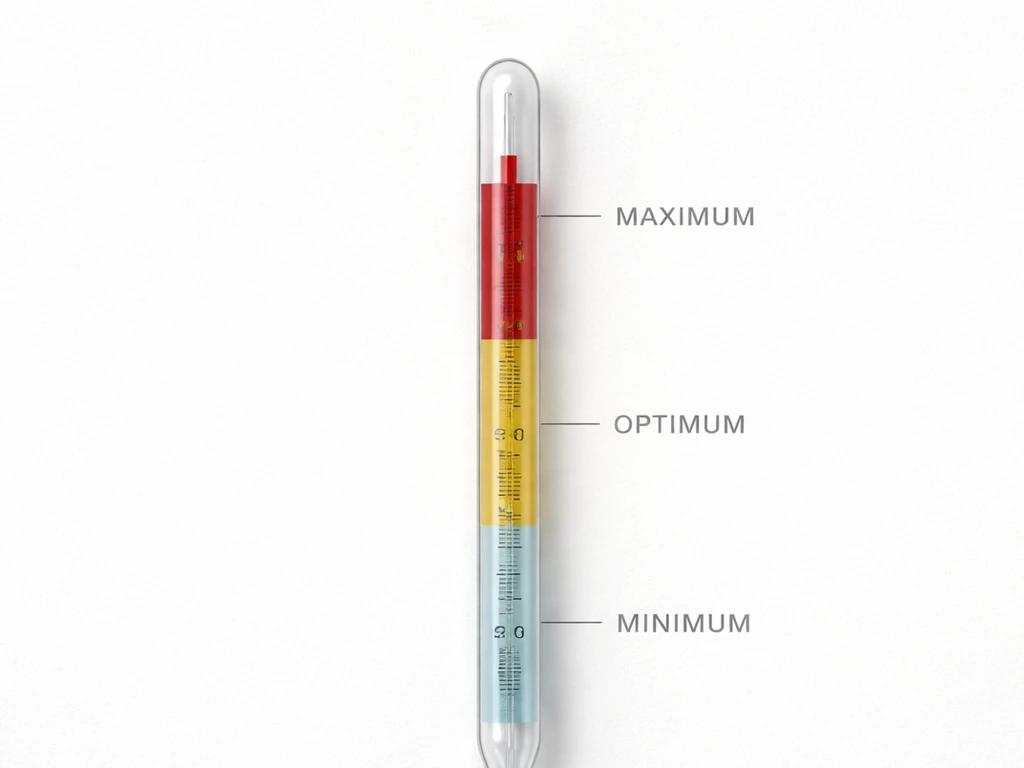
Every bacterium has three key temperature points: a minimum below which it cannot grow at all, an optimum where it multiplies fastest, and a maximum above which growth stops and cells start to die. Think of it like a bell curve. Growth rate climbs as temperature rises toward the optimum, then falls sharply as temperature approaches the maximum. Push past the maximum and you're no longer talking about growth, you're talking about cell damage and death.
Scientists group bacteria into categories based on where their optimum falls. Psychrophiles have an optimum at or below 15°C and usually cannot survive above about 20°C. Mesophiles, which include the majority of clinically important and foodborne pathogens, grow best around 20 to 45°C with a peak near 35°C. Thermophiles thrive between roughly 45°C and 70°C. Hyperthermophiles, found in places like hydrothermal vents, have growth optima between 80°C and 110°C. For practical food safety, mesophiles and the cold-tolerant psychrotrophic group are the ones that matter most. microorganisms that grow best in warm moist places are more likely to reach unsafe levels when food is held in the temperature danger zone.
| Group | Minimum growth temp | Optimum growth temp | Maximum growth temp |
|---|---|---|---|
| Psychrophile | ≤0°C (32°F) | ~15°C (59°F) | ~20°C (68°F) |
| Psychrotroph (cold-tolerant) | ~0–4°C (32–39°F) | ~20–30°C (68–86°F) | >30°C (86°F) |
| Mesophile | ~10–15°C (50–59°F) | ~35°C (95°F) | ~45°C (113°F) |
| Thermophile | ~45°C (113°F) | ~55–65°C (131–149°F) | ~70°C (158°F) |
| Hyperthermophile | ~65°C (149°F) | ~80–110°C (176–230°F) | >110°C (230°F) |
Growing vs surviving: these are not the same thing
This distinction matters more than most people realize. Bacteria can survive, sometimes for a very long time, at temperatures where they absolutely cannot grow. Freezing a food at -18°C (0°F) does not sterilize it. It stops growth and essentially pauses bacterial activity, but many cells remain alive. The moment you thaw that food and let it sit at room temperature, growth picks back up.
Below the minimum growth temperature, some pathogens enter what microbiologists call a viable but non-culturable (VBNC) state. The cells are metabolically active, potentially still dangerous, but not replicating. They can resuscitate under the right conditions. Above the maximum growth temperature, cells take actual damage, proteins denature, and at sufficient heat exposure, death rates exceed reproduction. That's the principle behind pasteurization and cooking temperatures.
The practical takeaway: cold storage slows or stops growth, but it doesn't eliminate bacteria. Hot cooking kills them. Anything in between is a negotiation between time and temperature.
Temperature ranges that matter for food safety right now
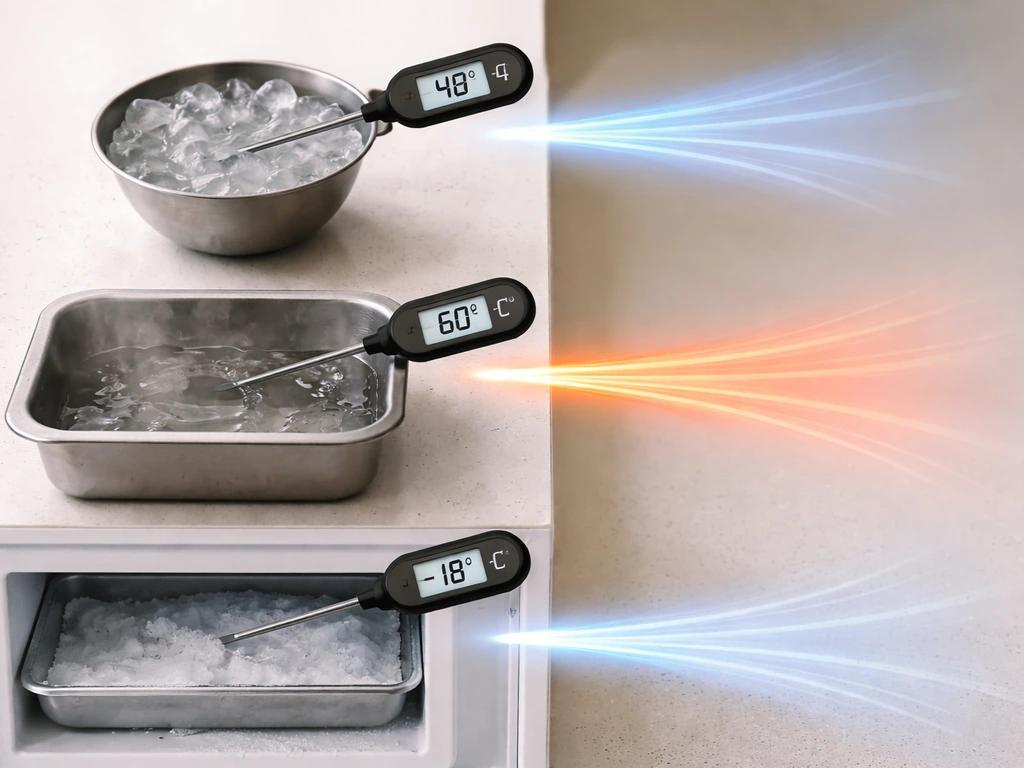
The FDA Food Code (2022) defines the two safe holding temperatures precisely: blank" rel="noopener noreferrer">keep cold TCS (time/temperature control for safety) foods at or below 5°C (41°F), and hot foods at or above 57°C (135°F). The USDA presents the consumer-friendly version as the 40°F to 140°F danger zone. Anything sitting in that range is in territory where most foodborne pathogens can grow. Microorganisms that grow best in warm, moist places can also become a problem when food is held in the temperature danger zone microorganisms that grow best in warm, moist places are.
- Freezer: -18°C (0°F) or colder. No bacterial growth. Cells may survive but cannot replicate.
- Refrigerator: 4°C (40°F) or below. Growth of most pathogens stops or slows dramatically. Some cold-tolerant organisms (psychrotrophs) can still grow slowly at this range.
- Danger zone: 4°C to 60°C (40°F to 140°F). Active growth range for most foodborne pathogens including Salmonella, E. coli, Staphylococcus aureus, and Campylobacter.
- Hot holding: 57°C (135°F) or above per FDA Food Code, 60°C (140°F) per older FDA manufacturing regulations (21 CFR 110.80). Growth is inhibited at these temperatures.
- Cooking/kill step: 74°C (165°F) for poultry, 71°C (160°F) for ground meat, 63°C (145°F) for whole cuts with rest time. These temperatures kill pathogens rather than just stopping growth.
What temperature abuse actually looks like in practice
Temperature abuse means food sits in the danger zone long enough for bacterial populations to reach unsafe levels. USDA guidance draws the line at 2 hours of total time in the danger zone (1 hour if the ambient air temperature is above 90°F). The FDA Food Code handles this through specific cooling requirements: cooked food must drop from 135°F to 70°F within 2 hours, then from 70°F to 41°F within a total of 6 hours. Those aren't arbitrary numbers; they're calculated to prevent enough bacterial doubling cycles to create a hazard.
Time-at-temperature is cumulative. If a chicken dish sits on the counter for 45 minutes while you eat, then goes back in the fridge and comes out again the next day for another 90 minutes before being served, that's 2 hours and 15 minutes in the danger zone total. That's over the limit. The FDA consumer guidance is straightforward: if refrigerated perishables (meat, poultry, fish, dairy, eggs, leftovers) have been above 40°F for 4 hours or more, discard them. The FDA advises keeping the refrigerator at 40°F (4°C) or below and the freezer at 0°F (-18°C) to limit bacterial growth.
There's no reliable visual or smell test for whether bacterial growth has occurred. Pathogens can multiply to dangerous levels in food that still looks and smells completely normal. The time and temperature records are the only real evidence you have.
The exceptions that make this more complicated
Not all bacteria behave the same way at cold temperatures. Psychrotrophs are the group that creates real headaches for refrigerated food. These organisms prefer warmer temperatures (optimum around 20 to 30°C) but can multiply at refrigeration temperatures. Psychrophiles, for example, grow best in warmer conditions rather than in deep cold, which is why cold storage can still be risky for some organisms psychrophiles grow best in warm temperatures.
Listeria monocytogenes is the clearest food safety example: it can grow across a temperature range of -2°C to +45°C, with an optimum between 30°C and 37°C. Even at a properly maintained 4°C refrigerator, Listeria can grow, just slowly. This is why ready-to-eat refrigerated foods have use-by dates and why long cold storage is not the same as safe indefinite storage.
On the other end, thermophilic bacteria like Bacillus stearothermophilus (now Geobacillus stearothermophilus) are relevant in contexts like canning and high-temperature food processing, where growth can occur at temperatures that would kill mesophiles. A thermotropic organism will tend to grow in the direction of heat when its temperature preference is met. For most retail and home food handling, thermophiles aren't the concern since food temperatures during cooking easily exceed their range. The organisms worth worrying about in everyday food storage are mesophiles and psychrotrophs.
It's also worth noting that temperature doesn't work in isolation. Water activity, pH, oxygen availability, and competing microflora all interact with temperature to determine whether growth actually happens. But temperature is the single most controllable variable in food handling, which is why regulatory guidance centers on it.
If you're exploring how specific organism types differ, the behavior of psychrotrophs overlaps with questions about which bacteria can grow even in cold temperatures, and the mesophile optimum range connects directly to discussions of what temperature ranges mesophilic organisms typically occupy.
What to do with this information today
Here's how to translate all of this into actual handling decisions:
- Verify your refrigerator temperature. Use an appliance thermometer. The FDA recommends 40°F (4°C) or below. Many home refrigerators run warmer than their dial settings suggest.
- Keep your freezer at 0°F (-18°C). This stops growth completely, though it doesn't kill everything.
- Track time, not just temperature. Every minute food spends between 40°F and 140°F counts toward the 2-hour limit. Use a timer if you're not sure.
- Cool hot food quickly. Don't leave a large pot of soup on the stove to cool to room temperature for hours. Divide it into shallow containers and refrigerate promptly.
- When hot holding (buffets, steam tables), keep food at 135°F or above and verify with a calibrated thermometer, not just the equipment's built-in gauge.
- If you can't verify the temperature history of a food, apply the 4-hour rule: when in doubt about cumulative time above 40°F, discard it.
- For high-risk populations (pregnant people, elderly, immunocompromised individuals), be especially cautious with refrigerated ready-to-eat foods that may harbor Listeria, even when properly stored.
The core principle is simple even if the microbiology isn't: bacteria grow within specific temperature windows, most dangerous ones thrive between 40°F and 140°F, and controlling time in that range is the most effective tool available. Get the temperatures right, track the time, and you've addressed the biggest variable in bacterial growth for everyday food safety.
FAQ
If bacteria can grow between -2°C and 70°C, why do food rules use 5°C and 57°C instead?
The wide biological range is species dependent, food rules target the risk from common pathogens during storage and holding, and they add a safety margin. Using 5°C for cold holding slows growth enough that time becomes manageable, while 57°C for hot holding keeps growth from getting going even if holding equipment varies slightly.
Does “cold storage” mean bacteria are dead after long refrigeration?
No, refrigeration usually slows growth but does not reliably kill cells. Some bacteria enter a viable but non-culturable state at low temperatures and can resuscitate after thawing or warming, so the key limit is how long food sits in the danger zone, not how cold it was overnight.
Can bacteria still grow if my fridge reads 4°C but the food is near the door or back?
Yes. Real food temperatures can be higher than the thermostat setting because of airflow and door opening. Check by placing a probe in the actual food, especially for ready-to-eat items, and follow use-by dates because slow growth can still matter over time.
What’s the difference between “minimum,” “optimum,” and “maximum” temperature for bacteria?
Minimum is the lowest temperature where they can multiply, optimum is where growth rate is fastest, and maximum is where replication stops and damage exceeds growth. A food can be “below optimum” yet still in a range where populations gradually increase.
If I partially thaw frozen food in the microwave, am I causing a time-in-danger-zone problem?
Often, yes. Microwaves heat unevenly, creating warm pockets that can reach the danger zone while other parts remain frozen. Use the reheat immediately method, cover and rotate if the instruction says so, and avoid letting it sit after thawing.
Is it safe to taste food to tell whether bacteria grew?
No. There is no dependable smell, taste, or appearance test for bacterial growth or toxin presence. The safer approach is time and temperature tracking (and discarding when limits are exceeded).
Do all bacteria respond the same way to refrigeration?
No. Psychrotrophs are the group that can grow at refrigerator temperatures, even though their growth is slower than at their optimum. Psychrophiles have different cold preferences and are not the main culprit for everyday refrigerated food spoilage or risk.
If a food briefly hits the danger zone, is it always unsafe?
Not automatically. The risk depends on total cumulative time and how hot it got, plus factors like salt, pH, and oxygen availability. A short excursion may be acceptable if it stays well under the allowed cumulative time and you return it quickly to proper cold or hot holding.
Does cooking or reheating always fix the problem if the food was mishandled?
Cooking can kill bacteria present at the time, but it may not address toxins already produced by certain pathogens. Also, reheating that does not heat all parts uniformly can leave cold spots where surviving bacteria can continue growth after reheating.
How should I count time when food temperature fluctuates, like taking leftovers out for serving?
Use cumulative time in the danger zone. Every time the food warms into the unsafe band, clock time adds up, even if it goes back to refrigeration between servings. This is why repeated warm-ups can push you over the threshold.
What should I do if I’m not sure how long leftovers were above 40°F?
If you cannot verify time in the danger zone, follow a conservative rule of discard, especially for TCS foods. For example, if refrigerated perishables may have been above 40°F for around 4 hours or more, the practical decision is to throw them out rather than guess.
How can water activity, pH, or packaging change whether bacteria grow at the same temperature?
Lower pH, reduced available water, or limited oxygen can inhibit growth even within a favorable temperature range. But since temperature is the most controllable variable, regulations still prioritize it, so you should not treat “packaged” as a substitute for time-temperature control.
Next Article
Mesophiles Grow Best At: Optimum Temperature and Conditions
Optimum 20–45°C for mesophiles, plus how pH, moisture, nutrients, and oxygen control thrive vs survival in food.