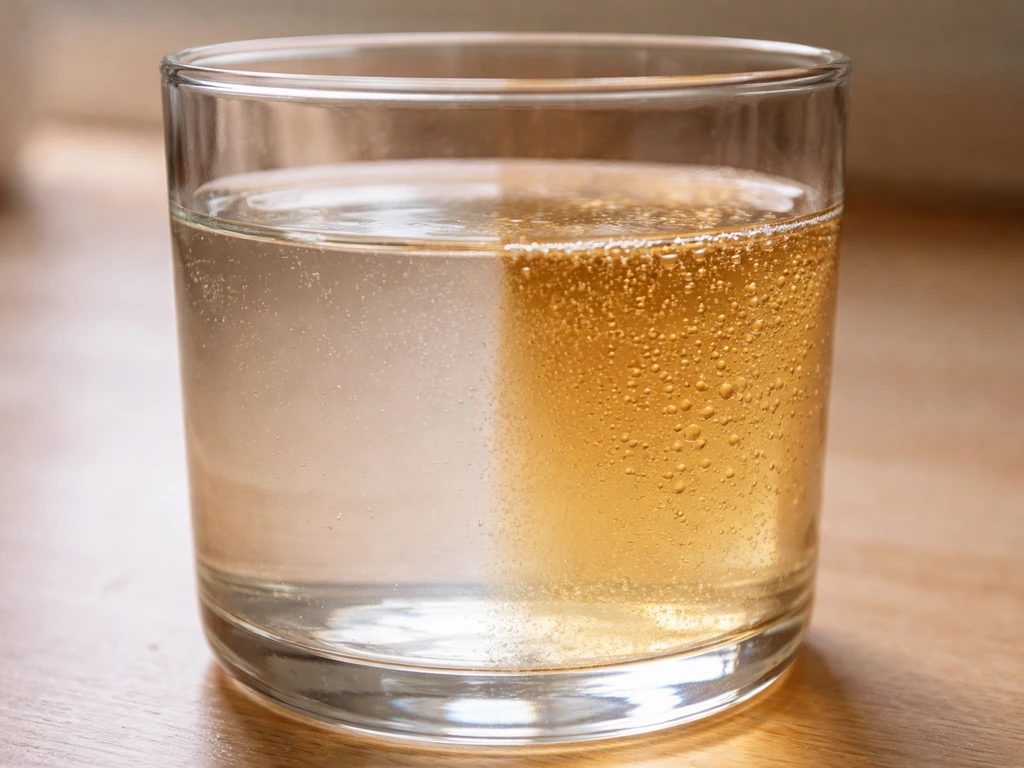
Yes, bacteria can grow on plastic surfaces, not just survive on them. The plastic itself isn't usually the food source, but the organic residues, proteins, fats, and salts that deposit on plastic give bacteria exactly what they need. Add moisture and a temperature in the right range, and you have conditions where a small initial contamination can multiply from thousands to hundreds of millions of cells in a matter of hours.
Can Bacteria Grow on Plastic? Biofilms, Risk, Cleaning Guide

Marcus Reeves
30 Jun 2026
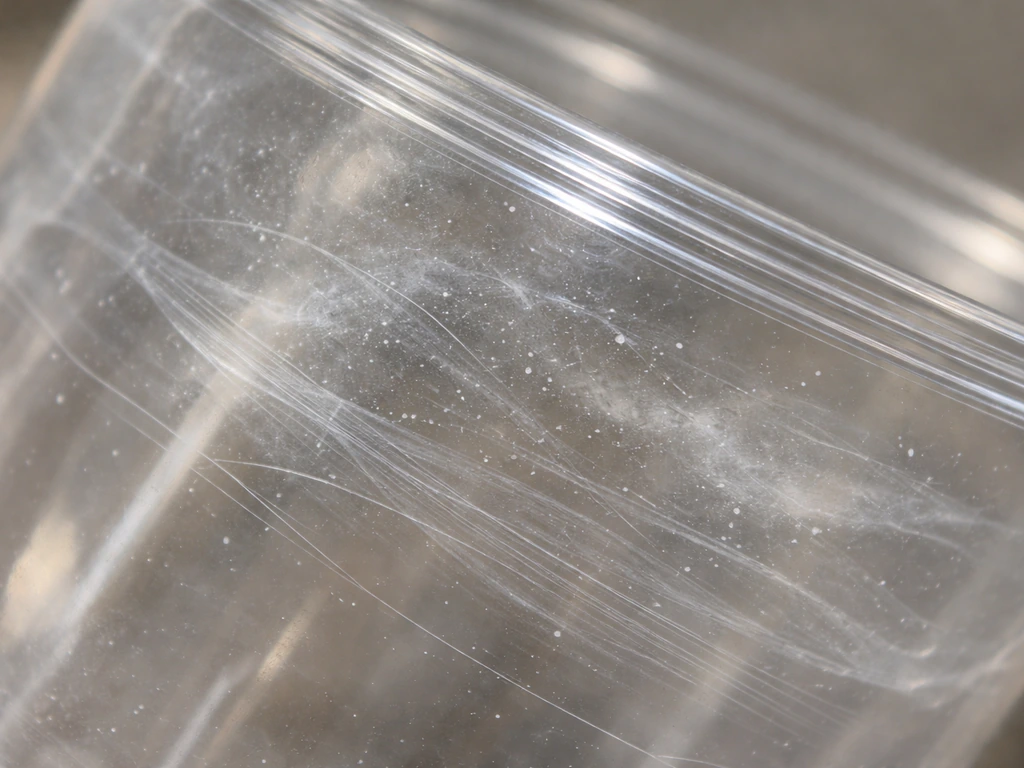
What actually drives bacterial growth on plastic
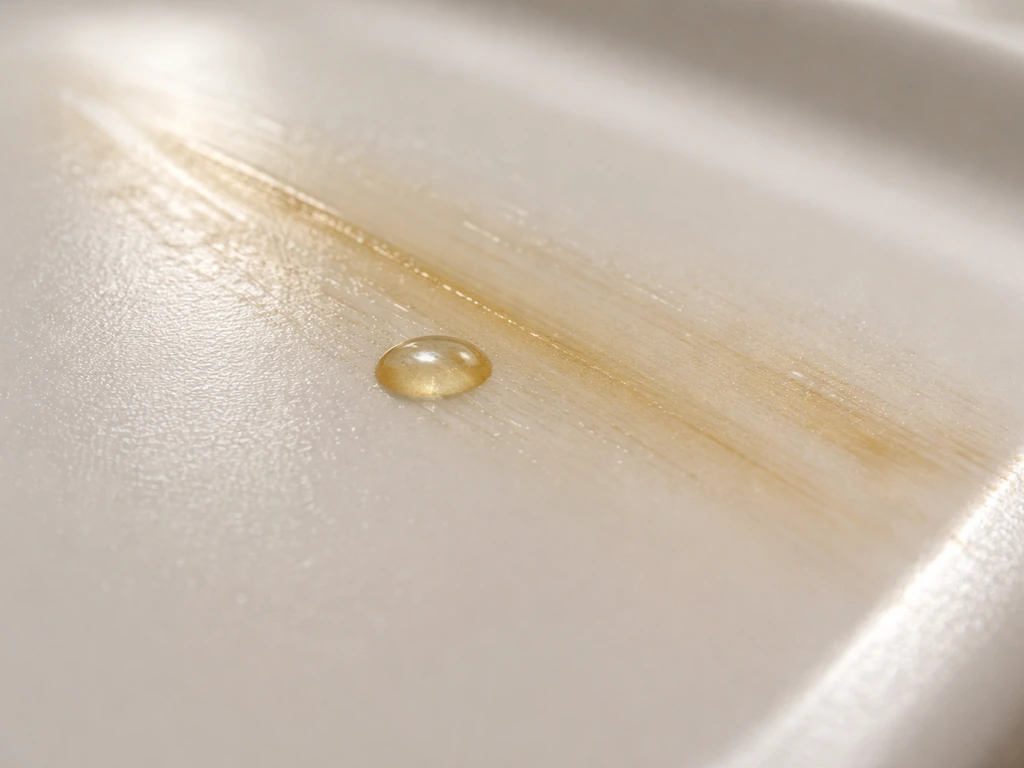
Pure, clean plastic is a pretty hostile surface for bacteria. Most polymers don't provide carbon, nitrogen, or energy. The problem is that plastic surfaces in real life are almost never chemically clean. A thin invisible film of organic material, called a conditioning layer, forms almost immediately when plastic contacts food, water, or even air. That film is what bacteria feed on.
Once that organic base exists, the same environmental rules that govern bacterial growth anywhere else apply on the plastic surface. Five factors matter most:
- Moisture: bacteria need water activity above roughly 0.90 for most pathogens to multiply. A wet surface, even from condensation, is enough.
- Nutrients: food residues, proteins from saliva or hands, and dissolved organics in water all provide a nutrient base.
- Temperature: most foodborne pathogens grow between 4°C and 60°C (40°F to 140°F), with fastest growth between about 25°C and 40°C.
- pH: most bacteria prefer near-neutral pH (6.5 to 7.5), but some, like Listeria, tolerate a wider range down to around pH 4.4.
- Oxygen: aerobic bacteria need it, anaerobic bacteria are inhibited by it, and many common pathogens (like Staphylococcus aureus and E. coli) are facultative, meaning they grow with or without it.
Surface properties also matter more than most people expect. Research comparing polyethylene (PE), polypropylene (PP), polyethylene terephthalate (PET), and polyvinyl chloride (PVC) found that surface hardness was a meaningful factor in how readily bacteria adhered across those four plastics. Rougher, more porous, or aged surfaces give bacteria more places to grip and shelter, which is why scratched containers or worn cutting boards carry higher risk than smooth new ones.
Biofilms: the more serious version of bacteria on plastic
Bacteria on a surface don't just sit there as isolated cells. Given time and the right conditions, they organize into biofilms: structured communities encased in a self-produced matrix of polysaccharides, proteins, and DNA. This matrix is called the extracellular polymeric substance (EPS), and it's the reason biofilms are so much harder to deal with than ordinary surface contamination.
In one study on polypropylene, Pectobacterium carotovorum counts on the surface climbed from roughly 10,000 cells per square centimeter to around 100,000,000 cells per square centimeter between 24 and 60 hours of incubation, alongside visible microcolony formation and EPS production. That's a 10,000-fold increase in less than two and a half days. It illustrates why leaving a contaminated plastic surface at room temperature isn't a minor issue.
Biofilms change the risk calculation in two important ways. First, the EPS matrix physically blocks disinfectants from penetrating to the cells underneath, meaning standard sanitizer concentrations that easily kill free-floating bacteria may leave biofilm cells largely intact. Second, cells can detach from a biofilm and re-contaminate whatever the surface contacts next, like food, liquid, or another surface.
Research shows that both Gram-positive bacteria (like Staphylococcus aureus) and Gram-negative bacteria (like Pseudomonas aeruginosa) show reduced susceptibility to disinfectants in biofilm form, with Gram-negative species showing the largest reduction. This matters because Gram-negative pathogens like Salmonella and E. coli are the ones most commonly implicated in food contamination.
Real-world scenarios and what to expect from each
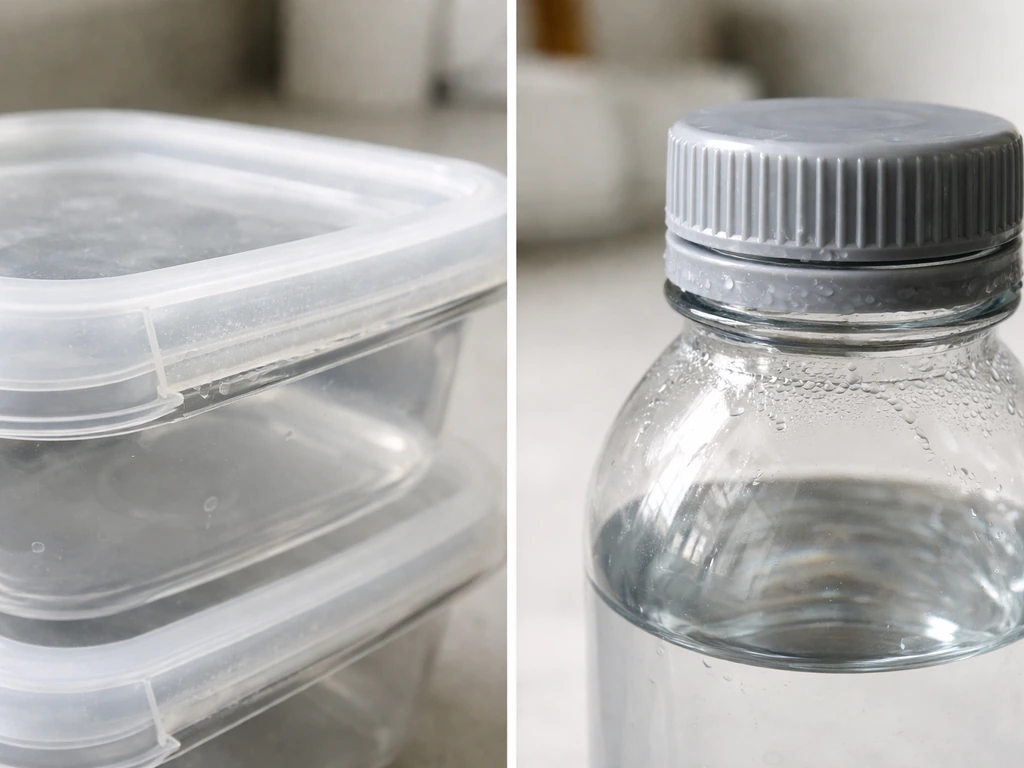
Plastic food storage containers and lids
These are the highest everyday risk category. Residual food, especially proteins and fats, combined with moisture from stored food and ambient temperatures creates ideal growth conditions. Lids and sealing rings tend to harbor more bacteria than the container body because they have grooves, crevices, and rubber gaskets that are hard to clean thoroughly and easy to overlook.
Reusable water bottles
Water alone is low nutrient, but saliva, drink residues, and organic particles from tap or filtered water create a conditioning layer quickly. The mouthpiece and threads are the primary concern. A bottle left filled at room temperature between uses is a better growth environment than one kept refrigerated and dried between uses. Studies on reusable bottles consistently find biofilm formation on interior surfaces, particularly near the opening.
Plastic cutting boards
The conventional assumption that plastic boards are safer than wood turns out to be more complicated in practice. Knife grooves in plastic trap organic residues and bacteria in ways that are genuinely difficult to dislodge with standard washing. Aged or heavily scratched plastic boards can harbor comparable or higher bacterial loads than wooden ones after normal cleaning.
Medical and industrial plastic surfaces
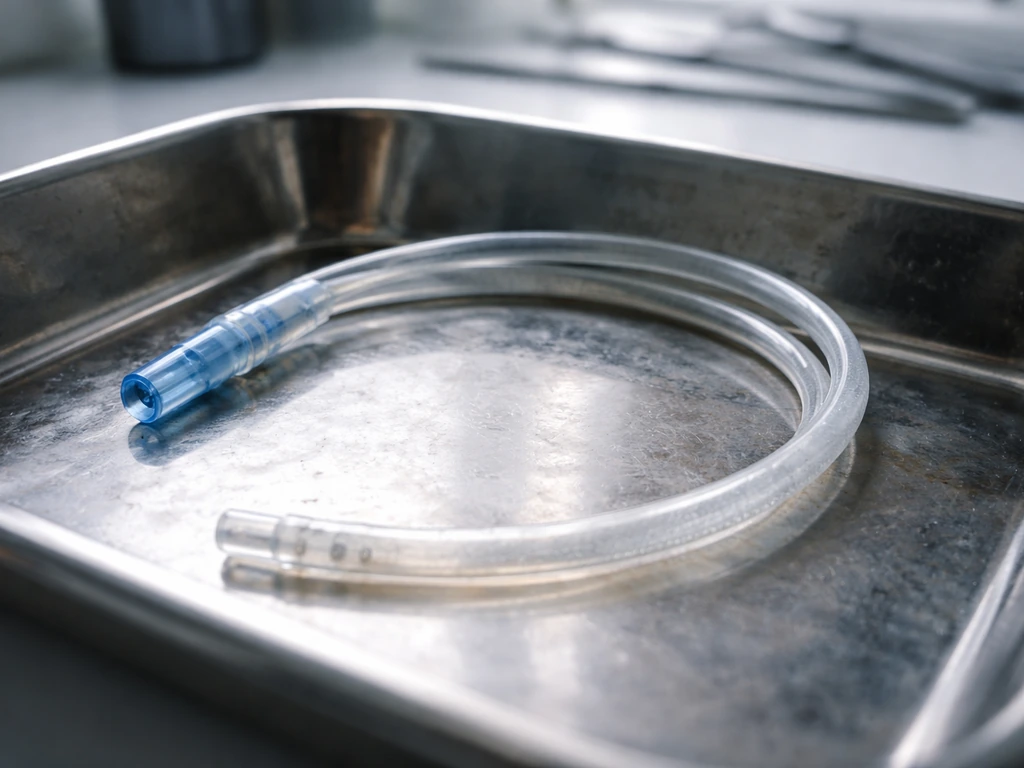
In medical settings, biofilm formation on plastic catheters, tubing, and equipment surfaces is a well-documented clinical problem. Aged industrial PP surfaces in detergent solution have been shown to develop a conditioning layer (called an EBS layer) that actually promotes Pseudomonas aeruginosa biofilm formation, meaning cleaning with detergent alone doesn't prevent colonization and may alter the surface in ways that encourage it. Studies on aged industrial polypropylene surfaces in detergent solution report surface conditioning that alters morphology and promotes bacterial adhesion and biofilm formation, including Pseudomonas aeruginosa biofilms Aged industrial PP surfaces in detergent solution have been shown to develop a conditioning layer.
Survival vs. active growth: not the same thing
Survival and growth are different risks, and the distinction matters for how you respond. A dry plastic surface at room temperature will still carry bacteria, but they generally aren't multiplying quickly or at all. Many common pathogens can survive on dry surfaces for hours to days, sometimes longer, without growing. Salmonella has been detected on dry surfaces for several weeks in controlled studies. MRSA can survive on plastic for months under certain conditions.
Active growth requires moisture above the threshold for that species, nutrients, and a permissive temperature. The shift from survival to growth is what drives contamination risk from manageable to serious, because a surface carrying 100 cells is a very different hazard from one carrying 10 million. Temperature control and drying surfaces after use are your two most direct levers for keeping contamination in the survival-only range.
| Condition | Likely outcome on plastic | Key control |
|---|---|---|
| Wet surface, 25–40°C, food residues present | Active growth, potential biofilm | Remove moisture, clean immediately, refrigerate |
| Wet surface, 4°C (refrigerated) | Slow or no growth; survival likely | Clean before returning to use |
| Dry surface, room temperature | Survival without multiplication | Sanitize before use; minimize contact time |
| Scratched or aged surface, any moisture | Increased adhesion and biofilm risk | Consider replacing; use aggressive cleaning |
How to actually clean plastic and stop regrowth
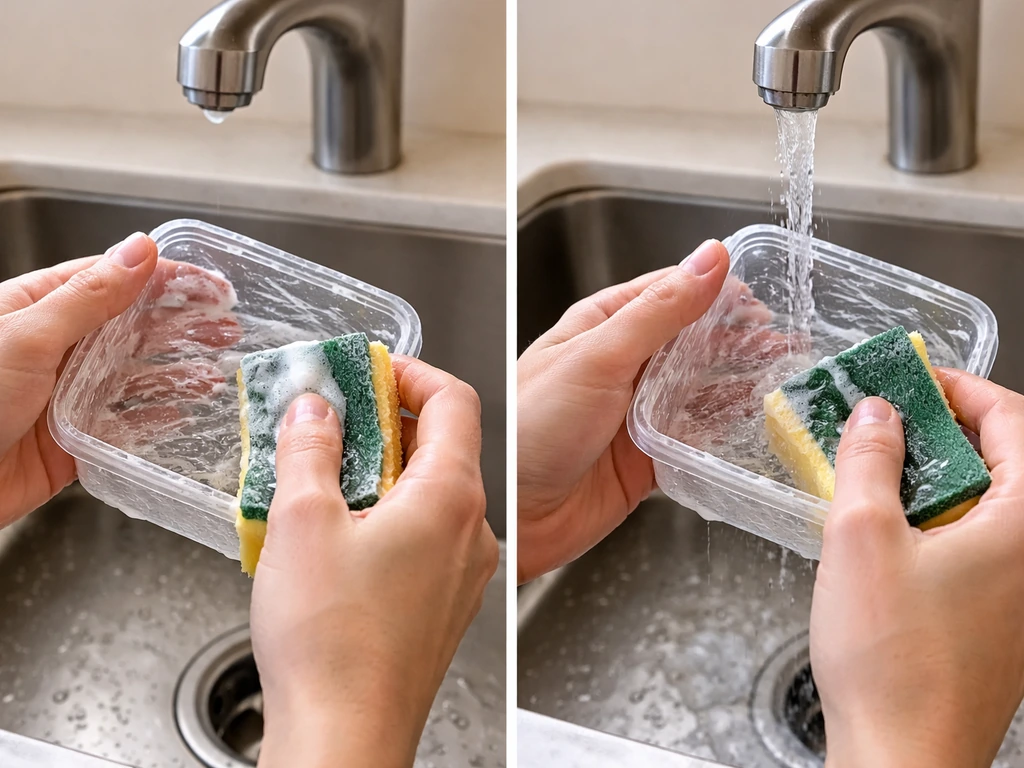
The most important step is physical removal first. Biofilm EPS matrix resists chemical penetration, so sanitizers applied to a surface still coated in organic residue do far less than they would on a physically clean surface. Scrubbing with hot water and dish soap, or running items through a hot dishwasher cycle, breaks up the EPS and removes the bulk of the bacterial load before any sanitizer comes into contact with the surface.
For chemical sanitization after physical cleaning, controlled research comparing common disinfectants against S. aureus and P. aeruginosa biofilms found that hydrogen peroxide and sodium hypochlorite (bleach) were more effective than quaternary ammonium compounds (the active ingredient in many commercial surface sprays). Quaternary ammonium compounds are adequate for lightly contaminated surfaces but show the weakest performance against established biofilms of those three categories.
- Rinse off loose debris with hot water immediately after use.
- Wash with dish soap and a brush or sponge, paying specific attention to grooves, threads, and sealing rings.
- Rinse thoroughly to remove soap residue, which can interfere with sanitizers.
- Apply a food-safe sanitizer if the item contacts food: a dilute bleach solution (1 teaspoon unscented bleach per quart of water) is effective and low cost. Let it contact the surface for at least one minute before rinsing.
- Allow the item to air-dry completely before storing or reusing. Moisture is the single biggest driver of regrowth.
- Store items dry and away from other contamination sources.
For water bottles with narrow openings, a bottle brush is essential. The mouthpiece and threads should be disassembled and cleaned separately each time. Silicone seals and gaskets should be removed if possible and washed individually, since bacteria accumulate preferentially in those recesses.
When to worry and how to decide your next step
For most everyday plastic items in a home kitchen, consistent cleaning with soap, hot water, and occasional sanitizing is sufficient. Some people wonder if bacteria can grow in coffee, and the same basics like residue and moisture apply can bacteria grow in coffee. You don't need to be alarmed every time a plastic container sits on the counter for a few hours. The risk scales with how long conditions have been favorable, how much residue was left on the surface, and how the surface will be used next.
The situations that should push you toward more caution or discarding items entirely are more specific: In terms of canned food, the best-known risk is the growth of spore-forming bacteria that can survive processing and then multiply if conditions allow which bacteria grow in canned food.
- Visible slime, discoloration, or persistent odor after cleaning: these are signs of established biofilm that standard cleaning may not have fully removed.
- Deeply scratched cutting boards or containers: grooves protect bacteria from both mechanical scrubbing and chemical contact. If cleaning isn't reaching the bacteria, it's not controlling the risk.
- Items used with raw meat, poultry, or seafood that weren't cleaned promptly: the nutrient load and likely pathogen types from raw protein justify more aggressive sanitizing or replacement.
- High-risk users: if you're preparing food for immunocompromised individuals, infants, elderly people, or pregnant people, the threshold for replacing worn plastic items should be lower.
- Medical or laboratory plastics: biofilm formation on these surfaces has direct clinical implications. Standard kitchen-level cleaning protocols are not appropriate here, and manufacturer or facility-specific decontamination protocols should be followed.
The underlying logic is straightforward: plastic doesn't protect against bacteria, but it doesn't automatically promote them either. The conditions you create around the plastic, moisture, temperature, time, and residue, are what you're actually managing. Control those factors and you've addressed the real risk. Understanding how bacteria behave on surfaces like plastic follows the same environmental logic as asking whether bacteria can grow in other substrates or low-nutrient environments, where the answer always comes back to what conditions exist rather than what the material is. That same rule applies when people wonder can bacteria grow in wine, since growth depends on nutrients, acidity, and storage conditions bacteria can grow in other substrates.
FAQ
How long does it take for bacteria to grow on plastic, not just survive there?
Growth depends on time, moisture, temperature, and the amount of organic residue. If the surface gets a conditioning layer and remains damp at a permissive temperature, bacterial numbers can jump dramatically within about 24 to 60 hours. If the plastic dries quickly, most bacteria tend to remain in a survival state rather than multiply.
Does bacteria growth happen on “clean” plastic, like a brand-new container straight out of the package?
Brand-new plastic is relatively hostile because it usually lacks a conditioning layer. However, once it contacts water, food residues, saliva, or even humid air over time, an invisible organic film can form. That film is what makes growth possible, so “clean” after contact matters more than the plastic being new.
Is it enough to spray sanitizer on plastic, or do I still need to scrub?
You need physical cleaning first. Sanitizers work far better after you remove the organic layer and disrupt any developing matrix. If residue remains, disinfectants do not penetrate effectively, which can leave cells protected under a biofilm-like layer.
What’s the biggest mistake people make when trying to clean plastic for hygiene?
Relying on a single step (like spraying or soaking) without removing residue. Another common issue is incomplete cleaning of high-risk parts like lids, threads, seams, and gaskets where grooves trap deposits and biofilm tends to establish.
Can bacteria grow on plastic in the fridge or in a cool storage area?
They can still persist, but multiplication is slower when temperatures are low and when surfaces dry between uses. Refrigeration reduces growth risk, but it does not eliminate contamination, especially if the container stays wet with food or drink residues and you do not wash thoroughly.
Do different plastics (PET vs. PP vs. PVC) change the risk of bacterial growth?
Yes, surface characteristics affect how readily bacteria adhere and how easily they form stable communities. Rougher, more porous, or aged plastics tend to support stronger attachment. Smooth, newer surfaces generally reduce adherence and make cleaning more effective.
Why do bottle lids, seals, and mouthpieces seem dirtier even after washing?
They collect residue in recesses and under rubber components, and those micro-spaces are harder to reach with a sponge. If seals are not removed and cleaned individually, biofilm can persist near the opening, where moisture and nutrients concentrate.
If bacteria can survive on dry plastic, should I worry about touching a container after it has dried?
Survival alone is usually a lower concern than active growth, but it is not zero. Many pathogens can remain detectable for hours to days, sometimes longer under controlled conditions. Drying and prompt cleaning reduce the risk substantially, especially if you avoid leaving organic residue behind.
Are biofilms on plastic dangerous even if there is no visible slime?
Yes. Biofilm can exist as a microscopic layer before you notice anything. Visible residue and odor are stronger clues, but absence of visible film does not guarantee cells are not embedded in a protective matrix.
What’s the safest approach for plastic cutting boards or utensils with knife grooves?
Scrub grooves aggressively with hot water and detergent, and consider replacement if the surface is heavily scratched or worn. Grooves trap organic material in a way that normal washing often cannot remove fully, which can allow higher bacterial loads to persist.
Should I discard plastic items after a period of time, even if I wash them?
For items that repeatedly contact high-nutrient residue (like food prep boards) or that are difficult to fully clean (like worn bottle seals), replacing worn components can be more reliable than continued “routine” washing. If a piece consistently shows persistent residue, odor, or staining in the same areas, that is a practical sign to replace it.
Is bleach or hydrogen peroxide always better than common spray disinfectants on plastic?
For established biofilms, bleach (sodium hypochlorite) and hydrogen peroxide have shown stronger performance than quaternary ammonium compounds. That said, you still need to remove visible residue first, and you should follow label guidance for contact time and compatibility with the plastic.
Does bacteria growth mean plastic is “food safe never again,” or is cleaning usually enough?
Cleaning usually resolves the main risk drivers because you remove residue and break up surface-associated communities. The goal is to keep the surface conditions in the “survival-only” range by controlling moisture, drying between uses, and addressing hard-to-clean parts.
What if I want to know whether I should be extra cautious with canned or jarred foods in plastic packaging?
For shelf-stable foods, the higher-profile risk often involves spore-forming bacteria that can survive processing and multiply if conditions allow. That concern is specific to the food-processing context, so focus on proper storage and discarding compromised containers rather than trying to “sanitize” the package to fix the food itself.
Next Article
Can Bacteria Grow in Sugar Water? Food Safety Guide
Learn when bacteria can grow in sugar water, what conditions matter, and how to store or prevent contamination safely.