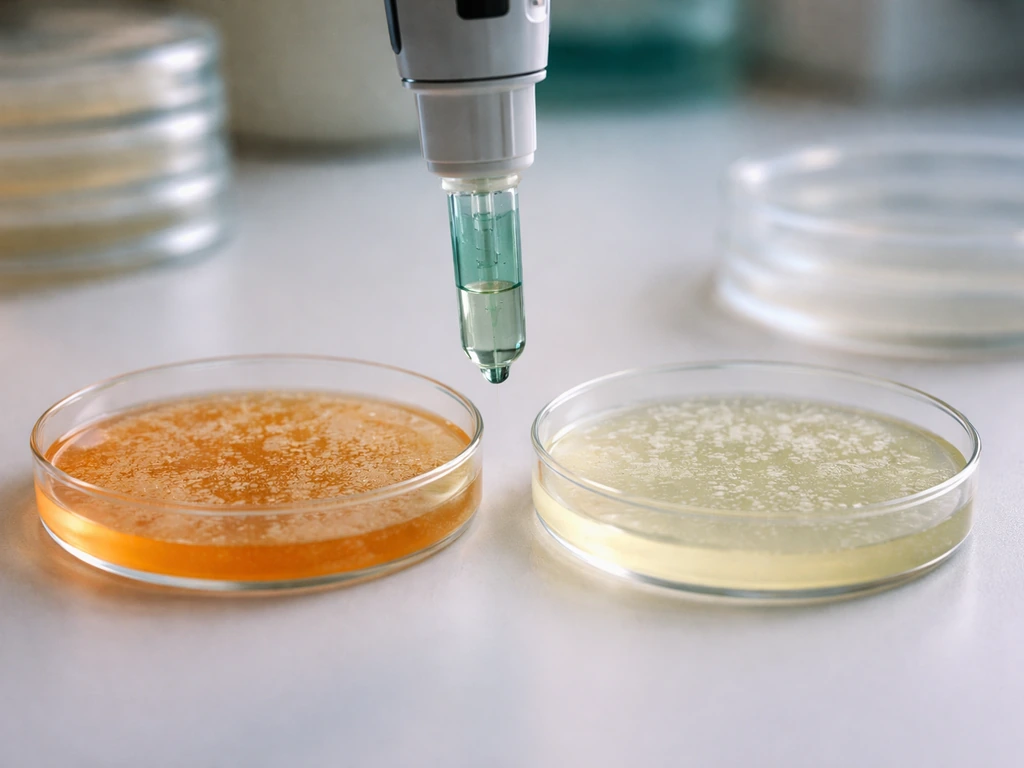
Candida grows best under mildly acidic to neutral conditions, roughly pH 4 to 7, but it can survive a much wider range than most people expect. The yeast form (what you see in food and on skin) tends to dominate in acidic environments, while the more dangerous hyphal or filamentous form is triggered at neutral to alkaline pH. So the short practical answer is: acidic conditions keep Candida in its less aggressive yeast state, and neutral or alkaline conditions can push it toward the growth patterns associated with infection and biofilm formation.
Does Candida Grow in Acidic or Alkaline Conditions?

Marcus Reeves
16 May 2026
What Candida is and why pH matters to it
Candida is a genus of yeast fungi, with Candida albicans being the most studied species. It lives naturally on human skin, in the gut, and on mucous membranes, and it also shows up as a spoilage organism in certain foods. Unlike most bacteria, which are pH specialists, Candida is a generalist. It has evolved complex pH-sensing machinery specifically because it has to survive in wildly different environments inside the human body, from the acidic vaginal canal to the near-neutral bloodstream.
pH matters to Candida for a reason beyond simple survival: it controls which form the organism takes. C. albicans can switch between a round yeast form and elongated hyphal (filament) form. That switch is partly driven by pH, and the hyphal form is the one associated with tissue invasion and infection. So when we talk about pH and Candida, we're talking about both whether it grows and what it becomes.
Does Candida prefer acidic or alkaline conditions?
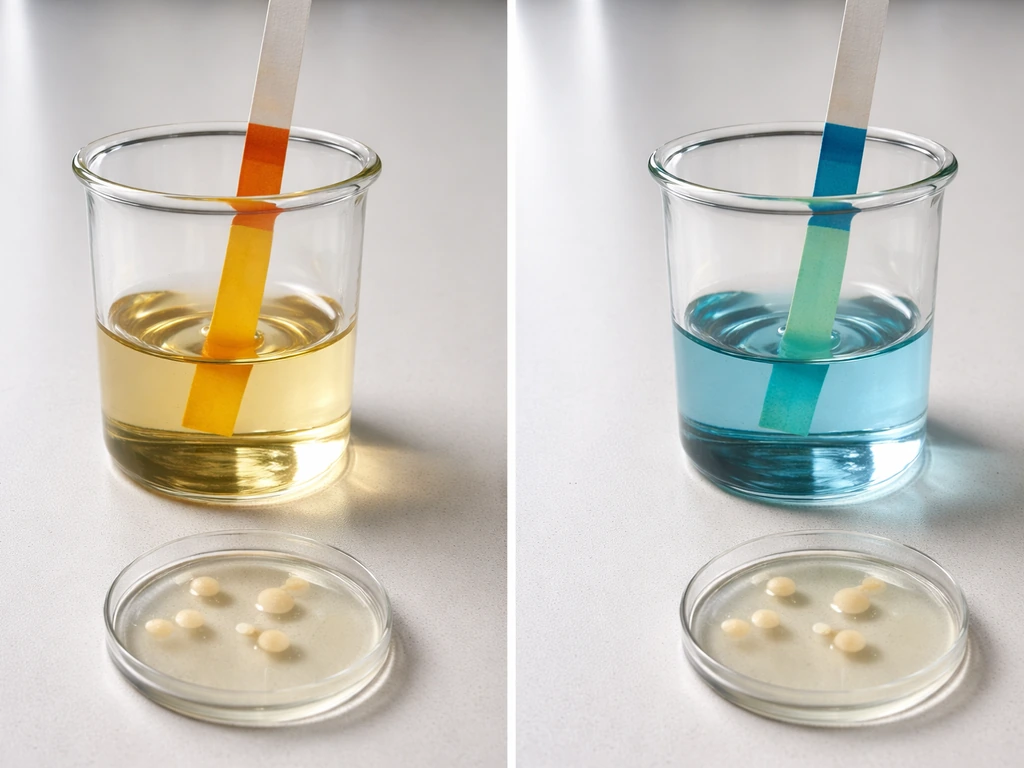
Candida tolerates both ends of the pH spectrum better than most pathogens, but it does have preferences. Unlike Candida (a yeast), bacteria have different pH needs, so they may not require neutral acidity to grow. For active growth and colonization, it functions well in the pH 4 to 7 range. In acidic conditions (roughly pH 4 to 6), the [yeast form dominates](https://pmc.
ncbi. nlm. nih. gov/articles/PMC3560528/).
In general, yeast can grow more readily in mildly acidic to neutral conditions, while more alkaline environments tend to promote the filamentous form of Candida. Shift toward neutral or alkaline pH (above 7), and Candida tends to convert to its filamentous form. That filamentous form is harder to clear and is what's associated with invasive candidiasis.
Here's what makes C. albicans particularly interesting: it doesn't just respond to pH passively. Research has shown it can actively alkalinize its surrounding environment, raising the pH from around 4 up past 7 in under 12 hours. It essentially engineers the conditions it prefers. This alkalinization is directly tied to hyphal development, which is a virulence mechanism. That means when Candida is left unchallenged in an acidic environment, it may work to change that environment rather than just tolerating it.
On the survival side, C. albicans is remarkably tough. It can survive at pH 2 or below (roughly the acidity of stomach acid) and at pH 10 or above. A mechanistic study of pH sensing in Candida albicans reports that it can survive extremely acidic conditions (pH ≤ 2) as well as extremely alkaline conditions (pH ≥ 10) at pH 10 or above. Survival and active proliferation are different things, though. It endures extremes, but it's not thriving or multiplying at those extremes under normal conditions.
The pH ranges Candida can handle and where it really takes off
| pH Range | Candida Behavior | Form Predominant |
|---|---|---|
| ≤2 | Survival only; minimal active growth | Yeast (dormant) |
| 3 to 4 | Tolerates well; limited growth | Yeast |
| 4 to 6 | Active growth; comfortable range | Yeast (dominant) |
| 6 to 7 | Transition zone; growth continues | Mixed yeast/hyphae |
| 7 to 8 | Promotes filamentation and biofilm | Hyphal (dominant) |
| ≥10 | Survival; significantly stressed | Yeast (stressed) |
The practical sweet spot for Candida proliferation sits between pH 4 and 7. Below pH 4, growth slows considerably even if the organism doesn't die. Above pH 8, growth is suppressed too, though Candida's pH-sensing pathways (particularly the Rim101p signaling system) help it adapt to alkaline host environments like the oral cavity and bloodstream. This is why Candida can colonize so many different body sites despite their very different pH levels.
pH alone doesn't tell the whole story
pH is one control lever, not the whole control panel. Several other environmental factors interact with pH to determine whether Candida actually proliferates in a given setting.
Temperature
Candida grows best between 20°C and 37°C (68°F to 98.6°F). At body temperature (37°C), growth is faster and hyphal conversion is more pronounced. Below 10°C, growth slows significantly. Refrigeration temperatures (around 4°C) suppress Candida in food systems even when pH is in the favorable range. So a food with pH 5 stored cold is much safer than the same food stored at room temperature. Food safety guidance for bacterial growth is similar in spirit, since many food poisoning bacteria cannot grow below 20°F food poisoning bacteria can not grow below 20 f.
Water activity and moisture
Candida, like most yeasts, needs available water to grow. Its minimum water activity (aw) for growth is approximately 0.87, though some species tolerate slightly lower. This means dry or low-moisture environments (dried foods, well-cured products) inhibit Candida growth regardless of pH. A highly acidic food that is also dry is doubly inhospitable.
Oxygen
Candida is a facultative anaerobe, meaning it can grow with or without oxygen. It prefers aerobic conditions for maximum growth, but it will ferment sugars and continue growing in low-oxygen environments. Oxygen levels aren't a reliable sole control measure for Candida in the way they might be for some strict aerobes.
Nutrients and competing microbes
Candida thrives on simple sugars (glucose, fructose, sucrose) and nitrogen sources. High-sugar environments encourage rapid growth. Competing bacteria can suppress Candida by consuming nutrients and, in body environments, by producing compounds that lower local pH, which is exactly the protective role lactobacilli play in the vaginal microbiome. This question is especially important because some bacteria tolerate low pH quite well, which can influence how microbial communities behave in acidic niches does bacteria grow well in acidic environments. Disrupting that bacterial competition (for example, with antibiotics) often triggers Candida overgrowth even when the underlying pH hasn't changed dramatically.
Candida in the body vs in foods and materials
The pH story plays out differently depending on the setting. In clinical and human health contexts, different body sites have very different baseline pH levels, and Candida has adapted to all of them.
- Vaginal mucosa: Normally pH 3.8 to 4.5, maintained by lactobacilli. This acidity keeps Candida in a less aggressive yeast state. When pH rises (due to bacterial vaginosis, hormonal changes, or antibiotic use), the risk of candidal vaginitis increases.
- Oral cavity: pH around 6.5 to 7.5. Candida thrives here and can form biofilms on teeth and dental appliances. Saliva buffering capacity and immune factors matter as much as pH.
- Gut: pH ranges from about 1.5 in the stomach to 7.5 in the large intestine. Candida can survive stomach acid transit and colonize the intestine where pH is more favorable.
- Skin: Surface pH is mildly acidic (around 4.5 to 5.5), which is part of the skin's natural defense. Disruption by soaps, sweat, or occlusion raises pH and can allow Candida overgrowth in skin folds.
In food systems, Candida species appear as spoilage organisms in fermented products, dairy, fruit juices, and sugar-rich foods. The mildly acidic pH of many of these foods (yogurt at pH 4 to 4.5, fruit juice at pH 3 to 4) doesn't prevent Candida growth entirely; it just slows it and keeps it in yeast form. In food contexts, Candida is generally a spoilage concern rather than a direct pathogen, although immunocompromised individuals can be at risk from consuming heavily contaminated products. It's worth noting that the behavior of Candida (a yeast) in acidic food environments follows patterns similar to what's seen with other yeasts, though bacteria in the same foods may be inhibited much more decisively by the same acidity.
How to use pH control practically (and what it won't fix on its own)
Understanding Candida's pH preferences gives you real, actionable tools, but also some important limits to keep in mind.
In food safety and preservation

Keeping food pH below 4 (through acidification with vinegar, citric acid, or fermentation) reduces Candida growth meaningfully, but it doesn't eliminate it. Food poisoning bacteria are unlikely to grow in acidic foods when pH is kept low enough acidification with vinegar, citric acid, or fermentation. For reliable control in food, combine low pH with refrigeration, controlled water activity, and proper sanitation. Pasteurization kills Candida cells directly and is more reliable than pH alone for safety-critical applications.
In personal hygiene and skin care
Maintaining the skin's natural acidic pH (around 4.5 to 5.5) through pH-balanced cleansers is a reasonable preventive measure. Avoiding harsh soaps that raise skin pH protects the acid mantle and reduces the environment that favors Candida in skin folds. For vaginal health, the same logic applies: practices that disrupt natural acidity (like douching) can raise pH and create conditions more favorable to Candida overgrowth.
What pH control won't fix
pH control is not a treatment for active Candida infection. Once Candida has established a biofilm or tissue infection, antifungal agents are required. Additionally, Candida's ability to actively alkalinize its local environment means that a transiently acidic condition may not stay acidic if Candida is already present and growing. Restoring competing microbial populations (for example, through probiotics in clinical settings) and addressing underlying immune or antibiotic factors is at least as important as pH management.
The bottom line is that pH is a meaningful variable for Candida control, but it works best as part of a layered approach. Acidic conditions favor the less virulent yeast form and slow proliferation. Neutral to alkaline conditions favor the filamentous form and faster colonization. Knowing this helps you make better decisions about food preservation, hygiene practices, and understanding how Candida behaves in different body compartments, but no single pH value is a magic switch that eliminates the risk on its own.
FAQ
If I use an acidic product, will it prevent Candida from converting to the filamentous form?
It can reduce the likelihood by keeping conditions more favorable to the yeast form, but it is not a guarantee. If Candida is already established, the organism can locally change pH (active alkalinization) and filamentous switching can still occur, so antifungal treatment is needed for active infection.
Does Candida grow better in “alkaline” conditions in the vagina specifically?
A higher vaginal pH can increase risk because it shifts the environment away from the protective acidic range created by lactobacilli. Even so, oxygen, sugar availability, and disruption of competing bacteria (for example after antibiotics) also strongly influence whether overgrowth happens.
What pH should I aim for on the skin if I’m trying to reduce Candida risk?
A practical target is to support the skin’s normal acidic range (about pH 4.5 to 5.5). Instead of trying to make skin very acidic, use pH-balanced, non-irritating cleansers and avoid harsh soaps, because overly aggressive cleansing can disrupt the skin barrier and worsen problems.
Can Candida survive very acidic stomach pH or very alkaline conditions, even if it cannot thrive?
Yes. It can endure extremes (survival at very low pH and very high pH), but survival is different from active growth and proliferation. In most real-life situations, growth is much more restricted than mere survival, especially when temperature, moisture, and nutrients are not supportive.
In food, is lowering pH below 4 enough to make it safe from Candida?
It meaningfully reduces Candida growth, but it does not eliminate risk by itself. For safer food control, combine low pH with refrigeration, low water activity, sanitation, and appropriate processing, because Candida needs water and nutrients to multiply.
Why does Candida sometimes worsen after antibiotics if the pH of the area did not change much?
Antibiotics can reduce competing bacteria, and that can remove nutrient competition and protective chemical effects. In body niches, some protective bacteria also help keep local conditions acidic, so Candida may overgrow even if the measured bulk pH seems similar.
Does “pH strips” tell me whether Candida is likely to overgrow?
Not reliably. Local microenvironments can differ from what a strip measures, and Candida behavior depends on more than pH (temperature, moisture, oxygen level, sugars, and community composition). pH can be a useful clue, but symptoms and clinical evaluation matter more if infection is suspected.
Can yeast form and filamentous form coexist at the same time?
Yes. pH influences the balance, but Candida can remain in yeast form in less favorable conditions while still being present. Switching toward filamentous growth is more likely when conditions are near neutral to alkaline, especially at body temperature.
Is Candida in the mouth or bloodstream more likely to be affected by pH changes?
Those sites have different baseline pH and Candida has adaptation mechanisms that help it persist across that variation. While pH can shift form and growth rate, interventions usually need to address the underlying drivers such as immune status, medications, and microbial imbalance.
Next Article
Does Bacteria Grow Well in Acidic Environments? pH Guide
Learn how pH affects bacterial growth, which microbes tolerate acidity, and why temperature and oxygen also decide survi