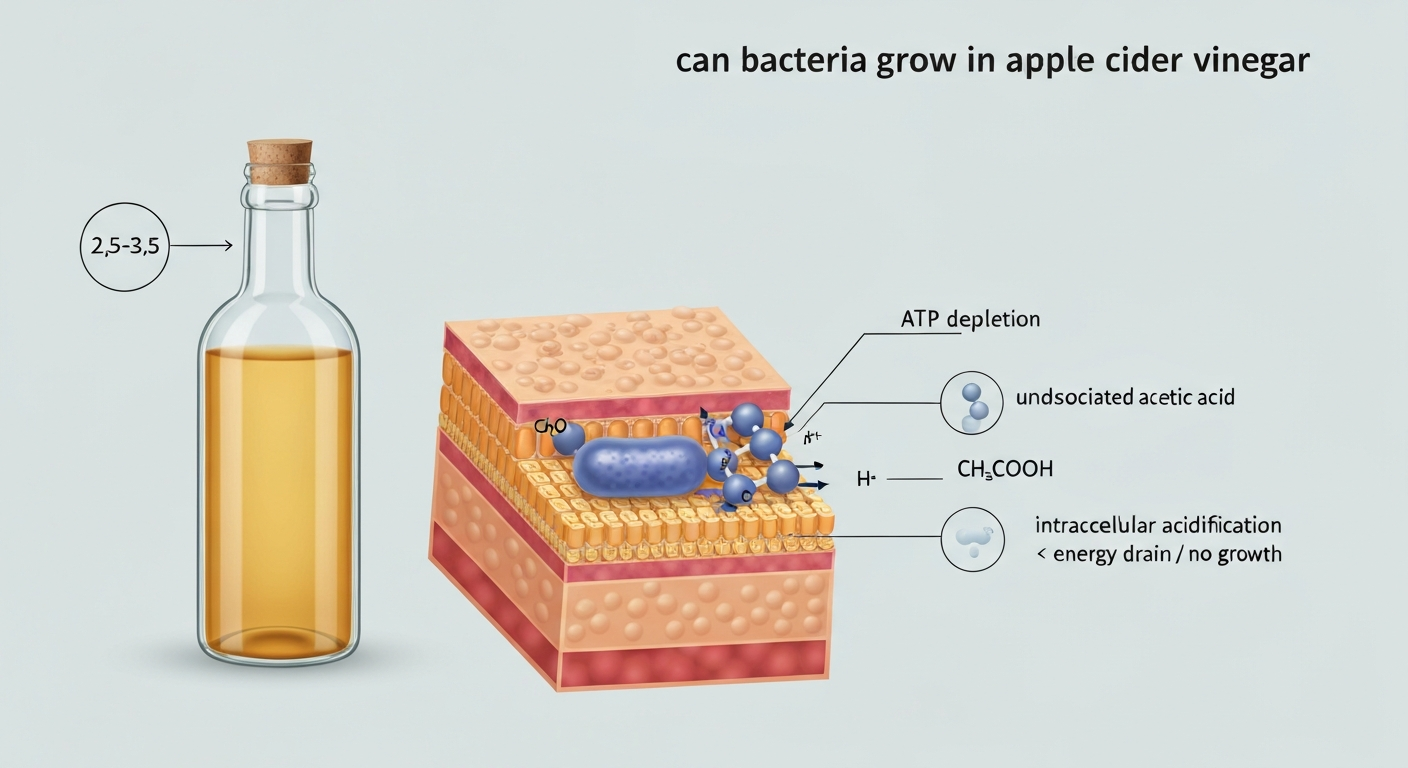
No, bacteria generally do not grow well in highly acidic food. Most harmful bacteria prefer conditions close to neutral pH (around 6.5 to 7.5) and struggle or stop growing entirely when acidity climbs high enough. But "highly acidic" needs a precise definition, because the line between "probably safe" and "still risky" comes down to specific pH numbers, not just a general sense that something tastes sour.
Do Bacteria Grow Well in Highly Acidic Food? pH Rules

Marcus Reeves
4 Apr 2026
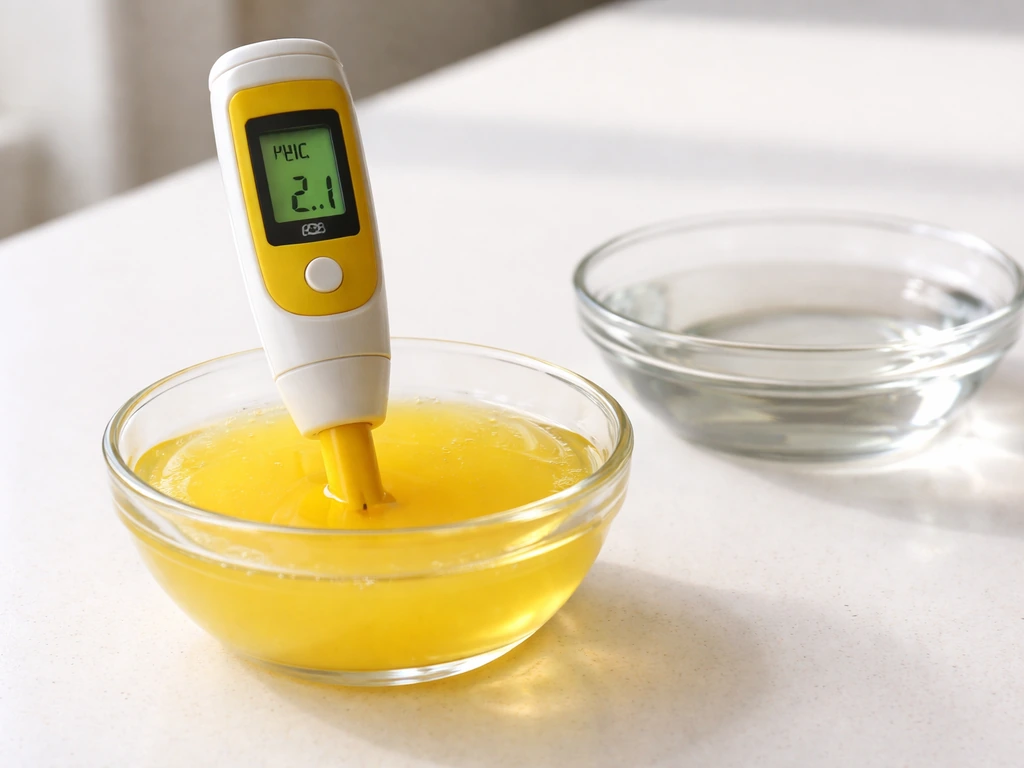
What "highly acidic" actually means for microbes
pH runs on a scale from 0 to 14. Pure water sits at 7 (neutral). Anything below 7 is acidic; anything above is alkaline. For food safety purposes, the number that really matters is 4.6. The FDA draws the regulatory line right there: foods with a finished equilibrium pH of 4. In draft guidance for industry on controlling Listeria monocytogenes in ready-to-eat foods, FDA discusses intrinsic factors and cites pH thresholds such as pH ≤ 4.4 (and/or corresponding aw levels) as part of preventing L. monocytogenes growth pH 4.6. 6 or below are classified as acidified foods, while foods above pH 4.6 are considered low-acid foods with a higher inherent risk.
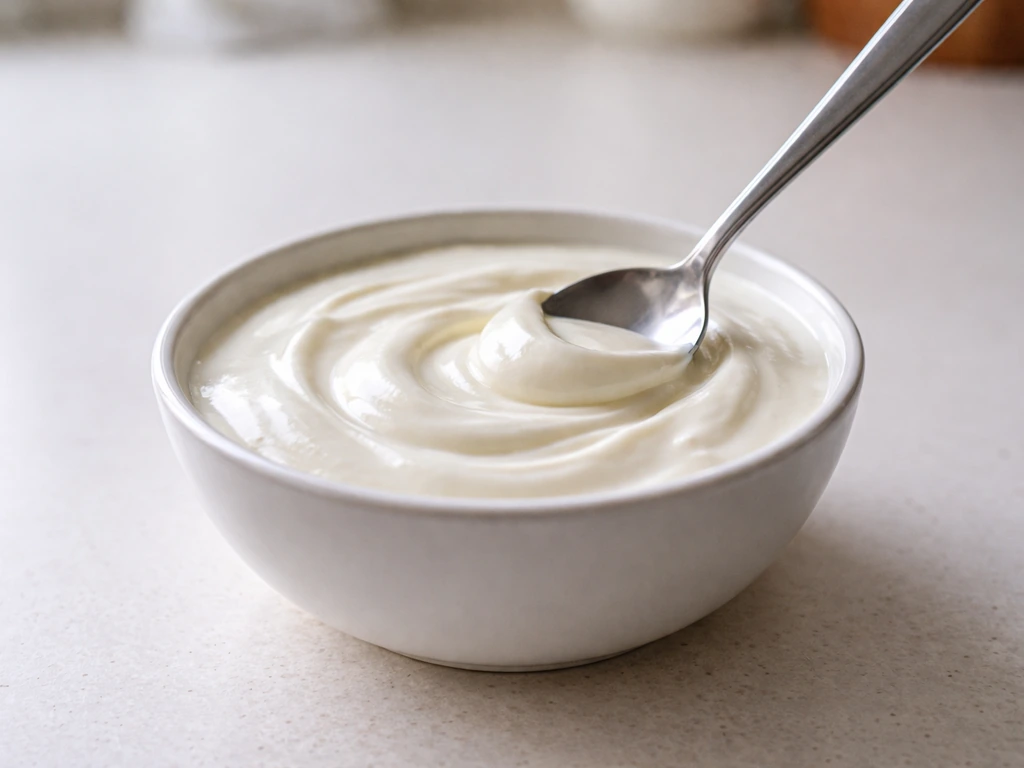
To put that in everyday terms: vinegar sits around pH 2.5, lemon juice around 2 to 3, most yogurts around 4 to 4.5, tomatoes around 4 to 4.5, and pickles in the 3 to 3.5 range. A food at pH 4.5 is technically acidic, but it is also right at the border of where dangerous bacteria can no longer survive. A food at pH 3 is genuinely highly acidic and far more hostile to most pathogens.
If you want to dig into how bacteria behave in acidic environments more broadly, that context helps frame why the 4.6 cutoff was chosen and what happens on either side of it.
How acid actually stops bacteria from growing
Acid does not kill bacteria in one dramatic step. It works by interfering with the basic chemistry bacteria need to survive and reproduce. When the external pH drops, hydrogen ions (H+) flood the environment. Bacteria have to spend energy pumping those ions back out just to keep their internal pH stable enough to function. At some point, especially when external pH gets low enough, that process fails.
The practical result is that bacterial enzymes stop working properly, membrane integrity gets compromised, and DNA replication slows or halts. Below pH 4.6, most pathogenic bacteria cannot maintain internal homeostasis at all. That is why regulatory food safety standards treat pH 4.6 as the critical control point, not just an arbitrary number.
A common question that comes up here is whether bacteria actually need neutral acidity to grow. The short answer is: most pathogens perform best near neutral pH, but "need" is too strong a word for all bacteria, because some have evolved to handle acidic conditions very effectively.
Bacteria that still manage to grow in acidic food
Not every microorganism follows the standard rules. Acid-tolerant and acid-loving organisms are real, and some of them show up in foods you might assume are safe because they taste sour.
Lactic acid bacteria (Lactobacillus species) thrive in the pH 3.5 to 5.5 range. They are why fermented foods like sauerkraut and yogurt stay preserved but also continue to change in flavor over time. Acetic acid bacteria (Acetobacter) work well in the pH 4 to 6 range. Some strains of E. coli (including O157:H7) have demonstrated acid resistance at pH values as low as 4, which surprised researchers when it was first documented. Listeria monocytogenes can survive (though not grow well) in moderately acidic conditions. Salmonella shows a stress response that actually increases its tolerance when briefly exposed to mild acid before encountering a more hostile pH.
There is also a distinct category of organisms called acidophiles that grow best at very low pH values. The pH at which acidophiles grow best is often between 2 and 5, well below what most pathogens tolerate. These organisms are not typically the food poisoning culprits, but understanding them helps explain why acidity alone is not a perfect barrier.
It is also worth knowing that food poisoning bacteria are unlikely to grow in acidic foods, but "unlikely" is not "impossible," and the distinction matters in real food safety work.
A quick look at pH tolerance across common microorganisms
| Organism | Minimum pH for Growth | Optimal pH Range | Notes |
|---|---|---|---|
| Clostridium botulinum | 4.6 | 6.0 to 7.5 | No growth or toxin below pH 4.6 |
| Salmonella spp. | 3.8 to 4.0 | 6.5 to 7.5 | Acid resistance varies by strain and food matrix |
| E. coli O157:H7 | ~4.0 | 6.0 to 7.0 | Higher acid tolerance than most E. coli |
| Listeria monocytogenes | 4.3 to 4.5 | 6.0 to 8.0 | Can survive but not grow well below ~pH 4.5 |
| Lactic acid bacteria | 3.5 | 5.5 to 6.5 | Tolerant; responsible for fermentation |
| Staphylococcus aureus | 4.0 | 6.0 to 7.0 | Toxin production requires pH above 4.5 to 5.0 |
Acidity is only one piece of the puzzle
pH is powerful, but it does not operate in isolation. Four other factors interact with acidity to determine whether bacteria actually grow in a given food. Getting all of them right is what food preservation is really about.
- Water activity (aw): This measures how much free water bacteria can actually use. The FDA regulatory threshold for acidified foods is aw above 0.85 combined with pH at or below 4.6. A product with low aw (below 0.85) is protected by moisture restriction even if its pH is not particularly low. Dried acidic fruits, for example, get a double layer of protection.
- Temperature: Most pathogens have a growth range of roughly 40°F to 140°F (4°C to 60°C), often called the danger zone. Even a highly acidic food can become risky at room temperature over time if other conditions allow survival. Food poisoning bacteria cannot grow below 20°F, which is why freezing remains a reliable secondary control even for acidic products.
- Oxygen availability: Aerobic bacteria need oxygen; anaerobic ones (like Clostridium botulinum) do not. Vacuum-sealed or canned acidic foods remove oxygen, which directly addresses anaerobic pathogens. However, that same seal creates conditions where botulinum could theoretically grow if pH is not also controlled.
- Nutrients: Bacteria need carbon, nitrogen, and other nutrients to multiply. Foods that are acidic but also nutrient-rich (like tomato sauce) support growth more readily than a simple vinegar solution.
Yeast and molds add another layer to this picture because they tolerate acidity much better than most bacteria. Yeast growth in acidic versus alkaline environments follows different rules than bacterial growth, which is why spoilage in acidic foods (jams, fruit juices, fermented products) is often driven by yeast and mold rather than pathogenic bacteria. Similarly, whether Candida grows in acidic or alkaline conditions is a related question worth understanding if you are dealing with fermented or probiotic food products.
Practical food safety takeaways: where acidity helps and where people go wrong
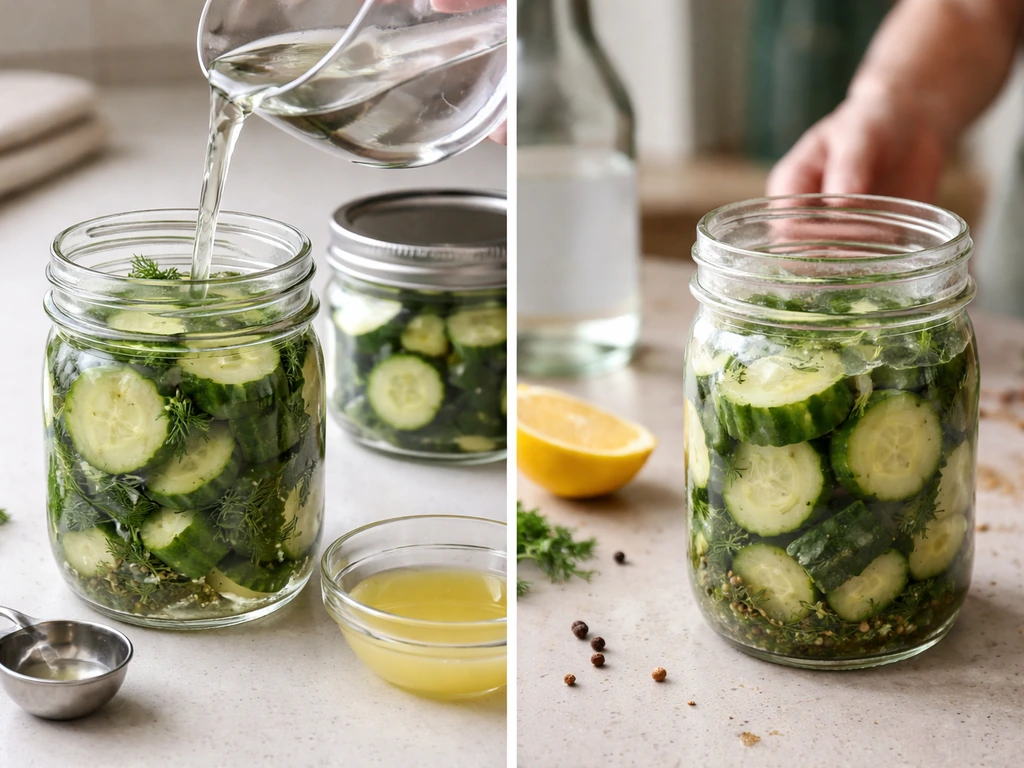
Acidity is one of the oldest and most reliable food preservation tools humans have. Vinegar pickling, lemon juice marinades, fermentation, and acidified canned goods all exploit the fact that most pathogens cannot survive below pH 4.6. The WHO specifically notes that Clostridium botulinum will not grow in acidic conditions below pH 4.6, which is why properly acidified pickles and relishes do not require pressure canning the way low-acid vegetables do.
But people make predictable mistakes when relying on acidity for safety. The most common one is assuming that if something tastes sour, it is protected. Taste is not a reliable pH test. A food can taste moderately acidic but still measure above pH 4.6, leaving it in the danger zone for pathogen growth. Another common error is diluting the acid: adding low-acid ingredients to a vinegar-based recipe without re-checking that the final equilibrium pH stays at or below 4.6.
Temperature control mistakes also undermine acidity as a hurdle. Leaving an acidic food at room temperature for extended periods still allows acid-tolerant organisms to survive and potentially accumulate to risky levels, even if the pH is preventing active growth by the most dangerous pathogens.
How to test, label, and store acidic foods safely
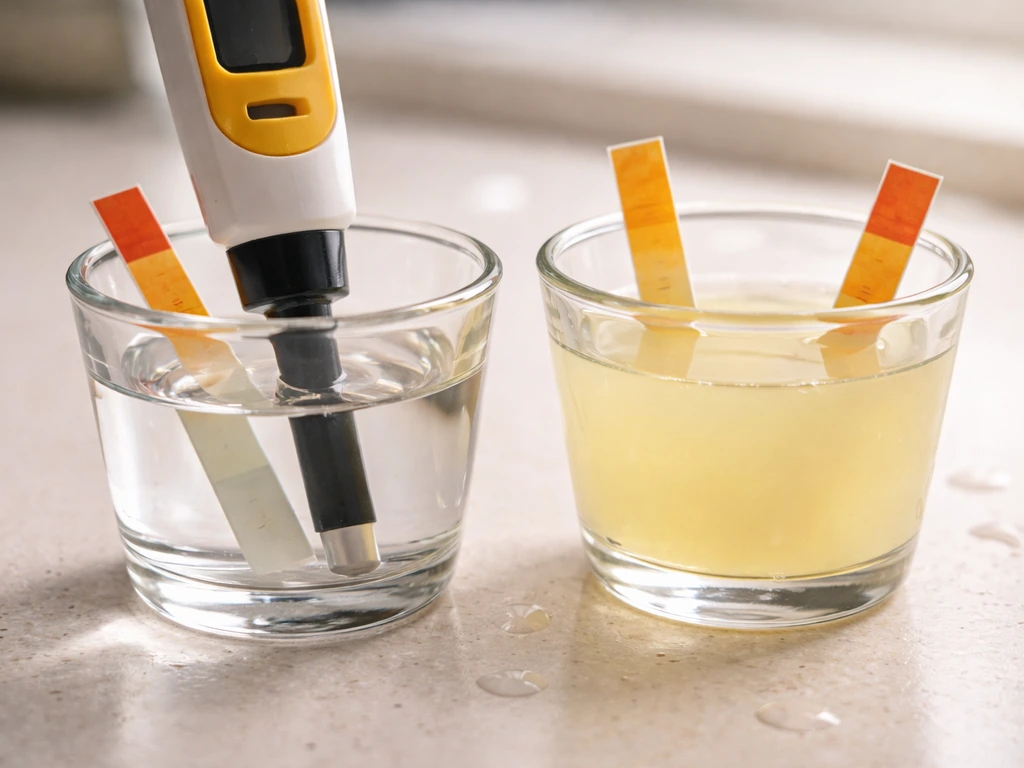
If you are producing acidic food at any scale, from a home kitchen to a small commercial operation, pH measurement is not optional. A calibrated digital pH meter (not pH strips, which are imprecise) is the right tool. Test the finished equilibrium pH, not just the initial measurement, because some ingredients continue to react and shift pH over time after mixing.
The FDA's 21 CFR §117.80 is direct about this: processors relying on pH control must monitor and maintain pH at 4.6 or below to prevent growth of undesirable microorganisms. That is the regulatory floor, not a suggestion. If you are producing acidified foods commercially, you also fall under 21 CFR Part 114, which requires process registration and validated acidification procedures.
For practical storage and handling, here is what actually works:
- Verify finished equilibrium pH with a calibrated meter. Target pH 4.6 or below for any food where pH is your primary control. Document the reading.
- Combine acidity with refrigeration. Even properly acidified foods benefit from cold storage because it slows growth of acid-tolerant spoilage organisms like yeasts and molds.
- Do not break the acid barrier mid-process. If you add unacidified ingredients after the initial pH is set, re-test the final product.
- Label with the date and storage conditions. Acidity slows but does not always prevent eventual spoilage, especially once a container is opened and new organisms are introduced.
- Use proper container seals. Oxygen exposure after acidification can introduce aerobic spoilage organisms that pH alone will not stop.
- Treat borderline pH results (between 4.5 and 5.0) as low-acid products and apply appropriate controls: refrigeration, short shelf life, or additional processing.
The core principle is this: highly acidic food (pH well below 4.6) creates a genuinely hostile environment for most food poisoning bacteria, and that protection is real. But acidity is a hurdle, not a lock. Combining it with temperature control, proper water activity management, and clean handling practices gives you layered protection that is far more reliable than relying on pH alone.
FAQ
Is pH strips or “sour taste” enough to know bacteria cannot grow in acidic food?
No. Taste does not reliably predict the finished equilibrium pH, and test strips are often too imprecise near the 4.6 boundary. If safety depends on acidity, measure with a calibrated digital pH meter and verify the final mixed product, not just one ingredient.
What does “finished equilibrium pH” mean for a recipe or fermented batch?
It is the pH after ingredients fully interact and reactions settle, such as after mixing, heating/cooling, or fermentation. pH can drift during storage or ongoing fermentation, so you should re-check at the point you will package or serve, especially for batches that are still active.
Can some bacteria still survive in acidic foods even if they cannot grow well?
Yes. Many pathogens may be unable to multiply below pH 4.6, but they might persist for a time. That is why “no growth” is not the same as “sterile,” and why hygiene, correct processing, and time-temperature control still matter.
At what pH do acidic foods become risky again if you are trying to prevent bacterial growth?
For regulatory acidified-food control, pH above 4.6 is the key risk threshold. In practice, risks rise the farther you are above 4.6, especially if the food also has enough nutrients, moisture, and warm temperatures to support growth.
Why can “diluting” vinegar in a recipe make it unsafe even if it still tastes tangy?
Because the safety depends on the final pH, not the vinegar amount you started with. Adding low-acid ingredients, watery liquids, or buffers can raise the equilibrium pH above 4.6 even when the flavor still reads sour.
Does acidity work the same way at refrigeration temperature versus room temperature?
Lower temperatures generally slow down any organisms that remain, but acidity is still the critical hurdle. If an acidic food sits warm for extended periods, acid-tolerant microbes may survive and sometimes increase to concerning levels, even if many pathogens cannot thrive.
Do yeasts and molds pose a safety problem in highly acidic foods?
They can, but they are more often a quality-spoilage issue than a classic bacterial food-poisoning issue. They tolerate acidity better than many bacteria, so you should still use good sanitation and control storage conditions to prevent spoilage and possible toxin concerns in specific mold scenarios.
If I’m making yogurt or other fermented dairy, can I rely on the acidity to prevent pathogens completely?
You should not rely on pH alone. Starter culture performance, sanitation, temperature during fermentation, and post-fermentation handling affect safety. A properly managed fermentation that reaches the expected pH helps, but contamination after fermentation can still be a problem.
Are acidified foods the same as “pickled” foods, and do they both require the same pH target?
Not exactly. “Pickled” is a style term, while “acidified foods” is a regulatory concept tied to reaching and maintaining pH control. In both home and commercial settings, the practical goal is that the final equilibrium pH stays at or below 4.6 for bacterial-growth inhibition.
Can you “fix” an acidic food that measures above pH 4.6 after mixing?
Sometimes you can, but you need to adjust with the correct type and amount of acid, then re-measure the equilibrium pH after the ingredients fully react. You cannot assume the pH will drop enough just because you add more vinegar once; confirm with another pH test when the product has stabilized.
Next Article
Can Bacteria Grow in Apple Cider Vinegar? Safety, Risks & Limits
Can bacteria grow in apple cider vinegar? Causes, acid-tolerant microbes, safety thresholds and storage tips.