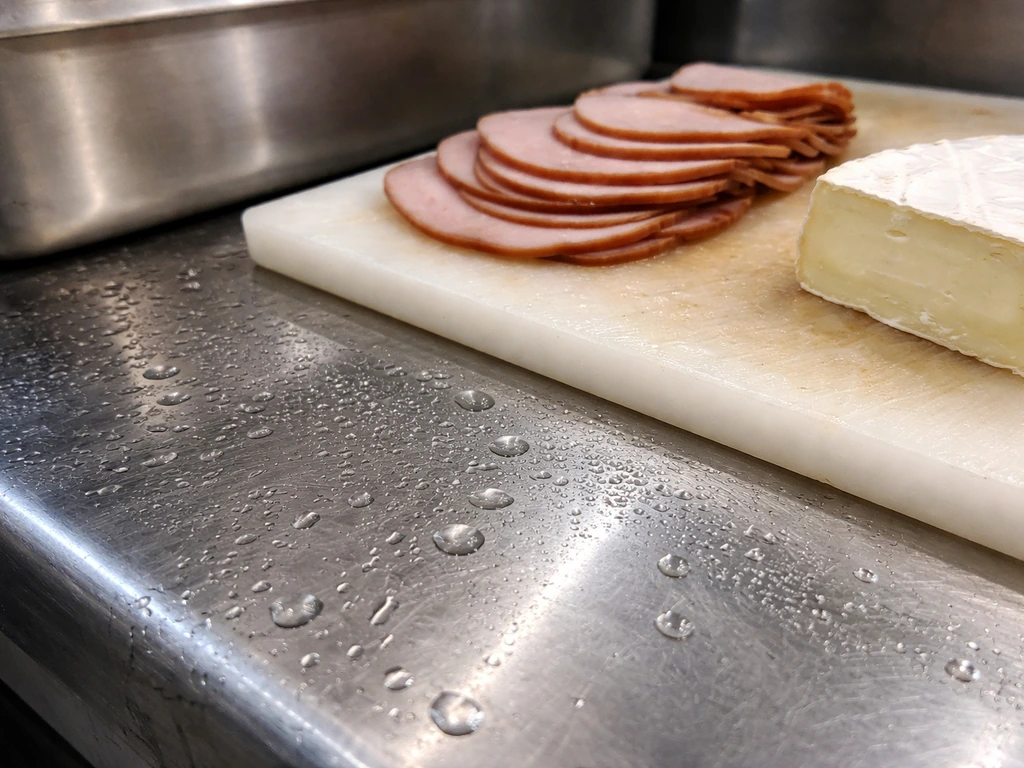
Legionella grows in water temperatures between 20°C and 50°C (68°F–122°F). Its sweet spot is around 35°C–42°C (95°F–108°F), which is exactly the range you find in poorly maintained hot water systems, storage tanks, and stagnant sections of plumbing. Below 20°C growth essentially stops, and above 50°C the bacteria start dying off. That same cold-temperature effect is why Listeria monocytogenes does not grow in refrigerated foods Below 20°C growth essentially stops. At 60°C and above, it cannot survive at all.
What Temperature Does Legionella Grow Rapidly?

Marcus Reeves
21 May 2026
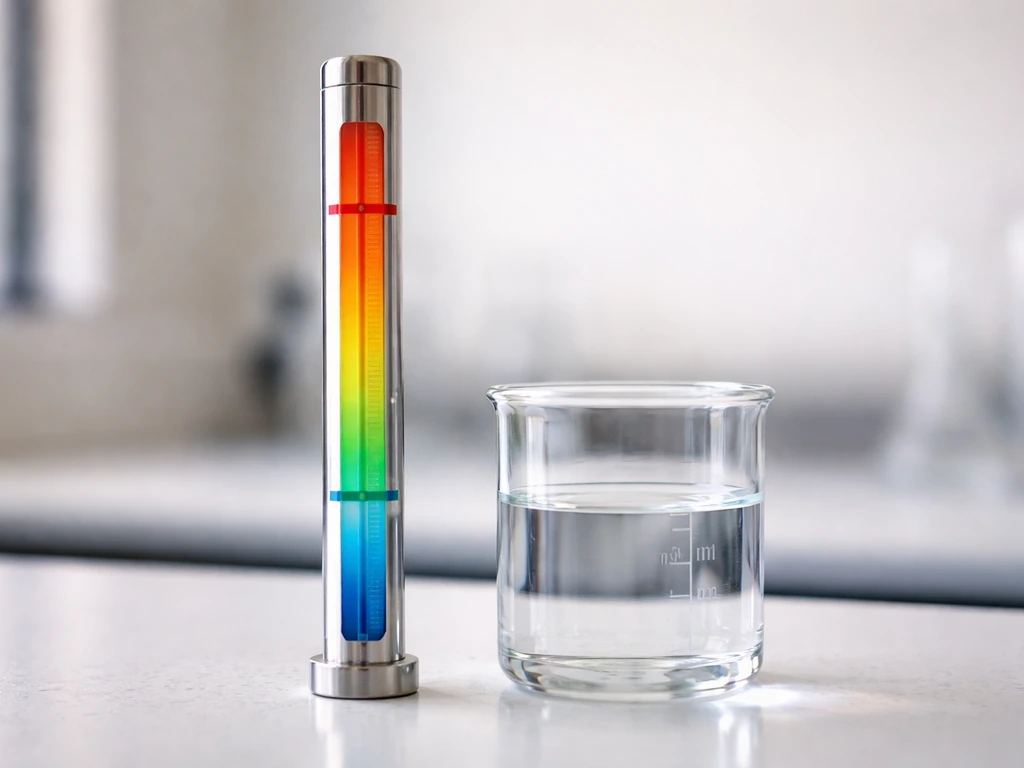
Legionella growth temperature range at a glance
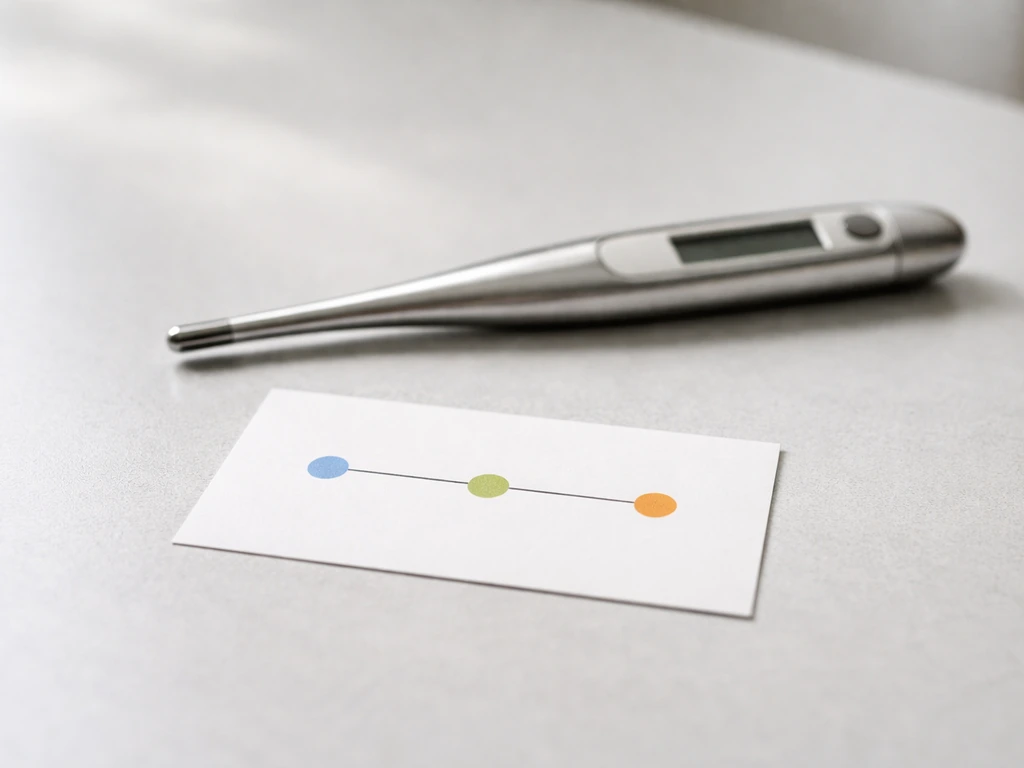
Both the WHO and CDC broadly agree on the core numbers, with some minor variation in how they define the upper and lower limits. Here is how the main reference points line up:
| Temperature | What happens to Legionella |
|---|---|
| Below 20°C / 68°F | Growth effectively stops; bacteria can persist in a dormant or reduced state |
| 20°C–25°C / 68°F–77°F | Lower boundary of growth zone; slow, limited multiplication possible |
| 25°C–45°C / 77°F–113°F | Active growth zone; multiplication accelerates through this range |
| 35°C–42°C / 95°F–108°F | Optimal range; fastest growth and highest risk |
| 50°C / 122°F | Growth ceases; bacteria begin to die |
| 60°C / 140°F and above | Legionella cannot survive; used as the hot-water storage target |
The WHO puts the multiplication range at 20°C–50°C with an optimal of 35°C. The CDC describes best growth between 25°C and 45°C and notes that growth may occur as low as 20°C. Research on biofilms in water systems narrows the true optimal to 37°C–42°C. For practical control purposes, treating anything in the 20°C–50°C band as a risk zone is the right approach.
Rapid growth: the "ideal" temperature and what it actually means
When people ask about Legionella's ideal temperature, they usually want to know where the real danger zone is. Lab and biofilm studies consistently point to 37°C–42°C as the range where L. pneumophila multiplies fastest. That is roughly body temperature, which is not a coincidence: Legionella evolved to grow inside amoebae and other protozoa in warm water environments, and it thrives under similar conditions inside human lung tissue.
A key finding from biofilm research is that warm temperatures are not just favorable for Legionella directly, they also matter because host amoebae (which shelter and amplify the bacteria) are themselves digesting Legionella at temperatures below 20°C. So when the water warms up into that 35°C–42°C band, everything that promotes Legionella colonization falls into place at once: the bacteria multiply, amoebae become hosts, and biofilm communities in pipe walls create a protected niche.
A laboratory study tracking metabolic activity found that the rate of cell multiplication peaked and then began to decline around 45°C. This confirms that even within the growth zone, there is a ceiling: as you push water above 45°C toward 50°C, growth is progressively inhibited. But you cannot rely on temperatures in the 45°C–49°C range as a control measure because they are not reliably lethal, just slowing.
Growth vs survival: what happens at the cold and hot extremes
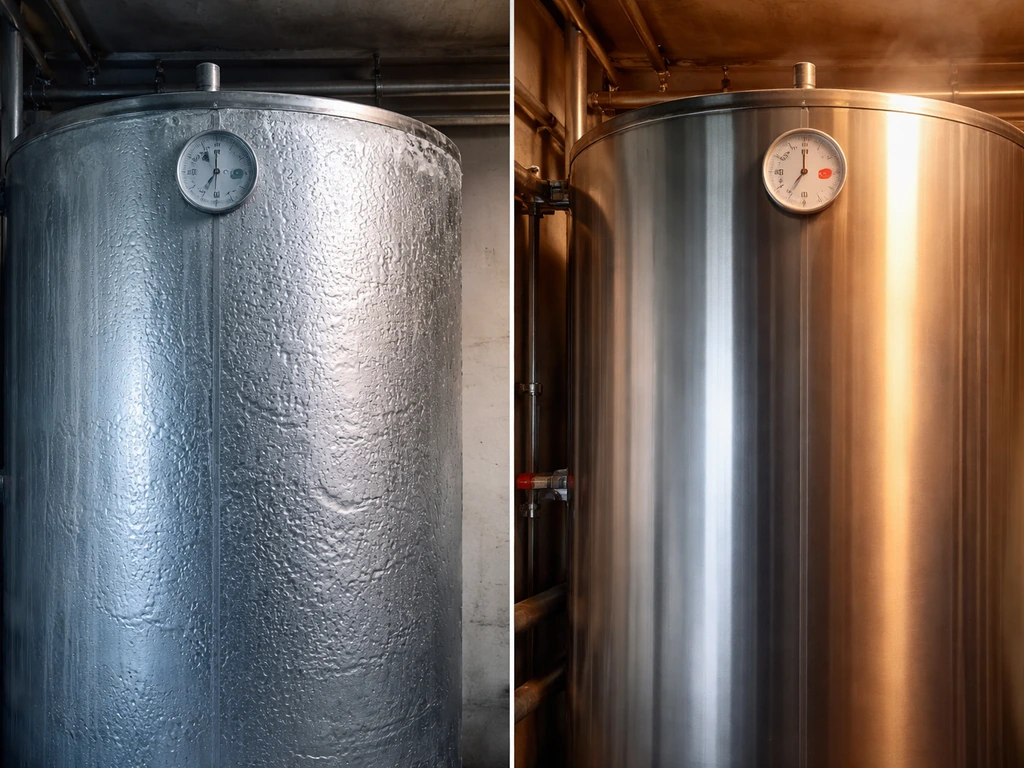
Cold water: surviving without growing
Cold temperatures stop Legionella growth but they do not kill it. Multiple studies have tracked L. pneumophila survival at 4°C (refrigerator temperature) over weeks. In that PLOS One study, researchers tested L.
pneumophila survival in defined freshwater across 4°C to 42°C and reported CFU decreases at 4°C that stabilized after about two weeks [pneumophila survival at 4°C (refrigerator temperature) over weeks. ](https://journals. plos. org/plosone/article?
id=10. 1371%2Fjournal. pone. 0139277).
At refrigeration temperatures, Legionella may survive for weeks and can still retain the ability to multiply under the right conditions refrigerator temperature. In one drinking-water microcosm study, concentrations dropped then stabilized at around 100 CFU/mL and held there throughout the study. Another study found that bacteria kept at 4°C retained the ability to multiply inside host cells for at least 28 days. A separate three-week survival experiment at 4°C also confirmed progressive decrease but not elimination.
The practical takeaway here is similar to questions about whether Listeria can grow in the fridge: cold storage suppresses growth but is not sterilization. If a cold water system allows temperatures to drift up into the 20°C–25°C range, the Legionella that has been sitting there dormant can start multiplying again. That is why guidelines treat cold water control targets as a live, ongoing requirement, not a one-time fix.
Hot water: the lethal zone
At 50°C, Legionella stops growing and begins to die, but the kill rate at exactly 50°C is slow enough that it is not used as a reliable control target. At 60°C, the bacteria cannot survive. WHO Housing and Health Guidelines advise that [temperatures leaving the water heaters should be above 60°C](https://www. ncbi.
nlm. nih. gov/books/n/who276001/pdf/), and temperatures above 50°C should be maintained throughout the associated pipework. OSHA states explicitly that Legionella cannot survive at 70°C, and this temperature is used as the flushing standard during active thermal disinfection after a positive finding.
A hospital hot-water system field study found that Legionella could still be isolated at temperatures at or below 50°C even after chlorination, but raising one calorifier to 60°C reduced counts to undetectable. That real-world data is why 60°C is the minimum storage target, not a conservative guess.
Practical implications for water systems and food safety
Legionella is fundamentally a water system pathogen. It causes Legionnaires' disease through inhalation of contaminated aerosols, most commonly from hot water systems, cooling towers, shower heads, spa pools, and decorative fountains. Any system that heats water into the 20°C–50°C window and holds it there, especially with stagnant sections or scale and sediment, is a potential amplification site.
From a food safety angle, the concern is narrower but real in settings that use large water systems for food processing or preparation. High-risk environments include commercial kitchens with little-used outlets, food processing facilities with warm-water holding tanks, and any institutional setting where water is stored or circulated at temperatures in the growth range. The biology here is the same whether you are thinking about a hotel plumbing system or a food plant water line: temperature management is the primary control.
Research also shows that temperature alone does not tell the whole story. Pipe material, organic carbon content, and biofilm formation all interact with temperature to determine how much Legionella amplifies in a given system. Scale and sediment in water heaters are specifically flagged by OSHA as a nutrient source. So even if your temperature targets are met on paper, physical system conditions can undermine that protection.
How to control it: temperature-based prevention steps
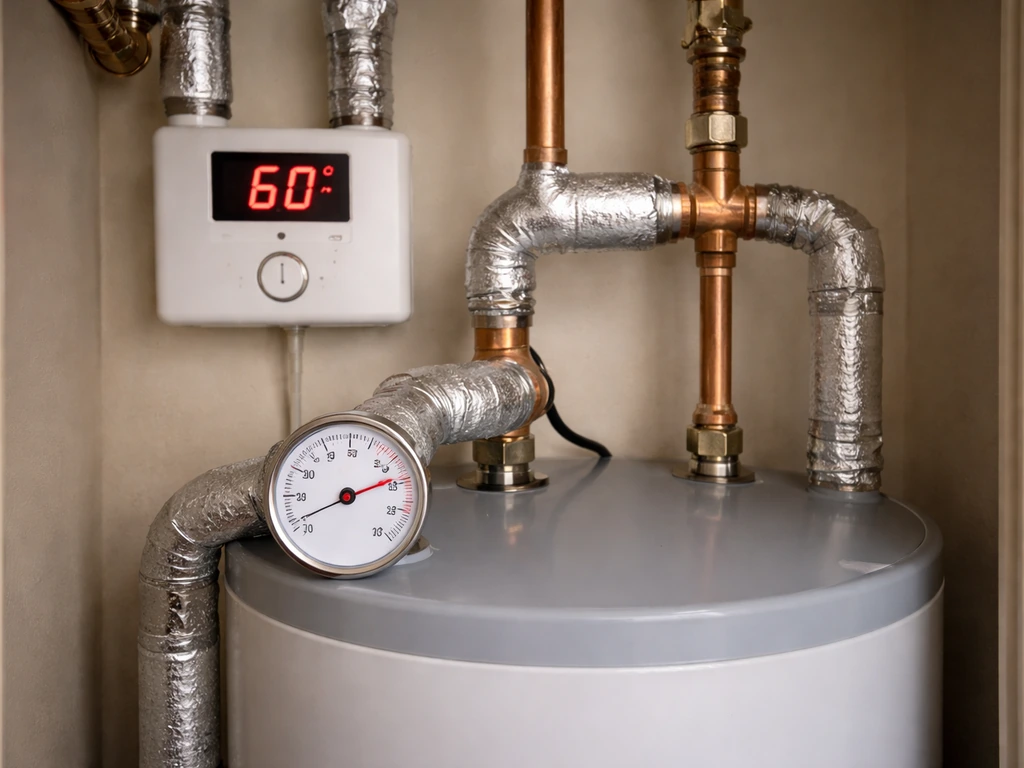
Temperature control is the foundation of Legionella prevention in any water system. The targets below come from WHO, CDC, HSE (UK), and OSHA guidance and are broadly consistent across jurisdictions, with slightly stricter thresholds for healthcare settings.
Hot water system targets
- Store hot water at or above 60°C (140°F) at the heater or calorifier
- Circulate hot water so the return temperature stays at or above 50°C (122°F), and at or above 51°C in healthcare facilities
- Verify that hot water reaches at least 50°C at outlets within one minute of running (55°C in healthcare premises per HSE guidance)
- Insulate pipework to prevent heat loss in distribution lines, especially in long runs or little-used branches
Cold water system targets
- Keep cold water stored and distributed below 20°C (68°F) wherever possible
- The absolute upper limit for cold water is 25°C (77°F) according to WHO; below 20°C is the preferred target
- Insulate cold water pipes away from heat sources and hot water lines to prevent temperature creep
- In healthcare and high-risk settings, aim to deliver cold water below 20°C throughout the system, not just at the storage point
Thermal disinfection for remediation
If Legionella is detected or suspected in a system, thermal flushing is a standard first-response measure. OSHA guidance describes maintaining system temperature at 70°C while flushing each faucet or outlet continuously for 20 minutes. This is a high-temperature shock treatment, not routine maintenance, and it needs to be coordinated carefully to avoid scalding risks to building occupants.
Measuring and troubleshooting: what to do if you suspect Legionella
Suspicion is usually triggered by one of three things: a reported case of Legionnaires' disease linked to a building, a routine risk assessment that flags system deficiencies, or temperature measurements that fall inside the growth zone during monitoring. Here is how to work through it.
- Measure water temperatures at representative points in the system: heater outlet, return line, and outlets, especially ones with slow flow or infrequent use. Use a calibrated probe thermometer, not just the heater dial setting, since dial readings are often inaccurate.
- Check how long it takes for hot water to reach 50°C at outlets after the tap is opened. If it takes more than one minute, that is a flag for the distribution system.
- Look for dead legs (capped-off pipe runs), infrequently used outlets, and areas where water sits stagnant. These are the highest-risk locations for temperature stratification and Legionella amplification.
- Inspect the heater or calorifier for scale, sediment, and corrosion. These conditions provide nutrients that support biofilm and Legionella growth even when temperature targets are nominally met.
- If temperatures are consistently falling in the 20°C–50°C range and you cannot quickly correct them through system adjustments, contact a water treatment professional or Legionella risk assessor. Routine microbiological testing (culture or qPCR) of water samples can confirm whether colonization has occurred.
- After any confirmed positive finding, do not attempt thermal disinfection or chemical treatment without professional input. Remediation protocols need to be matched to your specific system design, and the process must be managed to avoid spreading contaminated aerosols during the flush.
Ongoing monitoring is not a one-time job. CDC guidance specifically calls out monitoring at locations with slow-moving or stagnant water, and measuring temperatures after changes or flushes to confirm the system is behaving as expected. A written water management plan that documents target temperatures, monitoring frequency, and corrective action thresholds is the standard approach for any building with a complex water system.
If you are looking into related questions, such as whether Legionella can grow in cold water specifically, or whether it can persist in bottled water, the same core temperature biology applies: growth requires that 20°C–50°C window, and anything outside it stops multiplication even if it does not eliminate the organism entirely. Listeria, by contrast, depends on different food and surface conditions for what it grows on, which is why its prevention starts with proper food handling and sanitation what does listeria grow on.
FAQ
Is there a single “ideal” temperature for Legionella growth?
In real plumbing, “what temperature does Legionella grow” usually means “where it multiplies fastest,” which is roughly 37°C to 42°C. But growth can still occur anywhere in the 20°C to 50°C band, especially when biofilms, scale, or sediment are present.
If my water system stays at the target temperature most of the time, is Legionella still possible?
No. Treating only the exact target point is risky, because temperatures drift and can stratify in tanks. If parts of a system spend time in the 20°C to 25°C or 35°C to 45°C ranges, dormant organisms can resume multiplication.
Can Legionella grow in cold water, like at refrigerator temperatures?
It can survive at refrigerator temperatures, but growth is suppressed at those cold temperatures. The key edge case is when cold outlets warm up or stagnate long enough to enter the 20°C to 25°C range, then multiplication can restart.
If I raise the temperature, does that automatically eliminate Legionella everywhere in the system?
Thermal disinfection should not be treated as routine “set-and-forget.” Flushing and holding temperatures long enough matters, because some system sections can be insulated, poorly circulated, or have dead legs where temperature lags behind measurements taken elsewhere.
Why isn’t 50°C a reliable control temperature?
Yes, but it is slow at the margins. The article notes that 50°C is not reliably lethal because the kill rate there can be slow, so you should not use 50°C as a control target for disinfection.
Where should temperature be measured to confirm Legionella risk is really controlled?
You can get misleading readings if you only measure at the boiler or calorifier. Temperatures should be checked at representative outlets and in problem areas (little-used outlets, distal points, dead legs, storage tanks) because those are where the water may actually sit in the growth zone.
How does 60°C control differ from 70°C flushing in practice?
If water reaches 60°C, Legionella cannot survive, but reaching it is different from maintaining it through flushing and throughout distribution. For safety, systems typically use higher-temperature flushing standards (for example, 70°C during active disinfection) rather than relying on gradual warm-up.
If temperatures are in the right range, what else can still let Legionella amplify?
A positive test does not automatically mean you should only adjust temperature. The article highlights that pipe material, organic carbon, biofilm, and nutrients from scale and sediment can undermine “on-paper” targets, so corrective actions often include reducing stagnation and controlling sediment and biofilm alongside temperature.
How do time and water use patterns affect Legionella risk beyond temperature?
Do not use time alone as your metric. Legionella risk depends on both temperature and how long water stays in the growth band, plus whether aerosols are generated. For example, frequent use may reduce stagnation, while frequent aerosol generation can increase exposure even when concentrations are lower.
Does the risk management approach differ between healthcare, hotels, and food processing sites?
In facilities like hospitals or hotels, the priority is controlling hot water and minimizing conditions that allow sections to sit in the 20°C to 50°C range. In food processing, the same temperature biology matters for warm-water holding or circulation tanks, but risk management should also consider how water contacts food and whether aerosols are being generated.
Next Article
What Does Listeria Grow On Foods and Conditions
Listeria grows and survives on ready-to-eat dairy, deli meats, seafood, produce, and wet processing surfaces, even in th