Under the right conditions, Legionella can begin multiplying within hours and reach meaningful concentrations in a water system within days to a few weeks. The exact speed depends heavily on temperature, but biofilm, stagnation, sediment, and loss of disinfectant residual all play a role too. At its sweet spot of around 35–40°C (95–104°F), Legionella can amplify rapidly. Drop the temperature below 20°C (68°F) or push it above 60°C (140°F), and growth slows dramatically or stops entirely.
How Long Does It Take for Legionella to Grow in Water?

Marcus Reeves
1 May 2026
What 'growth' actually means for Legionella in water
When we talk about Legionella 'growing' in a water system, we're really talking about two different things: survival and active multiplication. Legionella can survive in water at a wide range of temperatures, but it only actively multiplies, meaning replicates and builds up to dangerous concentrations, when conditions are genuinely favorable. The concern in building water systems isn't just that Legionella is present; it's that it multiplies to a level where aerosolized droplets pose a real inhalation risk.
In lab testing, 'detectable growth' is typically confirmed when visible colonies form on culture plates, which takes 7–14 days of incubation time in standard CDC culture methods. Initial colony examination begins at 72–96 hours, with re-examination continuing over that window. In a real water system, meaningful amplification (a significant increase in CFU/mL, or colony-forming units per milliliter) can happen much faster than that lab turnaround suggests, because the lab is just detecting what has already been growing in the system.
Typical timeframes: how long Legionella takes to grow
There is no single universal answer, because growth rate varies dramatically with conditions. But here are realistic timeframes tied to real-world scenarios.
| Condition | Temperature Range | Expected Growth Timeline |
|---|---|---|
| Optimal amplification zone | 35–42°C (95–108°F) | Active multiplication within hours; significant build-up within days |
| Moderate growth zone | 25–35°C (77–95°F) | Slower multiplication; detectable increase over days to a few weeks |
| Marginal/slow zone | 20–25°C (68–77°F) | Growth possible but sluggish; weeks to months for meaningful concentrations |
| Suppressed growth (cold) | Below 20°C (68°F) | Growth largely inhibited; survival possible but multiplication minimal |
| Thermal kill zone | Above 60°C (140°F) | Rapid die-off; counts can drop from ~10,000 CFU/L to undetectable |
In studies simulating distribution system conditions, L. pneumophila populations were maintained over 97 days in tap water at 25°C and 32°C, confirming that persistence, and potential amplification, is real and sustained at those temperatures. At 4°C, replication was not possible. In a hospital hot-water system field study, heating water to 60°C brought Legionella counts from roughly 10,000 CFU/L down to undetectable levels, showing just how powerfully temperature controls the outcome in both directions.
Temperature is the biggest lever
Temperature is the single most important factor controlling how fast Legionella multiplies. The organism's favorable growth range runs from about 25°C to 45°C (77°F to 113°F), with optimal multiplication occurring around 35–42°C (95–108°F). Research on L. pneumophila in heated tap water at 38–42°C confirmed that this band is where the bacteria replicate fastest, with maximum growth temperatures hitting around 42–43°C depending on the strain.
As temperature falls below 37°C, reproductive activity decreases noticeably. Below 20°C (68°F), growth is largely suppressed, though the bacteria can still survive and wait. In cold water, Legionella usually does not thrive, but it can still survive and sometimes persist long enough to become a problem if temperatures drift upward or other risk factors are present can legionella grow in cold water. Above 60°C (140°F), die-off is rapid enough to be used as an active control method.
This is why CDC recommends storing hot water above 140°F (60°C) and maintaining return line temperatures at a minimum of 124°F (51°C). WHO Housing and Health Guidelines specify that for hot water systems, temperatures leaving heaters should be above 60°C and temperatures above 50°C should be maintained throughout associated pipework [temperatures leaving heaters above 60°C and temperatures above 50°C maintained throughout pipework](https://www. ncbi. nlm.
nih. gov/books/NBK535301/table/ch8. tab3/). [The WHO guidance is similar: hot water outlets at or above 60°C, cold water kept below 25°C and ideally below 20°C.
](https://iris. who. int/bitstream/handle/10665/276001/9789241550376-eng. pdf?
ua=1)
The danger zone in most building water systems is lukewarm water: storage tanks that aren't hot enough, distribution lines that cool down before reaching outlets, and dead legs or infrequently used fixtures where water sits and gradually drifts toward that 25–45°C window. That's where growth accelerates.
Other conditions that speed up or slow down growth
Temperature gets most of the attention, but it's rarely the only factor in practice. Several water chemistry and system conditions can significantly shorten or extend the time it takes for Legionella to reach problematic levels.
Biofilm and sediment
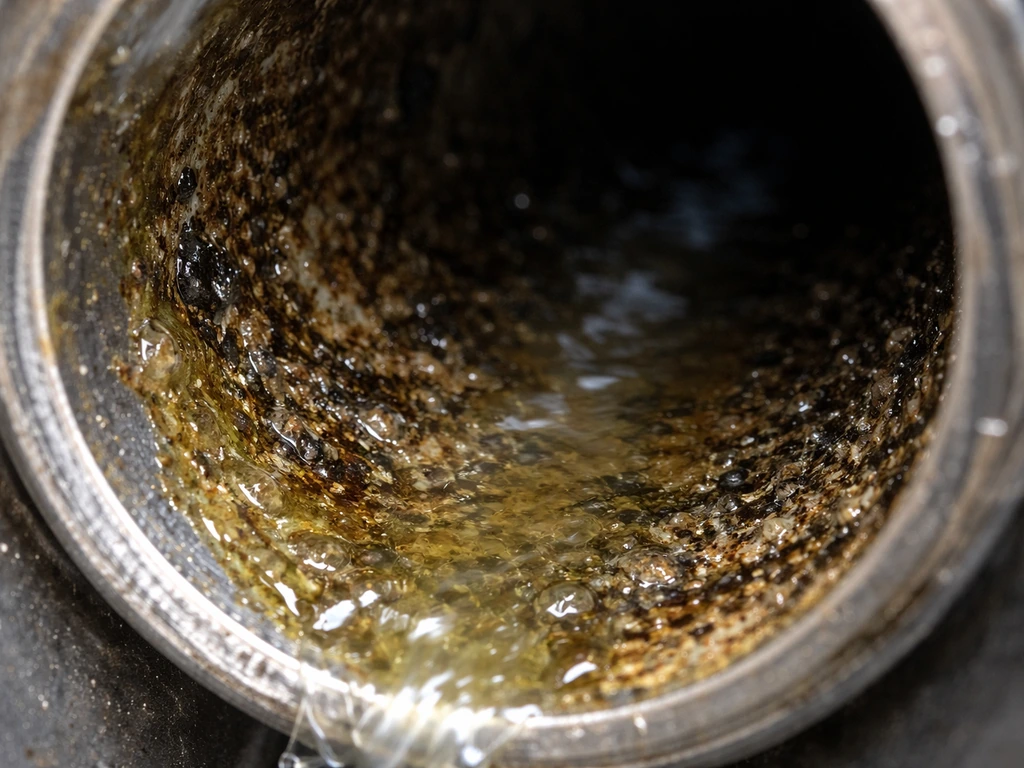
Biofilm is one of the most important accelerators. Legionella doesn't just float freely in water; it colonizes biofilm on pipe walls and fixtures, where it's protected from disinfectants and has a ready nutrient supply. In the same way, the organisms Legionella often rely on in practice are the surfaces and nutrients it can grow on, including within biofilms biofilm on pipe walls and fixtures. Sediment accumulation in tanks and pipes creates similar sheltered microenvironments. Once established in biofilm, Legionella is much harder to eliminate and can seed the bulk water continuously. OSHA notes that protozoa and other water organisms within biofilm can actually amplify Legionella growth further, essentially acting as hosts.
Water age and stagnation
Stagnant water is a major risk factor. When water sits in a system without moving, two things happen: disinfectant residuals deplete, and temperatures drift toward the growth-favorable range. Dead legs, capped-off pipes, infrequently used showers or taps, and oversized storage tanks are all common sources of stagnation. The longer water sits, the less protection it has, and the more time Legionella has to amplify unchecked.
Disinfectant residual
Maintaining an adequate disinfectant residual (typically chlorine or chloramine in municipal systems) suppresses growth throughout the distribution system. As water ages or sits in warm pipes, that residual is consumed faster. When it drops too low, Legionella and other microorganisms face less competition and less chemical pressure, which can shorten the time to meaningful amplification significantly.
pH and nutrient availability
pH is a secondary but real factor. Monitoring pH is part of CDC's recommended water system surveillance alongside temperature and disinfectant residuals. Nutrient availability, including organic matter in the water or leaching from pipe materials, also influences how quickly Legionella and the biofilm communities it relies on can grow.
How to judge your risk based on your water conditions
If you're trying to figure out whether your water system is currently at elevated risk for Legionella growth, run through these practical checkpoints.
- Hot water storage temperature: Is your water heater storing water above 60°C (140°F)? Anything lower puts you in or near the growth-favorable range.
- Hot water return temperature: Is the return line coming back at or above 51°C (124°F)? A cool return means water is spending time in the danger zone.
- Cold water temperature: Is your cold water reliably below 20°C (68°F)? Warm cold water (above 25°C) is a real risk, especially in summer or in poorly insulated buildings.
- Stagnant points: Are there dead legs, capped outlets, or fixtures not used in the past week? Stagnation accelerates disinfectant loss and temperature drift.
- Biofilm and sediment: When was your system last descaled or flushed? Visible scale, rust, or turbidity in water suggests conditions that favor Legionella colonization.
- Disinfectant residual: If you're on a building system, is the residual being measured at the furthest points from the entry? Low residual at remote outlets is a warning sign.
- System complexity: Does your system include cooling towers, hot tubs, decorative fountains, or large storage tanks? Each adds risk surface area.
- Recent low-use periods: Has the building been unoccupied or partially shut down? Even a week of low flow can allow conditions to drift toward growth-favorable.
If you're checking this in the context of cold water storage or bottled water, the principle is the same: water kept above 20°C and sitting without disinfectant will favor bacterial growth over time. Temperature suppresses or enables growth regardless of the source. This connects to questions about whether Legionella can grow in cold water or bottled water, where the same temperature thresholds apply. If you are also thinking about food safety, you may wonder can Listeria grow in the fridge and how temperature affects it.
What to do right now to stop or prevent growth
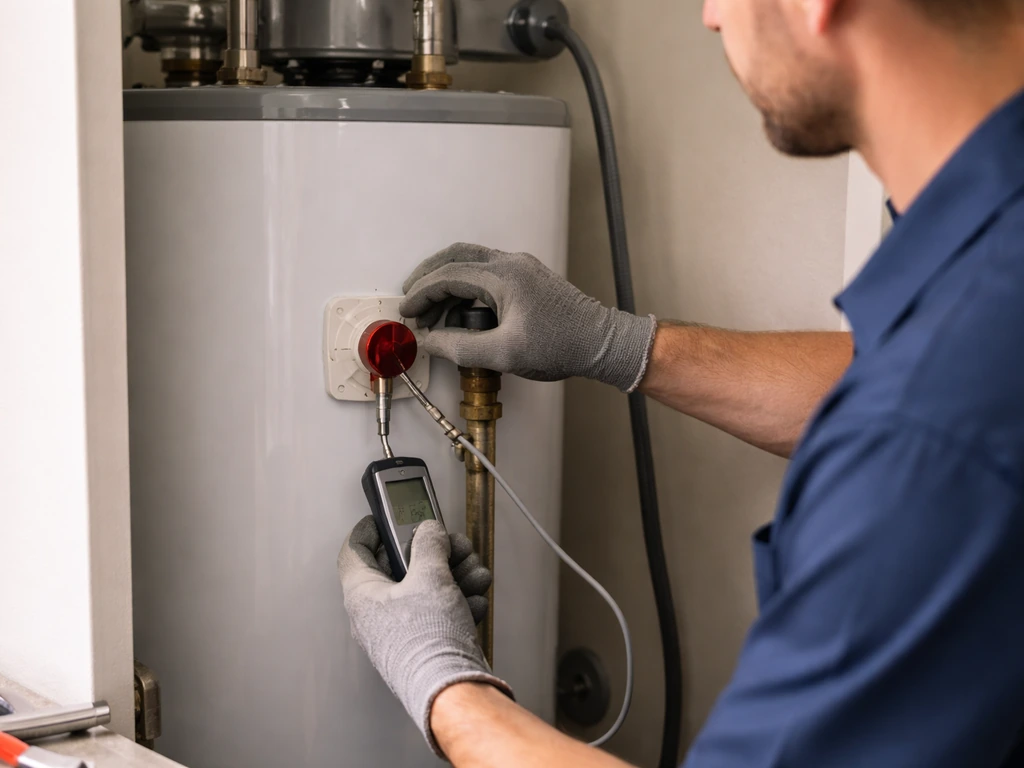
If you've identified risk conditions in your system, here are concrete actions you can take today or schedule immediately.
- Check and adjust water heater temperature. Set storage to at least 60°C (140°F). Verify with a thermometer at the heater outlet, not just the thermostat dial.
- Flush stagnant outlets. Run every shower, tap, and fixture that hasn't been used recently for several minutes to displace sitting water and restore temperature and disinfectant levels.
- For thermal disinfection of a known problem: heat the system to at least 70°C (158°F) and flush each outlet for a minimum of 20–45 minutes, ensuring outlet temperatures reach at least 60°C (140°F). OSHA and ASHE both describe this procedure for active remediation.
- Measure temperature at remote points. Use a digital thermometer to check hot water temperature at the furthest outlets from the heater. If it's below 50°C by the time it reaches the tap, heat is being lost in the distribution system.
- Check cold water temperatures. Especially in summer or in unconditioned spaces, verify cold water is staying below 20°C.
- Test disinfectant residual. Use a simple test strip or meter to check free chlorine at remote outlets. A residual near zero means the water has lost its chemical protection.
- Inspect and clean tanks. If you have a storage tank, check for sediment, scale, or biofilm. Schedule cleaning and descaling if it hasn't been done within the past year.
- Eliminate dead legs. Identify any capped-off or rarely used pipe sections and either remove them or commit to a regular flushing schedule.
- Develop a Water Management Plan (WMP). For commercial or healthcare buildings, CDC and OSHA both recommend a formal written plan that includes monitoring schedules, trigger thresholds, and corrective actions. This is not just best practice; it's a regulatory expectation in many healthcare settings.
- Retest after interventions. After thermal disinfection or system changes, collect water samples for Legionella culture testing to confirm the intervention worked. Standard culture results take 7–14 days, so plan accordingly.
The key takeaway is that Legionella growth is not inevitable, and it's not instant. It requires a combination of conditions to be simultaneously present, mainly warm water, stagnation, biofilm, and depleted disinfectant. Address any one of those meaningfully and you reduce the risk. Address all of them together and you can keep growth suppressed for the long term. Temperature monitoring is the fastest and cheapest starting point, and it gives you real-time feedback on whether your system is creating the conditions Legionella needs to multiply.
FAQ
Does Legionella start multiplying the moment it enters a building water system?
Yes, but the risk is tied to temperature history and disinfectant presence. If cold water is held or distributed long enough to warm into the 25°C to 45°C band, or if disinfectant residual is absent or rapidly depleted, Legionella can begin multiplying during that warmer window. Short, well-chilled draws are less likely to reach problematic levels, but recurring temperature drift plus stagnation is where timing becomes meaningful.
Why can two buildings with the same water temperature show different Legionella growth timing?
Not necessarily. In many systems the time to “problem levels” is driven by how long water remains in the favorable zone (lukewarm, warm return lines, cooled distribution legs) and whether biofilm and sediment are already established. A system can show low growth signals for a while, then accelerate quickly after a temperature lapse, disinfectant drop, or a period of heavy stagnation.
How should I interpret culture testing timelines if I’m trying to estimate growth rate in my system?
Lab culture results typically take 7 to 14 days, but the organism may already be amplifying in the system before the lab can confirm it. Also, “detectable” on a plate does not always match “infectious risk” because aerosolization depends on hydraulics, plumbing, and droplet generation. If you need actionable timing, focus on real-time temperature, disinfectant residual, and stagnation patterns rather than waiting for culture confirmation.
Can disinfectant residual changes make Legionella reach dangerous levels faster than temperature alone?
If disinfectant residual drops, growth can accelerate because the chemical pressure that restrains microbes is reduced, and competition from other organisms declines. Operationally, the most useful approach is to track both residual and temperature at multiple points, including distal outlets and return lines, since minimum residual often occurs farthest from dosing or during warm-up and draw-off cycles.
Do dead legs and rarely used taps change the time it takes for Legionella to grow?
Yes. Dead legs and infrequently used fixtures can create localized “mini-systems” where water sits, disinfectant residual is depleted, and temperature shifts toward the growth-favorable range. These locations can develop faster than the main loop, so a building can appear compliant in central measurements while still having high risk in distal points.
If we disinfect or flush a system, how quickly can Legionella re-grow?
Biofilm often acts like a reservoir that shortens the time to regrowth after it is disturbed. After cleaning or flushing, counts can sometimes rebound because Legionella cells in protected biofilm niches are released back into the bulk water. This means “time to regain growth” can be shorter than the original initial contamination timeline, especially if biofilm removal and full thermal or chemical control are not sustained.
How do nutrients, pipe material, and sediment influence how long Legionella takes to grow?
Water quality affects this indirectly through what supports biofilm and nutrient availability, such as organic matter, pipe material leaching, and sediment load. The practical takeaway is that two systems at the same temperature can differ in growth speed because one has more biofilm-friendly surfaces or higher suspended solids that help build microenvironments.
Can Legionella amplification happen during temperature fluctuations even if we usually keep hot water hot?
Yes, especially in locations where water repeatedly warms and stagnates, like return lines that are not maintained at target temperatures or storage tanks with inadequate mixing and heat maintenance. If your measured outlet temperatures are occasionally within the growth-favorable band for extended periods, growth can progress over days, even if the overall system is “usually” hotter.
If Legionella can survive in cold water, what determines whether it will eventually grow there?
The primary pattern is that lower temperatures suppress active multiplication but do not guarantee absence. If cold water systems have minimal disinfectant, and conditions intermittently allow temperatures to rise above suppression thresholds, Legionella can survive and then begin replicating during the warmer periods. That means the “how long” question should account for worst-case warming events and duration, not just the nominal supply temperature.
Next Article
Can Listeria Grow in the Fridge? Growth Limits and Fixes
Explains if Listeria can grow in fridge temperatures, how long foods stay safe, and step-by-step fixes to prevent it tod