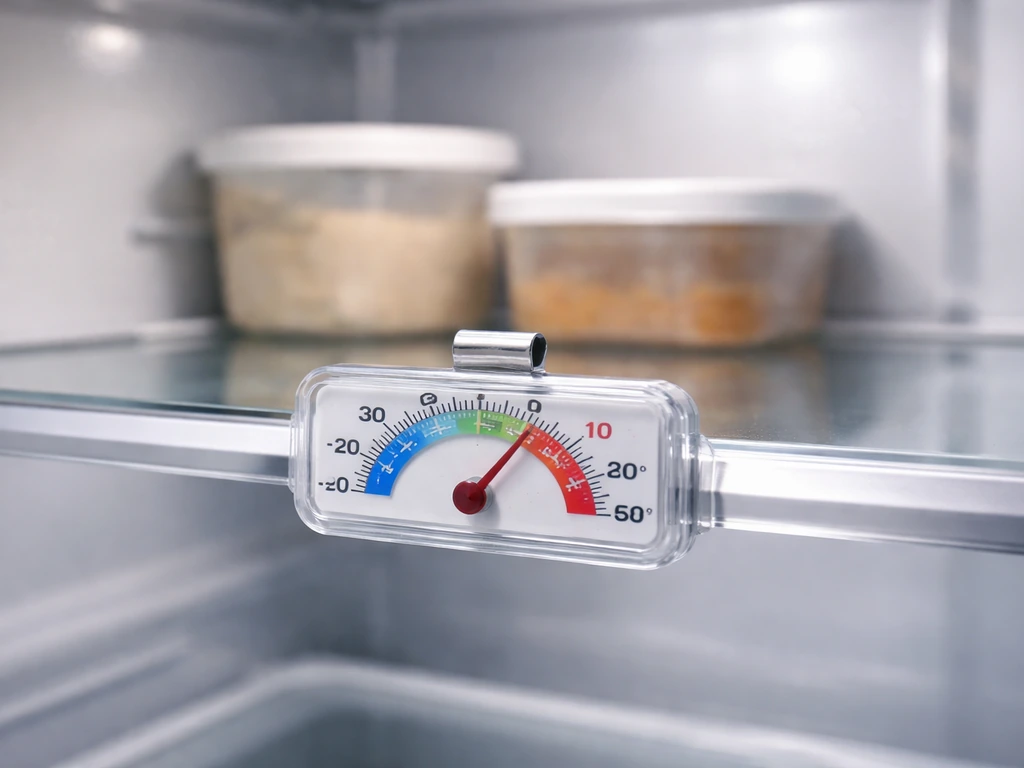
The minimum temperature for growth is roughly -1.5 °C (about 29 °F), according to food safety guidance from Food Standards Australia and New Zealand. At 0 °C (32 °F), growth is possible but very slow. At typical home refrigerator temperatures of 35 to 40 °F (about 1.5 to 4.4 °C), the bacteria can and do multiply, just more slowly than at warmer temperatures. The practical implication: keeping food cold slows Listeria down, but it does not stop it the way it stops most other pathogens.
The full growth range runs from that near-freezing minimum all the way up to about 45 °C (113 °F). That is a wider window than almost any other foodborne pathogen, and it is why refrigeration alone cannot be treated as a safety guarantee when Listeria is a concern.
Survival vs growth: what refrigeration and 'low temps' actually do
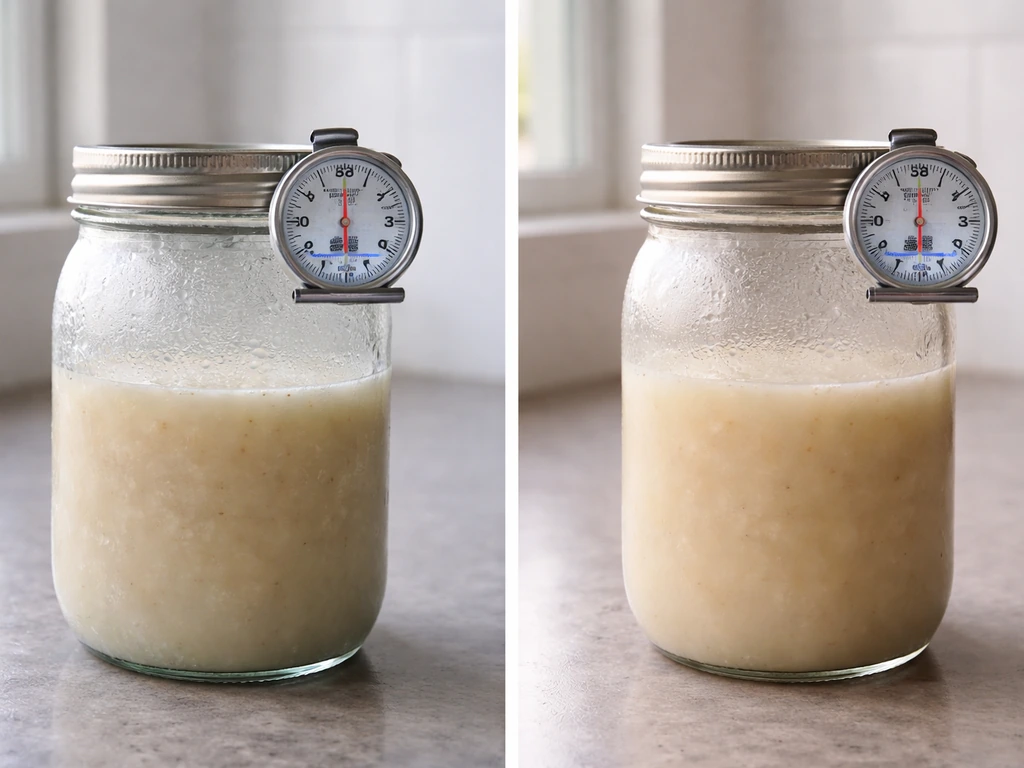
There is an important distinction in food microbiology between a pathogen surviving in a food and a pathogen actively growing in it. Survival means the organism stays viable but does not increase in numbers. Growth means the cell count is actually multiplying, which is when risk escalates.
With most common foodborne bacteria, refrigeration at 40 °F or below crosses into the survival-only zone. Those organisms stay alive but stop dividing. Listeria is different. Studies on deli meats inoculated at low starting levels (around 40 CFU/g) found measurable growth even at 4 °C (39 °F) during simulated home storage. Growth was faster at 7 °C and noticeably faster at 10 °C (50 °F), which is a temperature some refrigerators reach if the door is opened frequently or the thermostat is set too warm.
Research modeling growth probability across temperatures confirms that growth can occur at chilled temperatures well above 0 °C, with probability and rate increasing as temperature rises toward the optimum (around 30 to 37 °C). That means a refrigerator running at 42 °F instead of 38 °F is meaningfully worse for Listeria control, even if both temperatures feel cold to the touch.
Time is the other variable. The FDA specifically notes that the longer food stays in the refrigerator, the greater the chance Listeria will grow to risky levels. How long it takes for Legionella to grow depends on temperature and time, similar to how Listeria risk increases the longer food stays cold how long does it take for legionella to grow. How long it takes for Legionella to grow depends on temperature and time, similar to how Listeria risk increases the longer food stays cold can legionella grow in cold water. Legionella growth also depends on temperature, with warmer conditions helping it multiply faster. A deli meat sitting at 4 °C for ten days poses a much higher risk than the same product stored for two days, even under identical temperature conditions.
Can Listeria grow in the freezer? freezing effects and thawing risk
At freezer temperatures of 0 °F (-18 °C), Listeria does not grow. Growth effectively stops well before you reach freezing, and at -18 °C the bacteria are in a dormant, frozen state. So freezing is useful for halting multiplication.
However, the FDA is explicit on this point: freezing will not eliminate or reduce Listeria monocytogenes. Cells survive freeze-thaw cycles, and research on freeze-thaw tolerance shows that while repeated cycles do reduce viability to some degree, survival is strain-dependent and substantial numbers can persist. You cannot freeze contaminated food and assume it becomes safe.
The thawing stage is where risk resumes. When frozen food is moved to the refrigerator to thaw, it passes back through the temperature range where Listeria grows. If food then sits in the refrigerator for extended periods after thawing, growth can accumulate. USDA guidance states that food thawed safely in the refrigerator can be refrozen without cooking if it still has ice crystals or is at 40 °F or below, but the safest approach for high-risk items is to use them promptly after thawing rather than cycling them in and out of the freezer repeatedly.
Typical foods and storage situations where Listeria is most concerning
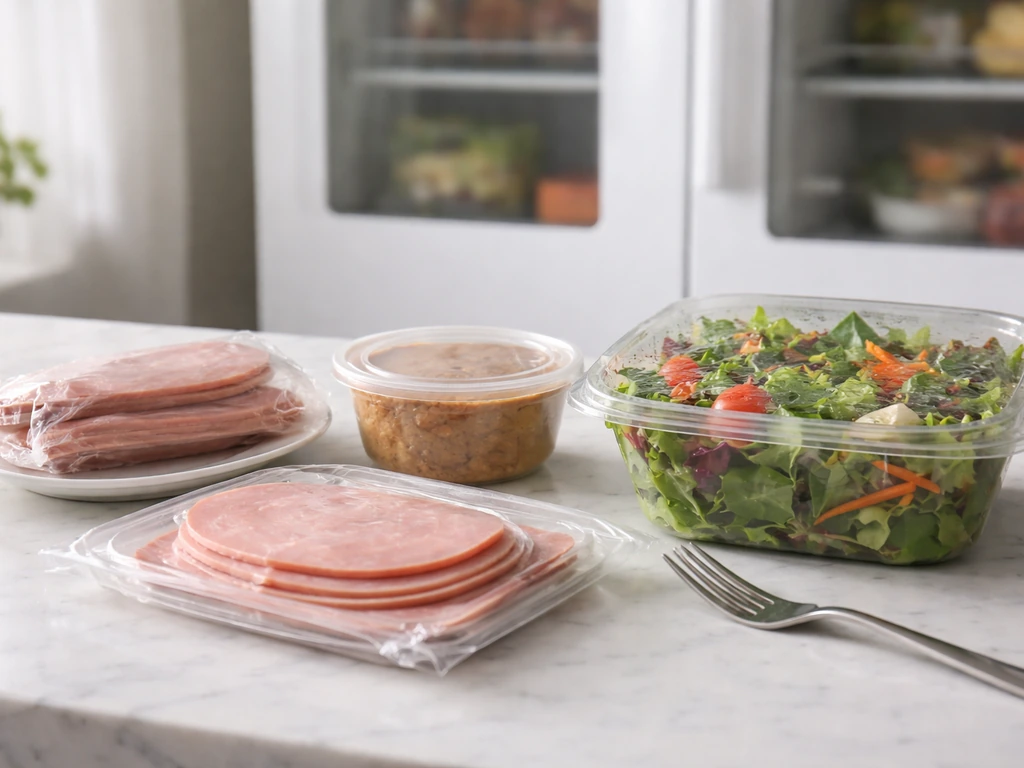
Listeria is particularly associated with ready-to-eat (RTE) foods because those products are typically not cooked or reheated before eating. Food Standards Australia New Zealand provides microbiological criteria for Listeria in ready-to-eat foods, including criteria based on whether Listeria monocytogenes is expected to grow in the product during storage blank" rel="noopener noreferrer">ready-to-eat (RTE) foods. Any heat that could kill the bacteria is absent, so whatever is on or in the food goes directly into the consumer. This is why refrigerated RTE items carry the highest practical risk. Listeria can grow on a wide range of foods, especially ready-to-eat items that stay refrigerated for long periods what does listeria grow on.
- Deli meats, cold cuts, and sliced luncheon meats (especially sliced at the deli counter, which have higher cross-contamination exposure)
- Hot dogs and ready-to-eat sausages
- Soft cheeses, particularly those made from unpasteurized milk (brie, camembert, queso fresco, feta)
- Smoked seafood and refrigerated smoked fish products
- Pre-washed or pre-cut produce stored in the refrigerator
- Refrigerated pâtés and meat spreads
- Leftovers stored in the refrigerator for more than three to four days
Research on market cheeses found that about 36.7% of tested products supported Listeria growth during refrigerated storage, with population increases of up to 3.58 log10 in some products. That is a large increase in bacterial load on food that most people eat without any heat treatment.
Cross-contamination within the refrigerator is a significant and often overlooked pathway. Juices from hot dog and deli meat packages can drip onto other foods, shelves, and drawers and transfer Listeria throughout the storage environment. Once the refrigerator interior is contaminated, even foods that were not originally at risk can pick up the pathogen.
Practical steps to prevent Listeria in the fridge today
Start with the temperature. Set your refrigerator to 40 °F (4 °C) or below and your freezer to 0 °F (-18 °C). Use an inexpensive refrigerator thermometer to verify the actual temperature, not just the dial setting. The FDA recommends verifying real refrigerator performance with a thermometer to help ensure the refrigerator is kept at 40 °F or below Use an inexpensive refrigerator thermometer to verify the actual temperature. A refrigerator running at 42 to 45 °F creates meaningfully better conditions for Listeria growth.
Limit storage time for high-risk ready-to-eat foods. Deli meats and opened packages of cold cuts should be used within three to five days of purchase or opening. Leftovers should be used within three to four days. The longer these foods sit at refrigerator temperature, the more opportunity Listeria has to multiply, even if everything looks and smells fine.
Store high-risk items in sealed containers or tightly wrapped packaging to prevent drips and cross-contamination. Keep raw meats on the lowest shelf so juices cannot drip onto ready-to-eat foods below. Clean up any spills from hot dog or deli meat packages immediately, do not let liquid sit on shelves or in drawers.
Refrigerate perishable prepared foods and leftovers within two hours of cooking or purchasing (or within one hour if the ambient temperature is above 90 °F). The longer food sits at room temperature before going into the refrigerator, the higher the starting bacterial load.
Clean your refrigerator regularly. Wipe down shelves, drawers, and door seals with warm soapy water followed by a food-safe sanitizing solution. Pay particular attention to the areas where packaged deli products and cheeses are stored.
Reheating, leftovers, and high-risk groups: what to do after possible exposure
If you or someone in your household falls into a high-risk group, the calculus around refrigerated ready-to-eat foods changes. High-risk groups include pregnant people, adults 65 and older, and anyone with a weakened immune system. For these groups, Listeria infection (listeriosis) can cause serious illness, and the threshold for caution should be lower.
For high-risk individuals, CDC guidance recommends reheating deli meats, cold cuts, hot dogs, and ready-to-eat sausages to 165 °F (74 °C) or until steaming hot before eating, even if the package says ready to eat. The same applies to soft cheeses made from unpasteurized milk. Reheating to that internal temperature kills Listeria and eliminates the risk from refrigerated growth that occurred during storage.
Discard any refrigerated leftovers that have been stored for more than four days, regardless of appearance or smell. Listeria does not reliably change the color, texture, or odor of food. You cannot detect its presence by sensory evaluation.
If food has been left out at room temperature for more than two hours (or one hour in heat above 90 °F), discard it. Room temperature falls squarely in the range where Listeria grows efficiently, and there is no way to reverse growth that has already occurred by putting the food back in the refrigerator.
If you are thawing food before cooking, the safest methods are in the refrigerator, in cold running water with immediate cooking afterward, or in the microwave immediately followed by cooking. The FDA Food Code requires that microwave-thawed food go directly to cooking. Avoid thawing on the counter, which moves food through the growth-permissive temperature range for an extended period.
Key takeaways and temperature/storage checklist
The core answer to the original question: yes, Listeria monocytogenes can grow in the refrigerator. It grows slowly at 40 °F or below, faster as temperature rises, and stops growing only at freezer temperatures, but survives freezing and resumes growing when thawed. Time in the refrigerator matters as much as temperature. This is what separates Listeria from most other foodborne pathogens and why specific handling practices are worth following.
A related misconception worth addressing directly: the statement that 'Listeria monocytogenes does not grow in refrigerated foods' is false as a general rule. It can and does grow in many refrigerated foods, particularly ready-to-eat items stored for extended periods. The conditions that reduce risk are lower temperatures, shorter storage times, and proper contamination control, not refrigeration alone.
| Condition | Listeria behavior | Practical action |
|---|
| Refrigerator at 40 °F (4 °C) or below | Slow growth is possible | Keep fridge at or below 40 °F; verify with thermometer |
| Refrigerator above 40 °F (4 °C) | Growth rate increases | Adjust thermostat; discard items stored while fridge was warm |
| Freezer at 0 °F (-18 °C) | No growth; cells survive | Use freezer to halt growth, not to make contaminated food safe |
| Thawing in refrigerator | Growth resumes slowly | Use thawed RTE foods promptly; do not refreeze repeatedly |
| Room temperature (above 40 °F) | Active, faster growth | Refrigerate within 2 hours; discard if left out longer |
| RTE foods stored 1 to 2 days | Lower risk | Generally acceptable with proper temperature control |
| RTE foods stored 5+ days | Higher risk as cells multiply | Discard or reheat to 165 °F for high-risk individuals |
| Leftovers | Risk grows with time | Use within 3 to 4 days; discard after that |
- Set and verify refrigerator temperature at 40 °F (4 °C) or below using a thermometer.
- Set freezer to 0 °F (-18 °C).
- Use deli meats, cold cuts, and opened RTE packages within 3 to 5 days.
- Use refrigerated leftovers within 3 to 4 days and discard after that.
- Refrigerate perishable foods within 2 hours of preparation or purchase.
- Store raw meats sealed and on the lowest refrigerator shelf.
- Clean up spills from deli or hot dog packages immediately.
- For high-risk individuals, reheat deli meats and hot dogs to 165 °F before eating.
- Thaw frozen food in the refrigerator, cold water, or microwave — not on the counter.
- Do not rely on appearance or smell to judge whether Listeria is present.