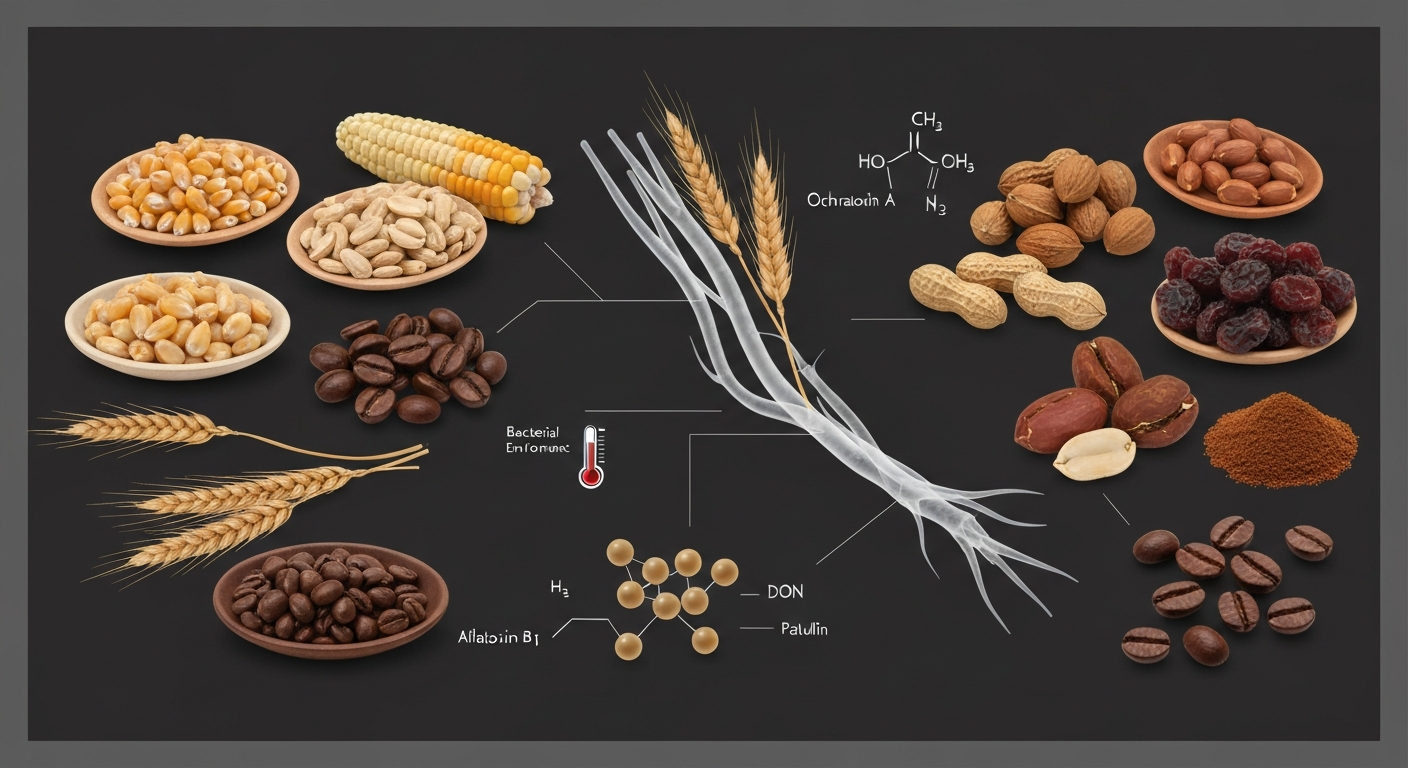
Mycotoxins do not grow on their own. They are chemical byproducts produced by certain mold species when those molds colonize a substrate and encounter the right combination of moisture, temperature, oxygen, and nutrients. The fungi that matter most in food safety include Aspergillus, Penicillium, and Fusarium species, and they can colonize a wide range of agricultural commodities: cereal grains, peanuts, tree nuts, dried fruit, coffee, cocoa, and spices. What makes mycotoxin contamination tricky is that a mold can be actively growing on a food without producing toxins, and conversely, once a toxin has formed in a commodity, removing the visible mold does not remove the toxin. Understanding which substrates and environmental conditions trigger both fungal colonization and toxin synthesis is the foundation of any serious mycotoxin control program.
Mycotoxins Can Grow On: Foods, Conditions, Detection & Control

What people mean when they search "mycotoxins can grow on"
The phrase reflects a genuine and practical question: on which foods and surfaces can the harmful chemicals called mycotoxins appear, and what does it take for them to form? This article addresses both parts of that question. It covers the major toxin-producing fungal genera and the toxins they make, the environmental parameters that control whether a fungus both grows and produces toxins, and the specific commodity groups where those conditions routinely occur. It also covers detection, regulatory limits, and evidence-based prevention measures, so the information can be applied directly to storage, quality control, and risk assessment decisions. This is not a survey of every mold that has ever produced a secondary metabolite; it focuses on the mycotoxins with the highest food-safety and regulatory significance globally.
Fungal colonization versus mycotoxin formation: why the distinction matters
Fungal colonization means the establishment and biomass increase of a fungus on or inside a substrate. The mold germinates, extends hyphae, and feeds on the material. This can happen across a relatively wide range of temperature and moisture conditions depending on the species. Mycotoxin biosynthesis is a separate and more restricted event. Mycotoxins are secondary metabolites, meaning they are not required for basic fungal growth and survival. Their production is regulated at the gene-cluster level and can be switched on or off by abiotic stresses including shifts in water activity, temperature, pH, and carbon or nitrogen availability. A systems approach to model the relationship between aflatoxin gene cluster expression, environmental factors, growth and toxin production by Aspergillus flavus (2012) provides experimental and modeling evidence that aflatoxin biosynthesis is controlled at the gene-cluster level and is responsive to abiotic stresses such as water activity, temperature, pH, and nutrient availability.
In practical terms, this means the environmental window that permits fungal growth is wider than the window that triggers toxin production. Aspergillus flavus, for example, can grow across roughly 15 to 45 degrees Celsius, but aflatoxin B1 (AFB1) synthesis is typically restricted to around 20 to 35 degrees Celsius and tends to require water activity (aw) values above 0.85 to 0.95, while the fungus can grow at aw as low as 0.80. Some isolates show detectable growth at aw of 0.82 but measurable AFB1 production only when aw reaches 0.90 or higher. This asymmetry has a critical implication: conditions that are visibly supportive of mold growth are not necessarily producing toxins, but conditions that are marginally supportive of growth can still produce dangerous toxin levels if temperature and moisture combine in the right way, even briefly.
It is also worth being clear that mycotoxins are not bacteria. This separates them from organisms like Bacillus anthracis or Candida auris, which are living microbes with their own growth requirements and ecological niches. For more on where Candida auris grows, see the section titled "where does Candida auris grow" (ab1477d3-847d-4212-a52e-2c5b4f8dabfd). For more on Bacillus anthracis ecology and habitats, see where does anthrax grow. Mycotoxins are stable molecules that persist in a food after the producing mold is dead or removed. They do not replicate, do not spread by contact the way a pathogen does, and are not eliminated by heating conditions that kill bacteria. That stability is part of what makes them a distinct and persistent food-safety problem.
Major mycotoxin-producing fungi and the toxins they make
Three fungal genera account for the vast majority of regulated mycotoxin contamination in food and feed: Aspergillus, Penicillium, and Fusarium. Each genus has characteristic ecological preferences, commodity associations, and toxin families.
| Fungal genus / species | Primary toxin(s) | Key commodities |
|---|---|---|
| Aspergillus flavus / A. parasiticus | Aflatoxins (B1, B2, G1, G2) | Maize, peanuts, tree nuts, spices |
| Aspergillus ochraceus / A. carbonarius | Ochratoxin A (OTA) | Cereals, coffee, dried fruit, spices |
| Penicillium verrucosum | Ochratoxin A (OTA) | Stored wheat, barley |
| Penicillium expansum | Patulin | Apples, apple juice, pears, other pome fruit |
| Fusarium verticillioides / F. proliferatum | Fumonisins (B1, B2) | Maize and maize products |
| Fusarium graminearum / F. culmorum | Deoxynivalenol (DON), Zearalenone (ZEN) | Wheat, barley, maize |
| Fusarium sporotrichioides | T-2 and HT-2 toxins | Oats, wheat, barley |
Aflatoxin B1 is the most potent naturally occurring carcinogen known and is regulated in virtually every country that has a food-safety code. Ochratoxin A is nephrotoxic and classified as a possible human carcinogen. Fumonisins are associated with esophageal cancer risk in high-exposure populations and neural tube defects in animal models. DON (also called vomitoxin) causes acute gastrointestinal effects at relatively low doses and is the most commonly detected mycotoxin in European cereal monitoring. Patulin is a concern specifically in apple-based products and primarily affects children who consume large amounts of apple juice.
What drives fungal growth and toxin production
Six environmental parameters interact to determine whether a fungus colonizes a substrate and whether it produces toxins. Understanding these parameters individually and in combination is the basis for designing storage and processing controls.
Water activity (moisture)
Water activity (aw) is the most important single variable in mycotoxin risk management. It describes available, free water in a food matrix rather than total moisture content, and it is expressed on a scale from 0 (bone dry) to 1.0 (pure water). Most toxigenic molds require aw above 0.70 to initiate growth, and optimum toxin production occurs at much higher values. Aspergillus species are relatively xerophilic and can begin colonizing at aw around 0.78 to 0.82. Fusarium species and Penicillium expansum are less tolerant of low moisture and typically require aw above 0.85 to 0.90 for meaningful colonization. For practical grain storage, maintaining a_w below 0.70 (roughly corresponding to 13 to 14 percent moisture in wheat or maize) is the standard target for blocking fungal growth and toxin accumulation.
Temperature
Temperature and water activity interact: conditions that are marginally acceptable for toxin production at one temperature may become optimal at another. Aspergillus and its aflatoxins are associated with warm, dry conditions (20 to 35 degrees Celsius for AFB1 production). Fusarium toxins, including DON, are a cool-climate problem, with optimal DON biosynthesis typically between 15 and 25 degrees Celsius at high moisture levels, making temperate cereal crops particularly vulnerable during cool, wet harvest seasons. Penicillium verrucosum produces ochratoxin A under cool, damp storage conditions, often at 5 to 20 degrees Celsius, which is relevant to European-stored barley and wheat. Penicillium expansum grows optimally at around 24 degrees Celsius but can grow at temperatures as low as 3 degrees Celsius and a_w as low as 0.85, which is why refrigerated fruit can still support this mold if damaged.
pH
Most toxigenic molds prefer slightly acidic substrates, broadly in the pH 4 to 8 range for growth, but the effect of pH on toxin biosynthesis is mechanistically distinct. For patulin in Penicillium expansum, optimal growth on synthetic media occurs around pH 5.1. At the gene-regulation level, pH changes can alter expression of global regulators like LaeA and pathway-specific regulators like aflR and aflS that control toxin gene clusters directly.
Oxygen and modified atmospheres
Most toxigenic molds are aerobic, so reduced oxygen or elevated carbon dioxide concentrations can suppress both growth and some toxin pathways. Modified atmosphere storage and hermetic sealing of grain silos exploit this principle. However, effects are species- and strain-specific: some Aspergillus strains maintain growth at surprisingly low oxygen concentrations, and the degree of CO2 suppression varies. Hermetic storage is most effective when grain enters storage at low a_w and is sealed before large fungal populations establish.
Nutrients and substrate composition
Carbon and nitrogen sources in the substrate affect both growth rate and toxin output. High-carbohydrate substrates like grains and nuts tend to support high AFB1 yields per unit biomass. The ratio of available carbon to nitrogen influences secondary metabolite gene expression. Substrate lipid content is also relevant: peanuts and tree nuts, which are high in fat, create a nutrient-rich environment for Aspergillus, contributing to their high aflatoxin risk profile.
Storage time
Toxin accumulation is time-dependent. Short transient episodes of elevated a_w, for example from condensation during temperature cycling in a grain silo, can initiate fungal growth and produce measurable toxin that persists even after conditions return to safe levels. Quantitative time-temperature-water activity models for AFB1 confirm that cumulative toxin dose increases with duration under conducive conditions, even when individual conditions are only marginally favorable. This is why grain-storage monitoring is not a one-time measurement at intake but an ongoing process.
Cereals and grains: the highest-volume mycotoxin risk category
Cereal grains, including wheat, maize, barley, oats, rice, and sorghum, represent the largest dietary exposure route to mycotoxins globally, primarily because they are produced in vast quantities, stored for extended periods, and consumed with minimal processing that would reduce toxin levels. The three main toxin families in cereals are aflatoxins (primarily in maize from tropical and subtropical regions), fumonisins (maize, from Fusarium Liseola group), and Fusarium toxins including DON and ZEN (wheat, barley, maize in temperate regions).
Colonization routes differ between field fungi and storage fungi. Field fungi like Fusarium species infect grain before or at harvest, often through silk channels in maize or during anthesis in wheat. Aspergillus infection can occur both in the field under drought stress and in storage under warm, humid conditions. Storage fungi, including Penicillium verrucosum, typically establish after harvest when grain moisture is not adequately reduced before storage.
Control points for cereals include: drying grain to safe moisture levels (below 13 to 14 percent, aw below 0.70) as rapidly as possible after harvest; monitoring temperature and moisture during storage with in-bin sensors; using aeration to prevent moisture migration and hot-spot formation; testing incoming grain lots by ELISA rapid strips or confirmatory HPLC-MS/MS; and segregating high-risk lots. EFSA occurrence data from 2009 to 2018 confirm measurable prevalence of AFB1, fumonisins, and DON across European monitoring datasets for cereal products. blank" rel="noopener noreferrer">EFSA Scientific Opinion: Risk assessment of aflatoxins in food (2020) reports commodity‑specific data for maize/maize products and notes measurable prevalence of aflatoxins, fumonisins and DON across European monitoring submissions from 2009–2018.
Peanuts and tree nuts: concentrated aflatoxin risk
Peanuts and tree nuts, including pistachios, almonds, Brazil nuts, and cashews, are consistently among the most frequently notified commodity groups in mycotoxin surveillance systems. Aflatoxins B1, B2, G1, and G2 are the primary concern, produced by Aspergillus flavus and A. parasiticus. The high fat and protein content of nut matrices creates a favorable nutritional environment for Aspergillus growth, and the physical structure of nut shells does not reliably exclude fungal colonization, particularly when shells are cracked, immature, or damaged by insects.
RASFF and EFSA reports have historically recorded frequent import notifications for aflatoxins on pistachios and peanuts. Peanut aflatoxin contamination is particularly associated with drought stress during pod development in the field, which elevates in-field aw fluctuation stress on Aspergillus and promotes toxin production. Post-harvest drying to below 8 to 9 percent moisture (aw below 0.70) is critical for groundnuts.
Practical mitigation measures used in the nut industry include mechanical and optical sorting (color sorting and fluorescence-based systems that detect aflatoxin-contaminated kernels by UV fluorescence), blanching to remove skins, and HACCP-based lot testing. Because aflatoxin distribution within a lot is highly heterogeneous, sampling plan design is a significant source of measurement uncertainty and is specified in detail by EU and Codex Alimentarius sampling regulations.
Dried fruit, apple juice, and patulin
Dried fruit presents two distinct mycotoxin risks. Ochratoxin A is the primary concern in dried vine fruits (raisins, currants, sultanas) and dried figs. Aflatoxins have also been detected in dried figs and dates. EFSA occurrence tables list dried vine fruit and dried figs among commodity groups with measurable OTA and aflatoxin occurrence, and RASFF notifications for dried fruit are a recurrent feature of European food safety monitoring.
The drying process is both the control point and the risk window. If grapes are sun-dried under conditions of intermittent rainfall, high humidity, or insect damage, Aspergillus carbonarius, the primary OTA producer on grapes, can colonize and produce OTA before moisture is sufficiently reduced. Rapid drying in controlled drying facilities and avoiding damage to fruit surfaces are the most effective preventive measures.
Apple and pome fruit products require attention to patulin, produced by Penicillium expansum. Patulin contamination in apple juice is driven by the use of damaged, bruised, or visually molded fruit in juice production. Penicillium expansum grows optimally at around 24 degrees Celsius and aw 0.99, but its low-temperature tolerance (growth possible at 3 degrees Celsius and aw 0.85) means cold-stored apples with bruising or disease lesions are not safe from colonization. EU maximum levels for patulin in apple juice are set at 50 micrograms per kilogram for products for adults and 10 micrograms per kilogram for products for infants and young children. The practical control is using only sound fruit and implementing sorting lines that remove damaged material before pressing.
Coffee, cocoa, and spices: ochratoxin A and aflatoxin during drying and storage
Coffee is one of the most intensively monitored commodities for ochratoxin A globally. EFSA occurrence data identify roasted coffee, green coffee, and instant coffee as food groups with measurable OTA. The contamination pathway typically originates during drying of coffee cherries or beans under humid conditions that allow Aspergillus and Penicillium species to colonize before moisture is reduced to safe levels. Roasting reduces OTA concentrations significantly but does not eliminate them, and the degree of reduction depends on roasting conditions and initial contamination levels. Post-roast OTA in commercial products is therefore a function of pre-roast quality control.
Cocoa beans present similar risks. OTA contamination in cocoa is associated with inadequate fermentation hygiene and slow or irregular drying. The fermentation step in cocoa processing generates heat and organic acids that can suppress some fungal growth, but poorly managed fermentation followed by slow sun-drying creates ideal conditions for Aspergillus colonization and OTA production.
Spices and dried herbs are a consistently high-notification category in European food-safety surveillance. Pepper, paprika, chili powder, nutmeg, and turmeric have all generated repeated mycotoxin alerts. Aflatoxins and OTA are the primary toxins detected, and co-occurrence of multiple mycotoxins in single spice samples is documented. The risk is concentrated at the drying and post-harvest handling stage in producing countries, where traditional sun-drying on open surfaces exposes material to insects, soil, and variable weather. Control interventions include mechanical drying facilities, optical sorting of dried spice material, and HACCP-based supplier qualification programs that require documented lot-by-lot mycotoxin testing.
How mycotoxin contamination is detected
Detection methods span a spectrum from rapid screening tools used at intake to confirmatory analytical methods used for regulatory compliance. Each has a defined role in a monitoring program.
- ELISA (enzyme-linked immunosorbent assay) lateral flow and dipstick tests: rapid (5 to 15 minutes), suitable for intake screening of grain, nuts, and spices; semi-quantitative with acceptable sensitivity for common regulatory limits on AFB1, DON, fumonisins, OTA, and patulin.
- Fluorometer-based assays: quantitative immunoaffinity column methods offering validated results in under 30 minutes; widely used in grain elevator settings.
- HPLC with fluorescence detection (HPLC-FLD): the standard confirmatory method for aflatoxins and OTA after immunoaffinity column cleanup; validated for most regulated commodities.
- LC-MS/MS (liquid chromatography tandem mass spectrometry): highest-sensitivity, multi-mycotoxin method capable of simultaneously quantifying dozens of mycotoxins and metabolites in a single run; increasingly the method of choice for regulatory and research laboratories.
- Near-infrared spectroscopy (NIR): non-destructive, high-throughput, useful at the grain store level for moisture and water-activity estimation that indirectly flags contamination risk, but not a direct toxin detection method.
- Visual and fluorescence inspection: UV light (365 nm) can reveal kojic acid-related fluorescence in Aspergillus-contaminated maize, but is not reliable for aflatoxin itself and should not substitute for chemical analysis.
Regulatory limits in major markets
| Mycotoxin | Commodity (example) | EU maximum level (µg/kg) | Codex / US reference level (µg/kg) |
|---|---|---|---|
| Aflatoxin B1 | Groundnuts for direct consumption | 2 | — |
| Total aflatoxins (B1+B2+G1+G2) | Groundnuts for direct consumption | 4 | 20 (total, US FDA action level) |
| Aflatoxin B1 | Cereals for direct consumption | 2 | — |
| Ochratoxin A | Cereals for direct consumption | 3 | — |
| Ochratoxin A | Roasted coffee | 5 | — |
| Ochratoxin A | Dried vine fruit | 10 | — |
| Deoxynivalenol (DON) | Unprocessed cereals | 1,250 | 1,000 (Codex) |
| Fumonisins (B1+B2) | Maize for direct consumption | 1,000 | 2,000 (US FDA guidance) |
| Patulin | Apple juice | 50 | 50 (Codex) |
| Patulin | Apple juice for infants/young children | 10 | — |
These levels are regularly reviewed as new occurrence data and toxicological assessments become available. The EU framework is set in Regulation (EC) No 1881/2006 and its subsequent amendments, and limits differ between raw materials, processed products, and foods intended for vulnerable groups including infants. Compliance testing must follow validated sampling plans because mycotoxin distribution in bulk commodities is heterogeneous and sampling error can be a larger source of analytical uncertainty than the chemical analysis itself.
Evidence-based prevention and mitigation controls
Effective mycotoxin management is built on controlling the environmental parameters that enable fungal colonization and toxin synthesis. This requires intervention at multiple points across the supply chain, from field management through final storage and processing.
- Dry promptly and thoroughly: the single most impactful post-harvest intervention. Reduce grain moisture to below 13 to 14 percent (a_w below 0.70) as quickly as possible after harvest. Use forced-air or heated drying systems rather than relying solely on ambient conditions.
- Monitor storage conditions continuously: install temperature and moisture sensors at multiple points within grain bins and silos. Investigate and aerate any hot-spot development, as temperature gradients drive moisture migration that creates locally elevated a_w zones.
- Control incoming raw material quality: implement lot-by-lot mycotoxin testing at intake using validated rapid methods, and define acceptance criteria based on regulatory limits and downstream use.
- Apply optical and mechanical sorting: color sorters and fluorescence sorters remove visibly defective, discolored, or mold-damaged kernels and nuts that carry the bulk of mycotoxin contamination in a lot. This is particularly effective for aflatoxin in nuts and maize.
- Use HACCP principles: identify critical control points where contamination can be prevented, reduced, or detected. For cereals this includes field moisture at harvest, drying, storage monitoring, and intake testing. For nuts and spices it includes drying, sorting, and processing controls.
- Consider modified atmosphere storage: hermetic storage bags, metal silos with CO2 injection, or sealed flat-stores with nitrogen flushing can suppress aerobic mold growth during extended storage, particularly in tropical environments where cooling is impractical.
- Maintain cold chain integrity for perishable produce: for pome fruit and fresh produce susceptible to Penicillium expansum, preventing physical damage and minimizing bruising is more important than temperature alone, since damaged tissue at refrigeration temperatures can still support patulin-producing mold growth.
- Reject and segregate visibly affected material: molded, shriveled, or insect-damaged material should be segregated and not blended into compliant lots. Dilution of a high-contamination lot with clean material does not reliably bring composite mycotoxin levels below regulatory limits and is not a recognized control measure under EU or Codex frameworks.
- Verify supplier controls with documentation: require certificates of analysis for mycotoxins from commodity suppliers, especially for high-risk ingredients such as spices, dried fruit, nuts, and maize-derived ingredients. Conduct periodic verification testing regardless of supplier documentation.
How mycotoxin niches compare to other microorganism niches
Mycotoxin risk is substrate-specific and environmentally defined in a way that is quite different from bacterial pathogen risk. For related information on where transient flora grow, see the article titled "where does transient flora grow.". Bacteria like Bacillus anthracis require specific host or soil environments and have their own distinct growth parameters. Candida auris, a fungal pathogen of clinical concern, is adapted to human body temperature and skin or mucous membrane surfaces rather than to dried agricultural commodities. Resident and transient skin flora occupy the dermis and epithelial surfaces in ways governed entirely by body-surface conditions, not by grain moisture or drying temperatures. These microorganisms and the environments where they establish are different problems with different control frameworks.
What makes mycotoxin-producing molds unique is that they are environmental fungi adapted to agricultural substrates, and their toxins persist as chemical contaminants long after the fungal cells are gone. A food-safety professional managing aflatoxin in a nut processing facility is solving a chemistry and storage-environment problem, not an infection-control problem. That distinction shapes every aspect of how mycotoxin risk is assessed, monitored, and controlled.
FAQ
What do people mean by the search intent “mycotoxins can grow on” — what's the difference between fungal growth and mycotoxin formation?
Fungi colonize substrates and increase biomass (growth), while mycotoxins are secondary metabolites produced by some fungi under specific physiological and environmental conditions. Growth can occur across a wider range of temperature, water activity (a_w) and nutrient conditions; toxin biosynthesis is regulated at the gene‑cluster level and often requires a narrower set of stresses or favorable conditions (e.g., particular T×a_w×time combinations). In practice this means a substrate can be visibly moldy without high toxin levels, and conversely short favorable windows (rewetting, warm spells) can trigger rapid toxin accumulation even when overall growth appears limited.
Which common food and feed substrates are at risk and which mycotoxins are typically associated with each?
- Maize/maize products: aflatoxins (Aspergillus flavus/section Flavi), fumonisins (Fusarium verticillioides/F. proliferatum), and DON (Fusarium graminearum) are primary concerns. - Nuts (peanuts, tree nuts, pistachios): aflatoxins from Aspergillus flavus/parasitus dominate risk. - Cereals (wheat, barley, oats): DON (Fusarium graminearum), zearalenone (Fusarium spp.), ochratoxin A (Penicillium/Aspergillus spp. in storage) can occur. - Dried fruits (raisins, figs, dates): ochratoxin A and sometimes aflatoxins (storage/harvest and drying failures). - Coffee and cocoa: ochratoxin A (Aspergillus/ Penicillium) — processing reduces but may not eliminate OTA. - Spices and herbs: aflatoxins and OTA commonly detected; heterogeneous contamination is common. - Fruit/juice/apple products: patulin (Penicillium expansum) in rots and juice made from spoiled fruit. - Animal feed/milk: mycotoxin transfer (e.g., aflatoxin B1 → aflatoxin M1 in milk) and multi‑mycotoxin co‑occurrence in feed; contaminated feed can cause residues in animal products.
What environmental parameters most strongly control fungal colonization and mycotoxin synthesis?
Key variables are temperature, water activity (a_w)/moisture, pH, oxygen/gas composition, nutrient composition, and exposure time. Temperature and a_w interact: growth windows are broader, toxin production windows narrower and often require higher a_w and specific T. pH and carbon/nitrogen sources influence regulatory gene expression. Low oxygen or modified atmospheres can suppress some species and toxin pathways but effects vary by species/strain. Storage time matters: cumulative toxin levels increase with duration under marginally favorable conditions and transient rewetting or warm events can rapidly trigger toxin biosynthesis.
What are typical temperature and water‑activity ranges for major mycotoxin producers?
Ranges vary by species and strain but typical windows: - Aspergillus flavus (aflatoxins): growth ≈15–45°C; aflatoxin B1 production commonly ~20–35°C and often requires a_w ≥0.85–0.95 depending on substrate. - Penicillium expansum (patulin): growth optima ≈24°C, patulin maximal near high a_w (~0.99) and temperatures often 16–24°C. - Penicillium verrucosum (OTA in cereals): favors cool, damp storage; OTA production observed ≈5–20°C with elevated a_w. - Fusarium species (fumonisins, DON): growth often 10–30°C; toxin biosynthesis typically at moderate temperatures (15–30°C for fumonisins, 15–25°C for DON) and high moisture (often ≥0.90–0.97 for DON on grain). These are general guidelines—strain and substrate shift exact optima.
How do substrate composition and physical state affect mycotoxin risk?
Substrate chemistry (available carbohydrates, lipids, nitrogen), surface morphology, porosity and water‑holding capacity influence colonization and microenvironments where a_w can be locally higher. Intact dry grain with low a_w resists growth; damaged kernels, broken nuts, insect damage and high dust increase localized moisture and nutrients promoting fungal colonization and toxin production. Dried or processed commodities (spices, dried fruit) can have hotspots of moisture or contaminated residuals where fungi persist. Liquid matrices (fruit juices, wet silage) support different fungal sets and often higher toxin risk for species that thrive at high water activity.
Which analytical/detection methods should food‑safety teams use for monitoring mycotoxins?
Common methods: - Screening: immunoassays (ELISA, lateral flow devices) for rapid, on‑site or high‑throughput presumptive screening. - Confirmatory/quantitative: chromatographic methods with mass spectrometry (LC‑MS/MS, GC‑MS) or HPLC with appropriate detectors for accurate quantitation and multi‑mycotoxin panels. - Microbial detection: culture and PCR/qPCR for identifying and quantifying toxigenic fungi and gene cluster markers (e.g., aflR) to inform source tracking and risk. - Sampling: robust, statistically designed sampling protocols are essential because mycotoxins are heterogeneously distributed; sampling error often dominates analytical uncertainty. Use validated methods and accredited labs for regulatory decision‑making; rapid tests are useful for triage but need confirmation for enforcement.
Where Does Candida auris Grow: Habitats, Surfaces, Risks
Where Candida auris grows: habitats, environmental tolerances, surfaces, food risk, culture methods & control guidance.