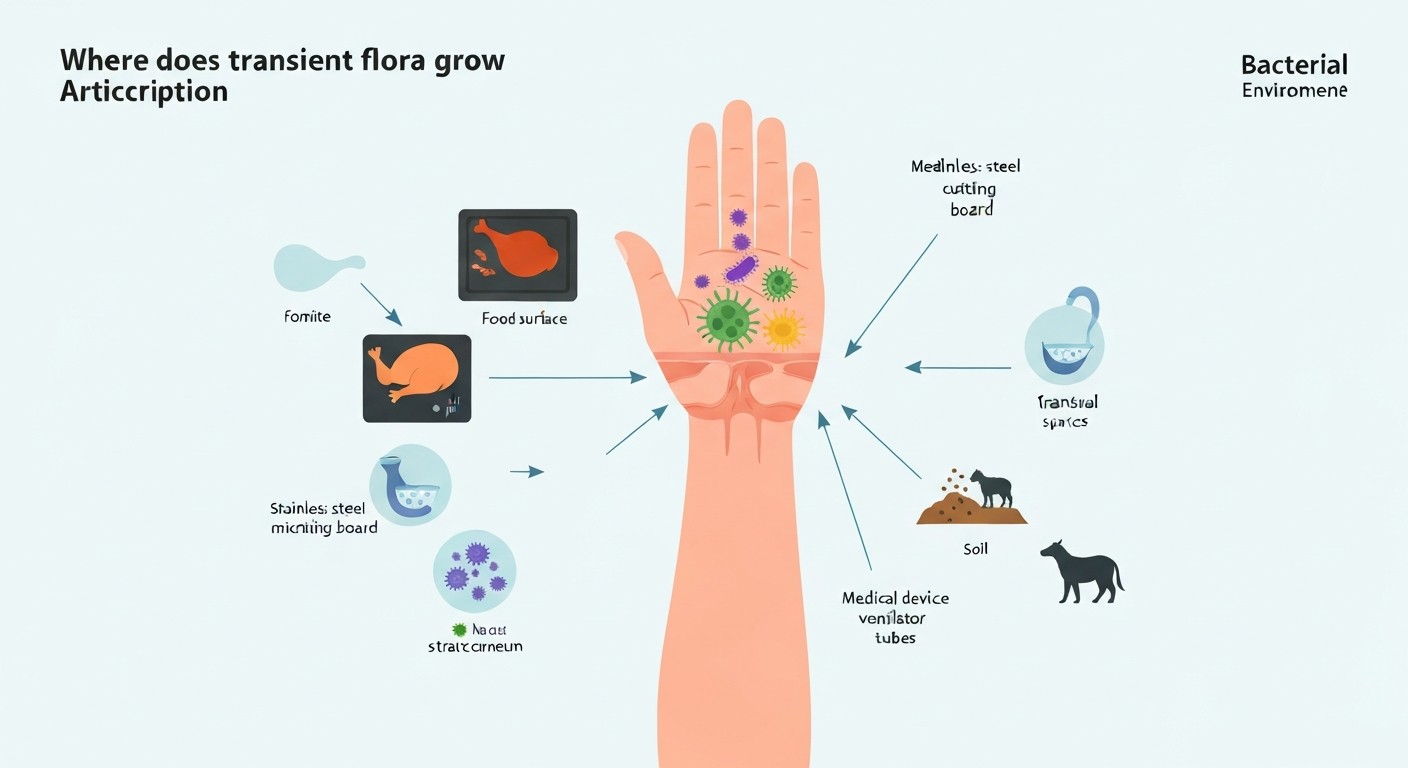
Transient flora grow on the outermost surfaces of skin, mucous membranes, food-contact materials, environmental fomites, medical devices, and food itself. They are not permanent residents. They arrive from the environment, from contact with other people or animals, or from contaminated food, and they persist only as long as conditions allow. Remove them with handwashing, sanitizing, or cooking and they are gone. That core fact is what makes transient flora both a serious contamination risk and a manageable one.
Where Does Transient Flora Grow: Key Habitats and Controls

Marcus Reeves
15 Jul 2026
Scope, audience, and what you will take away
This article maps every major habitat where transient flora establish themselves, explains the environmental conditions that allow them to survive or multiply, and gives practical guidance for controlling them. It is written for food safety professionals, infection-control practitioners, microbiologists, educators, and anyone who needs to understand contamination pathways rather than just memorize rules. Throughout, the focus stays on measurable parameters: temperature, water activity, pH, oxygen availability, surface material, and nutrient composition. By the end you should be able to explain where transient flora grow in any given setting, predict when growth is likely, and apply the right intervention at the right point.
Transient vs resident flora: what the terms actually mean
Resident flora (sometimes called normal or indigenous flora) are stable microbial communities that persistently colonize specific body sites. They re-establish after perturbation, occupy defined ecological niches, and often perform useful physiological roles such as competitive exclusion of pathogens and vitamin synthesis. Classic examples include Staphylococcus epidermidis on the skin surface, viridans streptococci in the oral cavity, and the complex anaerobic communities of the gut. Their defining characteristic is persistence: even vigorous handwashing does not eliminate them.
Transient flora, by contrast, are microorganisms temporarily present on a surface. They are acquired from the immediate environment, from contact with contaminated objects or people, or from food. They do not establish the stable ecological relationships that resident flora maintain. Because they sit in superficial layers rather than being embedded in appendageal structures, standard hygiene measures can remove or kill most of them effectively.
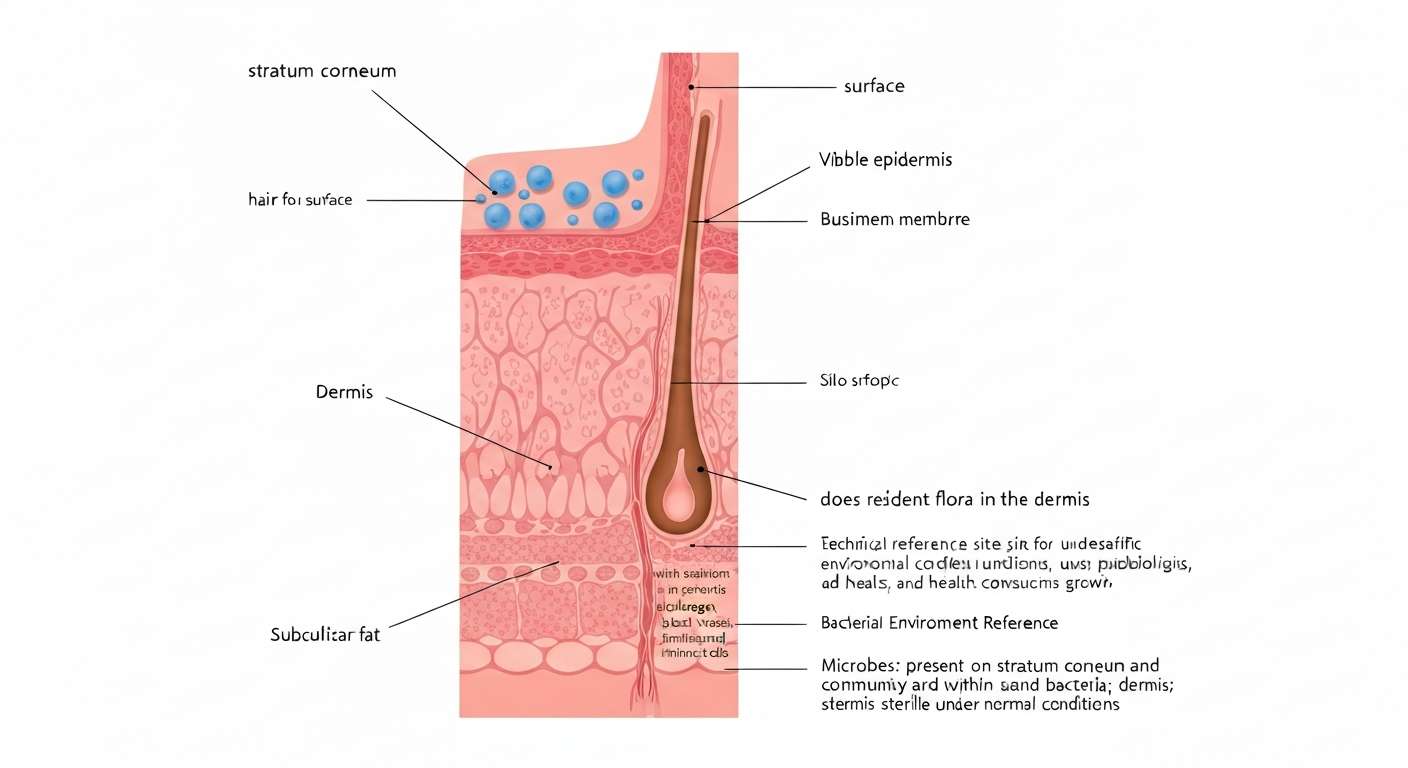
A question that often comes up alongside this comparison is whether resident flora grow in the dermis. The short answer is no, not in healthy skin. blank" rel="noopener noreferrer">Resident microbiota are concentrated at the epidermal surface and within cutaneous appendages: hair follicles, sebaceous glands, and sweat glands. The dermis and deeper soft tissues are essentially free of microorganisms in the absence of breach or infection. When microbes are detected in dermal tissue, it typically reflects injury, infection, or sampling of an appendageal duct rather than normal colonization. This depth distinction matters practically: it is why superficial disinfection reaches transient flora effectively but cannot eliminate all resident organisms.
Typical habitats: a broad map of where transient flora are found
Transient flora do not pick habitats randomly. They end up wherever environmental conditions provide enough moisture, nutrients, and a hospitable surface for at least temporary survival. In practice, the main habitats fall into five overlapping categories.
- Skin and mucous membranes, especially hands, forearms, and nasal passages where direct environmental contact is frequent
- Inanimate environmental surfaces and fomites: countertops, door handles, shared equipment, and processing plant floors
- Foods and food-contact surfaces, where nutrient availability, water activity, and temperature all interact
- Medical devices and healthcare surfaces, including catheters, ventilator circuits, bed rails, and monitoring equipment
- Soil, water, and animal reservoirs, from which organism-specific pathogens enter human environments through aerosol, contact, or ingestion
Each habitat has its own physical and chemical character that determines which transient organisms survive and for how long. The same Salmonella cell that persists for hours on a moist cutting board may die within minutes on a dry stainless steel surface at the same temperature. Understanding those nuances is more useful than treating all surfaces as equally risky.
Skin and mucous membranes: where transient flora land first
The hands are the most epidemiologically important site for transient flora in both healthcare and food environments. Healthcare workers acquire transient pathogens on their hands during patient care activities and can transfer them to the next patient or to a food-contact surface within seconds. In food production, hand contact is a primary vehicle for introducing enteric pathogens such as norovirus, Salmonella, and Shiga toxin-producing Escherichia coli into the production environment.
Transient microbes on skin occupy the outermost stratum corneum layers, not the deeper follicular niches where resident flora reside. They are not adapted to skin chemistry, which means they do not multiply at the same rate they would on a nutrient-rich food surface, but they can survive long enough to be transferred. Nasal passages and oral mucosa are also common carriage sites: Staphylococcus aureus nasal carriage is well documented and is a direct source of food contamination when infected workers handle uncovered ready-to-eat products.
Handwashing with soap and water physically removes transient flora through detergent action and mechanical friction. Alcohol-based hand rubs kill most transient bacteria and many viruses within 20 to 30 seconds. Neither method sterilizes the hands; resident flora in appendages are not fully eliminated. But for transient flora, thorough standard hand hygiene is highly effective, which is why WHO and CDC guidelines identify it as the single most important infection-control and food-safety measure.
Environmental surfaces and fomites: survival, transfer, and material effects
Once shed from a person or introduced from a food or animal source, transient flora land on surfaces where survival time depends heavily on the material, moisture level, temperature, and organic load. Hard, non-porous surfaces such as stainless steel and glass allow relatively easy cleaning and disinfection. Porous materials such as wood, cloth, and some plastics trap organisms in microscopic channels where disinfectants penetrate poorly and mechanical removal is incomplete.
Organic matter such as food residues, blood, or mucus substantially reduces disinfectant efficacy by reacting with active chemical agents before they reach the target organism. This is why every credible cleaning protocol, from the CDC environmental infection-control guidelines to WHO COVID-19 surface guidance, specifies cleaning first to remove organic matter, then applying disinfectant at the appropriate concentration and contact time. Spraying disinfectant onto a visibly soiled surface without prior cleaning is unlikely to achieve reliable kill.
Transfer efficiency from surface to hand varies by surface type, inoculum size, moisture, and contact pressure. Studies consistently show that wet surfaces transfer more organisms than dry ones, which has direct implications for food preparation environments where washing, defrosting, and wet processing generate moisture on surfaces and equipment. Frequency of surface contact also amplifies risk: a contaminated door handle or equipment switch that is touched dozens of times per hour becomes a significant amplification point for transient flora dissemination.
Control measures for environmental surfaces combine scheduled cleaning and disinfection with verification. ISO 18593 provides the internationally recognized standard methods for sampling food-contact and food-environment surfaces using contact plates, swabs, and sponge sampling. Regular environmental testing under this framework identifies contaminated niches that visual inspection misses and generates the quantitative data needed to validate cleaning and sanitizing programs.
Foods and food-contact surfaces: where transient flora can multiply
Food is not just a habitat for transient flora: it is one where many can actively multiply if temperature, water activity, and pH fall within permissive ranges. This is what distinguishes food surfaces from most dry environmental fomites. A contaminated stainless steel counter is a transfer point; a contaminated chicken breast at room temperature is a growth medium.
Temperature: the most controllable parameter
Most foodborne transient pathogens are mesophiles with optimal growth between roughly 20°C and 45°C. The FDA Food Code defines the danger zone as 4°C to 60°C (40°F to 140°F). Cold-holding at 5°C (41°F) or below slows or stops growth for most mesophilic pathogens, while hot-holding at or above 57°C (135°F) prevents growth and progressively inactivates organisms. Some transient organisms are psychrotrophic, meaning they can grow at refrigeration temperatures. Listeria monocytogenes is the best-known example: it can grow at temperatures as low as 0°C, which makes refrigeration alone insufficient for ready-to-eat products with extended shelf lives.
Water activity: the key moisture parameter
Water activity (aw) measures the availability of free water in a food matrix, not total moisture content. Most bacteria need an aw of at least 0.91 to 0.95 to grow. Listeria monocytogenes has a minimum aw of approximately 0.92. Staphylococcus aureus is notably tolerant, capable of growth at aw values as low as approximately 0.83 under otherwise ideal conditions, which explains its ability to grow in semi-dried and cured foods that inhibit other pathogens. Molds and yeasts are generally more xerotolerant than bacteria and can grow at aw values as low as 0.70 to 0.80, which is why they contaminate grain, nuts, dried fruit, and spices and why they are the organisms most associated with mycotoxin production in low-moisture foods. Mycotoxins can grow on dried commodities such as grains, nuts, dried fruit, and spices mycotoxins can grow on dried foods and commodities.
pH and oxygen: the supporting parameters
Most foodborne bacteria fail to grow below pH 4. See Bad Bug Book (Appendix on factors that affect microbial growth), FDA (PDF) for details stating most common foodborne bacteria generally do not grow below pH ≈4.0–4.5 and that acidity combined with low aw and low temperature is used as a preservation hurdle Bad Bug Book (Appendix on factors that affect microbial growth) — FDA (PDF). 0 to 4.5, which is why acidification through fermentation, vinegar addition, or naturally acidic ingredients is a reliable preservation hurdle. Molds and yeasts tolerate lower pH and therefore remain a risk in acidified products. Oxygen availability determines which organisms can grow in a given food matrix. Obligate aerobes survive on exposed surfaces and in oxygenated foods but cannot grow inside vacuum-packaged or modified-atmosphere products. Facultative anaerobes such as Enterobacteriaceae and Staphylococcus aureus thrive across both environments. Obligate anaerobes such as Clostridium botulinum and Clostridium perfringens find their growth niche in low-oxygen packaged foods, cooked products held warm, and deep within food masses where oxygen penetration is limited.
Growth parameters at a glance
| Organism / Group | Min. Temp (°C) | Max. Temp (°C) | Min. aw | Min. pH | Oxygen preference |
|---|---|---|---|---|---|
| Salmonella spp. | 5 | 47 | 0.94 | 3.8 | Facultative anaerobe |
| Listeria monocytogenes | 0 | 45 | 0.92 | 4.4 | Facultative anaerobe |
| Staphylococcus aureus (toxin) | 10 | 48 | 0.83 | 4.0 | Facultative anaerobe |
| E. coli O157:H7 | 6.5 | 45 | 0.95 | 4.0 | Facultative anaerobe |
| Clostridium botulinum (non-proteolytic) | 3 | 45 | 0.97 | 5.0 | Obligate anaerobe |
| Clostridium perfringens | 15 | 55 | 0.95 | 5.0 | Anaerobic / low O2 |
| Xerophilic molds (e.g., Aspergillus) | 5–10 | 45–50 | 0.70–0.78 | 2.0 | Aerobic |
| Yeasts (general) | 1–5 | 45–47 | 0.80 | 2.0 | Aerobic / facultative |
These values are empirical minima under otherwise favorable conditions. In practice, any parameter approaching its minimum limit slows growth substantially, and combining two or more near-minimum parameters (the hurdle technology approach) can prevent growth entirely even when each individual parameter alone would not.
HACCP and regulatory control at contamination points
Codex HACCP principles require processors to map hazard entry points, establish critical control points with measurable limits, and verify effectiveness through monitoring and environmental testing. The FDA Food Code applies equivalent logic to retail food service. In practice, the highest-risk contamination points for transient flora in food production are raw ingredient receiving areas, cross-contamination between raw and ready-to-eat zones, inadequate temperature control during cooling or thawing, and direct hand contact with finished products. Documented cleaning and sanitizing programs with scheduled environmental sampling are the verification mechanism that proves controls are working.
Medical devices and healthcare settings: persistence and special risks
Healthcare environments concentrate immunocompromised patients, invasive devices, and high-throughput hand contact in the same space, which makes them among the most consequential settings for transient flora transmission. Many healthcare-associated infections trace directly to transient organism transfer on hands or from contaminated surfaces to a vulnerable patient.
Medical devices present a specific problem because their surfaces can support biofilm formation. Once a transient organism forms a biofilm on a catheter surface, endoscope channel, or ventilator circuit component, it transitions from something removable by routine cleaning to something that requires dedicated disinfection protocols, enzymatic cleaning agents, or single-use device replacement to eliminate. Biofilm organisms are orders of magnitude more resistant to disinfectants than their planktonic counterparts.
Candida auris: a surface survivor in healthcare
Candida auris deserves specific attention in any discussion of transient flora in healthcare settings. Unlike most Candida species, C. auris colonizes skin persistently and can survive on dry hard surfaces for days to weeks, far longer than most bacteria. It has been recovered from bed rails, chairs, monitoring equipment, and axillary skin of patients who showed no clinical signs of infection. This surface persistence means it functions partly like a transient organism (acquired and transferred on hands and equipment) and partly like a persistent environmental contaminant, which complicates standard cleaning protocols. CDC guidelines for C. auris require enhanced terminal cleaning with EPA-registered fungicidal disinfectants and active surveillance cultures in affected units. Standard quaternary ammonium-based disinfectants are often insufficient against C. auris, and facilities managing outbreaks have had to substitute chlorine-based or other fungicidal agents.
Soil, animals, and specific pathogen ecology: anthrax and zoonotic reservoirs
Some organisms that function as transient flora on human skin or in human environments have their primary ecological reservoir far outside human contact: in soil, in water systems, or in animal populations. Understanding those reservoirs explains why certain exposures carry disproportionately high risk.
Bacillus anthracis: where anthrax actually grows
Bacillus anthracis, the causative agent of anthrax, is not a typical transient flora organism in the clinical sense, but its ecology illustrates an extreme version of environmental persistence. For more detail on where does anthrax grow, see the Bacillus anthracis ecology overview. Vegetative B. anthracis grows in soil and animal tissues under conditions that include adequate nutrients, near-neutral pH, and appropriate temperature. However, when conditions become unfavorable, it produces highly resistant endospores that can remain viable in contaminated soil for decades. Infection in humans occurs through contact with contaminated animal products (cutaneous anthrax), ingestion (gastrointestinal anthrax), or inhalation of spores (inhalation anthrax). The spores themselves do not grow on human skin but act as highly persistent transient contaminants that can initiate infection if they breach the skin barrier or are inhaled. Historically, anthrax is associated with alkaline, nutrient-rich soils in specific geographic regions, and the risk to people working with wool, hides, bone meal, or soil in endemic areas comes directly from this long-term environmental reservoir.
Zoonotic reservoirs and transient human exposure
Many pathogens that appear transiently on human hands, food surfaces, or in food originate in animal reservoirs. Salmonella cycles through poultry, cattle, and reptiles. Campylobacter jejuni is near-ubiquitous in the intestinal tract of poultry and reaches food through fecal contamination during slaughter and processing. E. coli O157:H7 colonizes cattle asymptomatically and enters human food chains through contaminated beef, unpasteurized milk, and produce irrigated with contaminated water. In each case, the organism is effectively a transient arrival in the human food environment, one without any natural adaptation to human skin or food surfaces, but capable of growth there under the right temperature and moisture conditions. Controlling the zoonotic interface, meaning carcass hygiene, temperature control, and cross-contamination prevention at slaughter and further processing, is the critical intervention point.
Oxygen tolerance and spore survival across environments
Spore-forming organisms such as Bacillus and Clostridium species add a layer of complexity to any habitat analysis. Their vegetative forms grow within specific oxygen, temperature, and nutrient ranges. But their spores persist in aerobic environments, on dry surfaces, and in low-moisture foods long after conditions become unfavorable for growth. A Clostridium perfringens spore on a contaminated cutting board will not grow there; it will survive, transfer to a cooked food, germinate if that food is held in the danger zone, and then multiply rapidly in low-oxygen conditions deep within a food mass. The habitat where spores survive and the habitat where vegetative cells grow are entirely different, which is why both thermal processing and post-cook temperature control are necessary for spore-former control.
Detection and control: practical steps across settings
Effective control of transient flora follows the same logic regardless of setting: identify where they come from, understand the conditions that allow them to survive or multiply, and apply interventions targeted at those specific parameters. The following steps apply across food production, healthcare, and general environmental management.
- Identify contamination entry points through hazard analysis (raw materials, personnel contact, equipment, environment) rather than treating all surfaces as equally risky.
- Clean before disinfecting. Organic load neutralizes disinfectants. Mechanical removal of soils must come first.
- Select disinfectants matched to the target organism: standard quaternary ammonium compounds are insufficient for C. auris and Clostridium spores; verify EPA or equivalent registration for the specific use case.
- Maintain temperature control for foods: cold-hold at or below 5°C (41°F), hot-hold at or above 57°C (135°F), and minimize time in the 4–60°C danger zone.
- Use hurdle technology in food formulation: combining low aw, acidic pH, and refrigeration temperatures creates multiple simultaneous barriers that prevent growth even when no single barrier is sufficient alone.
- Enforce hand hygiene at critical transfer points: before handling ready-to-eat food, after raw food contact, after environmental contact, and in healthcare before and after every patient interaction.
- Conduct environmental monitoring using standardized methods (ISO 18593 for food surfaces) to verify that cleaning and sanitizing programs are working and to identify persistent niches.
- Use active surveillance cultures in healthcare settings for organisms with demonstrated surface persistence, particularly C. auris and methicillin-resistant Staphylococcus aureus (MRSA), to detect asymptomatic carriage before transmission occurs.
- Train all personnel on the distinction between cleaning (removal) and disinfection (kill), the required contact times for specific agents, and the importance of not diluting disinfectants below effective concentrations.
Transient flora are, by definition, controllable. They are not embedded in tissues or stably adapted to the environments where we encounter them. What makes them dangerous is the speed of transfer, the volume of contact events in a busy food plant or healthcare ward, and the consequences when they reach a vulnerable host or a ready-to-eat product. Understanding where they grow and under what conditions is the first step toward interrupting those pathways reliably.
FAQ
What is the difference between transient flora and resident (normal) flora?
Resident (normal) flora are stable microbial communities that persistently inhabit specific body sites (skin, mucous membranes, gut), re-establish after perturbation, and often perform ecological or physiological roles. Transient flora are microbes temporarily present on surfaces (including skin), acquired from contact with people, foods or the environment; they do not persist long-term, are more likely to include opportunistic pathogens, and are more readily removed by routine hygiene (handwashing, cleaning). In healthy skin, resident microbes occupy the superficial epidermis and appendages (hair follicles, glands); the deeper dermis and soft tissues are normally sterile unless breached.
Where does transient flora commonly occur (typical habitats)?
Transient flora can be found on: - Skin surfaces (palms, fingertips, forearms) after contact with patients, surfaces, food or animals. - Mucous membranes (oral cavity, nasal vestibule) following exposure. - Environmental surfaces and fomites (doorknobs, countertops, equipment, medical devices). - Food matrices (raw ingredients, ready-to-eat foods) and packaging. - Processing environments (conveyor belts, drains, biofilms in wet zones). - Medical devices and implants (especially if contaminated during handling). Presence and persistence depend on organism, surface type, organic load and environmental conditions.
Which environmental conditions most strongly determine whether transient flora will grow or survive?
Key parameters: - Temperature: Mesophiles (most human pathogens) grow ~20–45°C; psychrotrophs (Listeria, some Pseudomonas) can grow at refrigeration (~0–7°C); thermophiles require >45°C. Food control uses <5°C or >57°C to inhibit growth. - Water activity (aw)/moisture: Many bacteria require aw ≥0.91–0.95; Staphylococcus aureus can grow at aw ≈0.83; molds/yeasts tolerate lower aw (~0.70–0.80). Moist surfaces and high-humidity environments support survival and growth. - pH: Most bacteria fail to grow below pH ≈4.0–4.5; many yeasts and molds tolerate lower pH. Combined hurdles (low pH + low aw + low temp) limit growth. - Oxygen: Obligate aerobes persist on exposed surfaces; facultative anaerobes (Enterobacteriaceae, Staphylococcus) survive many surfaces and foods; obligate anaerobes grow in low-oxygen niches and their spores persist in air-exposed environments. - Nutrients and organic films: Organic soils (proteins, fats) sustain growth and protect microbes from disinfectants. - Surfaces: Porous, scratched or biofilm-prone surfaces retain microbes longer than smooth, non-porous, cleanable materials.
How do biofilms and spores affect survival of transient flora on surfaces and foods?
Biofilms: Many bacteria and some fungi form biofilms on wet or nutrient-rich surfaces (drains, equipment, medical devices). Biofilms embed cells in extracellular matrix that increases tolerance to disinfectants and drying, and promotes persistent contamination and niche colonization. Spores: Spore-forming bacteria (Bacillus, Clostridium) produce environmentally resistant spores that survive heat, desiccation and many sanitizers; spores can persist on surfaces and in dry foods and later germinate when conditions permit. Both strategies convert a transient contamination event into a chronic environmental reservoir unless removed by mechanical cleaning and validated sporicidal treatments when required.
What are typical growth-condition ranges for major organism groups relevant to food safety and infection control? (comparative summary)
See table below for general ranges (approximate; species variation exists): Organism group — Temperature (°C) — Minimum aw — Typical pH tolerance — Oxygen notes Bacteria (common pathogens, e.g., Salmonella, E. coli) — 10–45 (mesophilic) — ≈0.94–0.95 — pH >4.5 usually — Facultative anaerobes common Staphylococcus aureus — 10–45 (mesophilic) — ≈0.83 — pH down to ≈4.0–4.5 — Facultative anaerobe Listeria monocytogenes — 0–45 (psychrotrophic) — ≈0.92 — tolerates moderate acidity — Facultative anaerobe Bacillus/Clostridium (spore-formers) — wide; spores survive high heat — spores survive very low aw — variable pH tolerance; spores resist extremes — Aerobic (Bacillus) or anaerobic (Clostridium) Yeasts — 0–35 (many tolerate refrigeration) — ≈0.88–0.90 — pH down to ≈3.0 — Facultative/aerobic Molds — 0–35 (many tolerate cool) — ≈0.70–0.80 or lower — pH often 2.5–6.0 — Aerobic Note: these are generalized limits. Specific species (e.g., psychrophilic pathogens, xerophilic fungi) deviate; consult species-level references (FDA Bad Bug Book, ICMSF) when precise limits are needed.
Where do specific high‑concern organisms grow or persist (special cases)?
Bacillus anthracis (anthrax): Grows in soil under aerobic conditions as vegetative cells; forms highly resistant spores that persist in soil, animal products and contaminated environments for decades. Human disease arises from exposure to spores; vegetative growth in hosts requires tissue or nutrient-rich environments. Candida auris: Can colonize skin and mucosal surfaces (axilla, groin), persist on environmental surfaces and medical devices, and form biofilms; it tolerates desiccation and can survive routine cleaning if not properly disinfected. Fungal crop contaminants/mycotoxin producers (Aspergillus, Fusarium, Penicillium): Grow on crops and stored foods when temperature, moisture (high humidity or elevated aw), and substrate permit; mycotoxin production often occurs under stress conditions (temperature/humidity fluctuations) and can persist in processed foods despite organism inactivation. Each organism’s ecology dictates specific control measures (e.g., spore inactivation, antifungal drying, environmental decontamination).
Next Article
Does resident flora grow in the dermis: skin microbiome niches
Does resident skin flora grow in the dermis? Clear summary of where microbes live and why the dermis is normally sterile