
Parasites do not multiply or reproduce in food the way bacteria do. When you find a parasite in food, it was already there before you bought it, either as an egg, a cyst, or a larva that hitched a ride in the animal or plant tissue. The real danger is not that the parasite is "growing" in your refrigerator overnight, but that a viable infective stage survives long enough to reach your gut. That distinction changes everything about how you protect yourself.
Can Parasites Grow in Food? Risks, Timing, and Safety Tips

Marcus Reeves
20 Jun 2026
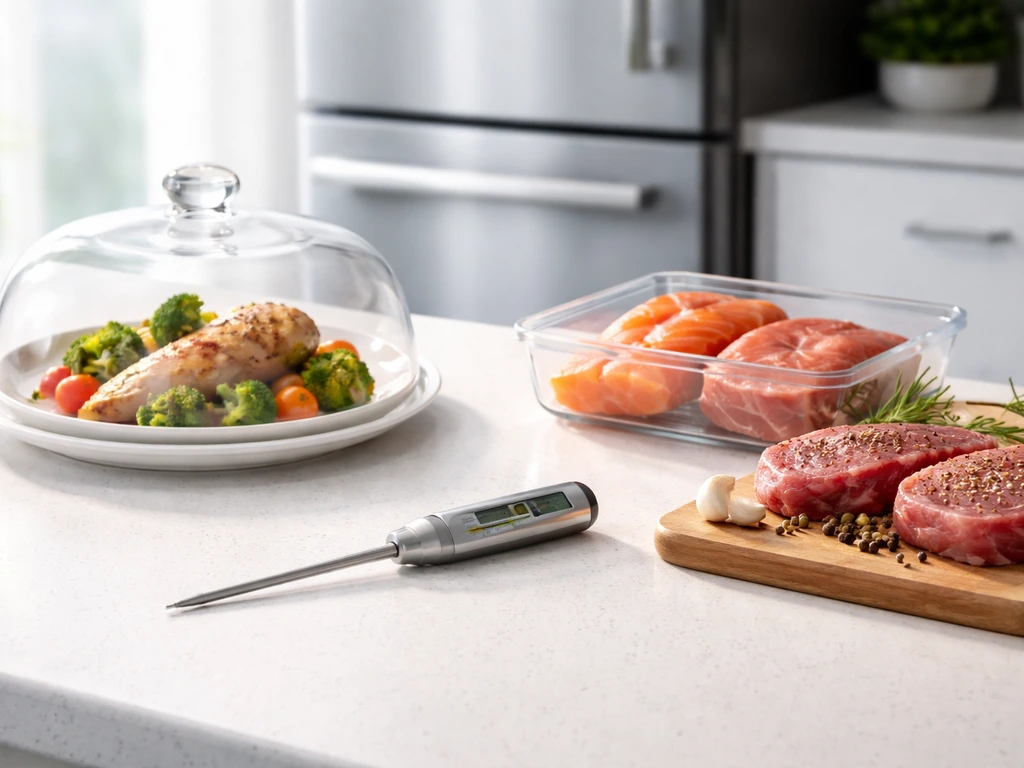
Parasites vs bacteria: what "grow in food" really means
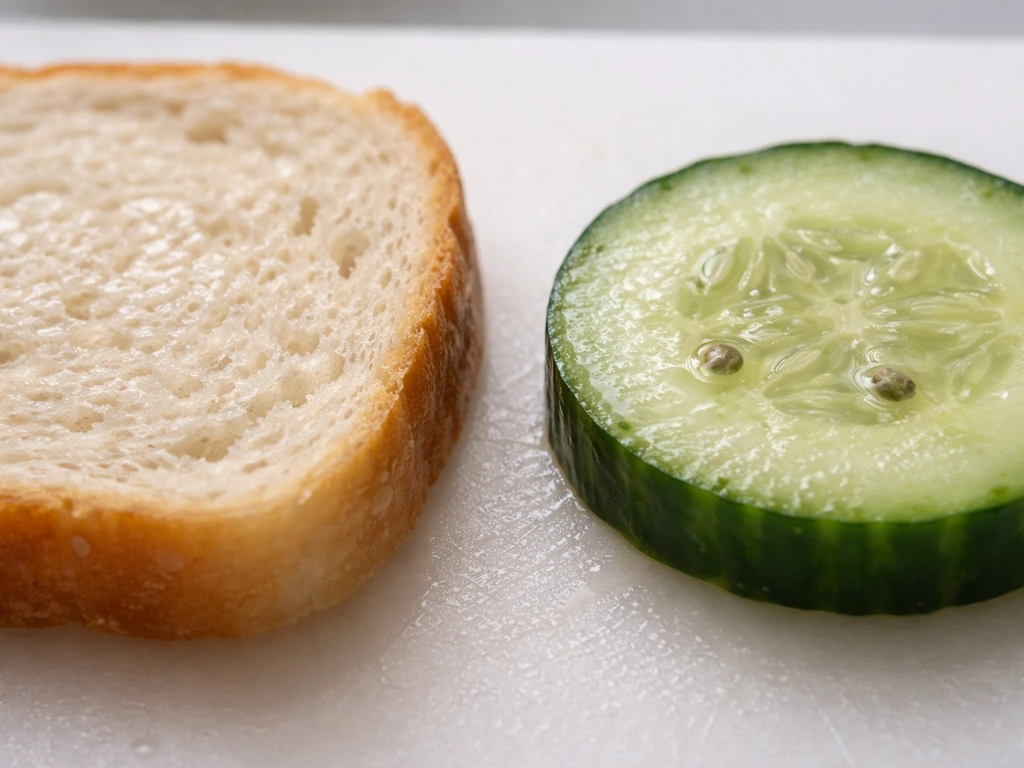
Bacteria genuinely grow in food. Given the right temperature, moisture, and nutrients, a single bacterium can divide into millions within hours. That is why leaving cooked chicken on the counter for four hours is a real hazard: the bacterial population has exploded. Parasites simply do not work this way. They cannot reproduce inside a piece of raw salmon or a head of lettuce sitting on your counter.
What parasites can do is survive. A Toxoplasma cyst embedded in undercooked lamb stays infective. Anisakis larvae in raw fish remain viable until heat or freezing kills them. Cryptosporidium oocysts on fresh produce can persist through a gentle rinse. The food is not a growth medium for these organisms the way a warm broth is for Salmonella. It is more like a vehicle, and the parasite is a passenger waiting to disembark inside a host.
This is also why the CDC and USDA frame parasite risk around the presence of viable stages rather than growth after purchase. The control question is always: is the infective form still alive in this food, and can I kill it before I eat it?
Parasite life stages in food: eggs, cysts, and larvae
Understanding life stages is the key to understanding risk. Most foodborne parasites show up in food as one of three forms, each with different durability.
- Cysts: Thick-walled, dormant structures like Toxoplasma gondii tissue cysts in meat or Giardia cysts on produce. Cysts are built to survive harsh conditions and are often resistant to chlorine at normal water treatment levels.
- Oocysts: A variant of the cyst form used by protozoa like Cryptosporidium and Cyclospora. Oocysts are especially rugged and can survive on the surface of fruits and vegetables for weeks.
- Larvae: The immature worm stage found in muscle tissue. Trichinella larvae are encysted in pork and wild game muscle; Anisakis larvae are coiled in fish flesh. These are alive and infective but cannot mature further without a suitable host.
- Eggs: Found in environments contaminated with fecal matter and can transfer to produce through contaminated water or soil. Taenia and Ascaris eggs are examples.
None of these forms multiply in the food itself. A piece of pork with 50 Trichinella larvae in it will still have 50 larvae (or fewer, as some die) a week later in your fridge. Compare that to bacteria, where 50 cells can become hundreds of thousands overnight. The parasite count in food at the time of purchase is essentially fixed. What matters is whether those parasites are still viable when the food is consumed.
What refrigeration and freezing actually do to parasites
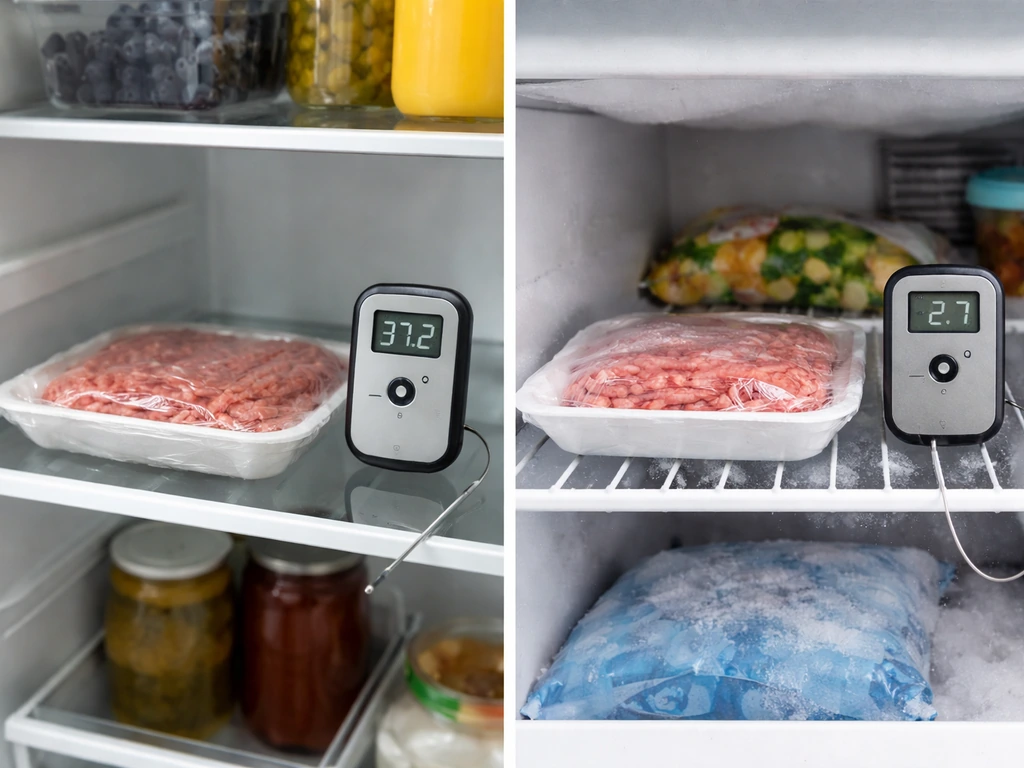
Refrigeration slows bacterial growth dramatically, which is why it is such a powerful food safety tool. For parasites, the picture is different. Refrigerator temperatures (around 35 to 40°F / 2 to 4°C) do not kill most parasites. They can keep Toxoplasma cysts, Anisakis larvae, and Giardia oocysts perfectly viable for days. Refrigeration is not a parasite control step. It is simply cold storage that does not reduce the infection risk.
Freezing is a different story, but it requires the right temperature and enough time. FDA’s seafood hazards guidance (Chapter 5 on parasites) frames freezing requirements in terms of how freezing inactivates parasites, including the needed time, temperature, and the specific parasite present blank" rel="noopener noreferrer">freezing to kill parasites. The FDA's seafood guidance and the CDC's trichinellosis prevention guidelines both give specific time-temperature requirements for parasite destruction, not just survival reduction. For example, the CDC states that freezing pork less than 6 inches thick at 5°F (-15°C) for 20 days will kill Trichinella larvae. The FDA Food Code (Section 3-402.11) provides similar freezing schedules for fish parasites intended for raw or undercooked service. A standard home freezer set to 0°F (-18°C) can achieve parasite destruction for most fish parasites if you hold it long enough, typically 7 days at -4°F (-20°C) or 15 hours at -31°F (-35°C) for certain species.
The critical caveat: not all parasites are equally vulnerable to freezing. Toxoplasma cysts in meat are destroyed by standard freezing. But some marine parasites, and protozoan oocysts on produce surfaces, may behave differently. Freezing produce does not reliably eliminate Cyclospora or Cryptosporidium oocysts. For produce, washing and cooking are the main control steps.
| Condition | Effect on bacteria | Effect on parasites |
|---|---|---|
| Refrigeration (35-40°F / 2-4°C) | Slows or stops growth | Does not kill; parasites remain viable |
| Home freezing (0°F / -18°C, 7 days) | Kills most bacteria | Kills most fish and meat parasites with correct hold time |
| Deep freeze (-31°F / -35°C, 15 hours) | Kills bacteria | Kills fish parasites per FDA Food Code |
| Cooking to 145°F / 63°C (meat, fish) | Kills bacteria | Kills most parasites including Trichinella and Anisakis |
| Cooking to 160°F / 71°C (ground meat) | Kills bacteria | Kills Toxoplasma and Trichinella reliably |
| Room temperature storage | Rapid bacterial growth | Parasites survive; no reproduction occurs |
Food types and the parasites most likely hiding in them
Meat (pork, beef, lamb, wild game)
Pork and wild game are the primary vehicles for Trichinella spiralis, the roundworm responsible for trichinellosis. Commercially raised pork in the U.S. carries very low risk today because of regulated feeding practices, but wild boar, bear, and other game remain genuine concerns. Toxoplasma gondii is embedded as tissue cysts in lamb, pork, and venison and is one of the most common foodborne parasites globally. Beef carries a lower protozoan risk but can harbor Taenia saginata (beef tapeworm) in undercooked form.
Seafood (fish, shellfish)
Raw and undercooked fish is where Anisakis larvae and Diphyllobothrium tapeworm larvae show up most commonly. Anisakis is found in cod, herring, salmon, mackerel, and many other marine species. The larvae are in the fish flesh or viscera when the fish is caught. Shellfish, especially oysters and clams, can concentrate protozoan oocysts (Cryptosporidium, Cyclospora) from the surrounding water. This is a filter-feeding issue, not parasites growing in the shellfish.
Produce (fruits and vegetables)
Fresh produce contaminated with fecal matter from irrigation water, soil amendments, or handling can carry Cyclospora cayetanensis oocysts, Cryptosporidium oocysts, Giardia cysts, and helminth eggs. Cyclospora outbreaks have repeatedly been linked to fresh herbs, raspberries, and leafy greens in North America. These parasites are surface contaminants picked up during growing or handling, not organisms that develop inside the plant tissue. Mosquitoes, however, are not a parasite related to food contamination, and the question is really about whether mosquitoes can breed in standing water rather than about parasites growing in food can mosquitoes grow in toilet.
How to reliably prevent infection
Cooking temperatures that actually work

Heat is the single most reliable way to eliminate parasites in meat and fish. The USDA recommends cooking whole cuts of pork, beef, and lamb to an internal temperature of 145°F (63°C) with a 3-minute rest. Ground meat should reach 160°F (71°C). Poultry should reach 165°F (74°C). Fish is safe at 145°F (63°C) measured at the thickest part. These temperatures kill Trichinella, Toxoplasma, Anisakis, and tapeworm larvae. A calibrated food thermometer is worth the small investment if you cook meat regularly.
Freezing as a backup control for fish
If you eat raw or lightly cured fish (sushi, ceviche, gravlax), freezing beforehand is the FDA-recommended approach for parasite control. A standard home freezer at 0°F (-18°C) held for 7 days will destroy most fish parasites. Commercial "sushi-grade" fish sold at reputable retailers has typically been frozen to these specifications already, but it is worth confirming with your supplier. This does not apply to shellfish bivalves: freezing oysters does not make them safe from protozoan oocysts the same way it handles Anisakis.
Produce handling
For produce, thorough washing under running water removes many surface-level oocysts and cysts, though it does not guarantee 100% elimination. Cooking produce is the most reliable step for high-risk situations. Avoid washing produce with anything that might recontaminate it (a dirty sink, for example). Dry produce after washing because surface moisture is where residual contamination tends to linger.
Cross-contamination is a real and overlooked risk
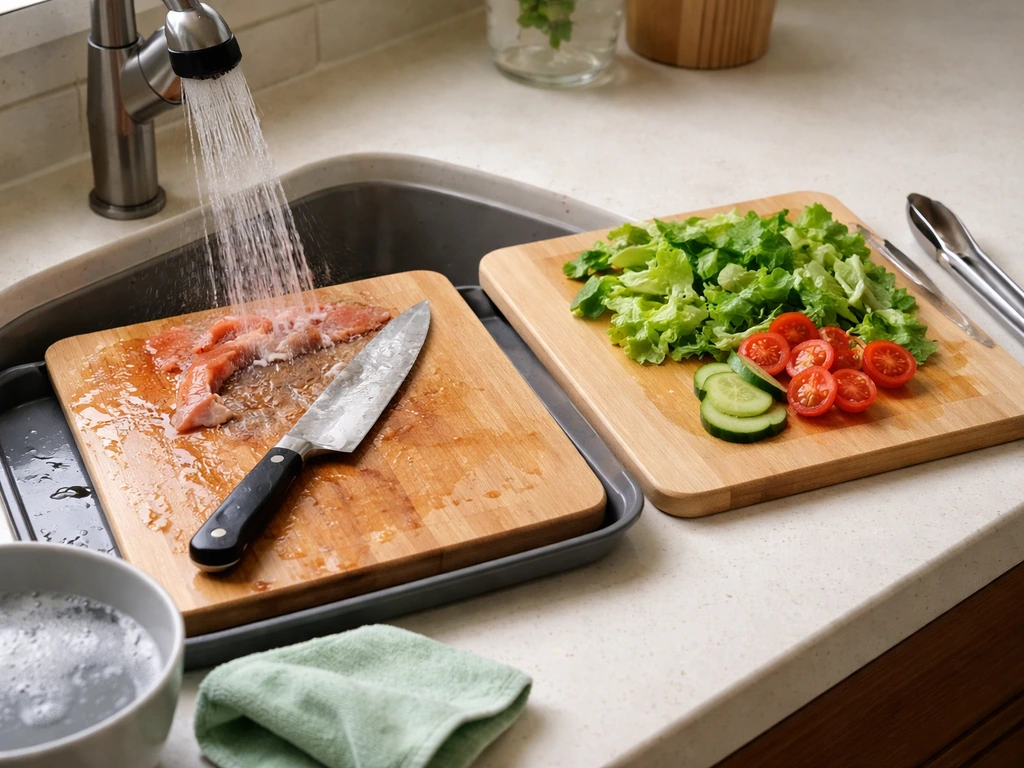
Cross-contamination from raw meat or fish to ready-to-eat food is one of the more realistic exposure routes at home. A cutting board used for raw pork and then for salad greens without washing transfers whatever was on that meat directly to food you are eating raw. Use separate boards, wash hands thoroughly after handling raw animal products, and keep raw meat juices from contacting anything that will not be cooked.
What to do after possible exposure
If you have eaten undercooked meat, raw fish, or suspect produce and are now concerned, the most practical first step is to know what symptoms to watch for and how soon they typically appear. Most foodborne parasitic infections have an incubation period measured in days to weeks, not hours, which distinguishes them from bacterial foodborne illness. If you are asking about bugs that grow in the lungs, those cases are usually not foodborne parasites, but other respiratory infections or complications.
| Parasite | Typical incubation | Key symptoms |
|---|---|---|
| Trichinella | 1-2 days (GI) then 2-8 weeks (muscle) | Nausea, diarrhea, then muscle pain, swelling around eyes, fever |
| Toxoplasma | 5-23 days | Often mild flu-like; serious in immunocompromised or during pregnancy |
| Anisakis | Hours to days | Severe abdominal pain, nausea; sometimes coughing if larva in throat |
| Giardia | 1-3 weeks | Diarrhea, bloating, greasy stools, fatigue |
| Cryptosporidium | 2-10 days | Watery diarrhea, stomach cramps, nausea |
| Cyclospora | 1 week | Prolonged watery diarrhea, fatigue, weight loss |
Mild GI symptoms that resolve within a day or two are more likely a different cause. Seek medical care promptly if you have severe abdominal pain (especially after eating raw fish, which can suggest Anisakis requiring endoscopy), persistent watery diarrhea lasting more than a few days, neurological symptoms, muscle pain combined with swelling around the eyes after eating wild game, or if you are pregnant and had a significant raw-meat exposure (Toxoplasma is a serious concern in pregnancy).
Tell your doctor specifically what you ate, when, and how it was prepared. Parasitic infections require specific testing (stool ova and parasite exam, blood tests, or imaging), and knowing the exposure helps target the right tests. Most foodborne parasitic infections are treatable with appropriate medication once identified.
Myths worth clearing up
A few persistent misconceptions make parasite risk harder to think about clearly. Here is what the evidence actually says.
- "Refrigeration kills parasites." It does not. Refrigerator temperatures preserve parasite viability. They just do not let bacteria flourish either, so the two risks are managed differently.
- "Parasites multiply in stored food." Parasites cannot reproduce in food. The number of infective stages in a piece of raw fish or meat at purchase is the same (or lower) a week later in the fridge. This is fundamentally different from how bacteria behave, where leaving food out actually increases the hazard.
- "Vinegar, lemon juice, or alcohol in ceviche kills parasites." Acid does not reliably kill Anisakis larvae or most other parasites. Ceviche prepared only with citrus juice is not a parasite-safe preparation unless the fish was previously frozen to FDA specifications.
- "Sushi restaurants serve parasite-free fish." Reputable operations do follow freezing protocols, but "sushi-grade" is not a federally regulated label. Asking your restaurant or fishmonger about their freezing practices is a reasonable step.
- "Parasites behave like viruses in food." Viruses also cannot grow or replicate in food (a topic related to how foodborne pathogens are categorized), but the survival and inactivation conditions for viruses and parasites differ meaningfully. Neither multiplies in food, but they require different control strategies.
- "If meat looks fresh and smells fine, it is safe from parasites." Parasite-infected meat looks, smells, and tastes normal. There is no sensory indicator for parasitic contamination.
The most useful mental model is this: treat parasites in food as a viability problem, not a growth problem. Your goal is to ensure that whatever infective stage might be present is destroyed before you eat it. Cooking to the right temperature handles almost every realistic scenario in meat and fish. Proper freezing handles raw fish applications. Washing and cooking handles produce. None of those steps are complicated, but skipping them is where infection risk actually comes from.
FAQ
If I refrigerate food for a few days, can parasites increase in number like bacteria do?
No, parasites generally do not multiply in food after purchase. What matters is whether an infective stage (cyst, oocyst, or larva) was present initially and whether it survives until you eat the food. This is why the same portion can stay “the same amount” in your fridge, even though bacteria could increase rapidly.
Does keeping food cold for several days make it safer for parasite risk?
Refrigeration usually slows neither Toxoplasma cysts in tissue nor many fish parasite larvae. For high-risk foods, you should rely on cooking to target temperatures or, for raw fish, correct freezing schedules. If you are deciding based on time, remember that “kept cold” is not the same as “made safe” for parasites.
Can I rely on washing produce to remove parasites completely?
Washing helps for many surface contaminants on produce, but it is not a guarantee for parasites that may already be on the surface or in crevices. The most dependable control for high-risk situations is cooking produce thoroughly. Also avoid using a sink, sponge, or brush that could recontaminate the food after washing.
Does freezing any contaminated food prevent parasites from infecting me?
Not always. Freezing can destroy certain parasites, but effectiveness depends on the parasite type, the thickness of the food (for meat), and time at a specific temperature. For example, freezing is a strong control for many fish parasites before raw service, but freezing produce is not considered a reliable way to eliminate organisms like Cyclospora or Cryptosporidium.
If my steak looks done, is it still possible to get a parasite from undercooked meat?
Yes for whole cuts of meat and most ground meat, heating is the core parasite control, measured by internal temperature, not by appearance. Even if the center looks cooked, undercooking can leave viable parasites. Use a thermometer and include the recommended rest time when applicable for whole cuts.
Is freezing enough to make all raw seafood safe from parasites?
For raw or lightly cured fish (sushi, ceviche, gravlax), freezing beforehand is the main FDA-style approach for parasite control, because it targets fish parasite larvae. However, freezing does not make bivalve shellfish safe from protozoan oocysts in the same way. If you are eating shellfish raw, prioritize purchase and handling practices instead of assuming freezing fixes the risk.
Can I trust “sushi-grade” labeling to mean parasites are gone?
Sushi-grade fish is often frozen to parasite-control specifications, but “sushi-grade” is not the only factor. If you are especially risk-averse (pregnant, immunocompromised, or serving very young children), confirm whether the supplier uses the correct freezing schedule for parasites and whether the product was maintained frozen before prep.
Does the way I thaw frozen fish affect parasite risk?
Thawing methods usually matter less than how the food is ultimately cooked or frozen. Still, thaw in the refrigerator (not at room temperature) to reduce bacterial risk, and then cook or handle according to parasite-control steps. For raw-fish preparations, ensure the fish experienced the correct freezing before thaw and serving.
If I cook the meat, can parasites still spread to my salad or other foods?
Yes, cross-contamination can matter even though parasites do not multiply in food. If raw meat juices touch a ready-to-eat item (salad greens, cooked sides, utensils), you can transfer viable parasite stages. Use separate cutting boards, wash hands thoroughly, and avoid letting raw drippings contact anything you will not cook again.
How long after eating contaminated food would parasite symptoms appear?
In many parasite illnesses, symptoms are delayed, often days to weeks, which differs from many bacterial food scares. That said, severe symptoms should not wait. Seek medical attention promptly for severe abdominal pain, persistent watery diarrhea lasting more than a few days, neurological symptoms, or, for pregnancy, significant raw-meat exposure.
If I think I ate parasites, what should I tell my doctor to get the right testing?
Yes, and it changes what tests and treatments are appropriate. When you contact a clinician, describe exactly what you ate (type of meat or fish, whether raw, undercooked, or cured), the approximate date, and how it was prepared. This helps narrow down whether stool testing, blood tests, or imaging is most useful.
Why is parasite risk taken more seriously during pregnancy?
Pregnancy increases concern for Toxoplasma, because infection can have serious fetal effects even if the mother’s symptoms are mild. The safest approach is to avoid undercooked meat and to follow strict handling and cooking temperatures. If you had significant exposure, contact your OB-GYN promptly.
Are mosquitoes related to parasites growing in food?
No, mosquitoes are not treated as a food contamination parasite issue. The “standing water” concept is about mosquito breeding, not parasites growing in food. If your concern is mosquitoes, focus on removing standing water and preventing bites, while food safety steps still center on cooking, correct freezing for fish, and produce washing.
Next Article
Can Worms Grow in Old Dog Poop? Risks and Cleanup Steps
Can roundworm or hookworm eggs survive in old dog poop? Learn risks, survival factors, and safe cleanup steps.