Viruses do not grow or replicate in food. Every major food safety authority, from the WHO to the FDA to Codex, agrees on this: viruses need living host cells to multiply, and food does not provide those cells. So if you were wondering whether a virus is quietly multiplying in that leftover chicken or on your cutting board, the answer is no.
Do Viruses Grow in Food? Survival, Risk, and Safety Tips

Marcus Reeves
27 Apr 2026
Mosquitoes generally need standing water to develop, so they are not likely to grow from a toilet bowl the way they do from stagnant puddles can mosquitoes grow in toilet. But here is the important follow-up: not replicating is not the same as not dangerous. Viruses can survive in food for hours, days, or even months depending on conditions, and a single infectious particle can still make you sick. That survival question is the one actually worth understanding.
Why viruses and bacteria behave so differently in food
When food safety professionals talk about bacterial "growth" in food, they mean the bacteria are actively reproducing, doubling in number under the right temperature, pH, and moisture conditions. Leave cooked rice at room temperature long enough and Bacillus cereus populations can multiply from a few cells to millions. That is what the time-temperature danger zone is largely about for bacteria.
Viruses work on completely different rules. They are strict intracellular parasites, meaning they cannot do anything on their own outside a living cell. Viruses are intracellular parasites that cannot multiply on their own, and if you are comparing that to lab conditions like whether a virus can grow in culture medium, the answer depends on providing living cells can virus grow in culture medium. A virus particle (called a virion) has no metabolism.
It cannot consume nutrients, it cannot divide, and it cannot do anything remotely like "growing. " To replicate, a virus has to enter a living host cell and essentially hijack that cell's machinery. Food does not have living human or animal cells available for that, so replication simply cannot happen there.
What viruses can do in food is persist. The viral capsid (the protein shell) and the genetic material inside it can remain structurally intact for extended periods under certain conditions. As long as that structure is preserved, the virus can still attach to and infect a cell if it gets into a susceptible host. That is the real risk: not growth, but survival and maintained infectivity.
How long viruses actually survive in food
Survival time varies quite a bit depending on the virus type and the food environment, but the numbers can be sobering. Norovirus surrogates have been shown to persist on surfaces and in fecal suspensions at both refrigerator temperature (4°C) and room temperature for at least seven days. Hepatitis A virus (HAV) can remain stable for months under the right conditions. Enteric viruses have been recovered from food matrices even after significant decomposition of the food itself had begun.
One particularly important finding: freezing does not inactivate these viruses. HAV has been transmitted through ice and frozen foods. Norovirus and HAV have both been detected in frozen berry products that triggered public health investigations. Freeze-drying can reduce viral levels somewhat (up to about 3.5 log reductions for norovirus in some studies), but it does not guarantee inactivation. The virus can survive a freeze step and persist during extended frozen storage.
Thorough cooking is a different story. HAV is inactivated by heating to 185°F (85°C) for at least one minute. Proper cooking temperatures for most foods will destroy enteric viruses, which is why cooking is a reliable control point. The challenge is with ready-to-eat foods, raw produce, and anything that will not be cooked after handling.
What environmental conditions affect how long a virus survives
Since viruses do not replicate in food, the relevant question is not what conditions encourage growth, but what conditions extend or shorten survival of infectious particles. Research identifies several key factors.
| Factor | Effect on Viral Survival | Practical Implication |
|---|---|---|
| Temperature (low, e.g., refrigeration/freezing) | Extends survival; freezing can preserve infectivity for months | Refrigeration and freezing do NOT make food virus-safe |
| Temperature (high, e.g., cooking) | Inactivates viruses at sufficient heat (HAV: 185°F/85°C for 1 min) | Thorough cooking is a reliable kill step for enteric viruses |
| pH / Acidity | HAV is relatively stable at low pH; high acidity may reduce some viruses but not all | Acidic foods (pickles, citrus) are not reliably virus-safe |
| Water activity / Moisture | Lower moisture (freeze-dried, dried foods) can reduce but not eliminate viruses | Dried/frozen products have caused outbreaks; don't assume safety |
| Food matrix / Surface type | Virus persistence varies by food surface structure (e.g., lettuce vs. turkey) | Produce surfaces can harbor and protect viruses from disinfection |
| Sunlight / UV exposure | UV and sunlight degrade viral particles over time | Relevant mainly for environmental and water contexts |
| Oxygen exposure | Less studied; some viruses are more stable in low-oxygen environments | Vacuum-packed or modified-atmosphere products still carry risk |
The practical takeaway from this table is that none of the typical preservation methods used in home or commercial food handling, including refrigeration, freezing, acidification, or drying, should be relied on to eliminate viruses. These methods may slow or partially reduce viral loads, but they are not the equivalent of a cook step.
How viruses get into food in the first place
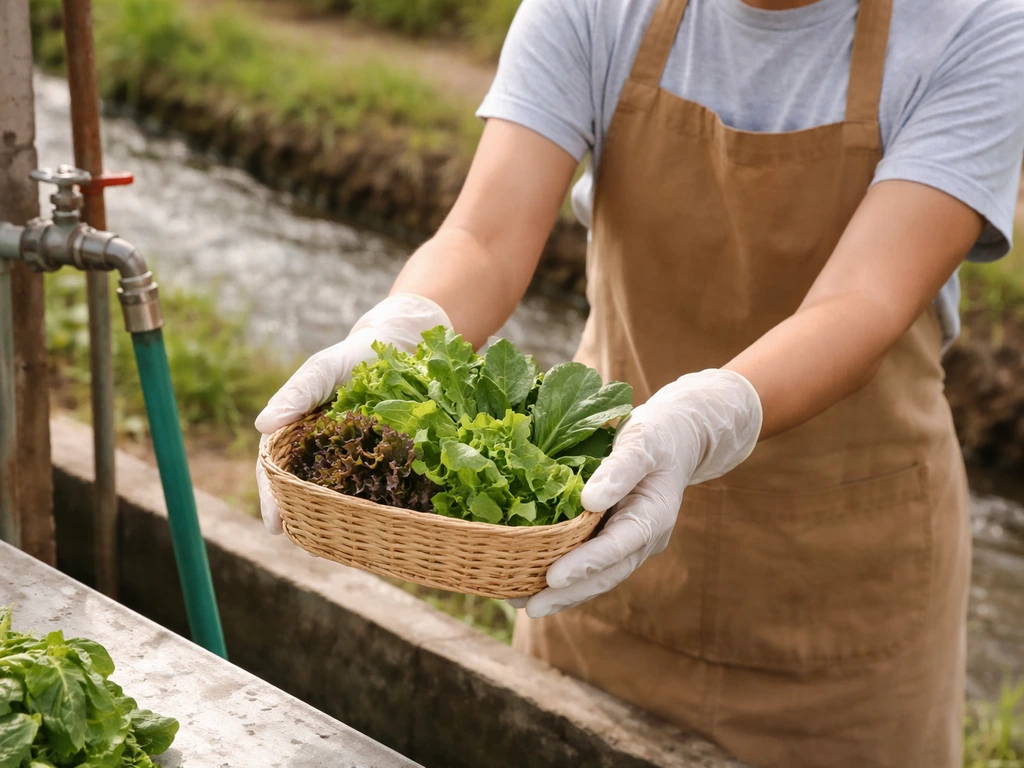
Since viruses cannot reproduce in food, contamination always starts somewhere else: a person, an animal, or contaminated water. Understanding these routes makes it much easier to identify where controls actually matter.
Infected food workers
This is by far the most common contamination point. CDC analysis of norovirus outbreaks found that infected food workers were implicated in roughly 70% of outbreaks where a contamination factor was identified. A separate epidemiological study of US norovirus outbreaks from 2001 to 2008 found that food handler contact with ready-to-eat food was implicated in 82% of outbreak-associated food contamination events. People can shed norovirus before symptoms appear and for up to 48 hours or more after recovering, which makes this route particularly hard to control.
Contaminated water and agricultural irrigation
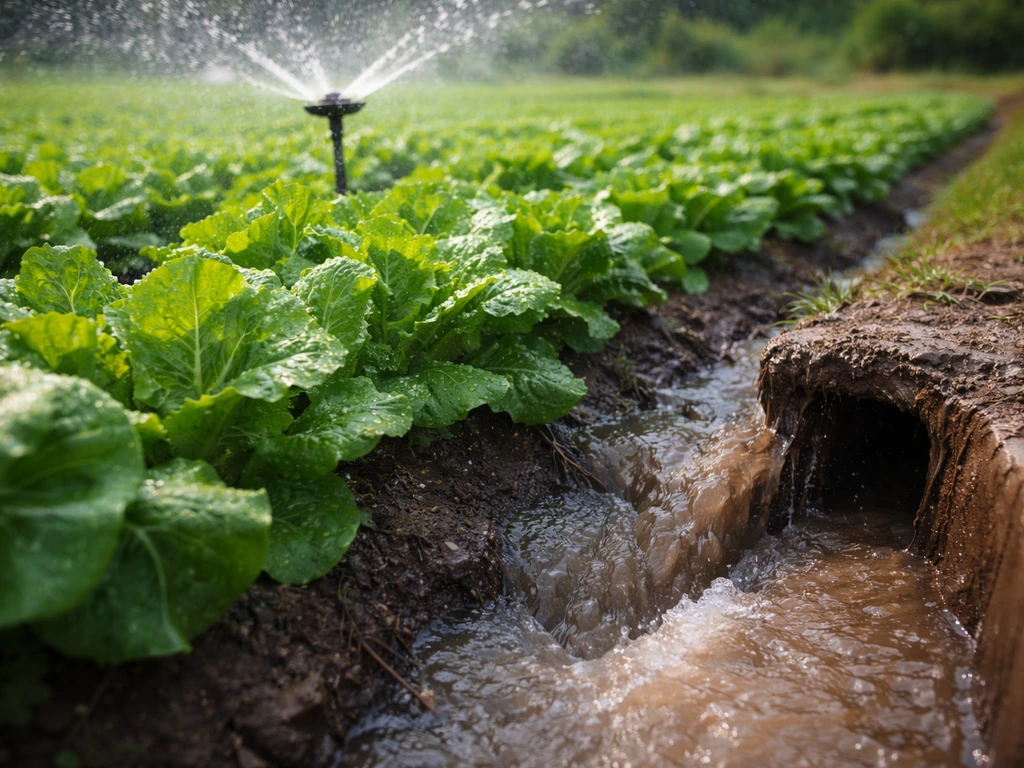
Sewage-contaminated water used to irrigate produce is a well-documented source. Shellfish, particularly oysters, filter large volumes of water and concentrate enteric viruses from contaminated marine environments. HAV and norovirus outbreaks have been linked to shellfish consumption repeatedly. This is also why berries grown in fields irrigated with or near contaminated water have been implicated in multiple outbreaks globally.
Cross-contamination during preparation
Even if a food starts out clean, poor handling practices during preparation can introduce viruses. Contaminated surfaces, shared utensils, and bare-hand contact with ready-to-eat food are all documented routes. Unlike bacteria, where a few cells on a surface might not be enough to cause illness, enteric viruses like norovirus have a very low infectious dose, meaning even trace contamination can be enough.
Parasites can also be transmitted through similar food and water contamination routes, and the overlap in transmission pathways between foodborne viruses and parasites is worth noting for food safety professionals managing multiple hazard types simultaneously. Parasites can survive and be transmitted via contaminated water as well, which is why water quality matters. Parasites can also be present in some foods when contamination occurs, so good hygiene and safe sourcing matter parasites can survive and be transmitted via contaminated water.
Practical steps to reduce your risk today
Because viruses do not replicate in food, the time-temperature abuse rules that govern bacterial growth do not apply in the same way. But viruses can survive for a long time, and the infectious dose is low. Here is what actually helps.
Handwashing is your single most effective control
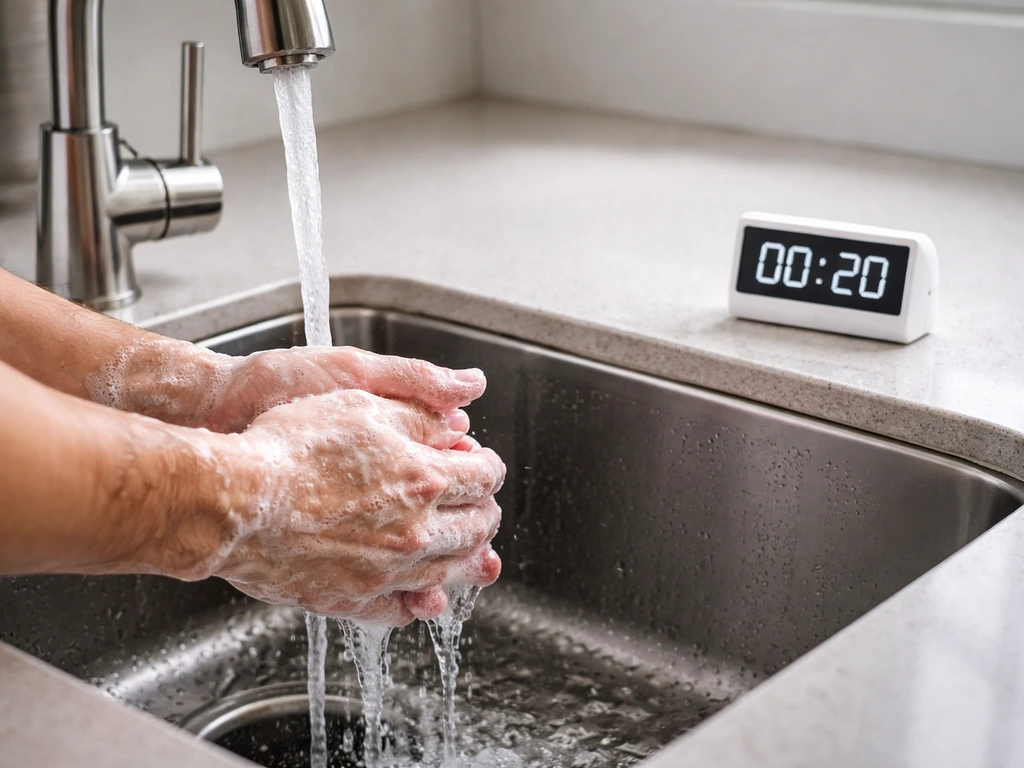
CDC guidelines are explicit: food handlers must perform thorough hand hygiene before contact with or preparation of food. Wet hands, apply soap, scrub for at least 20 seconds including fingernails and between fingers, rinse, and dry with a clean towel. Hand sanitizer alone is not adequate for norovirus. Soap and water is the standard.
Stay out of the kitchen when you are sick
The FDA Food Code and CDC guidelines both require excluding food workers with symptoms of norovirus or confirmed HAV infection for at least 48 hours after symptoms resolve (longer in some jurisdictions). CDC’s norovirus fact sheet for food workers advises that food workers with norovirus stay home when sick and for at least 48 hours after their symptoms stop stay home when sick and for at least 48 hours after symptoms stop. At home, the principle is the same: if you or anyone in the household has vomiting or diarrhea, avoid preparing food for others. This is not excessive caution, it reflects how these outbreaks actually happen.
Cook foods that can be cooked
For any food that will reach an internal temperature of 185°F (85°C) or higher, cooking is a reliable kill step for enteric viruses including HAV. Shellfish should always be thoroughly cooked, especially if sourced from areas where water quality is uncertain. Do not rely on "lightly cooked" preparations like steaming oysters open just until they crack.
Do not assume frozen or refrigerated food is virus-free
Frozen berries, ice, and refrigerated ready-to-eat foods have all been involved in viral outbreaks. Refrigeration slows bacterial growth, which is the main reason it matters for food safety, but it actively preserves viral infectivity. Treat frozen produce that will be eaten raw (smoothies, fruit salads, etc.) as a potential contamination risk if the source or handling history is uncertain.
Sanitize surfaces properly
HAV can be inactivated on surfaces with sodium hypochlorite (bleach) solutions at appropriate concentrations. Standard food-contact surface sanitizers approved for use against norovirus are effective when used at the right dilution and contact time. Wiping with a damp cloth does not count. For home kitchens, a diluted bleach solution (typically 1 tablespoon of unscented bleach per gallon of water) applied and left for a dwell time before wiping is the practical standard.
When to discard food
The FDA Food Code guidance is clear: if food has been handled by an employee who was excluded or restricted due to a transmissible illness including norovirus or HAV, that food should be discarded. At home, apply the same logic: if a sick person has handled ready-to-eat food with bare hands, discard it. Unlike bacterial contamination where the question is sometimes whether the numbers have grown to dangerous levels, viral contamination does not need to grow to be a problem. If it was there, it may still be infectious.
Consider vaccination where applicable
Hepatitis A has a safe and effective vaccine. If you work in food service, travel to areas with high HAV risk, or are in another elevated-risk group, vaccination is a practical prevention tool that goes beyond any food handling practice. CDC recommends it for food service workers in outbreak-control contexts as well.
The bottom line on viruses in food
Viruses do not grow in food, full stop. But that fact can give a false sense of security if you stop there. The real issue is that viruses can survive in food long enough to infect you, at very low doses, through routes that have nothing to do with temperature abuse or time in the danger zone.
The CDC describes norovirus spread routes that include contaminated food, water, and surfaces, not just person-to-person transmission viruses can survive in food long enough to infect you.
The controls that matter most are not about storage temperatures (though cooking temperature absolutely matters as a kill step) but about contamination prevention: hand hygiene, excluding sick food handlers, safe sourcing of produce and shellfish, and proper surface sanitation. These same principles apply to infections in the body, including bugs that grow in the lungs after they spread from an initial site of infection. Getting those basics right is what actually reduces risk.
That same idea applies to fecal matter: viruses and parasites are usually about survival and infectious dose, not growth, so always avoid contact with contaminated poop can viruses grow in toilet.
FAQ
If viruses do not grow in food, is it safe to eat food that sat out for a while?
Not necessarily. Viruses can remain infectious during room-temperature storage, especially on ready-to-eat items or in foods that got contaminated after cooking. The main risk is fresh contamination from handling, not “time-temperature growth,” so you still need to follow proper storage and, most importantly, prevent recontamination.
Can reheating leftovers make viral contamination safe again?
Reheating helps only if the food reaches a sufficient internal temperature and for enough time to inactivate the target virus. Reheating does not fix food that was contaminated after cooking (for example, handled with bare hands or contaminated utensils), because recontamination can reintroduce viruses after the heat step.
Does washing produce remove viruses the way it can remove dirt?
Washing can reduce surface contamination, but it cannot reliably remove viruses that may be attached to produce, trapped in crevices, or present due to water used during irrigation and processing. For higher-risk items eaten raw (especially berries), controlling upstream contamination and careful handling are more important than washing alone.
What is the difference between thawing safely and the risk from thawed frozen food?
Thawing does not inactivate viruses. The key risk is what happens during thawing and afterward, for example, leaks from packages, contact with thaw water, and cross-contamination onto ready-to-eat surfaces. Thaw in the refrigerator, and keep liquids contained and utensils separate.
Is hand sanitizer safe against norovirus?
Hand sanitizer is often less reliable for norovirus. Soap-and-water handwashing is the standard because it physically removes contaminants, including when contamination comes from vomit or diarrhea. Sanitizer can be used as a backup when soap and water are not available, but it should not replace thorough washing for suspected norovirus exposure.
How long should I exclude myself from food preparation after vomiting or diarrhea?
Common guidance is to stay out of food preparation for at least 48 hours after symptoms resolve. Some places use longer restrictions, so follow local rules or your employer’s policy. At home, the same principle applies, avoid preparing ready-to-eat food for others until you have been symptom-free for the required window.
If I accidentally used a utensil that touched raw food, is it a viral problem or just a bacterial one?
It depends on the contamination source. For viruses like norovirus and hepatitis A, the critical event is contamination from an infected person, not raw versus cooked meat. However, utensils and hands can carry viruses the same way they can carry bacteria, so the fix is the same idea: prevent cross-contamination and sanitize food-contact surfaces.
Can I “test” or visually detect viral contamination in food?
No. Viruses do not change the food’s smell, taste, or appearance in a way you can reliably detect. That means you cannot use sensory cues to decide if something is safe, you have to rely on hygiene practices, correct cooking, and excluding sick handlers.
Does bleaching surfaces always work if I use bleach?
Bleach can work, but performance depends on using the correct dilution and, crucially, contact time (dwell time). Also sanitize only after removing visible soil, because organic matter can reduce effectiveness. A quick wipe without enough dwell time may not be enough, and you should follow product-specific directions for food-contact surfaces.
Are there higher-risk foods beyond ready-to-eat items and frozen berries?
Yes. Any food that is handled after a cooking step is higher risk, especially foods served cold or requiring minimal further cooking, like deli salads, sandwiches, and fruit preparations. Also consider high-touch environments like buffets, where contamination from one sick person can spread quickly.
If a family member was sick, can I keep the food they handled if I refrigerate it?
If they handled ready-to-eat food with bare hands during illness or while contagious, refrigeration alone does not make it safe. A conservative approach is to discard that food, because viral contamination does not need to grow to be infectious. If you know the item was cooked after the handling, risk may be lower, but recontamination still matters.
Next Article
Can Bacteria Grow in Hot Sauce? Food-Safety Thresholds & Risks
Can bacteria grow in hot sauce? Explains when microbes survive or grow, key pH/aw thresholds, risks & prevention.