Botulism growing in commercial peanut butter is extremely unlikely under normal storage conditions. Peanut butter's naturally low moisture content, relatively low pH, and high fat composition create an environment that is genuinely hostile to Clostridium botulinum growth and toxin production. That said, the conditions that make botulism dangerous are worth understanding clearly, because a few edge cases, especially homemade or natural peanut butters stored badly, are less clear-cut.
Can Botulism Grow in Peanut Butter? Safety Answer and Checklist

Marcus Reeves
28 Jun 2026
The short answer on botulism risk in peanut butter
Commercial peanut butter is not a realistic vehicle for botulism toxin production. The combination of low water activity, added salt and sugar, and the processing methods used to make it commercially stable all work together to prevent C. botulinum spores from germinating and producing neurotoxin. Botulism from commercial peanut butter is not a documented, ongoing public health concern. Homemade peanut butter stored in sealed, airtight containers under warm conditions for extended periods sits closer to the theoretical risk zone, though still well outside the conditions where real outbreaks have occurred.
Botulinum toxin vs bacterial growth: what conditions are actually required
It helps to separate two things people often conflate. C. botulinum spores can be present in many environments, including soil and raw ingredients, without causing any harm. The spores of Clostridium botulinum grow best in low-oxygen, warm, low-acid environments where moisture and nutrients allow germination. The danger comes specifically from the neurotoxin the bacterium produces when it grows, not from the spores themselves sitting dormant in a food. Swallowing inactive spores in a healthy adult is generally not dangerous. Swallowing preformed botulinum toxin, which is produced when the organism actually grows and reproduces in a food, is the real threat.
For C. botulinum to grow and produce toxin, several conditions must align simultaneously. The environment needs to be anaerobic (very low in oxygen), non-freezing but within a permissive temperature range, have a pH above 4.6 (low acid), and have a water activity above 0. Botulism generally cannot grow in water by itself, because the required combination of conditions, especially low oxygen and the right water activity and temperature range, is not typically met. 93. If any one of those barriers is in place, toxin production is effectively blocked. Peanut butter stacks several of these barriers at once, which is why it sits so far outside the risk zone for botulism.
Temperature, storage, and shelf life: how they connect to risk
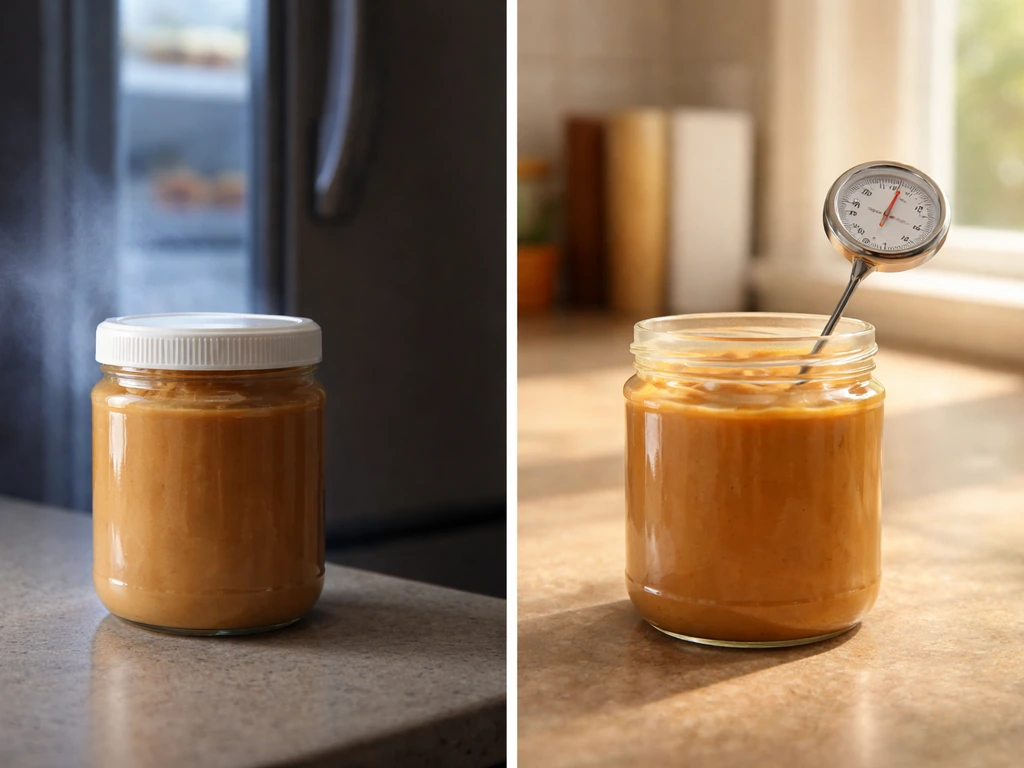
For proteolytic C. botulinum strains (types A and some B), the minimum temperature for growth and toxin formation is around 50°F (10°C). For nonproteolytic strains (types B, E, and F), the minimum drops to about 38°F (3. Cold temperatures can slow or inhibit botulinum growth, but some strains are still able to grow at refrigeration-range temperatures minimum drops to about 38°F (3.. 3°C). In practical terms, this means that even refrigerator temperatures only barely suppress the most cold-tolerant strains, which is why refrigeration is treated as a supporting control rather than the only barrier for high-risk, reduced-oxygen foods like vacuum-sealed fish. For peanut butter, temperature is almost a secondary concern because the moisture and pH barriers are already doing the heavy lifting.
Unopened commercial peanut butter is typically shelf-stable for about 6 to 9 months in the pantry. After opening, it stays fresh for roughly 2 to 3 months at room temperature, and refrigeration can extend that to around 3 to 4 more months. Natural peanut butters without stabilizers are generally recommended for refrigeration after opening for quality reasons. None of these storage windows create a botulism concern on their own, because the food's composition, not just storage time, is what drives risk. An opened jar of peanut butter left on the counter for a month is not going to develop botulism toxin. It may become rancid and unpleasant to eat, but that is a quality issue, not a botulism issue.
The food factors that actually protect you: water activity, pH, salt, and sugar
Water activity is one of the most important numbers in food microbiology, and peanut butter scores very low on this scale. Salt brine can lower water activity, which may reduce the conditions botulinum needs, but the final risk depends on the exact salt level and the remaining water activity, pH, and oxygen conditions can botulism grow in salt brine. Water activity above 0.93 is needed for C. botulinum to grow. Commercial peanut butter typically has a water activity well below that threshold, which means there simply is not enough free water available for the organism to function and reproduce. This is the single biggest reason botulism is not a realistic concern in standard peanut butter.
Salt and sugar reinforce this effect by binding water and further reducing water activity. Commercial peanut butters contain both, which layers additional protection. The pH of peanut butter also tends to sit in a range that is not particularly favorable to C. botulinum, especially compared to low-acid foods like canned vegetables or garlic-in-oil preparations where botulism outbreaks have actually occurred. Compare this to something like sugar, which similarly creates a low-water-activity environment inhospitable to botulinum growth, or salt brines used in preservation, which work by a related mechanism.
Oxygen exposure and packaging: does it matter for peanut butter?
C. botulinum grows best in anaerobic conditions, meaning environments where oxygen is absent or very limited. This is why the organism thrives in sealed cans, vacuum-packed products, and the interior of improperly processed home-canned jars. An opened jar of peanut butter, regularly accessed and exposed to air, is not anaerobic in any meaningful sense. The surface layer contacts oxygen with every use.
An unopened jar is more airtight, but the other protective barriers (low water activity, salt, sugar) are fully intact and doing their job. There is no documented case where an unopened, commercially produced jar of peanut butter created anaerobic conditions favorable enough to overcome the moisture and pH barriers and allow C. botulinum to grow. The risk scenario that does occasionally surface in food safety literature involves homemade or artisanal preparations where someone grinds peanuts, seals the product tightly in a jar, and stores it at warm temperatures for weeks without any of the preservative hurdles a commercial product has. USDA FSIS notes that botulism risk increases when storage conditions allow C. botulinum spores to germinate and produce toxin, including examples of room-temperature jar storage. Even then, the low water activity of pure ground peanuts still provides substantial protection.
Practical storage and safety checklist

Here is what actually matters day to day for keeping peanut butter safe and understanding when to act.
- Store commercial peanut butter in a cool, dry pantry away from heat sources. Heat degrades quality but does not create botulism risk on its own.
- Refrigerate natural peanut butter (those without stabilizers or added oils) after opening. This is mainly for quality, but it also keeps the product consistent.
- Do not introduce water or wet utensils into the jar. Adding moisture is the one factor that could theoretically push water activity in the wrong direction over time, especially in a tightly sealed container.
- Do not mix peanut butter with low-acid, high-moisture ingredients and then seal it in an airtight container for long-term storage at room temperature. Garlic, honey (in large amounts), or other additions change the food's composition.
- If the jar lid is bulging, the seal is broken in a way you cannot explain, or the product has an unusual smell or appearance beyond normal rancidity, discard it without tasting it. These signs are more relevant to home-canned or modified products, but they apply universally as a precaution.
- Do not rely on smell or appearance alone to rule out botulism toxin. In some contaminated foods, toxin can be present with no obvious spoilage. When in doubt with any food, especially low-acid, sealed, or improperly processed items, throw it out.
- If you are concerned about a specific jar, do not open it to investigate. Place it in a sealed plastic bag and dispose of it in a trash container that others cannot access.
- Call Poison Control at 1-800-222-1222 (US) if you suspect someone has consumed something that may contain botulinum toxin. For active symptoms, go to the emergency room immediately.
When to seek medical help right away
Botulism is a medical emergency. The toxin causes a descending flaccid paralysis, starting with the face and working downward, and can progress to respiratory failure if not treated promptly. The window for antitoxin to be effective is time-sensitive, so acting fast matters more than being certain.
Go to the emergency room immediately if you or someone you are with develops any of the following after eating a food you are concerned about:
- Double or blurred vision
- Drooping eyelids
- Slurred speech
- Difficulty swallowing
- Dry mouth combined with muscle weakness
- Progressive weakness moving from the upper body downward
- Difficulty breathing
These symptoms typically appear 12 to 36 hours after ingesting preformed toxin, but the range can be 6 hours to 10 days depending on the amount consumed. Symptoms in infants (who are susceptible to infant botulism from spore ingestion) include poor feeding, weak cry, floppy muscle tone, and constipation.
When you go to the ER, tell the clinical team exactly what you ate, when you ate it, and why you are concerned about botulism specifically. Clinicians can arrange emergency consultation through the CDC and request botulinum antitoxin when the clinical picture supports it. The CDC facilitates rapid antitoxin delivery for suspected cases, and that process moves faster when providers have the food history upfront. Do not wait for lab confirmation before seeking care. The clinical diagnosis based on symptoms is enough to start treatment.
The bottom line
Peanut butter, especially commercial peanut butter, is not a food where botulism is a realistic concern under normal handling. Its low water activity alone is enough to block C. botulinum growth, and the added salt, sugar, and processing compound that protection further. The foods where botulism actually happens are things like improperly home-canned vegetables, fermented fish stored at warm temperatures, and garlic-in-oil mixtures held at room temperature, all low-acid, high-moisture, oxygen-poor environments. Peanut butter is essentially the opposite of that profile. If you are worried about a specific situation, use the checklist above and do not hesitate to call Poison Control or go to the ER if symptoms appear.
FAQ
If I see mold or an “off” smell in peanut butter, does that mean botulism could be present?
Mold or rancid odors point more toward spoilage or oxidation, not botulism. Botulism involves a specific neurotoxin from bacterial growth under very restricted conditions. If the food looks or smells bad, discard it, but do not assume the symptoms are botulism, unless you have neurologic signs after ingestion.
Can botulism toxin be formed in an unopened jar if it was stored at high temperatures?
Normal pantry storage and even short periods of warmth are not a realistic setup because peanut butter’s low water activity and acidity barriers remain. The higher-risk scenario is not “warm storage,” but unusual homemade grinding plus long warm holding with tight sealing that bypasses the preservative and processing controls typical of commercial products.
Does freezing peanut butter make botulism more likely or less likely?
Freezing does not create conditions for toxin production. It can stop or greatly slow growth. However, freezing will not “sterilize” anything already present, and thawed peanut butter can still spoil for quality reasons, so safety still depends on whether the product was stored in a way that could allow growth of other microbes.
If spores are in peanut butter, can eating a spoonful ever cause botulism later?
In a healthy adult, ingesting dormant spores without toxin production is generally not the threat. Botulism risk hinges on whether toxin was produced in the food, which requires the right combination of low oxygen, temperature, acidity, and free-water availability. Peanut butter’s composition typically prevents that combination from forming.
What’s the difference between infant botulism and food-borne botulism from a jar of peanut butter?
Infant botulism is usually about spore ingestion that then germinates and produces toxin inside the infant’s gut. That is different from someone getting symptoms from preformed toxin in the food. If an infant is the concern, discuss immediately with a pediatric clinician or emergency services if symptoms appear.
How long after eating peanut butter would botulism symptoms be expected, and when should I seek care?
Symptoms can begin as early as about 6 hours and as late as around 10 days after exposure, often within 12 to 36 hours. Seek emergency care right away if there are neurologic signs such as drooping eyelids, double vision, slurred speech, trouble swallowing, or unusual weakness, because treatment timing matters.
Would “natural” or “no stir” peanut butter raise botulism risk compared with regular commercial peanut butter?
Usually not in terms of botulism, because the key barriers are still low water activity and pH. The more relevant variable is how homemade the product is and whether it was processed and stored in a way that could create long-lasting anaerobic and permissive conditions. For quality and freshness, refrigeration recommendations are about flavor and rancidity, not botulism.
Can peanut butter sandwiches or peanut butter mixed into other foods cause botulism risk?
Peanut butter itself is not a typical risk vehicle, but mixing it into a higher-moisture, low-acid, low-oxygen environment can change the overall conditions. For example, a prepared mixture that stays anaerobic and warm for extended periods is the kind of edge case to avoid. For normal meals, exposure is brief and the environment is not anaerobic.
Should I contact Poison Control instead of going to the ER if I’m worried about botulism from peanut butter?
Poison Control can help you decide, but botulism is a medical emergency when neurologic symptoms are present. If you suspect botulism based on symptoms, go to the ER immediately. If symptoms are mild or unclear, calling Poison Control for rapid guidance is reasonable while arranging urgent evaluation.
What should I tell clinicians, beyond “I ate peanut butter”?
Bring the product container if possible (brand, opened or unopened, and storage conditions), and tell them exactly when you ate it, how much, and when symptoms started. Also describe specific neurologic symptoms (vision changes, swallowing trouble, speech changes, breathing issues), because clinical teams decide on antitoxin based largely on the pattern and timing.
Next Article
Can Botulism Grow in Water Bottles? Conditions and Safety
Botulism needs anaerobic, warm, toxin-supporting conditions. Learn if it can grow in water bottles and what to do safely