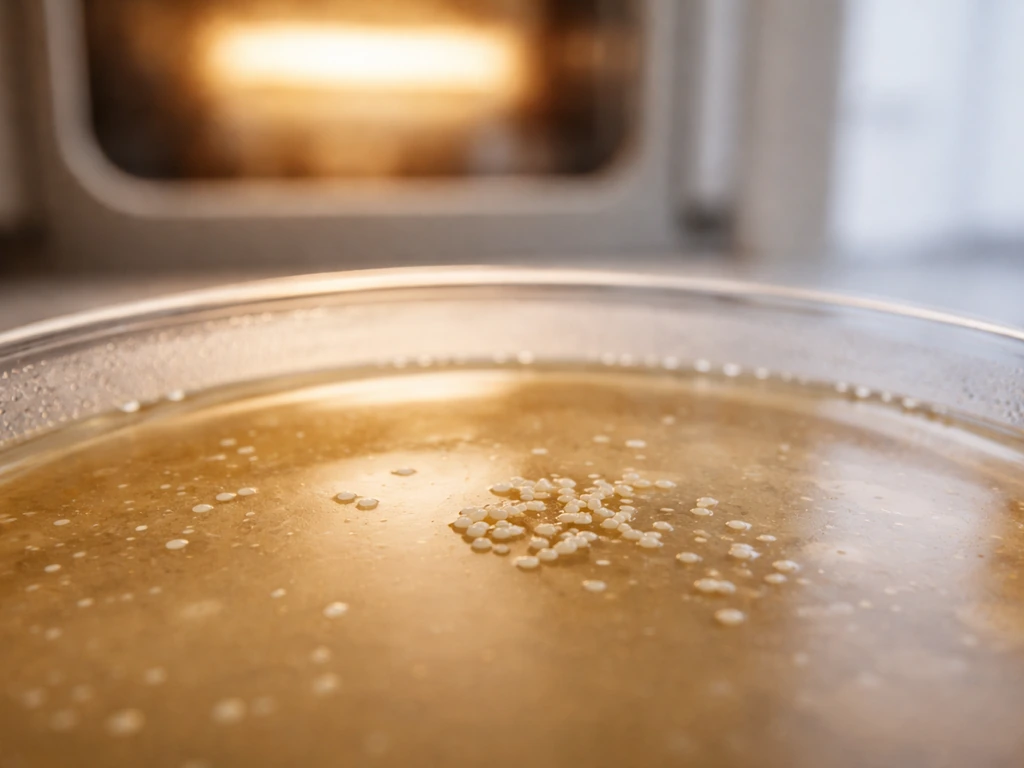
Yes, E. coli will grow on a TSA plate. TSA is a general-purpose, nutrient-rich medium with no inhibitors, and E. coli is a fast-growing facultative anaerobe that thrives in exactly the conditions TSA is designed to support. Under standard aerobic incubation at 35–37°C, you can expect visible colonies within 18–24 hours.
Will E. coli Grow on a TSA Plate? Growth Conditions and Timing

Marcus Reeves
23 May 2026
What TSA is and why it works for so many bacteria
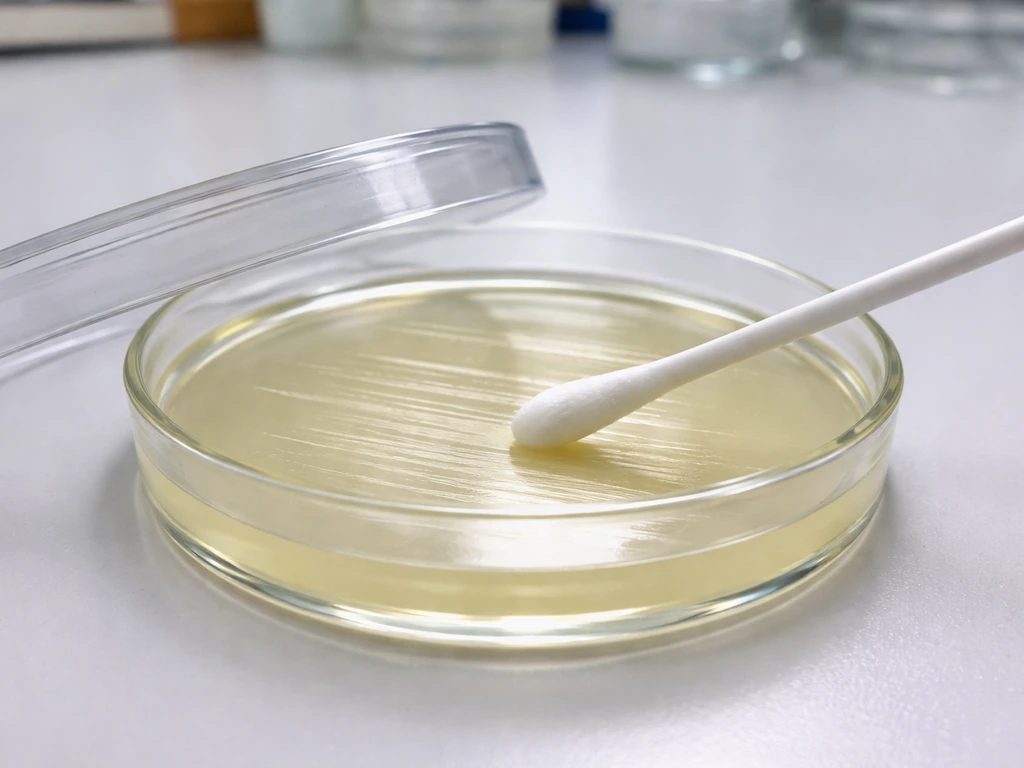
Tryptic Soy Agar (TSA) is a solid, general-purpose culture medium formulated to support the growth of a wide range of microorganisms. Its typical composition per liter includes 15 g pancreatic digest of casein, 5 g papaic digest of soy, 5 g sodium chloride, and 15 g agar. For an example of the blank" rel="noopener noreferrer">typical composition and incubation condition, Merck Millipore lists TSA as containing 15 g/L pancreatic digest of casein, 5 g/L papaic digest of soy, 5 g/L sodium chloride, and 15 g/L agar, with an example incubation of 24 hours at 30 to 35°C (aerobic). The casein and soy digests provide amino acids, peptides, vitamins, and carbon sources in immediately usable forms. Sodium chloride maintains osmotic balance. Because the medium contains no selective agents, dyes, bile salts, or antibiotics, almost nothing is excluded.
TSA is prepared according to U.S. Pharmacopeia standards for Soybean-Casein Digest Agar Medium, and it is specifically recommended for qualitative isolation and cultivation procedures where broad microbial recovery is the goal. That non-selective, nutrient-complete profile is exactly why it supports organisms across a huge range of genera, including E. coli.
Does E. coli meet TSA growth conditions
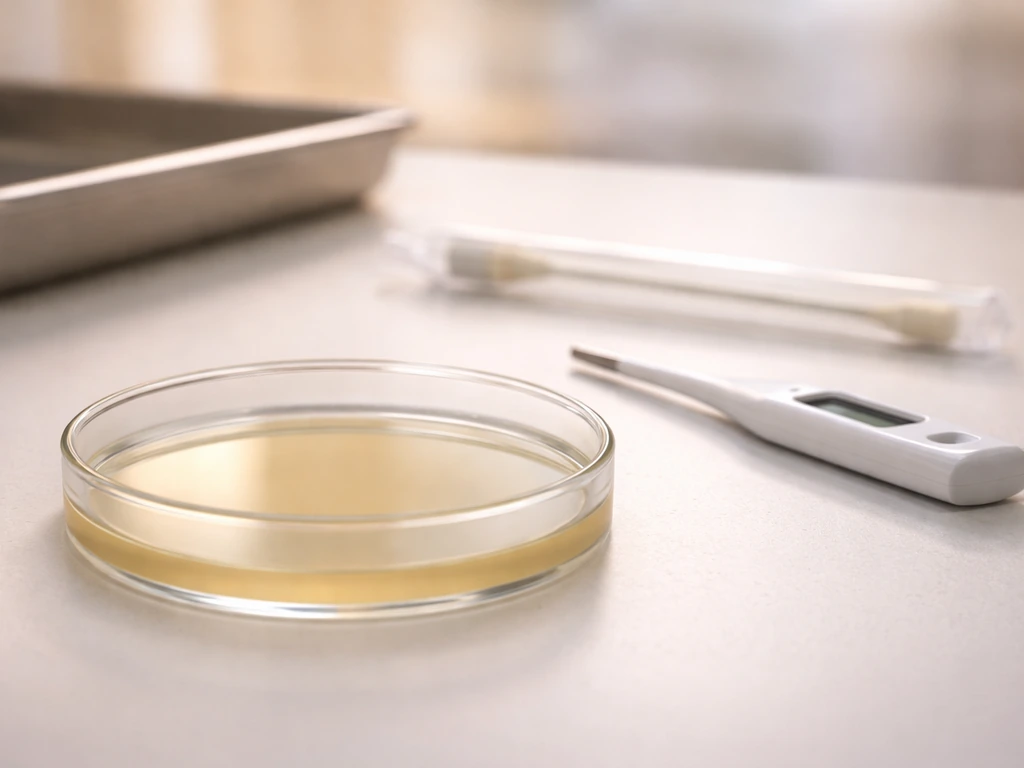
E. coli's growth requirements line up almost perfectly with what TSA offers. Here is how the key variables stack up:
| Condition | What TSA provides | What E. coli needs |
|---|---|---|
| Nutrients | Amino acids, peptides, carbon sources from casein and soy digests | Readily available nitrogen and carbon sources; no special growth factors required |
| pH | Typically 7.2–7.4 after preparation | Optimal growth at pH 6.0–7.5; tolerates a range of 4.4–9.0 |
| Oxygen | Aerobic incubation is standard; medium has no oxygen-limiting additives | Facultative anaerobe; grows with or without oxygen, fastest aerobically |
| Temperature | Incubated at 30–37°C in standard protocols | Optimal at 35–37°C; grows across 7–46°C |
| Moisture/Water Activity | Solid agar maintains sufficient water activity for growth | Requires adequate free water; standard TSA agar plates meet this easily |
Because E. coli is a facultative anaerobe, it will grow whether you incubate the plate aerobically or anaerobically, though aerobic incubation is faster and more practical for routine work. The medium's neutral pH and abundant nutrients remove any meaningful barrier to growth.
What to expect: colony appearance and timing
Under standard aerobic incubation at 37°C, E. coli colonies become clearly visible on TSA in 18–24 hours. This is consistent with what you see in reference colony morphology resources, which use TSA incubated at 37°C for 24 hours as a standard readout condition. ASM provides example colony morphology images that show organisms grown on trypticase soy agar incubated for 24 hours at 37°C, matching the typical readout timing for TSA plates.
Typical E. coli colonies on TSA look like this:
- Size: 2–4 mm in diameter after 24 hours
- Shape: circular, with a slightly irregular or undulate edge in some strains
- Surface: low convex, smooth, moist, and shiny
- Color: off-white to cream, sometimes slightly gray; no pigmentation
- Texture: butyrous (butter-like) consistency when touched with a loop
- Odor: some strains produce a faintly fecal odor on TSA, which can be a useful initial clue
If you incubate at 30–35°C instead of 37°C (which some protocols specify), colonies will still form within 24 hours but may be slightly smaller. At 25°C you would typically wait 48 hours for good-sized colonies. At temperatures below about 10°C, growth will be very slow or effectively halted, so refrigerated storage of inoculated plates is not incubation.
Situations where E. coli might not grow on TSA
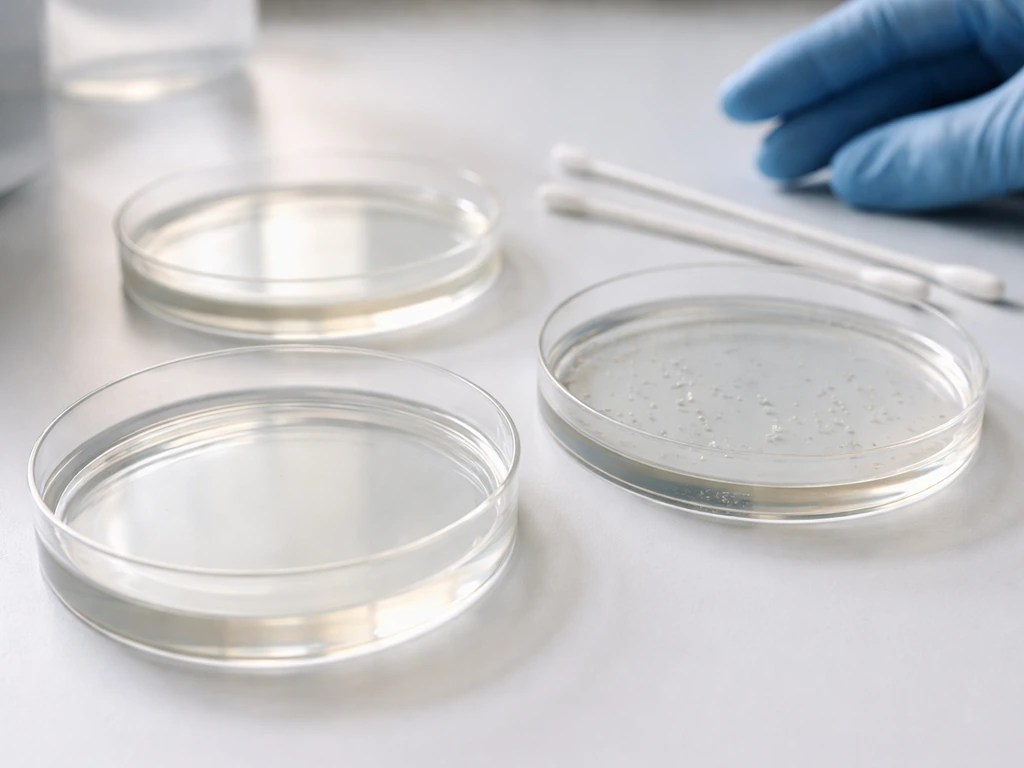
Given that TSA has no inhibitors, the problem when E. coli fails to grow is almost always on the organism side or the handling side, not the medium itself. Here are the most common culprits:
Strain-level considerations
Most E. coli strains, from standard lab strains like K-12 to common pathogenic and urinary tract isolates such as UPEC strains, grow readily on TSA. Auxotrophic mutants engineered in research settings (strains that cannot synthesize a specific amino acid or nucleotide) may grow poorly or not at all unless that nutrient is supplemented in the medium. If you're working with a defined mutant strain, check its specific growth requirements first.
Plate and storage problems
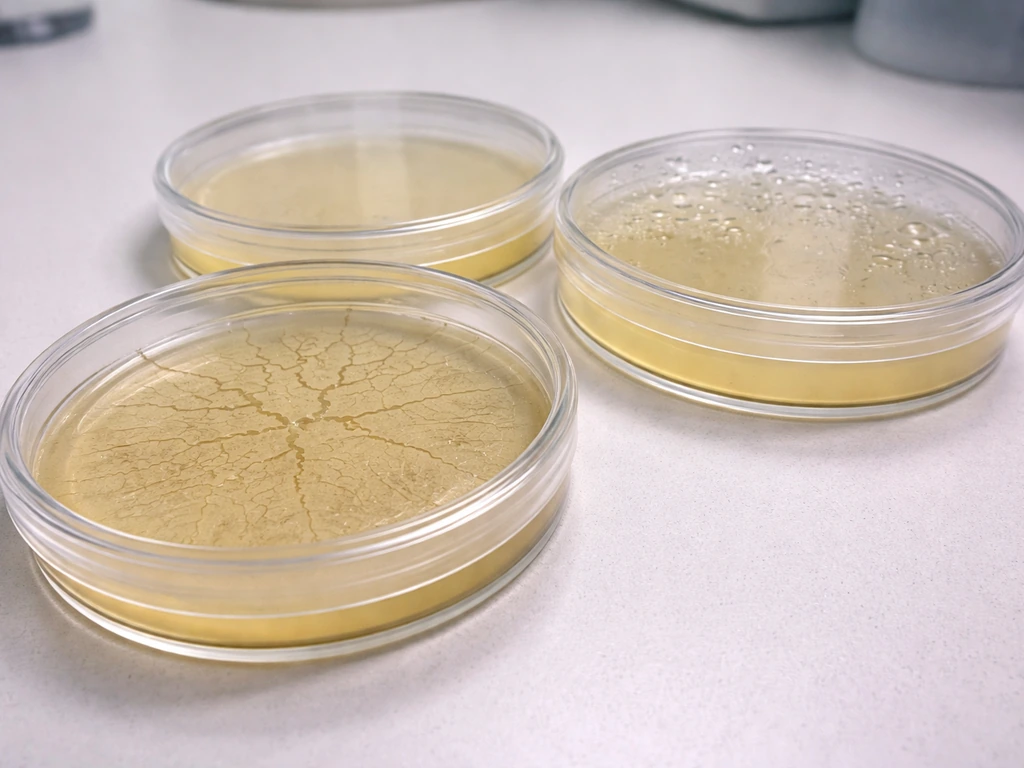
Expired TSA plates or plates stored improperly (exposed to light, heat above 25°C, or freeze-thaw cycles) can lose moisture, develop inhibitory breakdown products, or become contaminated. Severely dried plates (sunken agar, visible cracking) will not support normal colony growth. Always check the plate's expiration date and visual condition before use. Plates stored correctly at 2–8°C and used within their shelf life are rarely the issue.
Overheating during preparation
If TSA is autoclaved at excessive temperatures or held in a molten state for too long before pouring, the nutrients can degrade. Plates should be poured at around 48–50°C and solidified quickly. Plates that appear darker than normal or have a caramelized smell may have undergone heat damage and should not be used for sensitive work.
Antibiotic carryover
If the E. coli isolate came from a clinical or food sample where antibiotics were present, or if the broth enrichment step involved antibiotic treatment, residual antibiotics carried to the plate can inhibit growth. Similarly, if someone accidentally added antibiotics to the agar during preparation, you will get no growth of susceptible strains even though the medium looks normal.
TSA vs selective and differential media for confirming E. coli
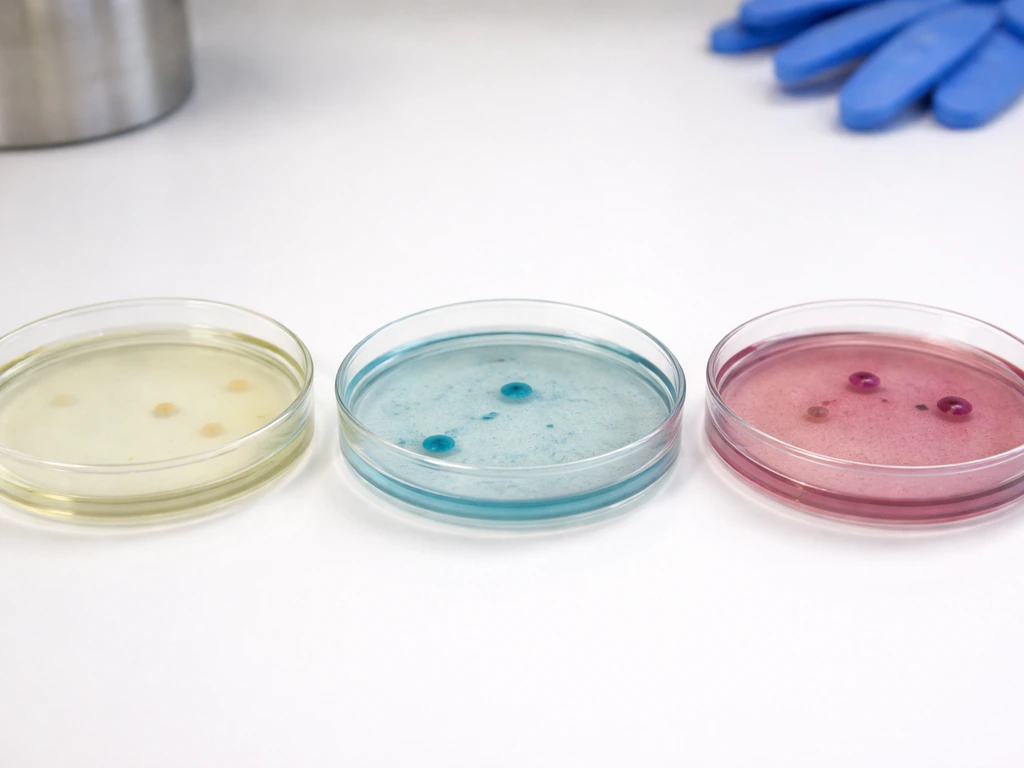
This is where TSA's broad inclusivity becomes its biggest limitation for identification work. Because TSA supports almost everything, a colony on TSA could be any of dozens of Gram-negative rods, Gram-positive organisms, or environmental bacteria. If you are moving from non-selective TSA to more specific confirmation steps, you may also look at what bacteria grow on bile esculin agar as a related option for differentiating organisms confirming E. coli. TSA growth alone tells you essentially nothing about whether your organism is E. Because TSA supports almost everything, a colony on TSA could be any of dozens of Gram-negative rods, Gram-positive organisms, or environmental bacteria, so if you specifically need does e coli grow on mannitol salt agar results for confirmation, switch to the appropriate selective and differential medium. coli specifically.
For confirmation, you need selective or differential media that either suppress non-target organisms, produce distinguishing reactions, or both. Common options used after preliminary TSA isolation include:
- EMB (Eosin Methylene Blue) agar: E. coli produces a distinctive metallic green sheen due to strong acid production from lactose fermentation. This is one of the most visually recognizable confirmatory results.
- MacConkey agar: selects for Gram-negatives and differentiates lactose fermenters (pink/red colonies) from non-fermenters. E. coli produces bright pink to red colonies with a precipitated bile halo.
- Chromogenic agars (e.g., CHROMagar E. coli): use enzyme-specific substrates to produce color reactions targeted at E. coli, including differentiation of O157 strains.
- Mannitol Salt Agar (MSA): actually useful for contrasting purposes since E. coli does not grow well on MSA (which targets staphylococci), so MSA can help rule it in or out as part of a panel.
- Biochemical confirmation: IMViC reactions (Indole positive, Methyl Red positive, Voges-Proskauer negative, Citrate negative) are the classical confirmation profile for E. coli.
The standard workflow in food safety and clinical microbiology is to use TSA or a comparable non-selective medium for initial recovery and colony isolation, then subculture suspect colonies to differential or selective media for presumptive identification, and follow up with biochemical or molecular confirmation. TSA is step one in a process, not an endpoint.
Troubleshooting: no growth or unexpected results
If you inoculated a TSA plate with what you believe is E. coli and got no growth, or got growth that looks wrong, work through this checklist before assuming a deeper problem:
- Check incubation temperature: Was the incubator actually at 35–37°C? Incubator malfunctions and door-propping are common causes of failed plates. Verify with a calibrated thermometer.
- Check incubation time: 18–24 hours at 37°C is the standard window. If you pulled the plate at 12 hours, give it more time before concluding no growth.
- Check plate condition: Is the agar moist and flat? Dry or cracked agar, or agar that has pulled away from the plate edge, will not support normal growth. Check expiration date.
- Check inoculum viability: Was the source culture stored at -80°C or refrigerated for a long time? Frozen stocks need to be properly revived before plating. Colonies from heavily stressed or dead cultures will not appear.
- Check for antibiotic contamination: Was anything added to the medium or was the sample from an antibiotic-rich environment? This is especially common with food or clinical isolates.
- Check oxygen conditions: Standard E. coli growth is aerobic. If the plate was placed in an anaerobic jar accidentally or sealed in an oxygen-depleted bag without intention, results will be slower but should still appear eventually.
- Unexpected colony types: If you get growth but the colonies look very different from the description above (e.g., very mucoid, deeply pigmented, or spreading), consider contamination from another organism. TSA has no way to suppress contaminants, so a fast-growing environmental organism can outcompete or mask your target.
If you have confirmed all the above and still see no growth, streak a known positive control (a confirmed E. coli strain or a reference strain stored properly) on a fresh plate from the same lot under the same conditions. If the control does not grow either, the problem is almost certainly the medium lot or the incubator, not your isolate.
Understanding the environmental variables behind these troubleshooting steps connects directly to the broader picture of E. coli growth behavior. Where does E. coli grow best? It prefers warm, nutrient-rich conditions, typically around body temperature. Temperature is the single most impactful variable since E. coli grows best around 37°C and slows dramatically below 10°C. pH matters less on TSA specifically since the medium is buffered near neutral, but if your sample carries extreme pH (acidic or alkaline) and you are plating a large inoculum without dilution, you can locally shift the agar pH enough to inhibit growth. E. coli can still grow when exposed to mildly acidic conditions, but extreme acidity can inhibit growth depending on buffering and exposure time can e coli grow in acidic environment. Water activity and moisture in the plate are the next most common practical issues after temperature.
One final practical point: TSA is not a confirmatory tool for E. coli, but it is a reliable and forgiving first step. Because Ideonella sakaiensis has different growth requirements than E. coli, its incubation conditions and metabolism will determine how it grows how Ideonella sakaiensis grows. On cetrimide agar, you would look for bacteria that tolerate the cetrimide selective agent, especially Pseudomonas species such as Pseudomonas aeruginosa. If your E. coli isolate does not grow on TSA under correct conditions, that is a significant finding worth investigating because essentially every wild-type and clinical E. coli strain should produce robust colonies in 24 hours. Failure to grow is a signal, not background noise.
FAQ
How long should I incubate the TSA plate to be sure E. coli will show colonies?
Yes, but you need to think about read time. If you incubate longer than the usual 18 to 24 hours, you can get colony overgrowth and “background” confluent areas, which makes picking single, well-isolated colonies harder. A common practical approach is to check at 18 to 20 hours for pickable colonies, then recheck at 24 hours, rather than waiting for multiple days.
Will E. coli grow on TSA if I incubate at 30°C, 25°C, or another non-standard temperature?
Often yes, but it is slower and may look smaller or more stressed. If you are incubating around 30 to 35°C you should still expect colonies within about 24 hours, while at 25°C it typically takes around 48 hours for good-sized colonies. Use the same incubation temperature for your positive control to interpret your results correctly.
What if my E. coli sample came from a clinical or food enrichment that used antibiotics, will it still grow on TSA?
Growth can still happen, but antibiotic carryover is a frequent cause of “no growth” on otherwise normal-looking TSA. If the sample or enrichment step used antibiotics, residual drug can remain active on the plate. If you suspect this, plate a dilution series of the inoculum to reduce residual antibiotic concentration, and always include a known E. coli positive control grown alongside.
Can poor streaking or heavy inoculum make it seem like E. coli did not grow on TSA?
Yes, streaking conditions matter for isolating true E. coli colonies. If you inoculate too heavily, you may get a lawn or mixed overgrowth that makes it look like there are no distinct colonies, even though some cells grew. For routine isolation, streak for single colonies or perform a dilution streak so individual colonies are distinguishable.
Does the pH of the original sample affect whether E. coli grows on TSA?
If TSA was prepared correctly, pH is usually not the limiting factor. TSA is typically neutral or near neutral, but extreme sample pH can sometimes inhibit growth when you plate a very large, undiluted inoculum because the local environment right at the inoculation site may become more acidic or alkaline. Diluting the sample before plating reduces this risk.
How can plate moisture or condensation on TSA affect E. coli colony appearance?
It can, especially if the agar surface is too wet. Excess moisture can cause spreading, colonies that merge together, or uneven growth that looks abnormal. Always check that plates are adequately dried for inoculation, and avoid incubating plates in a way that causes condensation to drip onto the surface.
If colonies grow on TSA, can I confirm they are E. coli based on colony appearance alone?
Yes, because different E. coli strains have different colony morphology. You can still use TSA for initial recovery, but do not treat colony size alone as proof. If you need confirmation, subculture suspect colonies and move to selective or differential confirmation steps rather than relying on “looks like E. coli” from TSA.
What is the best way to troubleshoot a TSA plate when my suspected E. coli shows no growth?
Use a known confirmed E. coli strain on the same TSA lot, and incubate it under the same temperature and time conditions. If the control grows but your sample does not, the issue is more likely your sample, antibiotic carryover, or a strain-specific requirement. If the control also fails, the problem is almost certainly medium handling, incubation conditions, or plate damage.
Next Article
What Temperature Does E. coli Grow Best At?
Find E. coli best growth temperature, growth vs survival limits, pH optimum, and whether it can grow at room temperature