E. coli grows best at 37°C (98.6°F), which is human body temperature. At that temperature in rich broth, it can double every 20 minutes and reach billions of cells overnight. That's the sweet spot. But it can still grow across a wide range, roughly 7°C to 46°C (about 45°F to 115°F), just much more slowly at the extremes.
What Temperature Does E. coli Grow Best At?

Marcus Reeves
30 Apr 2026
The optimal growth temperature for E. coli
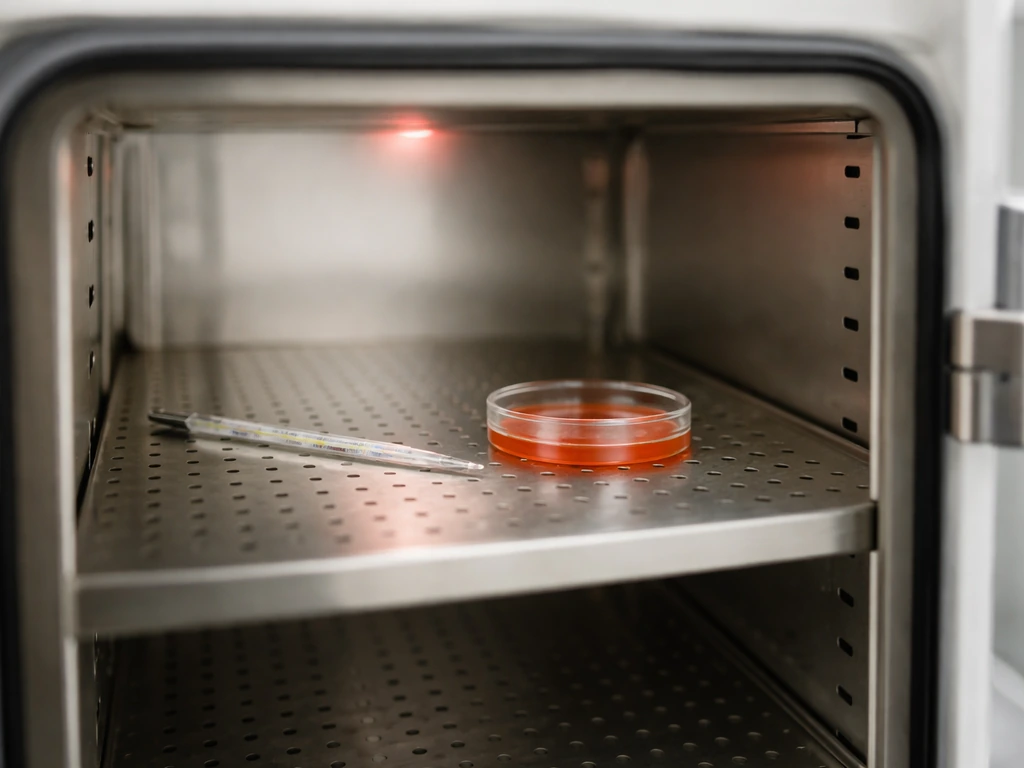
37°C is the textbook and practical answer. It matches human core body temperature, which is why E. coli is so well adapted to living in the gut. Under ideal lab conditions at 37°C with neutral pH and rich broth, the doubling time is around 20 minutes. That means one cell becomes over a billion in less than 10 hours. From a food safety standpoint, those are alarming numbers.
The range where E. coli grows actively (not just survives) is roughly 20°C to 42°C (68°F to 108°F), with the fastest growth sitting right in the middle at body temperature. The USDA calls 4.4°C to 60°C (40°F to 140°F) the 'Danger Zone' for bacterial growth in food, and E. coli is one of the main reasons that range exists.
Can E. coli grow at room temperature?
Yes, absolutely. Room temperature in most kitchens and homes falls somewhere between 18°C and 25°C (65°F to 77°F), which sits squarely inside E. This is why plates like TSA can support E. coli growth when conditions fall within its active range E. coli's active growth range. coli's active growth range. Growth is noticeably slower than at 37°C, but it's still real growth, meaning the bacteria are dividing and numbers are increasing.
The practical consequence: food left at room temperature doesn't stay safe indefinitely. The FDA allows a maximum 4-hour window for ready-to-eat foods held at non-refrigerated temperatures before they should be consumed or discarded. That guideline exists because pathogens like E. coli can multiply to risky levels within that window, especially in the upper half of the room-temperature range.
In a warm kitchen on a summer day, closer to 27°C to 30°C (80°F to 86°F), growth rates speed up considerably. Studies have tested E. coli growth under exactly those conditions (20°C and 27°C) and confirmed active multiplication. The warmer the room, the faster the risk builds.
Minimum and maximum temperatures: growth vs. survival
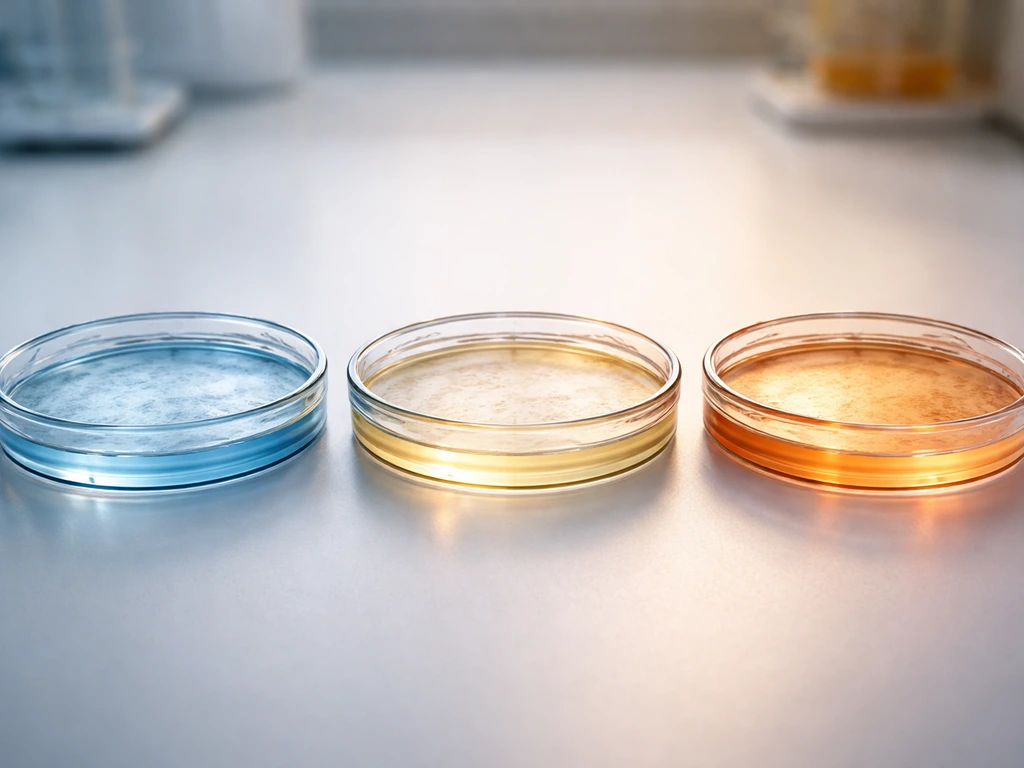
There's an important distinction between temperatures where E. coli can grow (divide and increase in number) and temperatures where it merely survives (stays alive but doesn't multiply). These are very different from a food safety perspective.
On the cold end, E. coli's minimum growth temperature is around 7°C to 8. 5°C (about 45°F). Research on the pathogenic strain E.
coli O157:H7 puts its average minimum growth temperature at roughly 8. A peer-reviewed temperature-gradient study on E. coli O157:H7 and selected coliforms measured [minimum and maximum temperatures for growth](https://pmc. ncbi.
nlm. nih. gov/articles/PMC267801/) in culture media. 4°C.
A separate study found that E. coli ML30 can sustain growth at as low as 7. 5°C to 7. 8°C.
That's close to, and in some conditions, inside typical refrigerator range (most home fridges run at 3°C to 5°C). Refrigeration doesn't kill E. coli, it just slows growth significantly and, at standard fridge temps, essentially stops it. However, fluctuating temperatures, like a fridge that gets warm during repeated door openings, can allow growth to resume.
On the hot end, growth stops above roughly 45°C to 46°C (113°F to 115°F). Above 60°C (140°F), which is why the USDA's hot-holding minimum is 60°C, E. coli is killed or inactivated rather than just slowed. Thorough cooking to 71°C (160°F) for ground beef is the standard recommendation for killing E. coli O157:H7 in meat.
| Temperature zone | Temperature range | What E. coli does |
|---|---|---|
| Freezing / frozen storage | Below 0°C (32°F) | Survives but does not grow; cells can remain viable for months |
| Refrigeration (standard) | 1°C to 4°C (34°F to 40°F) | Minimal to no growth; survival mode |
| Cold growth borderline | 7°C to 8.5°C (45°F to 47°F) | Very slow growth possible; minimum growth threshold |
| Room temperature | 18°C to 25°C (65°F to 77°F) | Active growth, slower than body temp but real and measurable |
| Warm / body temperature | 35°C to 42°C (95°F to 108°F) | Rapid growth; 37°C is the optimal point |
| Upper growth limit | 45°C to 46°C (113°F to 115°F) | Growth stops; cells stressed |
| Hot holding / kill zone | Above 60°C (140°F) | Cells killed; no growth possible |
What pH does E. coli grow best at?
Temperature isn't the only lever. pH is a close second in controlling E. coli growth, and the two conditions work together. E. coli grows fastest at pH 7. Bile esculin agar can also be used to help identify bacteria that grow in the presence of bile while splitting esculin. 0, which is neutral. That matches both the typical lab culture condition and, roughly, the environment inside the human gut.
Studies with E. coli K-12 show a doubling time of about 18 minutes at pH 7.0, compared to roughly 25 minutes at pH 5.0 or pH 8.7 when all other conditions are equal. Growth is measurably slower as pH moves away from neutral, but the bacteria are still dividing across a wide range. The practical growth range spans from about pH 4.4 to pH 9.0.
The acid limit for actual growth (not just survival) is around pH 4.0 in rich medium and pH 4.5 in minimal medium. Below that, E. coli can survive for a while in acid-adapted states but can't multiply. This is why acidified foods like properly pickled vegetables (pH below 4.0) and correctly fermented products are considered safe from E. coli growth, though starting contamination levels and process controls still matter.
On the alkaline side, growth generally stops above pH 9.0, though experimental strains have been evolved to push that ceiling slightly. For practical food safety purposes, pH 9.0 is the upper limit. The OSU/USDA reference values for E. coli growth are: minimum pH 4.4, optimal pH 6.0 to 7.0, maximum pH 9.0.
How temperature and pH work together (and what it means for food safety)
E. coli doesn't respond to temperature and pH in isolation. When both conditions shift away from optimal at the same time, growth slows much more dramatically than either factor alone would cause. Research using lactic acid stress (pH 4.6) at temperatures of 20°C and 27°C shows that growth rate at those combined conditions determines how vulnerable the bacteria are to further stress, and how quickly populations can recover or build.
This is the core logic behind hurdle technology in food preservation: stacking multiple mild stresses (slightly acidic pH, chilled temperature, reduced water activity) to stop growth even when no single factor alone would be enough. A food at pH 5.0 stored at 4°C is far safer than the same food at pH 5.0 left at 25°C.
For everyday food handling, the takeaway is straightforward. Keep food below 4°C or above 60°C whenever possible. If food must sit at room temperature, limit it to under 4 hours maximum, and closer to 2 hours if the ambient temperature is above 32°C (90°F). For acid-sensitive contexts, foods with pH below 4.4 are outside E. coli's growth range, but they're not sterile and won't necessarily remain safe forever if temperature abuse occurs. Cetrimide agar is selective, so only certain organisms that tolerate cetrimide and the medium’s chemistry can grow on it E. coli's growth range.
Understanding where E. where does e coli grow where E. coli grows. coli grows is part of the bigger picture of understanding its environmental tolerances.
Ideonella sakaiensis follows similar temperature-dependent biology, so its growth also depends strongly on the conditions it is exposed to how does ideonella sakaiensis grow. pH and temperature are the two dominant variables, but E. coli's behavior also changes depending on the food substrate it's growing in and whether it has access to nutrients, factors covered when looking at how the organism behaves across different growth environments and media.
To get a similar view of how different organisms respond to selective ingredients, you can also check what bacteria can grow on cetrimide agar growth environments and media. Mannitol salt agar is one of the classic selective media used to evaluate whether E. coli can grow and ferment mannitol under laboratory conditions. In general, whether E. coli grows on mannitol salt agar depends on its ability to ferment mannitol under those selective conditions. Some bacteria that grow on bile esculin agar include Enterococcus species what bacteria grow on bile esculin agar.
Practical rules to keep in mind
- 37°C (98.6°F) is the optimal growth temperature; keep food well away from that range.
- E. coli can grow at room temperature (18°C to 25°C), just more slowly; time still matters.
- Standard refrigeration at 3°C to 4°C effectively stops growth but does not kill E. coli.
- The growth range spans roughly 7°C to 46°C (45°F to 115°F); survival extends well outside that range.
- Optimal pH is 7.0; growth is possible from pH 4.4 to 9.0, but fastest near neutral.
- Below pH 4.4, E. coli cannot grow, which is the scientific basis for using acidification as a safety barrier.
- Combining cold temperature and acidic pH creates a much stronger barrier than either condition alone.
- When food is in the Danger Zone (4.4°C to 60°C), the 4-hour rule is the outside limit, not a target to aim for.
FAQ
Does E. coli always grow fastest at 37°C in real foods, not just in the lab?
No. If the temperature is in the growth range but the medium is missing key nutrients, growth will be limited or delayed. This is why results can differ between rich broth in lab experiments and real foods, where nutrient availability, competing microbes, and matrix effects slow E. coli division even at the same temperature.
If I keep food in the refrigerator, can E. coli ever grow again?
A common mistake is relying on a fridge “feels cold” estimate. If your refrigerator warms above about 7 to 8°C, growth can become possible again, especially with repeated door openings or a failing unit. Measuring with a separate fridge thermometer helps catch this, because E. coli can resume growth when it sits in the low-to-mid teens for long enough.
What happens if E. coli food gets slightly too hot, for example 48°C, does it instantly die?
Not exactly. At temperatures above the active growth ceiling (around 45 to 46°C), E. coli stops growing, but that does not mean it dies instantly. Survival can still occur for a time depending on temperature exposure length, so “too warm” is different from “safely cooked or pasteurized.”
How does temperature interact with pH for E. coli safety risk?
Yes, temperature and pH together can create conditions where E. coli is much more inhibited than temperature alone suggests. For example, a mildly acidic pH can reduce the growth rate at room temperature, which is one reason fermented or properly acidified foods are safer than untreated foods held at the same temperature.
Can freezing stop E. coli completely, or just pause it?
Freezing is mainly a way to pause activity, not to guarantee elimination. E. coli can survive freezing and may recover once thawed to temperatures in its growth range, especially if thawing is slow and the food spends time around room temperature.
Is the FDA 4-hour guideline the same risk at all room temperatures?
The 4-hour rule is a maximum for ready-to-eat foods held at non-refrigerated temperatures, but it is not a “safe at 4 hours” guarantee for every scenario. Risk increases faster when the ambient temperature is near the upper part of the active range, when the food has higher initial contamination, and when the food is not protected from cross-contamination.
How should I think about time at temperature, especially during a warm day or power outage?
Yes, if you can quantify the time spent above the safe boundary. For example, if food sits at 25°C for less than a couple of hours, that may be lower risk than the same product sitting at 32°C to 35°C for the same duration, because warm conditions push growth rate upward.
How is the best growth temperature relevant to cooking and thawing safety?
For meat, cooking targets are about reaching internal temperatures that inactivate pathogens, while storage temperatures target preventing growth. Even if cooking reaches a safe internal temperature, post-cooking handling can reintroduce E. coli, so temperature control after cooking still matters.
Next Article
Where Does E. coli Grow and What Does It Grow On
Find where E. coli grows and what it grows on, plus key temperature, pH, moisture, and food substrate conditions.