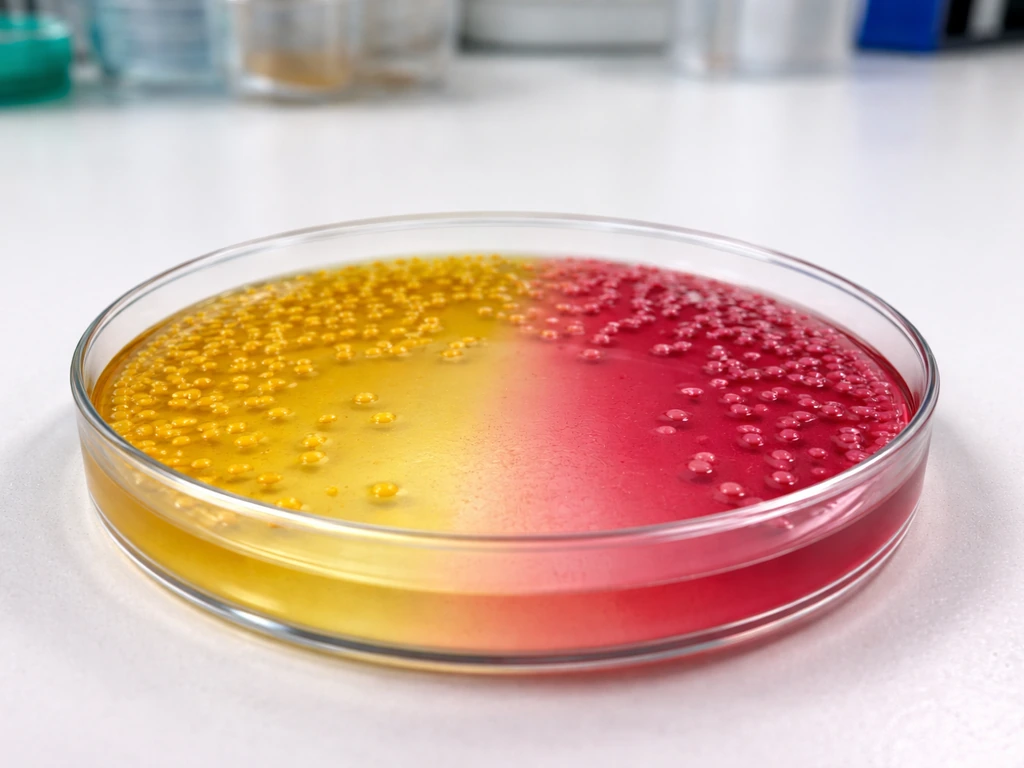
E. coli grows where it has warmth, moisture, and organic nutrients. Its primary home is the lower intestine of warm-blooded animals, including humans, but it spreads into soil, water, food, and surfaces anywhere fecal contamination occurs. Understanding exactly where it grows and what it needs to grow is the practical foundation for controlling it in food safety, lab work, or environmental monitoring.
Where Does E. coli Grow and What Does It Grow On

Marcus Reeves
18 Apr 2026
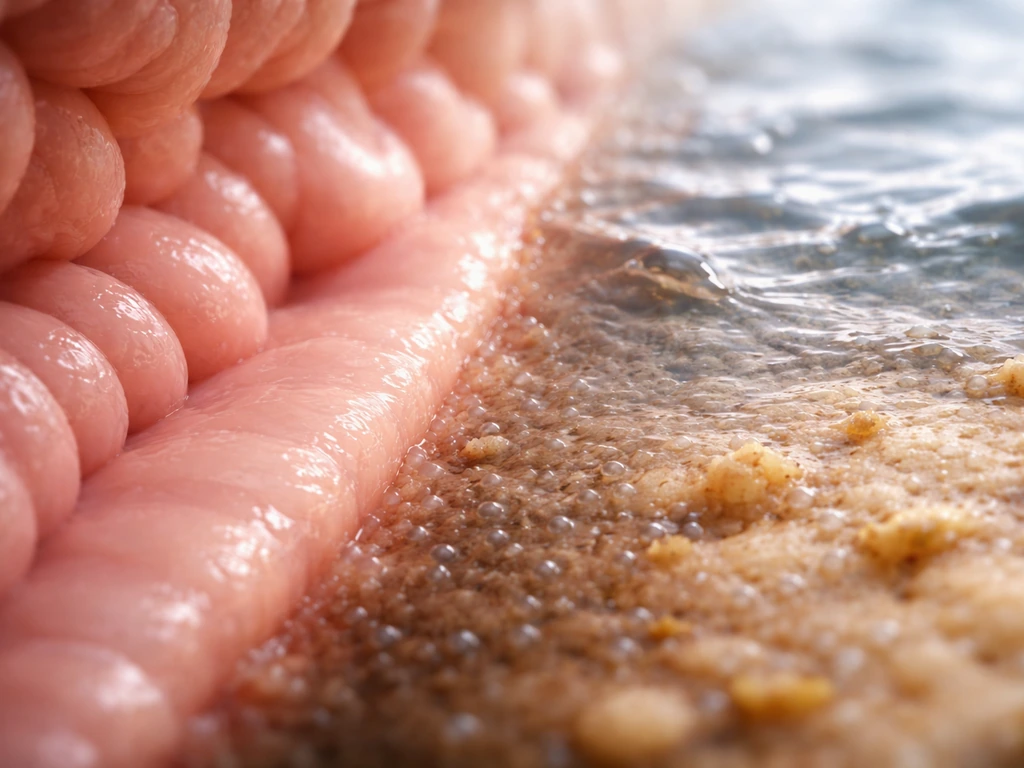
Where E. coli actually lives in the world
The intestinal tract of warm-blooded animals is E. coli's natural reservoir. It is a fecal coliform bacterium, meaning the gut and feces of humans, livestock, birds, and other warm-blooded animals are where it lives in the highest concentrations. The US EPA classifies it specifically as a fecal coliform tied to warm-blooded animal waste, and regulators use its presence in water as the primary indicator that fecal contamination has occurred.
The US EPA explains that fecal indicators are used because they are commonly found in human and animal feces, and that E. coli is a fecal coliform species specific to fecal material from humans and other warm-blooded animals [US EPA classifies it specifically as a fecal coliform tied to warm-blooded animal waste](https://archive. epa. gov/water/archive/web/html/vms511.
html).
From there, E. coli spreads into secondary environments. Contaminated water sources, irrigation water, soil receiving animal manure, and food-contact surfaces are all documented secondary habitats. It does not truly thrive in those environments the way it does in a gut, but under the right conditions it can persist and even multiply.
One underappreciated survival niche is the biofilm. E. coli O157:H7 can establish biofilms in water distribution systems and on food-processing surfaces, where cells are protected from disinfectants and environmental stress. The CDC specifically identifies biofilms in water systems as a persistence niche for pathogenic E. coli, which is part of why contamination in large processing facilities can be so hard to eliminate completely.
What E. coli actually grows on
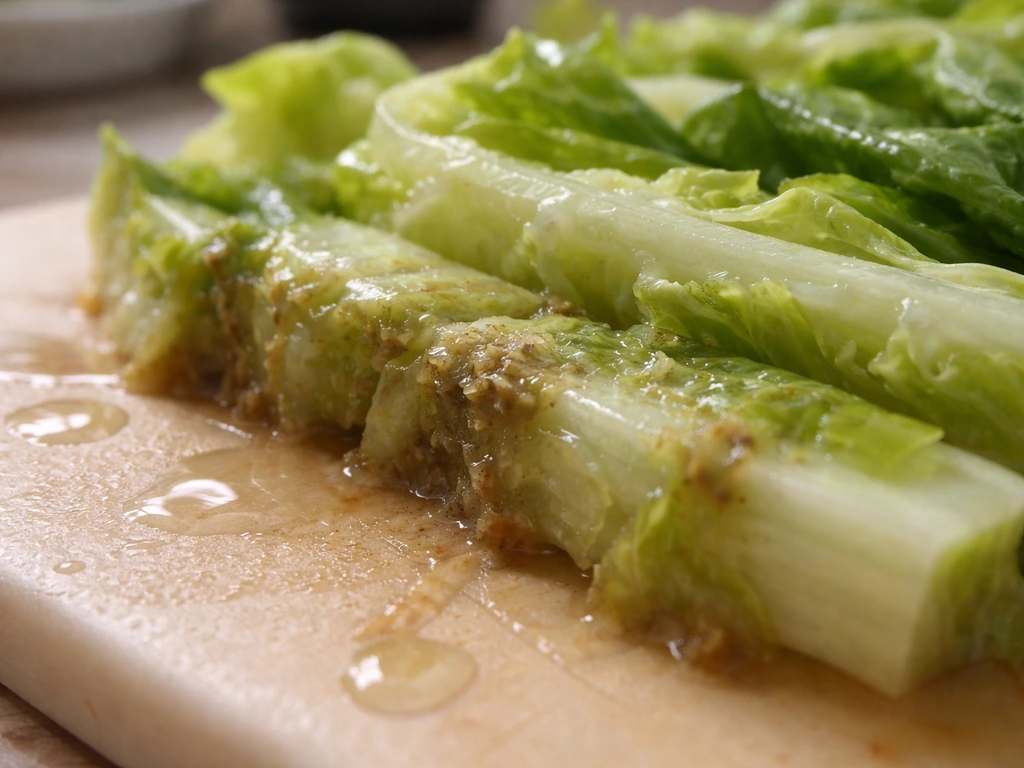
E. coli is an opportunistic grower on organic matter. In its natural environment, it uses the nutrient-rich contents of the intestine. In food environments, it can colonize a wide range of substrates, including raw meat, leafy greens, sprouts, unpasteurized dairy, and contaminated produce. These foods provide the proteins, carbohydrates, and moisture it needs.
In laboratory settings, it grows readily on nutrient-rich media. Rich broths like LB support fast doubling times at optimal temperature, and E. coli on a TSA plate will form visible colonies within 24 hours because tryptic soy agar provides all the amino acids and carbon sources it needs. The key point is that it is not a picky feeder, which is part of why it can cause problems across so many food categories.
On food-processing surfaces, it can form biofilms on stainless steel, rubber, plastic, and Teflon. This means contamination is not just about the food itself but about the surfaces that touch food during production. A biofilm on a processing line can serve as a persistent reservoir that recontaminates food even after cleaning, making surface sanitation a critical control point.
It is worth noting that E. coli is partly defined by what it does not grow on in selective laboratory contexts. For example, E. coli on mannitol salt agar is suppressed because that medium is selective for salt-tolerant organisms like staphylococci, not coliforms. Knowing which substrates support or exclude growth matters both in food environments and in lab identification work.
Temperature and pH: the two conditions that matter most
Temperature range for growth
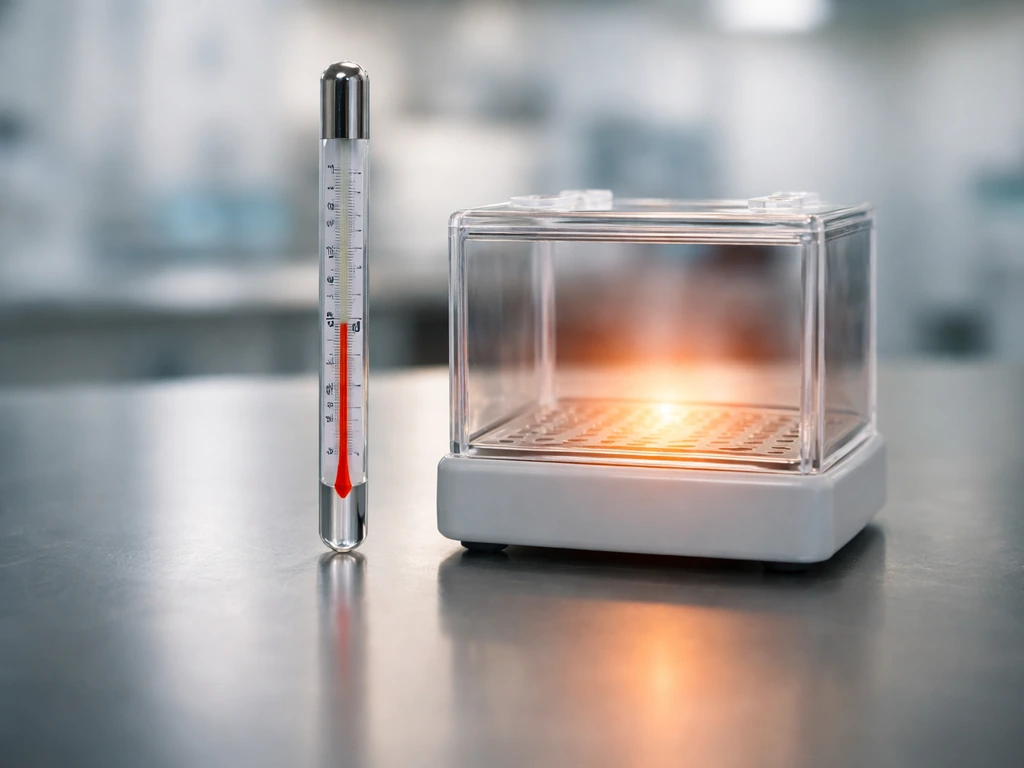
WHO reports that STEC strains of E. coli can grow from about 7°C (44°F) up to 50°C (122°F), with optimum growth at 37°C (98.6°F). That optimum maps directly to human body temperature, which explains why the gut is such an ideal environment. For what temperature E. coli grows best at, the short answer is 37°C, but the wider range means it can multiply at refrigerator temperatures that are even slightly off.
The FDA Food Code uses 41°F (5°C) as the upper boundary for safe cold holding, specifically because pathogens including E. coli can begin multiplying above that threshold. The practical implication is that a refrigerator running at 45°F is not safe for cut produce or raw proteins, even if it feels cold.
pH tolerance
E. coli is more acid-tolerant than many people assume. STEC strains can grow at pH as low as 4.4, with an upper limit around pH 9.0 and an optimum near neutral pH 7. This means it can survive and multiply in moderately acidic foods that people often consider low-risk. Apple cider, fermented sausages, and some mayonnaise-based products have been implicated in outbreaks precisely because their acidity fell within that growth range.
Foods with a pH below 4.4 are generally considered outside the growth range. Vinegar-based products, properly fermented sauerkraut, and similar high-acid foods typically inhibit growth. However, if a food starts above pH 4.4 and is then cross-contaminated after acidification is lost (for example, diluted or neutralized), the risk can return. For more on how acid conditions specifically affect E. coli, the details on whether E. coli can grow in an acidic environment are worth reviewing.
Moisture and water activity: the hidden control lever
Water activity (aW) is the measure of how much free water is available in a food for microbial use. It runs from 0 (completely dry) to 1.0 (pure water). E. coli requires a minimum aW of about 0.95 to grow, with an optimal aW near 0.995. In practical terms, this means E. coli thrives in high-moisture foods and cannot grow in properly dried or salted products.
An aW of 0.95 roughly corresponds to a salt concentration of about 8% in a reference solution. Processed meats, hard cheeses, and low-moisture products that push below that threshold put E. coli in a survival mode rather than a growth mode. The USDA notes that for low-acid foods (pH above 4.5), the risk of pathogen growth increases significantly when aW exceeds 0.86, though for E. coli specifically the 0.95 threshold is the relevant cutoff.
| Parameter | Minimum | Optimum | Maximum |
|---|---|---|---|
| Temperature | 7°C (44°F) | 37°C (98.6°F) | 50°C (122°F) |
| pH | 4.4 | ~7.0 | ~9.0 |
| Water Activity (aW) | 0.95 | ~0.995 | 1.0 |
These three parameters interact. A food that is slightly outside one limit might still support growth if the other conditions are favorable. A mildly acidic food at pH 4.6 with high moisture at room temperature is still a real risk. Hurdle technology in food safety works by stacking multiple partial barriers (slight acidity, reduced moisture, refrigeration) so that no single barrier has to do all the work.
Oxygen tolerance and how E. coli survives outside the gut
E. coli is a facultative anaerobe. That single fact explains a lot about its environmental range. It can grow with oxygen present (aerobic) or without oxygen present (anaerobic) by switching its metabolic pathways. The gut is largely anaerobic, but E. coli survives and grows fine in oxygenated water, open food surfaces, and aerobic lab cultures.
This oxygen flexibility also means modified atmosphere packaging (MAP) does not reliably eliminate E. coli risk. Research on E. coli O157:H7 under MAP conditions has shown that altering oxygen levels changes growth outcomes but does not necessarily prevent growth, especially under temperature abuse. High-oxygen MAP slowed growth in some studies, but low-oxygen packaging did not eliminate it either. Oxygen management in packaging is a useful tool but not a standalone control.
Outside the food context, E. coli can survive in soil and sediments for extended periods, especially in cooler, moist conditions. Fecal indicator monitoring in water systems accounts for this, because E. coli in environmental water does not necessarily mean it is actively multiplying, but it does indicate fecal contamination occurred and that conditions may have supported at least temporary survival.
Disinfection resistance is also part of the survival picture. Chlorination at proper concentrations inactivates E. coli, but biofilm-associated cells are harder to reach and kill. Studies comparing chlorine sensitivity between O157:H7 and standard E. coli strains show that survival under disinfection depends on concentration and exposure time, not just the presence of chlorine.
For context, E. coli's environmental flexibility contrasts with more fastidious organisms. Unlike Pseudomonas aeruginosa, which can be identified using selective media like cetrimide agar, or Enterococcus strains detected via bile esculin agar, E. coli is a generalist that grows across a wide range of conditions and substrates. That breadth is what makes it such a useful indicator organism and such a persistent food safety concern.
What this means for food safety right now
Knowing E. coli's growth parameters directly translates into actionable controls. The FDA Food Code 41°F/135°F framework exists because keeping foods below 41°F (5°C) or above 135°F (57°C) keeps E. coli either dormant or killed. That 41°F ceiling for cold foods is not arbitrary. Cut leafy greens, for example, should be held at 41°F or below at every stage of storage and display, because once they warm above that threshold, a contaminated batch can support rapid multiplication.
Time matters too. FDA guidance on time as a public health control acknowledges that short windows at room temperature can be managed with strict time limits, but those limits exist precisely because E. coli can multiply quickly under ambient conditions. In professional food service, the four-hour total time limit for food in the temperature danger zone is directly tied to pathogen doubling-time math.
For moisture control, reducing water activity below 0.95 in shelf-stable products effectively prevents E. coli growth. This is why jerky, dried herbs, and hard cheeses have different safety profiles than fresh meat and soft cheeses, even when both are stored at the same temperature.
It is also worth knowing that microbiology is not isolated to food and fecal contexts. Researchers studying unusual organisms, like those investigating how Ideonella sakaiensis grows and degrades plastic, sometimes use E. coli growth principles as a baseline reference for understanding what environmental conditions mean for bacterial metabolism generally. The principles governing temperature, pH, and moisture apply broadly across microbiology.
Practical next steps
- Verify your refrigerator is at or below 41°F (5°C). Even a few degrees above that threshold puts high-moisture, low-acid foods in the growth zone.
- Check water activity on any shelf-stable product you produce or evaluate. If aW is above 0.95, treat it like a perishable food requiring temperature control.
- Treat any food with a pH above 4.4 as potentially supporting E. coli growth if moisture and temperature conditions are also permissive.
- Sanitize food-contact surfaces with verified effective concentrations of disinfectant, and pay attention to biofilm-prone materials like rubber seals and gaskets.
- When evaluating modified atmosphere packaging, do not rely on oxygen reduction alone to control E. coli. Temperature control must remain the primary barrier.
- For water safety, E. coli presence in a water source signals fecal contamination, not just current active growth. Treat and test regardless of visual clarity.
FAQ
Does E. coli actually grow in soil and water, or is it just surviving there?
In healthy adults, E. coli naturally concentrates in the lower intestine, so it is most abundant in feces. Outside the body it usually does not “establish a home” long term, it persists when conditions still fit, then gradually declines as temperature, dryness, sunlight (UV), and nutrient availability change.
If E. coli is detected in water, does that mean it was actively multiplying?
Yes, but persistence depends on time and conditions. E. coli may remain detectable after contamination, even when active growth is unlikely, because the cell can survive while it is stressed. That is why testing for E. coli often signals fecal contamination rather than proving multiplication occurred.
Why can cleaned food-contact surfaces still lead to E. coli contamination?
It can, especially on food-processing surfaces, because biofilms shield cells from disinfectants. That means a “cleaned” surface can still have surviving cells that recontaminate food during the next production cycle, particularly when sanitation is infrequent or mechanical cleaning is insufficient.
Is modified atmosphere packaging enough to stop E. coli growth?
E. coli can grow without oxygen because it is facultative anaerobic, so low-oxygen environments do not automatically prevent growth. In modified atmosphere packaging, oxygen changes growth rates, but if temperature and time are wrong, the bacteria can still multiply or at least persist.
How strict does refrigerator temperature need to be for foods that could contain E. coli?
Yes, even slightly incorrect storage can matter. For cold foods, growth becomes more plausible when the product repeatedly exceeds about 5°C (41°F), so a thermometer reading that is “near” 41°F but fluctuates upward during transport or door openings increases risk.
Can E. coli grow in foods that taste sour or acidic?
E. coli can still grow in moderately acidic foods if the pH is above its lower growth limit and enough moisture is present, which means “naturally acidic” is not the same as “growth-proof.” A practical check is pH plus the possibility of dilution or cross-contamination after acidification.
Can E. coli grow in dried or salted foods?
Not usually, because proper drying, freezing, or heavy salting lowers available water below the growth threshold (around aW 0.95). That said, low-moisture products can still be contaminated, and E. coli may survive for some time even when it cannot multiply.
Why might E. coli not grow on a plate even if it is in the sample?
It depends on what you mean by “grow”: in a lab, it forms visible colonies on nutrient-rich media within about a day under typical incubation, but on selective or inhibitory media growth can be suppressed. In other words, choice of culture medium determines whether you see growth even if E. coli is present.
Does exposure to sunlight and air always kill E. coli on surfaces?
For backyard or environmental scenarios, sunlight and drying can reduce viable counts, but they do not guarantee safety. If the surface or food stays moist, shaded, and near body-warm temperatures, persistence and growth potential are higher than people expect.
If a food was pasteurized or fermented, can E. coli risk return later?
Yes. If a food starts within an unsafe range (for example, pH above the lower limit and high moisture) and then gets contaminated again, the “initial” acidity or temperature history may not reflect the conditions during actual bacterial multiplication.
If E. coli is killed by cooking, can it come back later?
Often yes, especially after heat damage, because bacteria that survive can later regrow if the food passes back through a temperature danger range. The key distinction is survival versus growth, and time spent at unsafe temperatures after cooking is what typically drives higher risk.
Does removing oxygen from food mixtures prevent E. coli from multiplying?
Not reliably. Vacuum or oxygen-reduced conditions can slow growth, but E. coli can still use alternative metabolic pathways. Temperature control and time limits are still the main factors, while packaging is only a secondary barrier.
Next Article
Does E. coli Grow on Mannitol Salt Agar? Growth Guide
Yes or no guide for E. coli on MSA, plus what other listed bacteria grow and how to read mannitol color change.