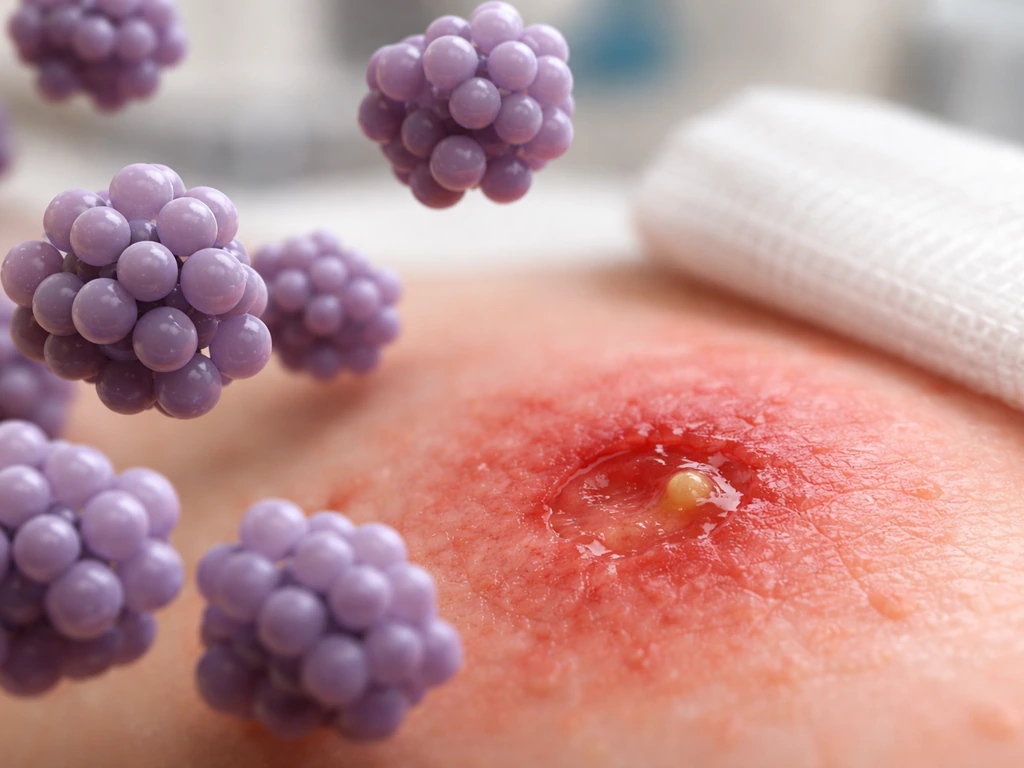
Yes, Penicillium mold can grow on bread. In fact, it is one of the most common molds you will find on a loaf that has been sitting out too long. But there is a big difference between that fuzzy growth and the antibiotic penicillin you get from a pharmacy. Understanding that distinction matters, both for your safety and for knowing what to do when you spot mold on your bread.
Does Penicillin Mold Grow on Bread? Safety and Storage Tips

Marcus Reeves
10 Apr 2026
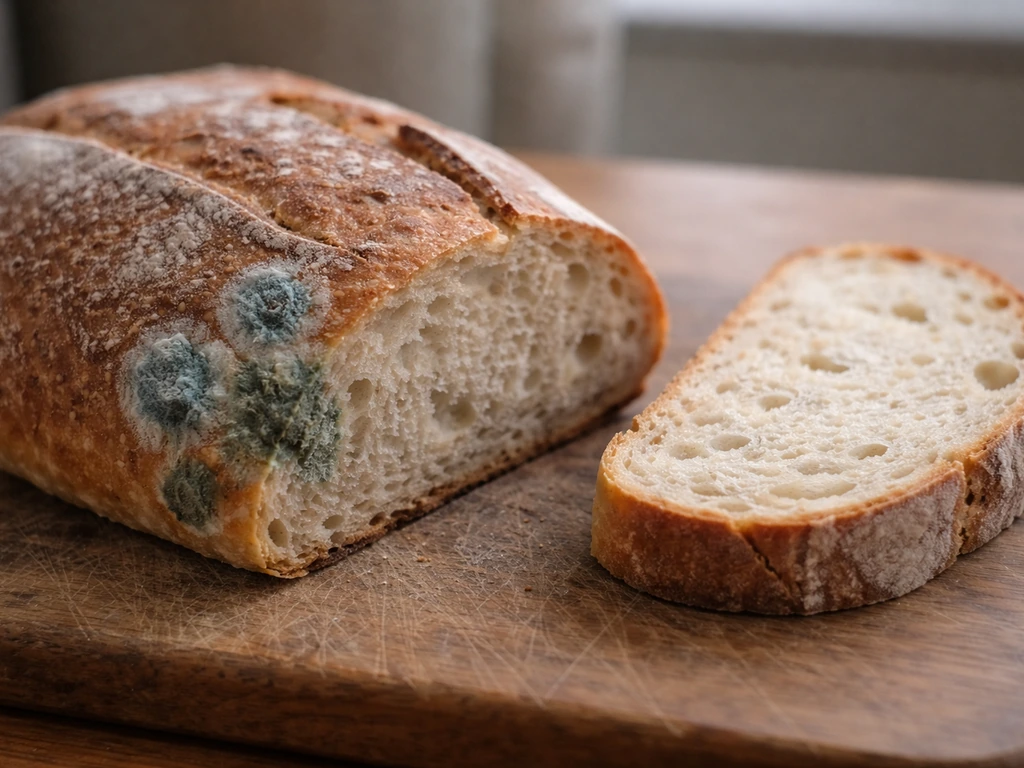
Penicillin the antibiotic vs. Penicillium the mold
Penicillin is a specific antibiotic drug derived from certain Penicillium fungi. The mold itself is the organism; penicillin is just one chemical that some strains of that organism can produce under very specific conditions. Penicillium chrysogenum, the species used in industrial antibiotic manufacturing, requires a controlled cultivation environment: a temperature around 25°C, a pH of roughly 6.2 to 6.5, defined carbon sources like glucose or lactose, and precise nitrogen sources such as corn steep liquor or ammonium salts. That level of control simply does not exist on a kitchen counter.
So when Penicillium mold grows on your bread, it is not producing meaningful quantities of pharmaceutical-grade penicillin. The mold is just growing, feeding on the carbohydrates in the bread, and spreading spores. If you are curious about where penicillin grows naturally in the environment, the answer is more nuanced than most people expect, but a slice of bread on your counter is not a penicillin factory.
Can Penicillium mold actually grow on bread?
Absolutely. Bread is almost an ideal substrate for mold. It has a water activity (a_w) of around 0.96, which is well within the range that supports active Penicillium growth. Studies modeling mold spoilage in bakery products have specifically isolated Penicillium species from spoiled loaves, and in one analysis, Penicillium accounted for about 56% of all mold colonies recovered from bread. Aspergillus came in at around 38%, with smaller fractions from genera like Cladosporium, Mucor, and Alternaria.
The environmental requirements that allow Penicillium to thrive on bread are not hard to meet in a typical home or bakery:
- Water activity: Penicillium species grow well at aw values from about 0.80 up to 0.98. Bread at 0.96 aw sits near the high end of that comfortable range.
- Temperature: Most bread-spoilage Penicillium strains are active between roughly 5°C and 30°C, with optimal growth around 20 to 25°C. Room temperature storage is essentially ideal for them.
- Oxygen: Penicillium is aerobic. A loaf left in open air or loosely bagged provides all the oxygen the mold needs.
- pH: Bread typically has a pH between 5.0 and 6.5, depending on the recipe. That mildly acidic environment suits Penicillium well.
- Nutrients: The starch and simple sugars in bread are excellent carbon sources for mold. Even the protein and fat content contribute nitrogen and energy.
One thing worth noting: mold growth is strongly interactive. A small drop in water activity combined with lower temperature has a compounding effect on slowing growth. This is exactly why proper storage matters so much, and why we will cover that in detail below.
What you are probably seeing on your bread
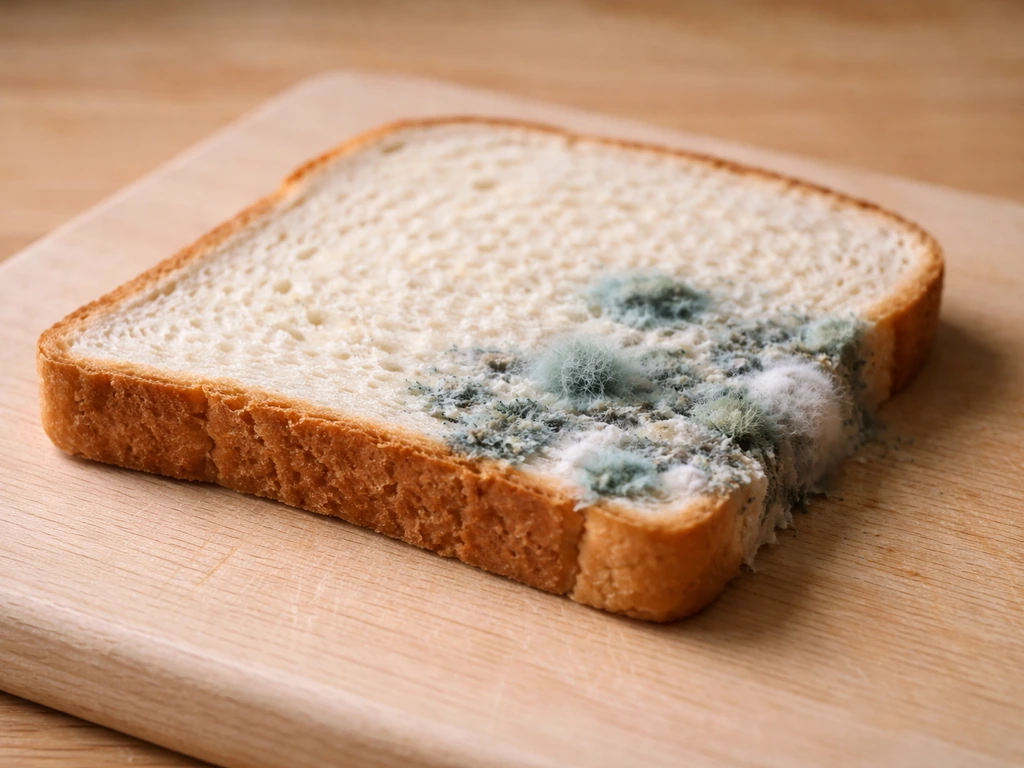
Most people describe mold on bread as fuzzy green dots, white cottony patches, or gray-blue-green fuzz. USDA FSIS specifically calls out fuzzy green dots on bread as a classic visual. Here is a rough guide to what different appearances might suggest, though visual identification alone is never definitive:
| Appearance | Likely mold type | Notes |
|---|---|---|
| Blue-green or gray-green fuzz | Penicillium species | Most common on bread; powdery texture as spores mature |
| Black or dark gray fuzz | Aspergillus niger or Rhizopus stolonifer | Rhizopus is common on white sandwich bread |
| White or off-white cottony growth | Early-stage Penicillium, Mucor, or Aspergillus | Color shifts as spores form |
| Olive-green to brown-black patches | Cladosporium species | Less fluffy, more flat-looking |
The color of mold on bread changes as it matures, so early-stage growth looks white or pale before the spores develop and shift to green, blue, or black. This means what starts as a faint white spot can quickly become the recognizable fuzzy green growth associated with Penicillium.
Here is the practical reality: you cannot reliably tell exactly which mold species you are looking at with the naked eye. The colors overlap, multiple molds often grow on the same loaf simultaneously, and the conditions that allowed one mold to grow almost certainly allowed others to grow too. From a safety standpoint, it does not really matter whether it is Penicillium or something else. The response is the same.
How to handle it safely without trying to culture anything
Do not try to confirm which mold species is growing on your bread by attempting to culture it at home or running any DIY tests. There is no reliable way to do this safely in a home setting, and the process of disturbing mold growth aerosolizes spores directly into your breathing space. That is the last thing you want.
Here are the safe steps to take when you find mold on bread:
- Do not sniff the mold directly. Inhaling mold spores can trigger respiratory irritation, worsen asthma, or cause allergic reactions even in people who have never had a mold allergy before.
- Do not pinch, brush, or disturb the mold patch. Any contact releases spores into the air.
- Place the bread carefully into a bag without squeezing it, seal it, and put it in the trash.
- Wash your hands thoroughly after handling the bag.
- Wipe down the area where the bread was stored with a damp cloth and mild detergent, then dry completely.
If you are immunocompromised, have asthma, or have a known mold allergy, it is worth being especially careful. The CDC notes that people with weakened immune systems face elevated risk of invasive mold infections when exposed to spores, and CDC guidance specifically advises people with asthma or other respiratory conditions to avoid areas with visible or smelled mold growth. Having someone else handle and discard the moldy bread is a reasonable precaution in those cases.
Food safety: just throw it out
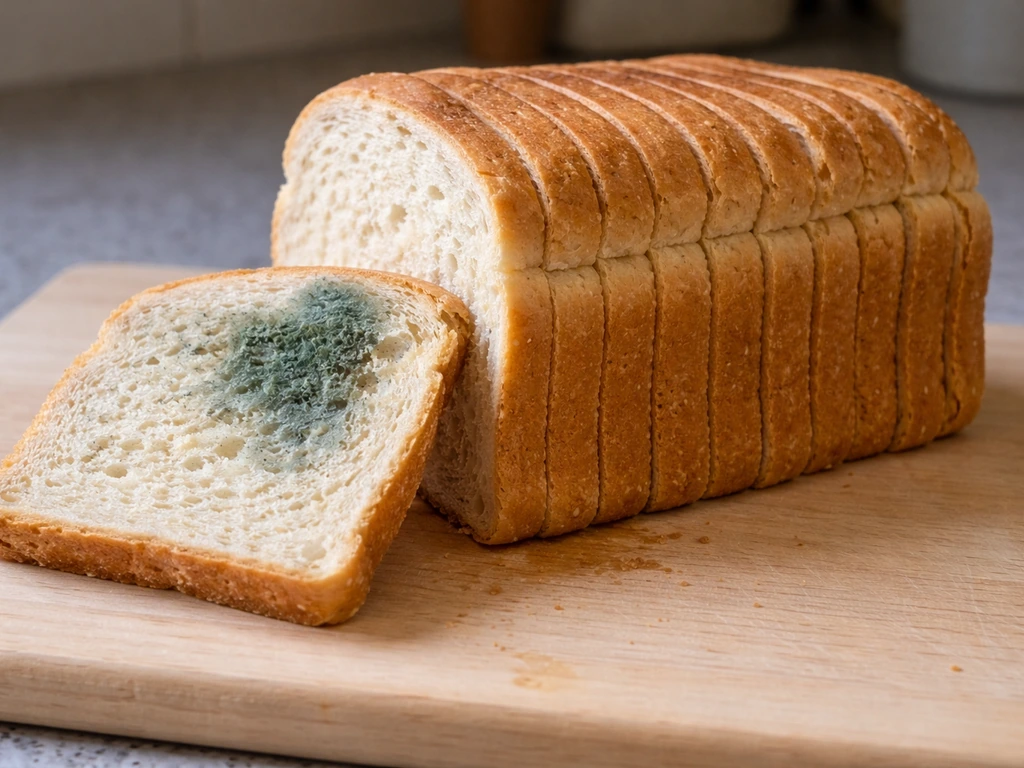
Bread is a porous food. That matters because mold does not just sit on the surface. The root structures (hyphae) penetrate into the crumb, meaning contamination extends well beyond the visible fuzzy spot. USDA FSIS is direct about this: moldy bread and other porous baked goods should be discarded entirely, not salvaged by cutting away the visible mold.
That advice applies even if the mold spot looks small. The visible growth is just the sporulating surface. By the time you can see it, the fungal threads have already moved through a much larger area of the loaf. And beyond the mold itself, USDA FSIS also points out that unseen bacteria may be present wherever mold has grown, so the contamination picture is broader than the green fuzz suggests.
There is also a mycotoxin concern. Some mold species, including certain Penicillium and Aspergillus strains, can produce mycotoxins, which are chemical compounds that are harmful to health and that do not break down with heat. Cooking or toasting moldy bread does not make it safe. The FDA has documented mycotoxin occurrence in bread and grain-based foods, and that risk alone is a good reason not to try to salvage a moldy loaf by any method. The mold you can see on the surface is connected to a network you cannot see, and what that network may have already deposited in the bread is not something you can remove.
It is also worth knowing that mold on food is not just a fungal concern in isolation. Where biofilms grow in food environments illustrates how microbial communities can establish in layers, with bacteria sometimes taking advantage of the same moisture and nutrient conditions that mold creates. Discarding the food and cleaning the storage area addresses both risks at once.
Not all mold-related risks are the same
Most healthy adults who accidentally eat a small amount of moldy bread will feel fine or at worst experience some digestive upset. That does not make it a good idea, but it does mean moldy bread is not an emergency for most people. The higher-risk groups are people who are immunocompromised, those with asthma or chronic lung conditions, and people with mold allergies. For these groups, even inhaling spores during disposal is enough to cause a reaction, which is why the handling steps above matter more for them.
Mold on food is not the same as the bacterial contamination that causes classic food poisoning, but it is worth understanding how different pathogens behave in overlapping conditions. Staphylococci are pus-forming bacteria that grow in a variety of food environments, and like mold, they can be present on foods without any obvious visual sign. The broader lesson is that visible contamination is just one piece of the picture.
How to stop mold from growing on bread in the first place
Since Penicillium and other bread molds need moisture, a moderate temperature, oxygen, and available nutrients, the prevention strategy is straightforward: take away as many of those conditions as you can.
Reduce moisture and air exposure
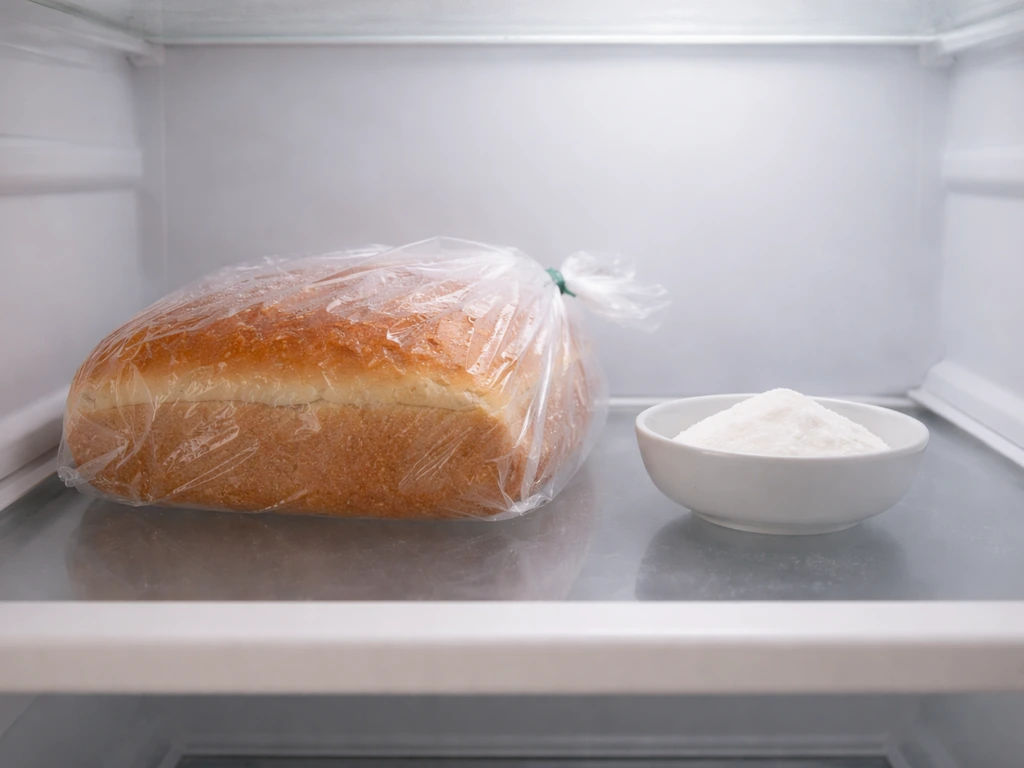
Mold cannot establish on dry surfaces. Bread that is allowed to cool completely before being bagged is less likely to trap excess moisture inside the packaging. Sealing bread tightly in a plastic bag or airtight container reduces the oxygen available and slows water loss (which would otherwise raise the local humidity near the crust). Avoid storing bread in areas with high ambient humidity, like near a dishwasher or above the stove.
Temperature and refrigeration
Refrigeration slows mold growth significantly because most bread-spoilage Penicillium strains grow much more slowly below 10°C. The trade-off is that refrigerating bread accelerates starch retrogradation (the process that makes bread go stale faster). For short-term storage of a few days, a cool pantry works fine. For anything beyond three to four days, freezing is the better option. Frozen bread (properly wrapped) essentially halts mold growth entirely, and it can be toasted directly from frozen without meaningful texture loss.
Packaging choices
Modified atmosphere packaging, which is used commercially to replace oxygen with carbon dioxide or nitrogen inside sealed bread bags, can significantly extend shelf life by denying mold the oxygen it needs. At home, the practical equivalent is simply squeezing excess air out of a resealable bag before sealing. Some bakers also use bread boxes, which allow a small amount of airflow (preventing moisture buildup) while still limiting direct air exposure. The best approach depends on how fast you go through a loaf.
Storage surface hygiene
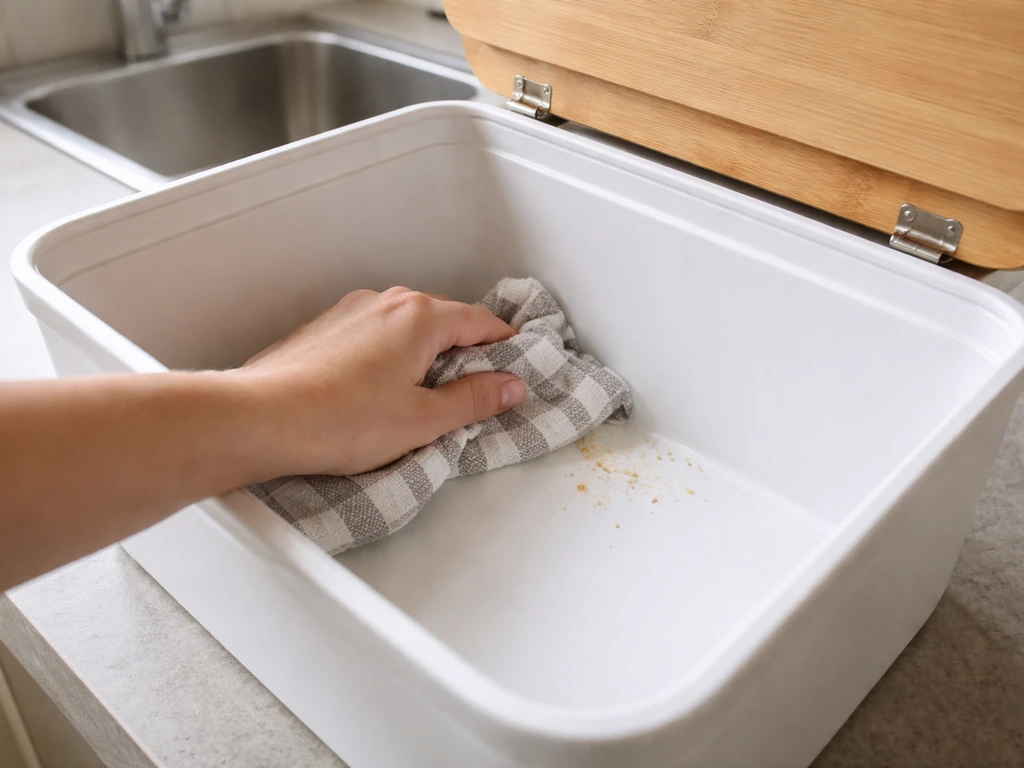
Mold spores are everywhere in the environment and land on food surfaces constantly. The key is not to eliminate them (that is not realistic) but to deny them the conditions to germinate and grow. Keep bread storage areas clean and dry. If you use a bread box, wash and dry it thoroughly between loaves. Residual spores from a previous moldy loaf can colonize the next one faster than you expect.
Understanding the microbial environment around your food also helps. Bacteria that form clusters and colonies can share storage surfaces with mold, and some of them are just as capable of colonizing food under the same warm, moist conditions. Round bacteria that grow in clusters are called cocci, and certain cocci-forming pathogens are among the contaminants that can be present alongside visible mold growth on food surfaces. Good storage hygiene addresses both.
The bottom line
Penicillium mold does grow on bread, and it is one of the most common molds you will encounter on a spoiled loaf. It is not producing usable antibiotic penicillin in your kitchen. When you see mold on bread, the safe answer is always to discard the entire loaf, handle it carefully to avoid inhaling spores, and clean the storage area. No cutting around the mold, no toasting it away, no trying to identify the exact species at home. Just discard it, and then store your next loaf in a way that keeps moisture and oxygen in check.
For most people, moldy bread is a nuisance. For people with asthma, mold allergies, or compromised immune systems, it is worth taking the handling steps more seriously. Either way, pus-forming bacteria that grow in bunches or clusters are just one example of the broader microbial risks that can co-exist with mold in food environments, which is a good reminder that visible mold is a signal to act, not just a cosmetic problem to work around.
FAQ
Can I cut off the moldy part of bread and eat the rest if the spot is small?
If mold is limited to a single thin surface patch, the safe approach is still to discard the entire loaf because hyphae can extend into the crumb where you cannot see them. Freezing later also does not “fix” contamination, it only stops additional growth.
If I toast moldy bread until it is crisp, is it safe to eat?
Toasting changes texture and appearance but does not reliably neutralize toxins or kill all fungal and bacterial contaminants that may have spread beyond the visible growth. The practical rule is, if there is visible mold, toasting is not a safety method.
What is the safest way to handle and dispose of moldy bread in my kitchen?
Do not smell it closely or brush it off, because you can inhale spores and aerosolize material. Instead, ventilate the area, use gloves if you have them, bag the bread immediately, and wipe the surrounding surfaces afterward with an appropriate kitchen cleaner.
What should I do if I ate a small bite of moldy bread by accident?
Most healthy adults will not have an emergency reaction from accidentally swallowing a small amount, but you should watch for symptoms like persistent vomiting, severe diarrhea, wheezing, or allergic signs. If you have asthma, a compromised immune system, or a known mold allergy, contact a clinician for personalized guidance.
Can moldy bread affect me even if I do not eat it (for example, from smell or spores)?
Yes, there can be a sensitivity issue even without tasting or eating it. People with asthma, mold allergies, or immune suppression can react from inhaled spores when cleaning or disposing of moldy bread, so another person should handle disposal if possible.
When would mold exposure from bread disposal be serious enough to get medical help?
Breathing issues can be delayed, especially after exposure to a large amount of airborne spores during disposal or cleanup. Seek urgent care if you develop breathing difficulty, chest tightness, or worsening wheeze, especially in people with asthma or lung disease.
Is it safer to keep bread in its bag or container after mold appears on a loaf nearby?
If the bread is still inside a sealed package, you may have more risk if the package has moisture condensation or visible mold. When in doubt, discard the loaf, then clean the shelf and container thoroughly because residual spores can seed the next bread.
How should I store bread to slow Penicillium growth without making it go stale too fast?
Refrigeration slows mold growth, but it does not prevent it, and condensation inside packaging can still provide enough moisture. Make sure bread is fully cool before bagging, store in a dry spot, and use freezing if you cannot finish the loaf within about a week.
Why shouldn’t I try to identify the mold species or culture it to confirm it is penicillin?
Do not try to identify the mold at home, and do not attempt DIY culturing, because disturbing growth increases spore exposure and does not produce reliable species identification. Identification also is not the decision point, the safety action is discard and clean.
What should I clean in the kitchen after I find mold on bread?
You should clean the storage area even if you throw the bread out, because spores and moisture can remain on surfaces. Wash removable items like a bread box with hot soapy water, dry completely, and wipe nearby shelves where condensation may have collected.
Can I wash moldy bread under the sink or wipe it clean to reuse it?
Rinsing or wiping the mold off only spreads contamination and can drive mold farther into porous surfaces like bread. If mold is present, do not wash, wipe, or vacuum the bread for reuse.
Is there any “gray area” where salvaging moldy bread is acceptable for anyone?
If you cannot discard due to cost or waste concerns, it still is not considered a safe reuse situation. The safe guidance remains discard the loaf and address the storage conditions, because toxins and hidden microbial spread are not removable by normal kitchen steps.
Next Article
Staphylococci Are Pus-Forming Bacteria That Grow in What
Learn where staphylococci grow on skin, wounds, and mucous membranes and which conditions enable their survival and spre