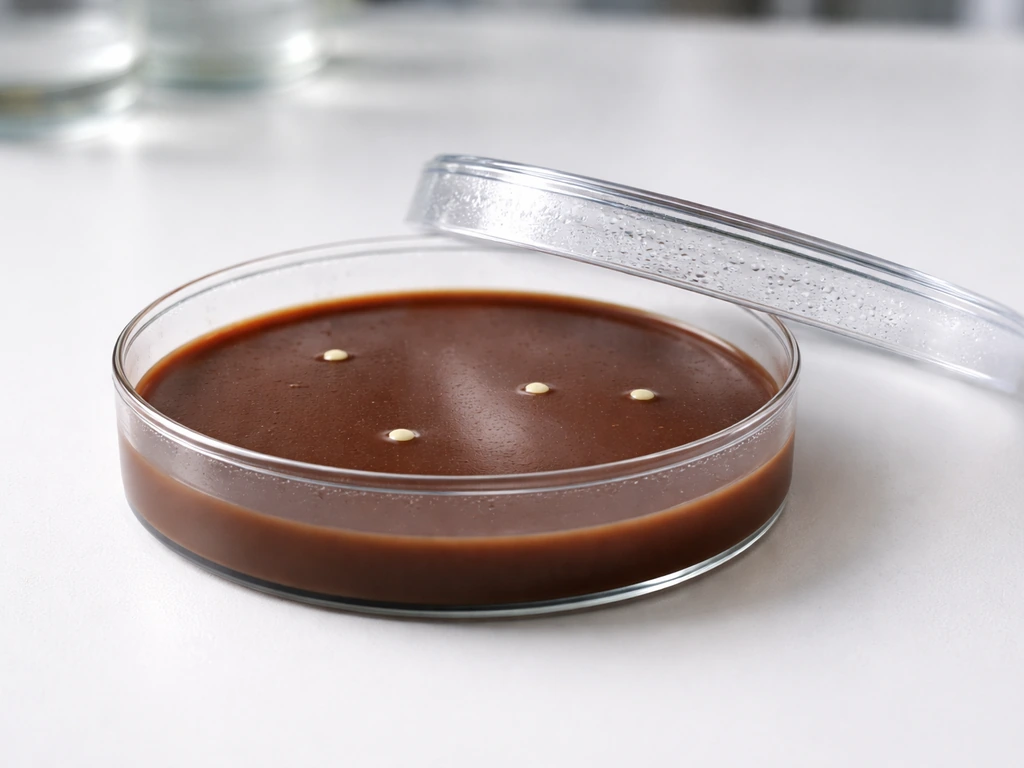
Pseudomonas aeruginosa grows best at around 37°C in moist, nutrient-available environments with a near-neutral pH and good oxygen supply. It tolerates a surprisingly wide range of conditions, from refrigerator temperatures near 4°C up to about 42°C, and it can exploit nearly any wet surface, drain, food contact zone, or clinical environment where moisture and even trace nutrients are available. That flexibility is exactly what makes it a persistent problem in food facilities, hospitals, and anywhere water collects.
How Does Pseudomonas aeruginosa Grow? Conditions to Know

Marcus Reeves
10 Jul 2026
Key growth basics at a glance
P. aeruginosa is a Gram-negative, non-fermenting aerobic bacillus that has evolved to thrive across an unusually broad range of environments. It is not a fastidious organism. It does not need rich, complex nutrients to survive and can grow on minimal carbon sources including hydrocarbons, simple organic acids, and even trace contaminants in water. In a rich broth like LB, laboratory strains can double in as little as 25 to 35 minutes. In minimal media, that slows to roughly 1 to 1.5 hours, but growth still proceeds reliably. That metabolic versatility is the first thing to internalize when you are trying to prevent contamination: P. aeruginosa does not need much to get established.
| Growth Factor | Minimum | Optimum | Maximum |
|---|---|---|---|
| Temperature | ~4°C | ~37°C | ~42°C |
| pH | ~3.5 (limited growth) | ~6.6–7.0 | ~9.7 (limited growth) |
| Water activity (aw) | ~0.97 | >0.99 (high moisture) | N/A (needs water) |
| Oxygen | Microaerobic (~0.4% O₂) | Fully aerobic | Aerobic |
Temperature: cold-tolerant and heat-limited
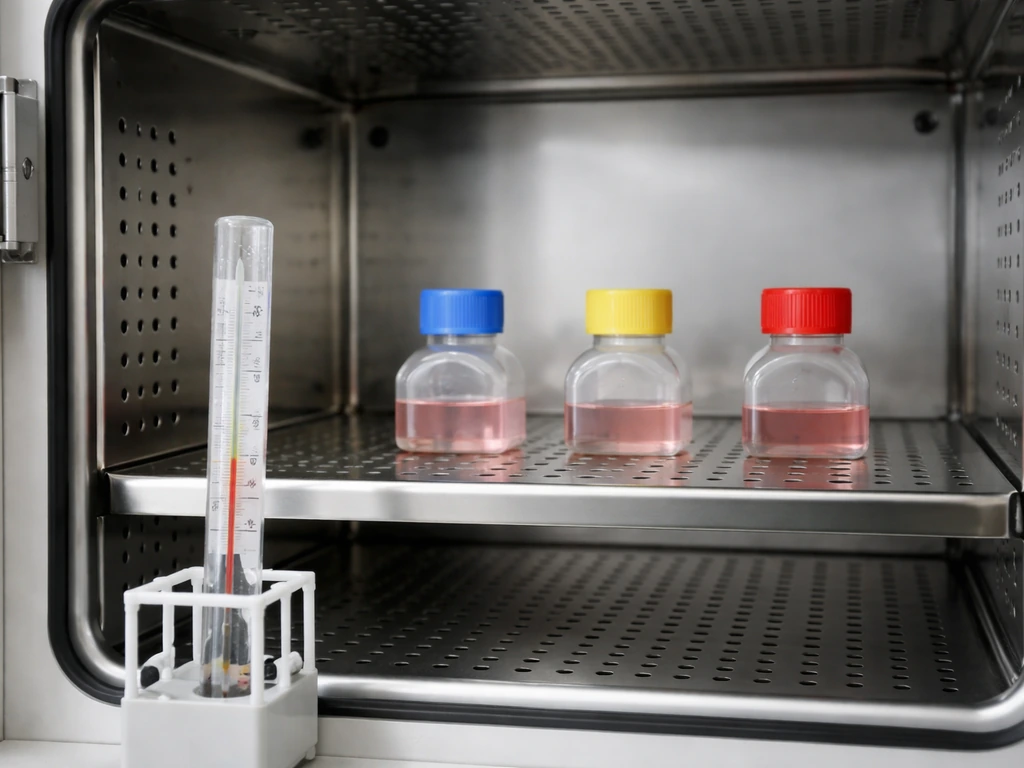
The organism's optimum growth temperature is around 37°C, which is why it is a clinically relevant pathogen and why incubators are typically set there for laboratory cultivation. But the more important practical fact is its lower tolerance: P. aeruginosa can survive and grow at temperatures down to approximately 4°C. That means refrigeration slows it but does not reliably stop it, especially in moist, nutrient-available environments like condensation-prone surfaces or refrigerated food processing zones.
At the upper end, growth is possible up to about 42°C, which the FDA's Bacteriological Analytical Manual actually uses as a confirmatory growth test for Pseudomonas species identification. Growth above that temperature generally ceases, so standard food pasteurization temperatures are lethal. The takeaway for anyone monitoring food safety is that the danger zone for this organism is wider than for many other pathogens: room temperature and even cold storage conditions can still allow it to persist and multiply given enough time and moisture.
pH tolerance: flexible but not acid-proof
P. aeruginosa grows best at near-neutral pH, roughly 6.6 to 7.0, which maps closely to the conditions in human tissues and neutral water systems. Laboratory culture studies have shown it can survive at pH values ranging from about 3.5 to 9.7, though biomass production drops considerably at both extremes. In practical terms, it is not going to thrive in strongly acidic food products like vinegar-based preparations or pickled items, but it is quite comfortable in most fresh produce, minimally processed foods, and water systems that hover near neutral.
One underappreciated detail is that the combination of low pH and organic acids, the kind used in cleaning and food contexts, is more inhibitory than low pH alone. Research modeling P. aeruginosa growth kinetics confirms a synergistic inhibitory effect when organic acids are present alongside reduced pH. This is useful to know if you are designing a sanitation protocol: an acid-based cleaner used at the correct concentration and pH can be more effective than a neutral disinfectant at equivalent concentration. It is also worth noting that within a biofilm, the internal pH can remain near 6.7 even when the bulk environment is more acidic, which is one reason biofilm-embedded cells are harder to kill with acid-based approaches.
Water activity and moisture: this organism needs wet conditions
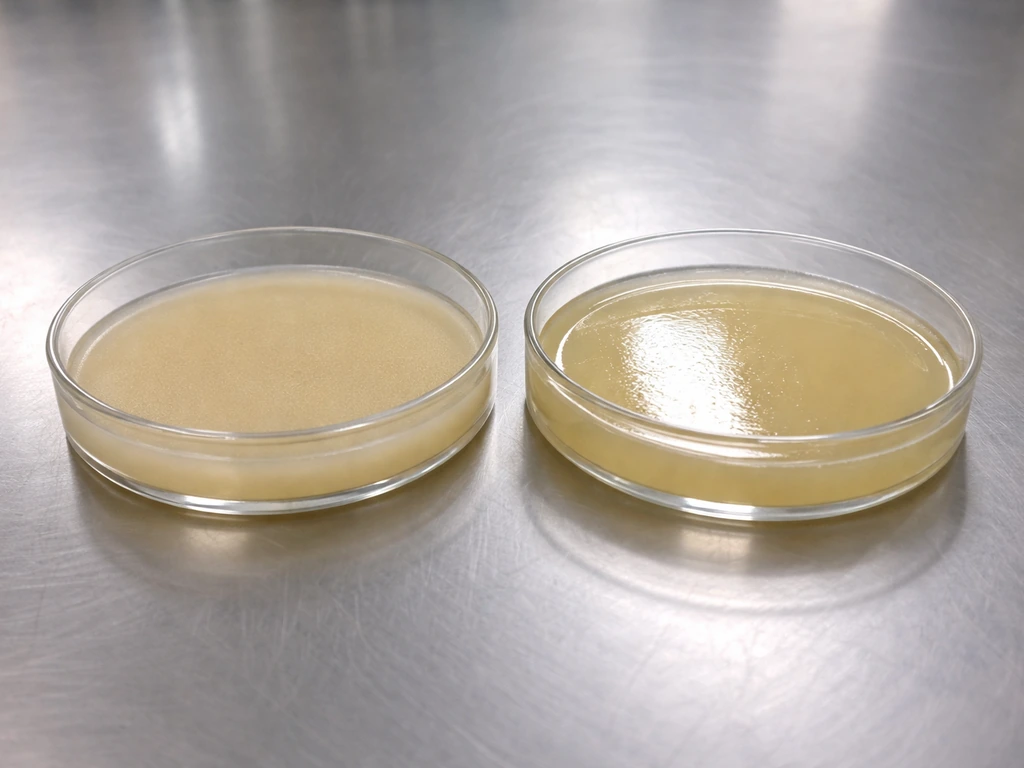
P. aeruginosa requires relatively high water activity to grow, with a reported minimum around 0.97 aw. To put that in perspective, most fresh meats, fish, fresh produce, and water-based beverages have aw values above 0.97, meaning they can support growth. Dried foods, shelf-stable goods with reduced moisture, fermented products, and items with aw below 0.95 are significantly more resistant. Moisture control is one of the most reliable levers for preventing P. aeruginosa in both food products and facility environments.
Where this matters most in food facilities is not just in the food itself but in the environment: standing water in floor drains, wet cutting boards, damp seals around equipment, condensation in cold rooms, and slow-draining sinks. P. aeruginosa is sometimes called a water organism for good reason. Any surface that stays persistently wet is a potential colonization site, and once it colonizes, biofilm formation makes removal much harder.
Oxygen: aerobic by preference, flexible by necessity
P. aeruginosa is primarily an aerobic organism: it grows fastest and most efficiently with a good oxygen supply, which is why standard laboratory cultures are grown with shaking to maximize aeration. However, it can grow under microaerobic conditions. Research has shown growth at oxygen concentrations as low as 0.4%, with a generation time of around 122 minutes under those conditions, compared to much faster doubling times under full aerobic conditions. This matters because low-oxygen microenvironments occur routinely inside biofilms, in biofilm-clogged drains, and in the deep layers of surface films on food contact equipment.
Under true anaerobic conditions, survival can continue through fermentation pathways, notably pyruvate fermentation, though growth is minimal. Oxygen microelectrode studies confirm that within a mature P. aeruginosa biofilm, there is a stratified oxygen gradient: cells near the surface are metabolically active and growing, while cells in deeper, oxygen-depleted zones slow down significantly but remain viable. A 2025 review also emphasizes that oxygen-limited niches within Pseudomonas aeruginosa biofilms drive altered metabolism and growth, with reduced activity and increased drug tolerance in biofilm interiors stratified oxygen gradient. This metabolic stratification is directly linked to antibiotic and disinfectant tolerance in biofilms.
Nutrients and what it can actually grow on

One of P. aeruginosa's defining characteristics is its nutritional versatility. It can use a wide variety of organic compounds as its sole carbon and energy source, including simple sugars, amino acids, organic acids, and even hydrocarbons like n-alkanes. Studies on clinical isolates have confirmed that some strains can assimilate hydrocarbons directly, though this varies by strain. In food environments, this means residual organic matter from inadequate cleaning, trace nutrients in water lines, and even residues on supposedly clean surfaces can all sustain growth. Group B strep can also be cultured on selective media, and the specific agar type used matters for reliable growth.
From a laboratory cultivation standpoint, P. aeruginosa grows well on standard nonselective media like LB broth or tryptic soy agar, and on selective/differential media like blank" rel="noopener noreferrer">cetrimide agar, which encourages the production of its characteristic pigments, pyocyanin (blue-green) and pyoverdine (fluorescent yellow-green). While Pseudomonas aeruginosa can grow on many common lab media, chocolate agar is not a standard growth choice for this organism does pseudomonas aeruginosa grow on chocolate agar. These pigments are often the first visual clue in identification workflows. Plates are incubated at 37°C for 24 to 48 hours for typical isolation, and short-term storage of cultures is done at 4°C. For food safety and environmental testing, cetrimide agar or similar selective media are the standard starting point for presumptive identification.
How P. aeruginosa persists: biofilms, stress tolerance, and surface survival
Understanding how P. aeruginosa grows is only part of the picture. The other part is understanding why it is so hard to eliminate once established. Biofilm formation is central to this. Once P. aeruginosa shifts from planktonic (free-floating) to biofilm mode, it wraps itself in an extracellular matrix including alginate, a polysaccharide that physically blocks disinfectants and reduces the penetration of chlorine-based agents. Studies comparing planktonic and biofilm cells consistently show that biofilm-embedded cells are substantially more tolerant to chlorine, quaternary ammonium compounds (QACs), and hydrogen peroxide than their free-floating counterparts.
Biofilms also provide physical protection from desiccation. Even in environments that dry out periodically, desiccation-tolerant genes allow P. aeruginosa to survive on inanimate surfaces like plastic and stainless steel until moisture returns. This is well documented in research identifying genome-wide factors important for surface persistence, and it explains why wiping down a surface and letting it re-wet is not an effective long-term control strategy.
When nutrients are truly scarce, P. aeruginosa does not simply die. It enters a starvation-survival mode involving polyphosphate granule biogenesis and cell cycle exit, essentially a controlled dormancy that allows cells to persist until conditions improve. The practical implication is that a surface or water line that appears clean and unfed can still harbor viable cells waiting for the next wet, nutrient-carrying event.
Disinfectant resistance is not just passive. Biofilm cells deploy enzymatic defenses, including catalase to neutralize hydrogen peroxide, and regulatory systems like RpoS and AlgT that coordinate resistance responses to oxidizing agents like monochloramine. QAC-based disinfectants are further undermined by organic load, over-dilution, and insufficient contact time. A 2026 study on contaminated handwashing sinks found that soaking and extended contact time significantly outperformed simple rinsing for reducing P. aeruginosa detection and recurrence, reinforcing that contact time and physical penetration matter as much as disinfectant choice.
Where it actually shows up in real environments
In real-world settings, P. aeruginosa is most commonly found wherever water accumulates: floor drains, sinks, hose bibs, ice machines, cooling systems, mop water, and the internal surfaces of water lines. In food facilities, wet processing equipment, gaskets, and biofilm-prone areas like drain lips and pipe elbows are classic colonization sites. In healthcare, it turns up in sinks, ventilators, and any water-bearing equipment. In food products themselves, it is associated with minimally processed, high-moisture items, particularly fresh fish, seafood, and some dairy products, where it can cause visible spoilage through protease and lipase activity.
For microbiologists working with chocolate agar or other general-purpose media, it is worth noting that P. aeruginosa grows readily on chocolate agar, as it does on most nonselective blood-based media. Listeria monocytogenes, for comparison, does not typically grow on chocolate agar under routine testing conditions does listeria monocytogenes grow on chocolate agar. Its growth behavior on various selective and nonselective media is a related topic worth understanding alongside cetrimide-based identification workflows.
Practical control: what actually works
The most effective prevention strategy targets the conditions P. aeruginosa needs: moisture, nutrients, and undisturbed surfaces. Eliminating standing water is the single highest-leverage action in a food facility or healthcare environment. Drains should drain completely and dry out between uses where possible. Equipment should be designed and maintained to avoid water traps. Any surface that stays wet should be treated as a potential colonization site and cleaned on a schedule that does not allow biofilm to mature.
- Control moisture first: eliminate standing water, pooling in equipment, and persistently wet surfaces. P. aeruginosa cannot establish itself in dry environments.
- Use pH and organic acid combination sanitation where appropriate: acid-based cleaners potentiated by organic acid residues are more inhibitory than neutral disinfectants at the same concentration.
- Apply disinfectants with adequate contact time and concentration: particularly for drains and surfaces with known biofilm risk, soaking outperforms wiping or rinsing.
- Do not rely solely on QACs or chlorine for biofilm removal: mature biofilms require mechanical disruption (scrubbing, high-pressure rinsing) combined with chemical disinfection to reduce viable cell counts effectively.
- Rotate disinfectant classes: using only one class of disinfectant creates selection pressure. Alternating between oxidizing agents and QACs, for example, reduces the chance of adaptive tolerance development.
- Monitor drains, sinks, and water lines proactively: these are the primary reservoirs. Environmental swabbing and culture on selective media like cetrimide agar gives you early warning before a contamination event reaches product.
- Avoid temperatures between 4°C and 42°C for extended holding of high-moisture foods without additional hurdles: pH reduction, water activity control, or modified atmosphere packaging should be used as complementary barriers.
- Refrigerate aggressively but do not treat cold storage as a kill step: 4°C slows P. aeruginosa but does not eliminate it. Combined hurdles are required for high-risk moist foods.
If you are trying to prevent P. By contrast, E. coli does not reliably grow on chocolate agar unless specific conditions and selective supplements are used. aeruginosa contamination, the mental model that works best is to treat moisture as the master switch. Remove it, and nearly all of the other conditions for growth collapse. Keep it dry, keep surfaces clean of organic residues, and use disinfectants at correct concentrations with enough contact time to reach inside surface films. That combination addresses the organism's growth requirements directly rather than fighting its consequences after contamination is already established.
FAQ
How long does Pseudomonas aeruginosa take to form visible growth after it’s introduced to a surface or food contact area?
Time depends mostly on moisture and available trace nutrients. In nutrient-rich lab broth it can show rapid growth, but on surfaces it usually requires biofilm development, which can take longer than standard plate incubation. If you are monitoring an environment, plan for detection methods that include biofilm recovery (for example, swab sampling plus a recovery step), not just a single direct-plating attempt.
Can Pseudomonas aeruginosa grow in refrigerated foods, or is cold storage enough to stop it?
Cold temperatures slow growth but do not reliably stop it, especially when water is present and nutrients come from residues or condensation. Practically, this means you should not rely on refrigeration alone to prevent establishment, focus on reducing water activity and removing biofilm-prone residues around cold-room equipment and drains.
If I clean with an acid, will that always work better than a neutral disinfectant?
Acid-based cleaning can be more inhibitory when pH is reduced with organic acids, but biofilm changes the outcome. Within biofilms, the local pH near cells can remain closer to neutral, so you still need correct chemical concentration, sufficient dwell time, and mechanical removal to disrupt the extracellular matrix, not just surface contact with acid.
What is the most common reason Pseudomonas still shows up after disinfection in sinks and drains?
Insufficient contact time and poor penetration into surface films or drain biofilms. Even when the disinfectant is appropriate, quaternary ammonium compounds and oxidizers can be neutralized by organic load and may not reach the low-oxygen deeper layers where cells persist. A better approach is to pair chemistry with time and physical removal of deposits (for example, periodic drain rodding and cleaning).
Does Pseudomonas aeruginosa require oxygen to grow, or can it survive in clogged drains and deep biofilms?
It grows fastest with oxygen, but it can remain viable and slowly multiply in microaerobic zones found inside biofilms. That is why drain biofilms can persist even after routine rinsing, and why disinfectants that do not effectively penetrate the stratified oxygen gradient may underperform.
How low does water activity (aw) need to be to prevent Pseudomonas growth in foods?
A commonly cited threshold is around 0.97 aw, below which growth becomes much less likely. For risk control, use this as a target directionally, because real foods also have solute type, pH, and surface wetness effects. If a product stays visibly moist on the surface, biofilm can still form even if bulk aw is lower.
Is Pseudomonas aeruginosa likely to grow on a food-contact surface if there are only trace residues left?
Yes. Its nutritional versatility allows it to use very small amounts of organic carbon, including hydrocarbons and organic acids, so trace residues from inadequate cleaning can be enough when moisture is present. The practical mistake is assuming that “looks clean” means “nutrient-free,” biofilm can use invisible residues and tolerate periods of drying and rewetting.
Does it matter which culture medium is used to detect Pseudomonas in environmental testing?
Yes. Selective approaches like cetrimide-based media are designed to enrich presumptive Pseudomonas and reveal characteristic pigments, while general-purpose media may also grow other organisms and complicate interpretation. If you need confirmation beyond presumptive identification, plan for follow-on steps rather than relying on a single plate type.
Can Pseudomonas aeruginosa grow on chocolate agar in routine microbiology workflows?
It can, because it is not restricted to special blood-free formulations and will often grow on general nonselective media. However, medium choice affects specificity, so if your goal is to differentiate from other gram-negative organisms, incorporate appropriate selective or differential methods.
What is the best single operational change to reduce Pseudomonas in a facility environment?
Eliminate standing water and prevent persistent dampness, particularly in drains, gaskets, seals, and condensation-prone areas. If you cannot fully dry between uses, increase cleaning frequency and ensure the process includes removing biofilm and residue films that disinfectants alone may not penetrate.
Next Article
Does Pseudomonas aeruginosa Grow on Chocolate Agar?
Learn whether Pseudomonas aeruginosa grows on chocolate agar and how incubation and medium factors affect results