Yes, Pseudomonas aeruginosa can grow on chocolate agar. It is not the organism this medium was designed for, but chocolate agar is a rich, non-inhibitory base that supports a wide range of bacteria, including P. aeruginosa, under standard aerobic incubation conditions. Whether you actually see colonies depends on which formulation you are using, what incubation conditions you set, and whether the medium contains any selective agents.
Does Pseudomonas aeruginosa Grow on Chocolate Agar?

Marcus Reeves
8 Jul 2026
What chocolate agar actually is and why labs use it
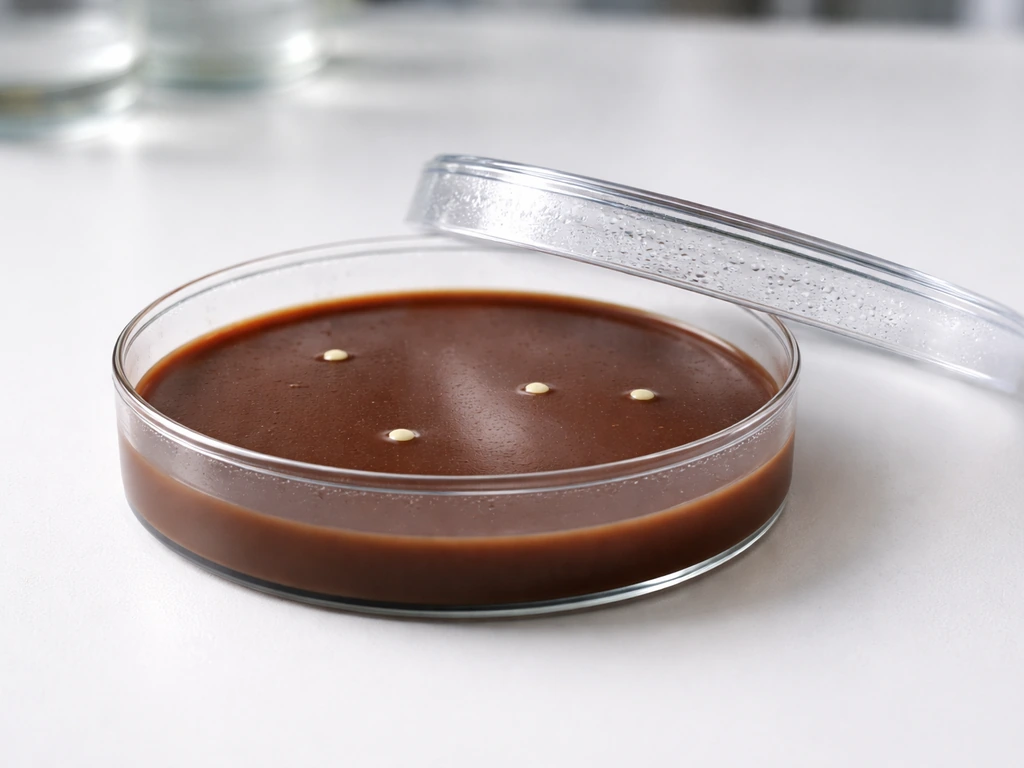
Chocolate agar is a blank" rel="noopener noreferrer">variant of blood agar made by heating red blood cells to around 80°C until they lyse, turning the medium a characteristic brown color. That heating step releases hemin (the X factor) and NAD (the V factor) from inside the red blood cells. Those two factors stay freely available in the medium rather than locked inside intact cells, which is what makes chocolate agar so useful for fastidious organisms like Haemophilus influenzae and Neisseria meningitidis that cannot get those nutrients from standard blood agar.
In routine clinical and food safety microbiology, chocolate agar is a workhorse for respiratory and meningitis workups. It appears in wound culture plating panels, sputum processing, and cerebrospinal fluid workups precisely because it supports a broad range of organisms while giving fastidious ones the growth factors they need. It is not inherently selective, meaning most aerobic and many facultative organisms will grow on it unless a selective agent has been added to the formulation.
Does P. aeruginosa grow on chocolate agar
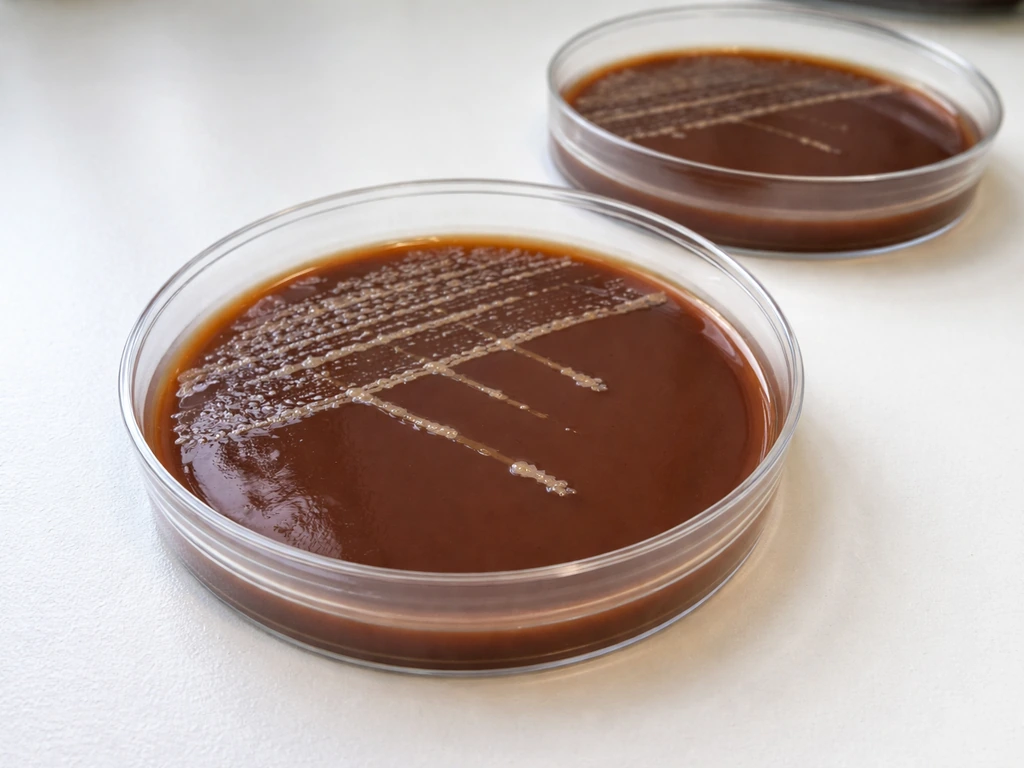
P. aeruginosa grows readily on plain chocolate agar. Multiple controlled laboratory studies have used P. aeruginosa ATCC 9027 as a quality control organism specifically to evaluate growth recovery on chocolate agar formulations. One published comparison explicitly assessed mucoid P. aeruginosa colony morphology on blood agar, chocolate agar, and China Blue agar side by side. A separate case report described a hemin-requiring small-colony variant of P. aeruginosa that grew on both blood and chocolate agar but not on MacConkey agar without blood, illustrating that some unusual P. aeruginosa phenotypes may actually depend on the blood-derived factors that chocolate agar provides in abundance.
The practical takeaway: if you plate P. aeruginosa on standard (non-selective) chocolate agar and incubate aerobically at 35 to 37°C, you should expect growth. Not seeing colonies is a signal to look at your conditions or medium formulation, not a sign that the organism is absent.
How incubation conditions change what you see
P. aeruginosa is an obligate aerobe. It grows best in an oxygen-rich environment, which means standard aerobic incubation works well. If you want to know how Pseudomonas aeruginosa grows in practice, its ability to thrive in oxygen and specific incubation conditions is a big part of the picture oxygen-rich environment. However, chocolate agar workflows for Haemophilus and Neisseria are often run in 5 to 10% CO2, following protocols such as those specified in UK Standards for Microbiology Investigations (35 to 37°C, 5 to 10% CO2, 40 to 48 hours). P. aeruginosa tolerates elevated CO2 and will still grow under those conditions, but its growth rate and pigment expression may differ slightly from purely aerobic incubation.
Temperature matters considerably. P. aeruginosa grows across a range from roughly 4°C up to 42°C, with an optimum around 37°C. Its ability to grow at 42°C is actually a standard confirmatory criterion for the species. If you are incubating below 30°C for any reason, expect slower or sparser growth. At 35 to 37°C you should see visible colonies within 18 to 24 hours, and certainly by 40 to 48 hours.
Inoculum size also matters. A very light inoculum on a rich medium like chocolate agar can produce colonies that look atypical or are easy to miss at first reading. If you are troubleshooting a no-growth result, consider whether the original inoculum was adequate before concluding the organism is absent.
Medium composition factors that can block or support growth
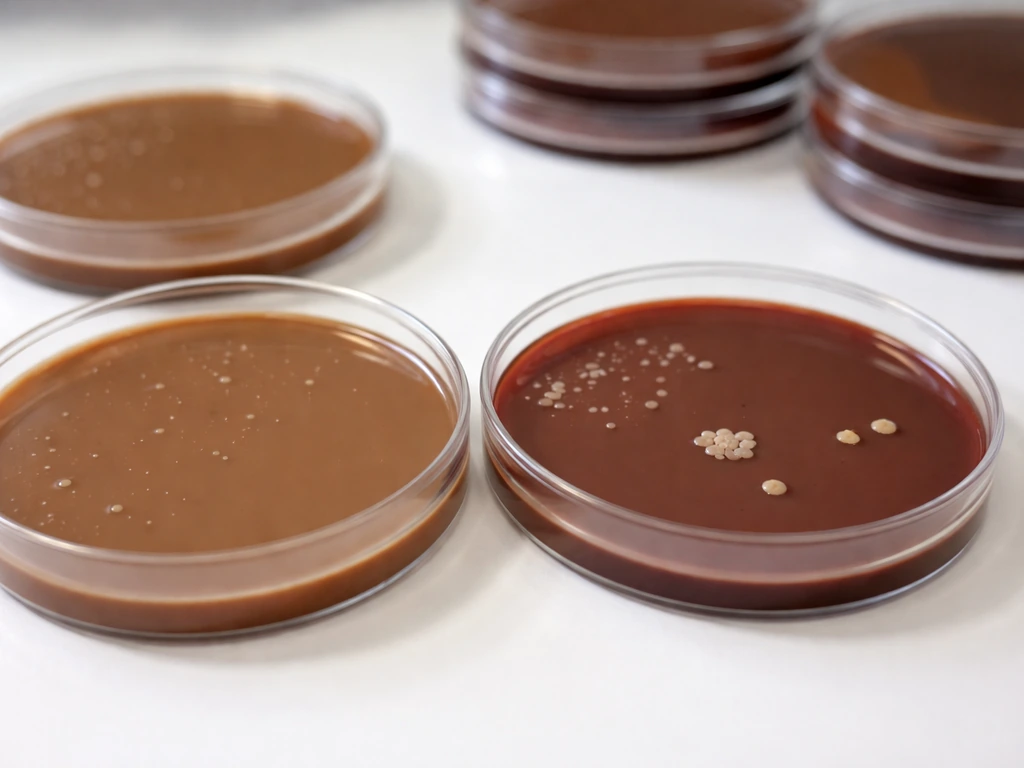
Not all chocolate agar plates are the same. The base formulation matters, and any added supplements or selective agents can completely change which organisms survive.
Plain chocolate agar (no selective agents) is permissive. Listeria monocytogenes can grow on chocolate agar as long as the medium is non-selective and the incubation conditions are appropriate Plain chocolate agar. P. aeruginosa grows on it just as it would on blood agar or tryptic soy agar. The rich nutrient content actually supports robust growth.
Bacitracin-supplemented chocolate agar is a different story. Bacitracin is commonly added to chocolate agar to suppress competing organisms and select for Haemophilus species. Bacitracin primarily targets Gram-positive organisms, so P. aeruginosa (a Gram-negative) is generally not suppressed by it. If your chocolate agar plate includes only bacitracin as a selective agent, you can still expect P. Bacitracin-supplemented chocolate agar is a selective formulation, but it does not meaningfully suppress P. aeruginosa P. aeruginosa to grow. aeruginosa to grow.
Thayer-Martin agar, which is also based on heated blood (chocolate agar), contains vancomycin, colistin, nystatin, and trimethoprim. Colistin is a polymyxin antibiotic active against Gram-negative rods. Its inclusion in Thayer-Martin medium is specifically intended to suppress organisms like P. aeruginosa and other Gram-negative competitors so that Neisseria species can be isolated cleanly. If you are using Thayer-Martin or a similar selective chocolate agar formulation with colistin or another polymyxin, do not expect to recover P. aeruginosa. That inhibition is by design.
| Chocolate agar formulation | Selective agents | Expected P. aeruginosa growth |
|---|---|---|
| Plain chocolate agar | None | Yes, robust growth expected |
| Chocolate agar + bacitracin | Bacitracin (Gram-positive suppressor) | Yes, generally not inhibited |
| Thayer-Martin agar | Vancomycin, colistin, nystatin, trimethoprim | No, colistin suppresses P. aeruginosa |
| Chocolate agar + bacitracin disk (separate disk method) | Bacitracin disk only | Yes, Gram-negative rods unaffected |
WHO guidance for meningitis diagnostic workflows also notes that the source of blood used to make chocolate agar matters for culture recovery. Using appropriate animal blood rather than human blood, following manufacturer guidance on heating temperature and timing, and ensuring the medium is within its expiry date all affect whether fastidious organisms and non-fastidious organisms alike will grow as expected.
Telling P. aeruginosa apart from look-alikes on chocolate agar
On plain chocolate agar, P. aeruginosa colonies tend to be flat to slightly raised, spreading, and irregular with a rough or metallic sheen. A key visual clue is the greenish-blue pigment pyocyanin, which diffuses into the surrounding agar and is fairly distinctive. The colonies often have a characteristic grape-like or musty corn tortilla odor that experienced microbiologists recognize quickly. Mucoid strains produce large, wet, mucoid colonies that look quite different from non-mucoid isolates, which is important in cystic fibrosis-related samples.
However, not all P. aeruginosa strains produce visible pyocyanin on chocolate agar, and other Gram-negative rods can also grow with spreading, irregular morphology. Other Pseudomonas species, Stenotrophomonas maltophilia, and some Enterobacteriaceae can produce colonies that overlap visually, especially at 24 hours. Relying on colony morphology alone on chocolate agar is not sufficient for identification.
The most reliable colony-level confirmation step is to subculture onto a pigment-selective medium such as cetrimide agar or Pseudomonas agar (King's medium A for pyocyanin), incubate at 35 to 37°C for 18 to 48 hours, and look for pyocyanin production under UV light or by eye. Growth at 42°C is another standard confirmatory criterion specific to P. aeruginosa and distinguishes it from most other Pseudomonas species. Oxidase testing (positive for P. aeruginosa) on a colony from your chocolate agar plate is a fast, inexpensive first filter.
Practical next steps when you are troubleshooting
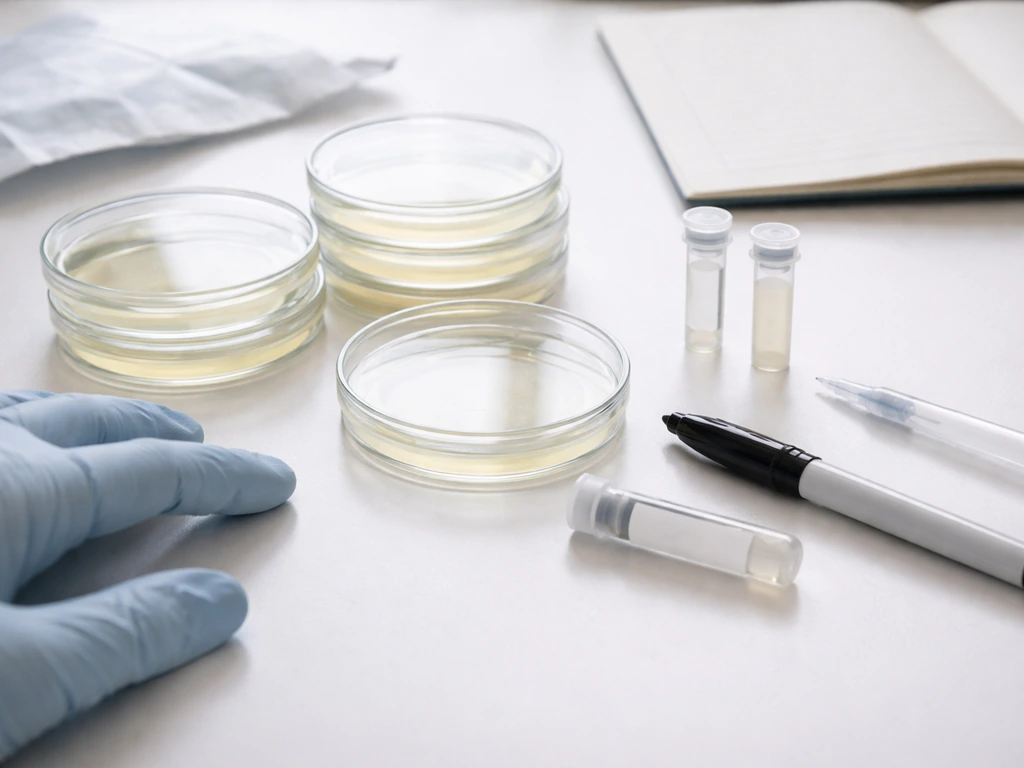
If you are trying to figure out whether P. If you are also wondering about group B strep, its growth on chocolate agar depends on the specific medium formulation and incubation conditions does group b strep grow on chocolate agar. aeruginosa should or should not grow on a chocolate agar plate you have in front of you, work through these checks in order.
- Identify your exact formulation: check the manufacturer's specification or your in-house recipe and confirm whether any selective agents (especially colistin or other polymyxins) are present. This is the most common reason for unexpected no-growth.
- Check your incubation setup: confirm temperature was 35 to 37°C and that the plate was incubated aerobically or in 5 to 10% CO2 for at least 24 to 48 hours.
- Verify your inoculum: if you are working from a clinical sample or a previously stored culture, ensure the starting material was viable and the inoculum density was adequate.
- Run a positive control: plate a known P. aeruginosa strain (ATCC 9027 is commonly used for this purpose) on the same lot of chocolate agar under the same conditions. If the control grows and your unknown does not, the medium is not the problem.
- If colonies are present and you need identification: run an oxidase test on a picked colony, then subculture to cetrimide agar or Pseudomonas agar for pyocyanin production. Confirm growth at 42°C. These three steps together give you high confidence in a P. aeruginosa identification.
- If you see no growth and your controls pass: consider that the organism may genuinely not be present, or that a selective agent in the medium (if present) is doing its intended job. Switch to a non-selective medium such as blood agar or tryptic soy agar to rule out viability issues.
Reading plates daily rather than waiting until the full 48-hour endpoint (as recommended in RCPath protocols) helps catch early-growing colonies before they spread into each other, which is especially important when you are looking for multiple organisms on the same plate.
What this means for food safety and diagnostic workflows
For clinical microbiology, chocolate agar is not the first-choice medium when you are specifically hunting for P. aeruginosa. Cetrimide agar is selective for Pseudomonas and suppresses most competing organisms. MacConkey agar is commonly used for Gram-negative screening. Blood agar or tryptic soy agar are used for general aerobic recovery. Chocolate agar shows up in wound culture panels and respiratory panels not because it is targeted at P. aeruginosa, but because it ensures that any fastidious organisms present alongside P. aeruginosa are also recovered. Knowing that P. aeruginosa can and does grow on chocolate agar means you should not ignore Pseudomonas-like colonies on a chocolate plate just because it is not cetrimide agar.
For food safety contexts, P. aeruginosa is less commonly a primary target compared with organisms like Listeria, E. coli O157, or Salmonella, but it is an important opportunistic pathogen in water systems, produce, and ready-to-eat foods. If you are running a plating panel that includes chocolate agar and you see suspicious colonies, do not dismiss them because the medium is not labeled as a Pseudomonas medium. Follow through with oxidase testing and confirmatory subculture.
It is also worth noting that selective chocolate agar formulations like Thayer-Martin are actively used in clinical workflows where suppression of P. aeruginosa is intentional. If you work across both Neisseria isolation workflows and broader respiratory or wound culture panels, keeping the distinction between plain chocolate agar and selective variants clearly documented in your SOPs prevents real-world misinterpretation. The medium name alone is not enough information; the formulation details determine what you will and will not grow.
For anyone comparing organism behavior across related media questions, P. aeruginosa's growth profile on chocolate agar follows the same basic logic as other non-fastidious Gram-negatives: a plain, blood-based, non-selective agar will support it, while selective formulations with the right inhibitors will not. Understanding how P. aeruginosa's broader growth requirements and environmental tolerances interact with medium composition gives you the foundation to predict and troubleshoot outcomes across different plating scenarios.
FAQ
If I do not see colonies after 24 hours on chocolate agar, should I incubate longer to recover P. aeruginosa?
Yes, it can, but the result depends heavily on whether the plate is truly non-selective and how long you incubate. If your chocolate agar contains inhibitors (for example, colistin in Thayer-Martin), P. aeruginosa typically will not be recovered even if you incubate longer. On plain chocolate agar, extended incubation beyond the usual window can also increase confusion because slow-growing non-Pseudomonas Gram-negative rods may start to appear.
Does Pseudomonas aeruginosa grow on chocolate agar the same way in CO2 compared with normal air?
It can grow without CO2, and it usually still grows with 5 to 10% CO2, but pigment and colony appearance may not look exactly like the classic high-oxygen description. If your workflow uses CO2 (common for Haemophilus or Neisseria panels), do not assume “less green pigment” means “not P. aeruginosa.” You still need confirmatory testing like oxidase and subculture for pigment confirmation.
How can mixed flora on a chocolate agar plate affect my ability to spot P. aeruginosa?
A mixed inoculum can make pyocyanin harder to recognize because other organisms may overgrow, or colonies can merge on a spreading surface. If the plate contains multiple colony types, pick several well-isolated suspect colonies for oxidase testing rather than relying on one “most obvious” colony.
What if my suspected P. aeruginosa colonies on chocolate agar do not show pyocyanin?
Yes, atypical phenotypes exist. Some isolates may be less pigmented on chocolate agar, and mucoid strains can look very different from non-mucoid colonies. This is why you should not treat “no green pigment” as a negative result, especially when the colony morphology could overlap with other non-fermenters.
Will bacitracin-supplemented chocolate agar suppress Pseudomonas aeruginosa?
If the plate is selective for Haemophilus (for example, bacitracin-supplemented chocolate agar), you generally should still recover P. aeruginosa because bacitracin mainly targets Gram-positive bacteria. The exception is if additional inhibitors are present (such as polymyxins in Thayer-Martin-like formulations) that are designed to suppress Gram-negative rods.
Can I use Thayer-Martin agar to detect Pseudomonas aeruginosa?
Colistin-containing selective chocolate agars (like Thayer-Martin) are designed to reduce recovery of P. aeruginosa and other Gram-negative competitors. If you need to detect P. aeruginosa specifically, do not rely on those plates alone, use a non-selective chocolate agar or a Pseudomonas-targeted medium such as cetrimide/pseudomonas selective agar for follow-up.
Could specimen collection or plate storage explain why P. aeruginosa did not grow on my chocolate agar?
Yes, specimen handling can change recovery independent of the agar. If organisms are stressed or delayed before plating, you may get weak or patchy growth. For troubleshooting, confirm the medium is within expiry, the plate was stored correctly (not dried out or overheated), and that the specimen was plated promptly using your lab’s standard transport and processing steps.
What is the best order of tests if I need to confirm P. aeruginosa from a chocolate agar plate?
Because chocolate agar is not primarily a Pseudomonas-selective medium, some other Gram-negative rods can look superficially similar, especially around early incubation times. The safest next step is to run a quick filter test (oxidase) on isolated colonies and then confirm with pigment-selective media or growth criteria such as cetrimide response and growth at 42°C.
Could a low inoculum make Pseudomonas aeruginosa look like it is not growing on chocolate agar?
For P. aeruginosa, a very light inoculum can yield tiny, scattered colonies that may be overlooked on a busy plate, particularly if other organisms are present. If you suspect the inoculum was too low, repeat with an adequate, standardized inoculation technique so you can compare colony morphology and confirmatory test results.
Does the type of blood used to make chocolate agar change whether Pseudomonas aeruginosa grows?
If your chocolate agar is made from different blood sources, or the blood heating and processing were not consistent, recovery of both fastidious and non-fastidious organisms can shift. Also check that the formulation matches what your protocol expects (plain versus selective supplements), because naming alone may not tell you which inhibitors are included.
Next Article
Can Bacteria Grow in Apple Cider Vinegar? Safety, Risks & Limits
Can bacteria grow in apple cider vinegar? Causes, acid-tolerant microbes, safety thresholds and storage tips.