In general, pathogens grow very slowly at pH levels below about 4.5 to 5.0, and growth stops almost entirely at or below pH 4.0 for most common foodborne organisms. The sweet spot where pathogens grow fastest is roughly pH 6.0 to 7.5, which is close to neutral. Once you get above pH 8.0 or so, growth also slows, though most pathogens can tolerate mildly alkaline conditions better than strongly acidic ones.
Pathogens Grow Slowly at What pH Level? Growth Ranges

Marcus Reeves
24 Mar 2026
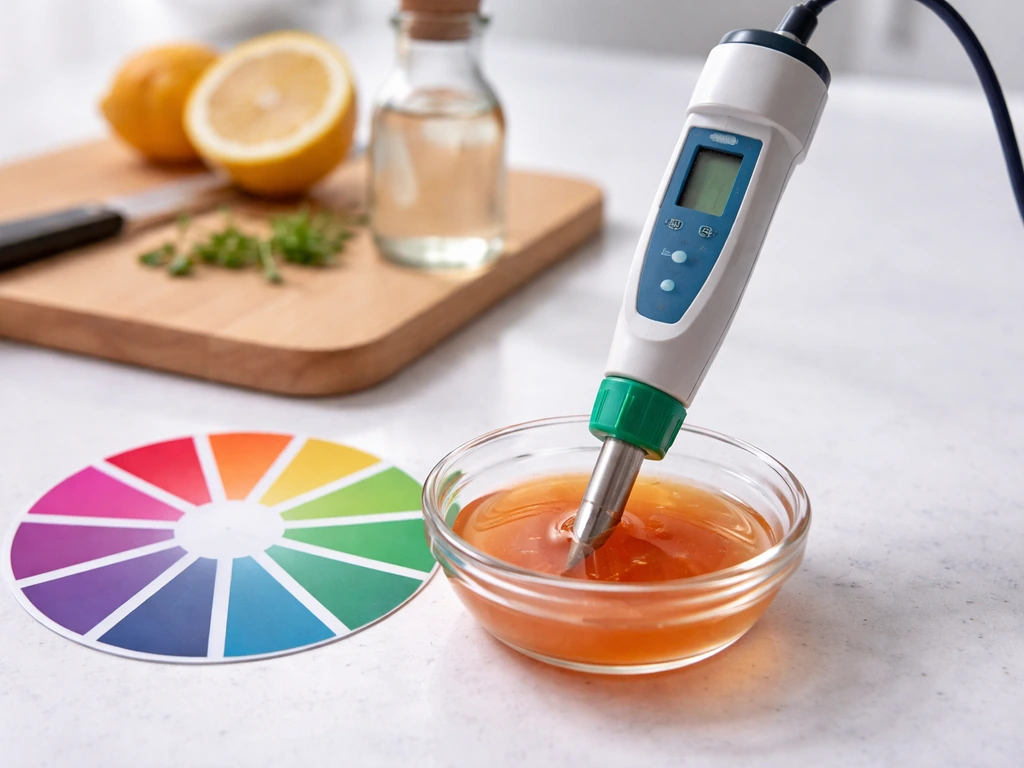
That's the short answer. But if you're working in food safety, preservation, or microbiology, you need more than a rule of thumb. You need to know how sharp those cutoffs actually are, which pathogens push the limits, and how pH interacts with everything else in a food system. That's what this article covers.
How pH affects how fast pathogens grow
pH is a measure of hydrogen ion concentration in a solution. A pH of 7.0 is neutral, anything below is acidic, and anything above is alkaline. Pathogens are no different from other living organisms in that their internal chemistry depends on relatively stable conditions. When the surrounding environment becomes too acidic or too alkaline, it disrupts enzyme function, membrane integrity, and metabolic pathways inside the microbial cell. Growth slows, then stops, and eventually the cells may die.
The key word there is 'eventually.' Slow growth is not the same as no growth, and no growth is not the same as death. That distinction matters a lot in practice, especially for food safety decisions where you need to know whether a pathogen can still accumulate to dangerous levels over time.
Acidic conditions are generally more effective at inhibiting pathogens than alkaline conditions. Most foodborne pathogens have a lower pH tolerance limit somewhere between 4.0 and 5.5, but their upper limit is often pH 9.0 to 10.0. That asymmetry is worth keeping in mind: a food that is slightly alkaline is not automatically safer than a neutral one.
Where pathogens grow well: the typical pH window
Most foodborne pathogens grow best somewhere in the range of pH 6.0 to 7.5. Within that window, enzymatic activity is optimal, membranes are stable, and the cell's energy-generating systems work efficiently. For practical purposes, any food with a pH in that range should be treated as fully supportive of pathogen growth, assuming other conditions like temperature and water activity are also favorable.
Staphylococcus aureus is a good example. Its optimal pH for growth is between 6.0 and 7.0. Below pH 4.0 it stops growing entirely, but in the 6 to 7 range it can multiply quickly and, more importantly, can produce heat-stable enterotoxins that survive even if the cells are later killed by cooking.
Here are the reported maximum pH values for growth for several major pathogens, which mark the upper edge of their growth window:
| Pathogen | Optimal pH range (approx.) | Maximum pH for growth |
|---|---|---|
| Salmonella spp. | 6.5–7.5 | 9.0 |
| Listeria monocytogenes | 6.0–8.0 | 9.4 |
| Pathogenic E. coli | 6.0–7.0 | 9.0 |
| Campylobacter jejuni | 6.5–7.5 | 9.5 |
| Staphylococcus aureus | 6.0–7.0 | 10.0 |
| Vibrio parahaemolyticus | 7.0–8.0 | ~11.0 |
| Vibrio vulnificus | 7.0–8.0 | ~10.0 |
These upper limits matter more than most people realize. Alkaline foods, certain seafood marinades, and some cleaning residues on food contact surfaces can reach pH 8.0 to 9.0. At those levels, most pathogens are still capable of growing, just more slowly than at neutral pH.
When growth slows: the low-pH zone where things get uncertain
This is where the question in the article title lives. There is a pH band, roughly from 4.5 down to the minimum pH for growth, where pathogens can still technically multiply but do so much more slowly than at neutral pH. Depending on the pathogen and the food environment, that sluggish growth can be anywhere from mildly reduced to almost undetectable.
Here are the reported minimum pH values for growth for several key pathogens. Below these numbers, growth is generally not detected under laboratory conditions:
| Pathogen | Minimum pH for growth (ICMSF/FDA range) | Notes |
|---|---|---|
| Campylobacter jejuni | 4.9 – 5.5 | Microaerophilic; particularly sensitive to acidity |
| Listeria monocytogenes | 4.4 – 4.8 | Can adapt to mild acid stress over time |
| Pathogenic E. coli | 3.6 – 4.7 | Wide range depending on strain; O157:H7 min ~4.4 |
| Salmonella spp. | 4.0 – 4.2 | Min pH ~4.20 reported in some cheese studies |
| Staphylococcus aureus | 4.0 | Toxin production stops above pH 5.0 even if cells survive |
| Vibrio parahaemolyticus | 4.8 – 5.0 | Halophile; salt tolerance interacts with pH tolerance |
| Vibrio vulnificus | 6.3 | Much less acid tolerant than most other pathogens listed |
Notice how Vibrio vulnificus has a minimum pH of 6.3. That is much higher than most other pathogens on this list. A food at pH 5.5 would effectively stop Vibrio vulnificus growth while still allowing Salmonella or E. coli to grow slowly. This is exactly why knowing which pathogen matters for a specific food is so important.
The zone between pH 4.5 and the relevant minimum is where growth is slow but not zero. If your food sits at pH 4.8 for days at room temperature, some strains of Listeria or E. coli may still be accumulating, just not as fast as they would at pH 6.5. That slow growth can still become a problem if storage time is long enough.
Also worth noting: Gram-positive bacteria like Listeria and Staphylococcus aureus tend to be more acid-tolerant than many Gram-negative pathogens, and bacterial spore-formers such as Clostridium botulinum present a different challenge entirely. Spores can survive at pH levels that kill vegetative cells, though germination and toxin production are still inhibited below pH 4.6 in most cases.
Inhibited vs dead: what 'they don't grow here' actually means
This is one of the most important distinctions in applied food microbiology, and it trips up a lot of people. When we say a pathogen 'does not grow' below a certain pH, we mean its population does not increase under those conditions. We do not necessarily mean the cells are dead or that they will be harmless if pH later rises.
Growth inhibited means the pathogen is present but not multiplying. If that food is later diluted, cooked incompletely, or its pH rises (say, because a sauce is mixed with a higher-pH ingredient), conditions may shift back into the growth-permissive range and the surviving cells can start multiplying again.
Death is a different outcome and requires either sustained extreme pH (very low, like pH 2 to 3, especially with heat) or a combination of stresses maintained over time. At pH 4.0, many pathogens are inhibited but not necessarily dying rapidly. At pH 2.0, the situation is more lethal, though even then, some cells may survive transiently.
For practical food safety decisions, you generally need to know three things: Is the pathogen inhibited? For how long? And is there any later step in the process that could reverse that inhibition? An acidified food at pH 4.3 might safely inhibit Salmonella in storage, but if that product is used as an ingredient in a mixed dish that ends up at pH 5.5, the inhibition is gone.
The pH 4.6 cutoff: where it comes from and how to use it
The FDA defines an acidified food as one with a finished equilibrium pH of 4. 6 or below (combined with a water activity above 0. 85). This cutoff is not arbitrary.
It is based primarily on the pH below which Clostridium botulinum cannot produce toxin, and it also corresponds to the lower edge of the growth range for most other major pathogens. In FDA’s risk-based preventive controls draft guidance for acidified foods, this pH threshold is discussed in the context of 21 CFR part 114 and using sufficiently low pH to prevent botulinum toxin formation [Below pH 4. 6, the risk of botulinum toxin formation is considered controlled](https://www. fda.
gov/media/172317/download). Below pH 4. 6, the risk of botulinum toxin formation is considered controlled, which is why this number appears in regulatory definitions under 21 CFR 114.
In practice, pH 4.6 is used as a critical control point in acidified and low-acid canned food regulations. Products at or below this threshold are treated differently from those above it in terms of processing requirements. If your product is at pH 4.4, you are in a different regulatory and safety category than if it is at pH 4.8, even though that difference sounds small.
One important nuance from validation practice: if your target pH is 4.9 but the maximum pH you might actually encounter in production is 5.1, a proper growth inhibition study should be designed using a worst-case pH of around 5.2. Testing only at the target pH understates the real risk. This worst-case approach is standard in challenge study design.
How to measure pH in real foods and what to watch for
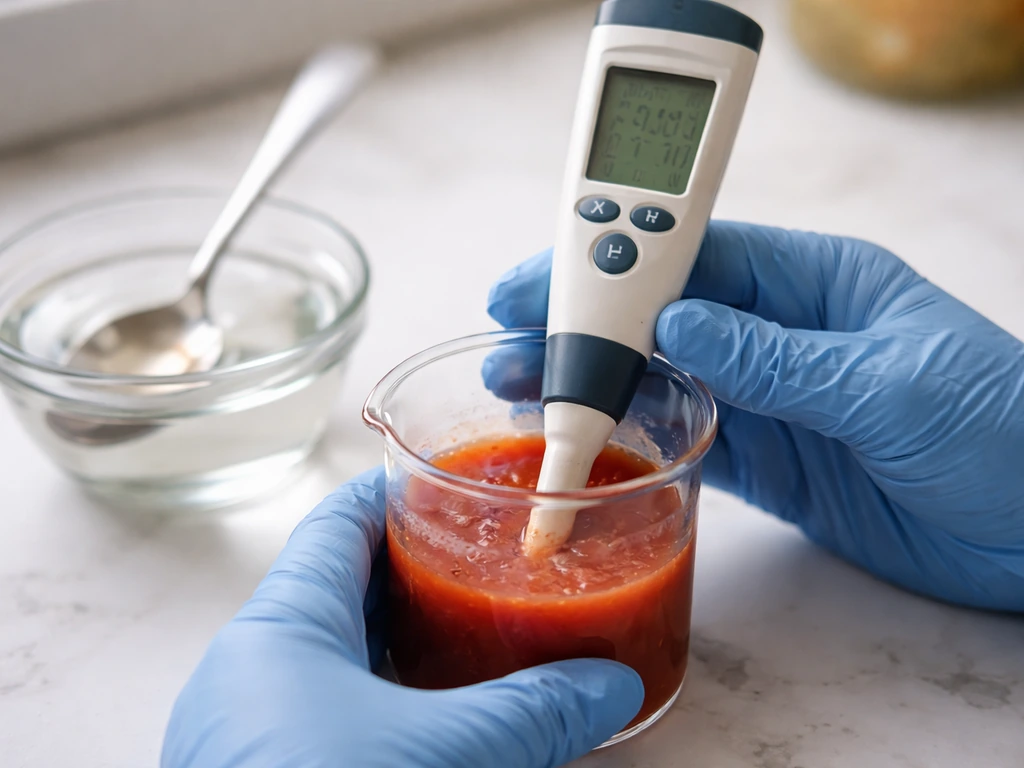
A calibrated digital pH meter with a food-grade electrode is the right tool for this. Test strips are useful for a rough screen but not reliable enough for food safety decisions where the difference between pH 4.5 and 5.0 can matter significantly.
For acidified foods, the FDA specifies measuring pH via electromotive force (emf) against standard buffers, with the instrument calibrated using commercially prepared pH 4.0 buffer or a potassium acid phthalate buffer. Calibrating at a pH close to the expected product pH improves accuracy.
One practical warning: poorly buffered foods (low in dissolved solids, thin liquids) can show pH shifts if you add water to prepare them for measurement. Always measure the food in its final formulated state where possible, not a diluted version. The equilibrium pH of the whole food system is what matters for microbial behavior, not the pH of a watered-down sample.
After you have a reliable pH reading, compare it to the minimum pH values for the pathogens that are relevant to your specific food or process. If your product contains raw seafood, Vibrio species are relevant. If it contains raw poultry, Salmonella and Campylobacter are the priority organisms. The right comparison depends on your specific risk context.
pH does not work alone: how other conditions change the picture
pH is one hurdle, not a complete control. Food safety systems work best when multiple limiting conditions are combined. This is sometimes called hurdle technology. Here is how the other major factors interact with pH:
Temperature
Pathogens grow most rapidly in the temperature danger zone, the same “danger zone” where pathogenic bacteria grow best in the danger zone (roughly 40°F to 140°F / 4°C to 60°C). That same idea applies to your question about the temperatures where most foodborne pathogens grow most quickly temperature danger zone. In the same way that pH sets a permissive growth range, the temperatures where pathogens grow fastest are captured by the temperature danger zone concept.
Combining a mildly acidic pH (say, 5. Temperature also affects whether pathogens multiply, and warmer conditions typically support faster growth than cold conditions temperature danger zone. 0) with refrigeration temperature (4°C) dramatically reduces the practical risk compared to either hurdle alone. However, some pathogens like Listeria monocytogenes are psychrotrophic, meaning they can still grow at refrigeration temperatures even if slowly.
Water activity
Water activity (aw) measures available moisture for microbial growth. The FDA uses an aw of 0.85 or less, combined with pH 4.6 or less, to define conditions where growth is controlled. At low water activity, growth stops even at otherwise favorable pH and temperature. Dried foods, high-sugar, and high-salt products exploit this principle.
Oxygen availability
Oxygen requirement varies by pathogen. Campylobacter is microaerophilic and needs low but not zero oxygen. Campylobacter jejuni can grow over an approximately pH 4.9 to 9.0 range, with maximum growth reported around pH 6.5 to 7.5 Campylobacter is microaerophilic and needs low but not zero oxygen.. Vibrio species and most E. coli are facultative anaerobes, meaning they can grow with or without oxygen. Vacuum packaging or modified atmosphere packaging changes which pathogens pose the greatest risk and does not substitute for pH or temperature control.
Preservatives and organic acids
The type of acid used to lower pH matters, not just the pH value itself. Organic acids like lactic, acetic (vinegar), and citric acid have direct antimicrobial activity beyond just lowering pH. They penetrate bacterial cell membranes in their undissociated form and disrupt internal pH. Hydrochloric acid adjusted to the same pH does not have this same membrane-active effect. So a product acidified with vinegar to pH 4.5 may be more effectively inhibitory than a product at the same pH using a mineral acid.
Preservatives like sodium benzoate, potassium sorbate, and nitrites also interact with pH. Many of these compounds are most active at lower pH values, so they work synergistically with acidification rather than independently of it.
How to find the right pH range for a specific pathogen
The minimum and maximum pH values listed in this article come primarily from FAO/WHO/ICMSF scientific criteria tables and FDA guidance documents. For most food safety and microbiological work, these are the right starting references. Here is a practical step-by-step approach for looking up what you actually need:
- Identify which pathogen or pathogens are relevant to your food type, process, or ingredient. For raw meat and poultry, Salmonella, Campylobacter, and E. coli are standard. For ready-to-eat products, Listeria monocytogenes is a priority. For raw shellfish, Vibrio species are key.
- Check the ICMSF 'Microorganisms in Foods' volumes or the FDA CFSAN 'Evaluation and Definition of Potentially Hazardous Foods' document for published minimum and maximum pH values for that specific pathogen.
- Look up whether the pathogen is a Gram-positive, Gram-negative, or spore-former, because these categories have different pH tolerance profiles and may require different control strategies.
- Compare your product's measured pH against the minimum pH for growth of the relevant pathogen, using worst-case pH (the highest pH the product might actually reach) rather than your target or average pH.
- Consider whether your process includes any step that could change the pH later, such as dilution, mixing with other ingredients, or fermentation, and evaluate inhibition at the final condition the pathogen would actually experience.
- If the pH alone does not provide an adequate margin, identify which additional hurdles (temperature, water activity, preservatives) are present and assess them together rather than in isolation.
- For regulated products like acidified foods or low-acid canned foods, consult 21 CFR Part 114 or work with a process authority who can validate your specific formulation against the relevant regulatory and safety criteria.
The most common mistake in applying pH data is using published minimum pH values as hard bright lines when they are actually population-level averages from laboratory conditions. Real foods have uneven pH distribution, protective niches, and variable microbial loads. A product at pH 4.1 is safer than one at pH 5.1, but it is not automatically safe in every scenario. Use the pH data as a guide for where you are in the risk spectrum, not as a binary safe/unsafe toggle.
If you are also working through temperature-related growth questions alongside pH, the same kind of species-specific lookup applies. The conditions where pathogens grow fastest and the temperature danger zone are closely related topics that round out the full picture of how environmental conditions interact to support or inhibit microbial growth.
FAQ
If a food’s pH is 4.8, does that guarantee pathogens will not grow?
Not necessarily. Growth can be slow but still possible above a pathogen’s minimum pH, especially if storage time is long and other conditions (temperature, water activity, and available nutrients) remain favorable. You should check the specific pathogen relevant to the food and consider worst-case pH and dwell time.
What pH should I measure, the surface or the center of the food?
Measure the location that best represents the highest-risk microbial environment. In products with uneven mixing (soups, marinades, layered foods), the center or thickest portion may have a higher or more variable pH than the surface, which can let limited growth occur in protective microzones.
Does cooking or reheating make low pH “good enough” for safety?
Cooking can kill existing cells but it does not neutralize toxins already produced. For organisms like Staphylococcus aureus, low pH might slow growth yet still allow toxin production if cells increase enough before cooking, so toxin risk depends on growth history, not just end-point pH.
How do I interpret “minimum pH for growth” versus “no growth”?
Minimum pH typically refers to population increase under lab conditions. “No growth detected” does not mean cells die rapidly, and survivors can resume growth if later handling steps raise pH (such as mixing with higher-pH ingredients) or if conditions become more permissive.
Can pH change after I formulate the food?
Yes. Some foods undergo fermentation, aging, or microbial metabolism that can shift pH over time. When designing controls, consider whether pH will drift upward during storage or if buffering keeps it stable, and validate using worst-case time-temperature scenarios.
Does the type of acid (vinegar versus mineral acid) matter if the final pH is the same?
Often, yes. Organic acids can inhibit microbes beyond pH alone because they act in an undissociated form and interfere with internal processes. With mineral acids, you may achieve the same pH reading but not the same antimicrobial effect, so performance can differ in real products.
How accurate do my pH measurements need to be for food safety decisions near pH 4.6 to 5.0?
If you are close to control thresholds, treat small differences as meaningful. Use a calibrated meter, confirm calibration buffers appropriate to your range, and measure the final formulation (not diluted samples) because dilution and poor buffering can shift readings and misclassify risk.
What if my product is near a regulatory cutoff like pH 4.6, but I have uncertainty in measurement?
Use a conservative approach consistent with validation thinking. Rather than relying only on the target pH, account for analytical variability, possible production drift, and sampling location. Challenge or growth inhibition studies should use a worst-case equilibrium pH that reflects real conditions.
Does low water activity (aw) eliminate the need to worry about pH?
No. aw and pH are complementary hurdles. Low aw can greatly limit growth even at moderate pH, but if aw is higher than expected or varies by product formulation, pH can become the limiting factor again. Confirm both are within validated ranges.
If a pathogen can tolerate slightly alkaline pH, is pH 8.5 automatically unsafe?
Not automatically unsafe, but it is not protective by itself. Many pathogens can still grow at mildly alkaline pH, often at reduced rates, so you must assess the relevant organisms plus temperature, time, aw, and packaging atmosphere to determine whether growth could become hazardous.
Next Article
At What Temperatures Do Most Foodborne Pathogens Grow
Learn optimal temps and danger zone ranges where common foodborne bacteria grow fastest, plus practical storage guidance