Yes, botulism can potentially develop in pickles, but the risk depends heavily on specific conditions. Vinegar-based pickles that are properly made and reach a pH of 4.6 or below are generally safe from <em>Clostridium botulinum</em> toxin production. The problem is that "properly made" involves more than just adding vinegar to a jar, and a surprising number of home-canning and pickling failures create exactly the conditions that allow this bacterium to thrive.
Can Botulism Grow in Pickles? pH, Anaerobic Risk, Fixes

Marcus Reeves
9 Apr 2026
What "botulism risk" actually means: spores vs. toxin
<em>C. botulinum</em> spores are everywhere. They exist in soil, on vegetables, and routinely end up in your kitchen. Spores by themselves are not what causes botulism. The danger comes when those spores germinate, grow into vegetative cells, and then produce toxin. That toxin is what causes the illness, and it is odorless, colorless, and tasteless, so you cannot detect it by looking at or smelling a jar.
For spores to germinate and for vegetative cells to produce toxin, a very specific combination of conditions has to come together: an anaerobic (oxygen-free) environment, a pH above 4.6, low salt and sugar content, high water activity (meaning sufficient available moisture), and a temperature between roughly 37°F and 99°F (3°C to 37°C) depending on the strain. If any one of those conditions is controlled properly, toxin production is blocked. The difficulty with home-preserved foods is that it is easy to accidentally lose control of one of those factors.
Does vinegar actually stop botulism in pickles?
Vinegar works by lowering pH. The safety target is pH 4.6 or lower. At that level of acidity, <em>C. botulinum</em> cannot germinate or grow, which means no toxin is produced. This is well-established, and properly acidified pickles genuinely are high-acid foods that are not conducive to botulism growth.
However, there is an important caveat. Research has documented cases where <em>C. botulinum</em> produced toxin in media at pH values lower than 4.6, meaning the pH threshold is not an absolute, universal guarantee under every condition and strain combination. In practice, correctly formulated commercial and home pickles that consistently hit pH 4.6 or below are considered safe, but this underscores why maintaining that pH throughout the jar and throughout the process matters, not just in the brine.
For comparison, this same pH threshold issue shows up in other acidified foods. botulism risk in tomato sauce is a related concern precisely because tomatoes can have a natural pH slightly above 4.6, which is why NCHFP specifically flags tomatoes as a food that cannot be assumed to be safely acidic without verification or added acid.
Vinegar pickles vs. fermented pickles: the risk is not the same
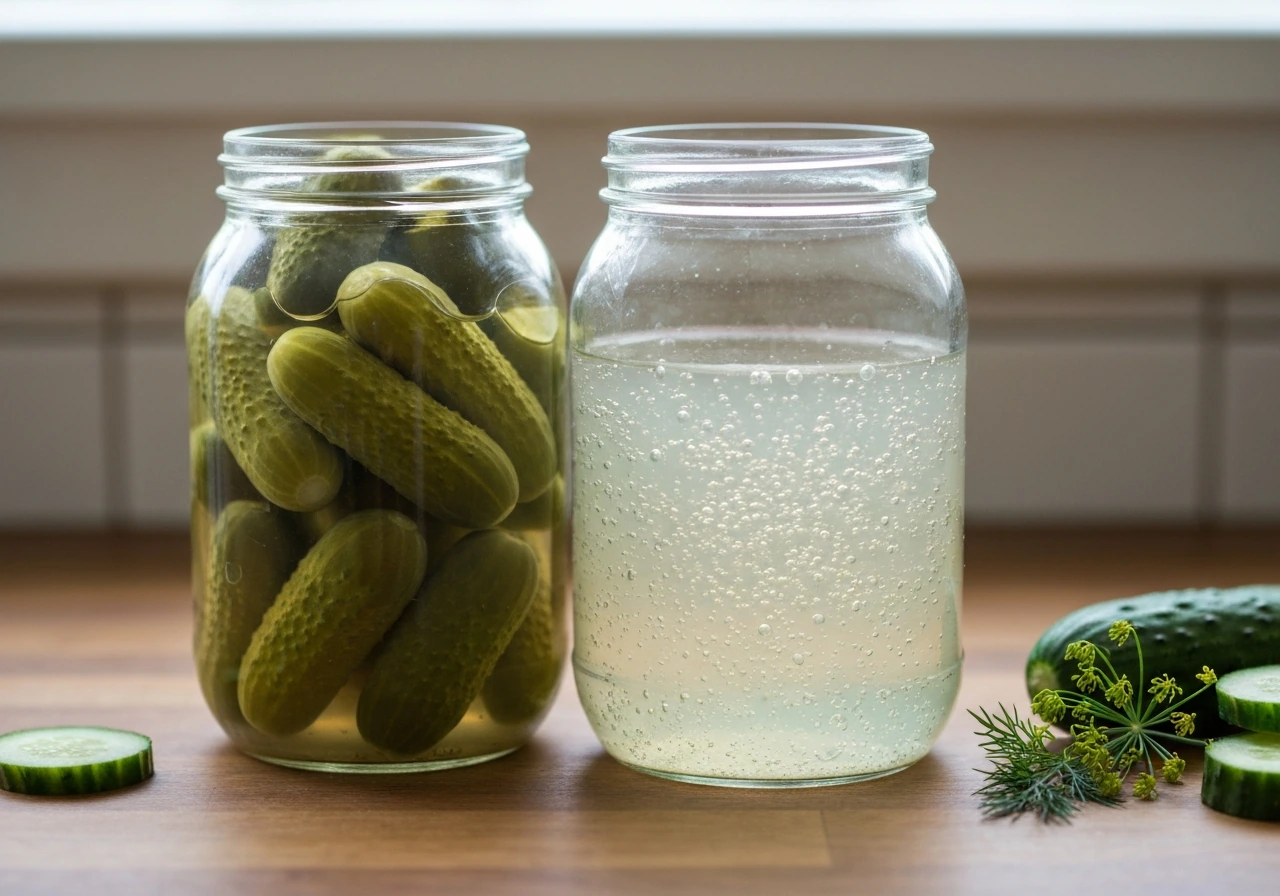
This distinction matters a lot. Vinegar pickles (also called quick pickles or fresh-pack pickles) are acidified directly by adding vinegar to the brine. The acidity is immediate and controlled by your recipe. Fermented pickles, like traditional dill pickles or sauerkraut, get their acidity from lactic acid bacteria converting sugars over days or weeks. The pH drops gradually during fermentation.
During the early stages of fermentation, before lactic acid bacteria have had time to bring the pH down, the environment in the jar can be close to neutral pH and anaerobic, which is a window of potential risk. NCHFP data shows that quick-pack pickle pH can start around 6. NCHFP reports that quick/fresh-pack pickle pH can drop from about 6. 1, 6.
2 down to 4. 4, 4. 6 after four days at room temperature, and it warns that improperly formulated products may allow botulism toxin formation [quick-pack pickle pH can start around 6. 1 to 6.
2](https://nchfp. uga. edu/how/pickle/quick-fresh-pack-pickles. html).
1 to 6. 2 and take about four days to drop to the 4. 4 to 4. 6 range.
If that fermentation process is disrupted or the starting conditions are wrong, you could have a jar sitting in an unsafe pH range while also being sealed and anaerobic.
Vinegar pickles skip that window by acidifying immediately, which is one reason they are considered lower-risk when done correctly. Fermented pickles are also generally considered safe when done properly, but the mechanism is different, and the failure modes are different too.
Anaerobic conditions and what jar storage does to botulism risk
<em>C. botulinum</em> is an anaerobe, meaning it requires the absence of oxygen to grow and produce toxin. A sealed jar is, by definition, an anaerobic environment. This is the central reason why home-canned and jarred foods carry this particular risk when other safety controls fail.
Refrigerator pickles (quick pickles stored in the fridge without heat processing) have a lower risk profile for two reasons: the low temperature slows or stops germination, and the jars are often not vacuum-sealed in the same way as heat-processed canned goods. Still, a tightly lidded jar in the fridge is not fully oxygenated either, so acidity still matters even for refrigerator pickles.
Heat-processed home-canned pickles create a vacuum seal, which locks in anaerobic conditions for the shelf life of the product. This is exactly the environment where botulism thrives if the pH is not properly controlled. Understanding how botulism behaves in low-risk beverages like coffee is one thing, but a sealed jar of vegetables is a very different anaerobic environment with a much higher potential for supporting growth.
Why botulism can still happen even when you used vinegar
This is where most actual incidents occur. Someone followed what seemed like a reasonable recipe, used vinegar, sealed the jars, and assumed it was safe. Here are the failure modes that change the equation:
- Too little vinegar or diluted vinegar: Using a vinegar with less than 5% acidity, or diluting a standard vinegar too much with water, can result in brine that does not acidify the food to pH 4.6 or below. The brine itself might test acidic while the interior of dense vegetables like whole cucumbers or beets has not been penetrated enough.
- Improper canning process: Not using a research-tested recipe and process time from USDA or NCHFP means you may not be applying sufficient heat to destroy vegetative cells or achieve safe conditions throughout the jar.
- Seal failure: If a jar does not seal properly during processing, it is no longer shelf-stable. Liquid leaking from jars during processing can leave food particles on the sealing edge and prevent a proper seal, introducing a contamination risk.
- Temperature abuse: Storing sealed jars at temperatures above 40°F for extended periods, especially above 50°F, creates more favorable conditions for germination if acidity was marginal to begin with.
- Low-acid additions to the brine: Adding large amounts of low-acid ingredients (garlic oil, certain herbs, or extra vegetables) without adjusting the acid levels can raise the overall pH of the finished product above the 4.6 threshold.
- Wrong or untested recipe: Using a recipe from an unverified source that has not been tested for pH and process time is a real risk factor. USDA-endorsed recipes are tested specifically to ensure the finished product reaches and maintains safe acidity levels.
It is worth noting that this same multi-factor vulnerability exists across preserved foods. For instance, honey and botulism is a well-known risk topic precisely because honey's protective factors (low water activity, natural antimicrobials) can be undermined under the wrong conditions, just as vinegar's protective factor (pH) can be undermined in pickles.
What to do if you are worried about a jar right now
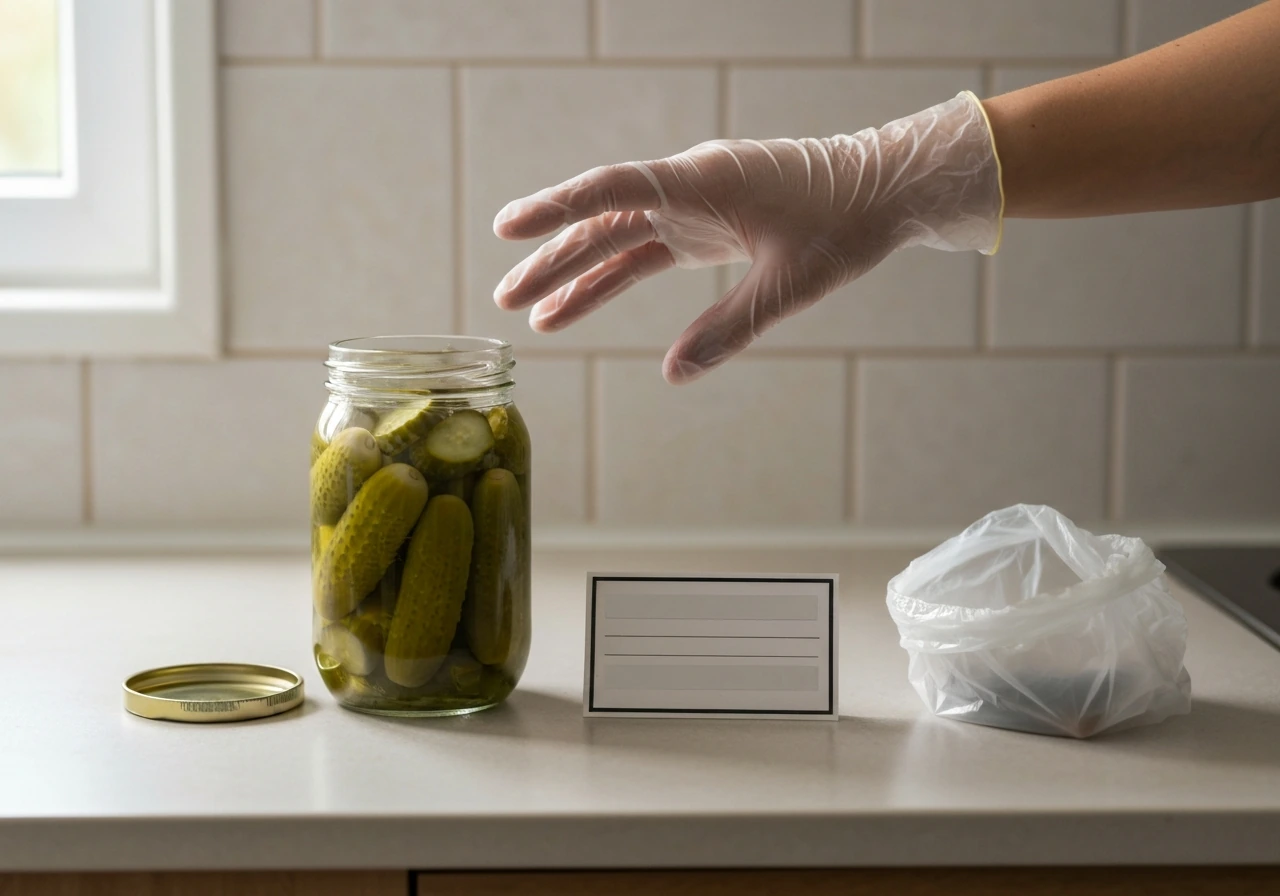
If you have a jar of home-canned or home-preserved pickles and you are not confident the process was done correctly, here is what to do:
- Do not taste it. Botulinum toxin cannot be detected by smell, taste, or appearance. Even a small taste of contaminated food can be enough to cause illness.
- Look for warning signs without opening the jar: bulging or swollen lids, spurting liquid when opened, an off odor on opening, unusual cloudiness (beyond normal fermentation cloudiness), or visible mold. Discard any jar showing these signs.
- If the lid did not seal (lid flexes up and down when pressed), do not treat it as shelf-stable. If you discover a failed seal within 24 hours of canning, refrigerate the contents and consume within one week. After 24 hours, discard.
- To safely discard a suspect jar: do not open it indoors if possible. Place the sealed jar in a heavy-duty garbage bag, seal the bag, and dispose of it in a trash receptacle that is out of reach of children and animals. If you must open the jar first, do so carefully outdoors, avoid splashing, and sanitize any surfaces that may have come into contact with the contents using a bleach solution.
- Wash your hands thoroughly after handling any suspect jar or its contents.
- If you or anyone has already eaten from a suspect jar and is experiencing symptoms including double or blurred vision, drooping eyelids, slurred speech, difficulty swallowing, dry mouth, or muscle weakness, seek emergency medical care immediately. Botulism symptoms typically begin 12 to 36 hours after exposure but can appear anywhere from a few hours to 8 days after ingestion. It is a medical emergency.
The same disposal and symptom-monitoring guidance applies any time you are dealing with a sealed preserved food of uncertain safety. The rules do not change based on whether it is pickles, sauce, or something else. Botulism risk in carbonated drinks like soda illustrates that even foods we do not normally associate with the pathogen can have edge-case risks under the wrong conditions, which is why the general principle (do not taste, discard when in doubt) holds broadly.
A practical checklist for safe vinegar pickling
If you are pickling today or evaluating your existing preserved stock, run through these checks:
- Use vinegar with at least 5% acidity (check the label; most commercial white and apple cider vinegars list this).
- Follow a USDA- or NCHFP-tested recipe exactly. Do not substitute ingredients or change proportions without understanding how the change affects final pH.
- Do not dilute the vinegar more than a tested recipe specifies. Extra water or lower-acid additions raise the pH.
- Use a water bath canner and the recommended process time for your jar size and altitude. Process time is not optional; it is calibrated to ensure safety throughout the jar.
- Verify lids have sealed after cooling: the center of the lid should be concave and should not flex when pressed. Discard any jar that has not sealed properly.
- Label jars with the date and store in a cool, dark location. Consume within the recommended time frame (typically one year for most home-canned pickles).
- If you are fermenting rather than using direct vinegar acidification, monitor the brine, maintain the correct salt concentration (typically 2% to 5% by weight), and keep the food submerged under brine throughout fermentation.
- When in doubt about a recipe's safety, test the finished product's pH with calibrated pH strips or a digital pH meter. Target pH 4.6 or lower, measured in the food itself, not just the brine.
Comparing the main risk factors at a glance
| Factor | Safe condition | Risky condition |
|---|---|---|
| pH | 4.6 or below throughout the food | Above 4.6, especially in dense vegetables or diluted brine |
| Oxygen (anaerobiosis) | Present (open or refrigerator storage without vacuum seal) | Absent (vacuum-sealed jars at room temperature) |
| Salt concentration | 5% or higher inhibits growth | Low salt combined with other marginal conditions |
| Temperature | Below 38°F (refrigerated) or above 118°F (heat-processed) | Between 37°F and 99°F for extended storage |
| Vinegar strength | 5% acidity, used per tested recipe | Under 5%, diluted too much, or homemade vinegar of unknown acidity |
| Canning process | USDA/NCHFP tested recipe and process time followed exactly | Untested recipe, skipped processing steps, wrong jar size or altitude adjustment |
| Jar seal | Firm, concave lid with no flex | Lid that pops, bulges, or was not properly sealed after processing |
The bottom line is that vinegar does protect against botulism in pickles when used correctly and when the finished product consistently reaches pH 4.6 or below. The risk is real when any part of that process goes wrong, and it is invisible when it does. Stick to tested recipes, verify your seals, and treat any jar of unknown safety as unsafe until you can confirm otherwise.
FAQ
How can I tell whether my pickle brine actually reached a safe pH, not just a “vinegar” ratio from the recipe?
Recipe proportions help, but they do not guarantee the final pH in your specific jar. Use a calibrated pH meter or pH test strips designed for pickling, and measure after brining but before eating (and ideally after the product has cooled). Also confirm the vinegar type (acidity varies by product), because “white vinegar” is not always identical in strength.
Does botulism risk apply to all vinegar pickles, including store-bought refrigerator pickles?
The risk level is lower when the product is made to a consistent, tested recipe and kept cold, but “lower” is not “zero.” Refrigerator storage slows growth by temperature, yet anaerobic conditions still exist in a sealed jar, so pH control still matters. If a jar is damaged or you suspect improper preparation, treat it as unsafe.
If the jar lid is bulging or the contents look spoiled, is that enough proof of botulism?
No. Botulinum toxin and the spores that can produce it can be present without obvious off odors, color changes, or taste. Bulging or spoilage is a reason to discard, but lack of visual cues does not mean it is safe. When safety is uncertain, discard without sampling.
Can botulism grow in pickles at room temperature even if the pH is slightly above 4.6?
Potentially yes, because the growth-and-toxin pathway depends on multiple factors, including pH, salt, sugar, water activity, and temperature. If pH is above the target and other controls are weak (for example, low salt), the risk rises, especially in anaerobic sealed storage where oxygen cannot limit growth.
What are the most common “home pickling” mistakes that can let the dangerous conditions happen?
Common issues include using a vinegar strength that is lower than assumed, skipping or mismeasuring the salt, using untested vegetable varieties or piece sizes, diluting brine too much, processing for too short a time (for heat-processed jars), and relying on time schedules without confirming the starting pH and final brine conditions.
Is it safer to use “quick pickles” or fermented pickles if I am worried about botulism?
Quick pickles are typically lower risk for botulism because acid drops immediately, reducing the window where pH can sit near neutral under anaerobic conditions. Fermented pickles can be safe when done properly, but they require careful management through the early fermentation period when pH is still falling.
If I made fermented pickles and they taste fine after a few days, is it safe to eat right away?
Do not rely on taste alone. Taste can lag behind safety because acidity needs time and consistency to reach safe levels throughout the jar. Follow a tested fermentation method and wait until the recipe’s time and conditions have been met, rather than eating early based on flavor.
Can I “fix” a questionable jar of pickles by adding more vinegar after sealing?
Adding vinegar after sealing is unreliable because toxin risk, if any, would already depend on what happened during storage, and you cannot easily confirm the final pH throughout the jar. The safe approach for an uncertain jar is to discard it. For future batches, correct the method before sealing and verify pH.
Are pickles that were frozen or stored in the fridge automatically safe from botulism?
Freezing generally stops growth, but botulinum risk is specifically about toxin production that can occur before freezing, and you cannot assume a jar became safe once it was frozen. Refrigeration slows growth but does not eliminate risk if pH and other factors were wrong. When in doubt, discard.
What should I do if I accidentally taste a jar that might be unsafe?
Do not take “a small taste” as reassurance. If you are concerned about exposure, treat it like other possible botulism exposure and contact emergency services or a poison control center right away for guidance, especially if symptoms such as blurred vision, drooping eyelids, difficulty swallowing, or weakness occur.
Next Article
Can Bacteria Grow in Lemon Juice? Growth Risk Explained
Learn if bacteria can grow in lemon juice, how acidity affects survival vs multiplication, and safe storage steps.